If one cat takes over whenever a toy appears and another gives up, plan separate opportunities for interactive play. Give each cat access to your attention without having to compete for the same moving lure. Start with how you will arrange the turns, rather than buying another toy or insisting that both cats play together.
Cats Protection’s multi-cat Q&A recommends separate fishing-rod play sessions so each cat gets time with the owner. It also suggests sharing those sessions with other people in the household. This supports an individual play plan; it does not promise that play will settle every conflict between cats.
Plan who plays, where, and with whom
Before bringing out the toy, make three decisions:
- Which cat gets this opportunity? Name the individual cat, rather than treating “the cats played” as the goal.
- Where can you offer the game? Choose a space where you can stay involved and the other cat will not repeatedly enter the same play area.
- What is the other cat doing? Plan a separate, comfortable place or a separate session with another available person. Do not rely on an unattended wand to occupy that cat.
These are suggested planning questions, not a prescribed household schedule. If there is only one person available, arrange turns at times when you can attend to each cat. If two people can help, agree which cat and space each person will take before the toys come out.
Put separation into the plan, not just the reaction
A Blue Ridge Humane Society advice column describes Parker joining wand play and Miles giving up. The response supports separating those cats for play and arranging a turn for each. That is advice for the described household, rather than evidence that all cats must be kept apart whenever toys appear.
For a practical first attempt, prepare the spaces before starting, offer one cat a supervised session, put the toy away, then offer the other cat a turn. Keep the transition unhurried enough that you can attend to where both cats are. Let a cat leave the interaction instead of returning the cat to the lure to complete a planned quota.
The useful outcome is an opportunity for each cat to take part. It does not require both cats to chase equally or to share the same toy.
If the other cat still interrupts
Separation can leave another practical problem. In an r/CatAdvice post about two cats, an owner reported that a kitten intercepted the older cat’s toys. Putting the kitten in another room also distracted the older cat because of meowing and interaction under the door.
That account is a reason to check the actual setup, not to assume closing a door solves the problem. If your arrangement leaves either cat unable to settle, pause that attempt. Consider a different time or an available helper rather than repeatedly starting the same interrupted game. You do not have to force a shared session to compensate.
For persistent tension, seek qualified behavior help. Cats Protection recommends professional support when owners continue to struggle, and veterinary advice for medical concerns. This play plan does not diagnose the cause of withdrawal, vocalizing or conflict.
Finish each turn with the toy put away
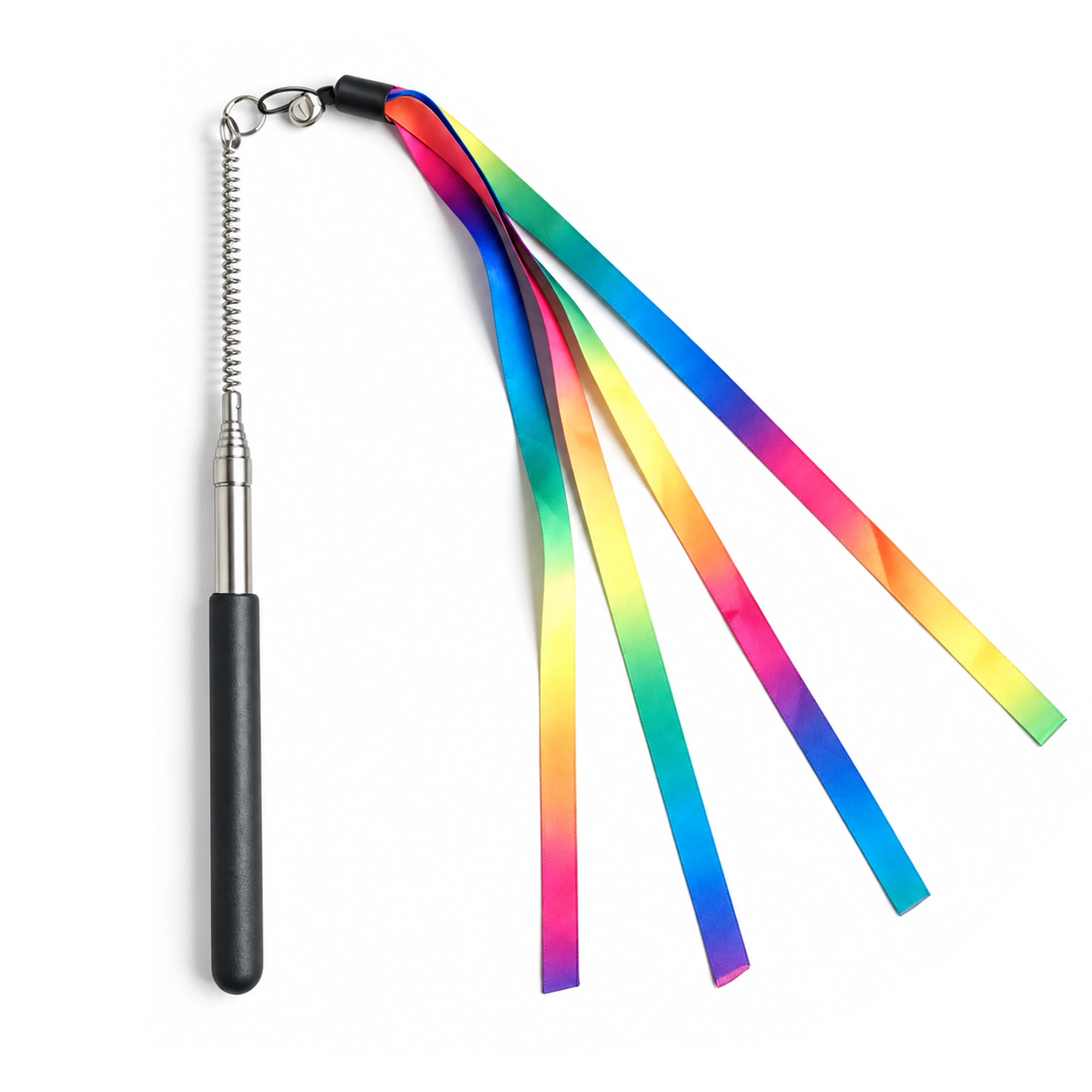
Choose equipment you can actively supervise. JoyPetPlay’s Rainbow Ribbon Cat Wand is described with a black grip, telescopic silver-colored rod, spring connector, small bell and rainbow ribbons. Its instructions call for supervised play, storage out of reach afterward and removal if damaged.
Put the whole wand away before turning your attention to another cat. For the next session, check which cat had an uninterrupted opportunity and which still needs one. Let that guide who gets your attention next, without requiring the cats to become play partners.