Anyone living with a speed-eating cat knows the routine. Food hits the dish, disappears in thirty seconds, and comes right back up on the rug moments later. That fast gulping is not just an annoying cleanup job. Gulping whole kibble leads to real stomach cramps, bloating, and food-related stress. When trying to break this cycle, most owners weigh two practical options: structured slow feeder bowls or textured slow feeder mats.
While both tools help cats take smaller mouthfuls, they work in completely different ways. Picking the right setup comes down to your cat’s face shape, whether you feed wet or dry food, and how sensitive their whiskers are to touch. Here is how slow feeder bowls and mats stack up across digestion, comfort, cleaning routines, and mental stimulation.
Quick Takeaways
- Digestive Pacing: Slow feeder bowls excel at controlling portioned dry kibble by forcing cats to navigate rigid physical ridges and labyrinths.
- Whisker Comfort: Wide, flat slow feeder mats prevent whisker fatigue by eliminating steep vertical walls that rub sensitive facial vibrissae.
- Food Compatibility: Rigid bowls handle wet, raw, or dry meals easily, while fabric foraging mats should be reserved strictly for dry kibble and dehydrated treats.
- Mental Engagement: Snuffle mats turn feeding into an olfactory hunting game, whereas puzzle bowls challenge physical paw dexterity.
The Mechanics of Feline Gulping: Why Speed Matters
In the wild, cats catch multiple tiny meals throughout the day rather than eating large portions all at once. Modern indoor life flips that pattern into two dense daily meals. When you factor in multiple pets competing for dishes or a rescue cat worried about food security, eating turns into a race.
Swallowing whole dry kibble forces air straight into the stomach. As those dry pieces soak up stomach fluids, they swell up quickly and trigger a sudden stretch reflex. The esophagus opens up, and the meal comes back out in an intact tube-like shape. Figuring out how to slow down cat eating gives digestive fluids enough time to break down each bite, lets the stomach wall stretch normally, and signals fullness before the dish is empty.
Slow Feeder Bowls: Ridges, Mazes, and Feline Anatomy
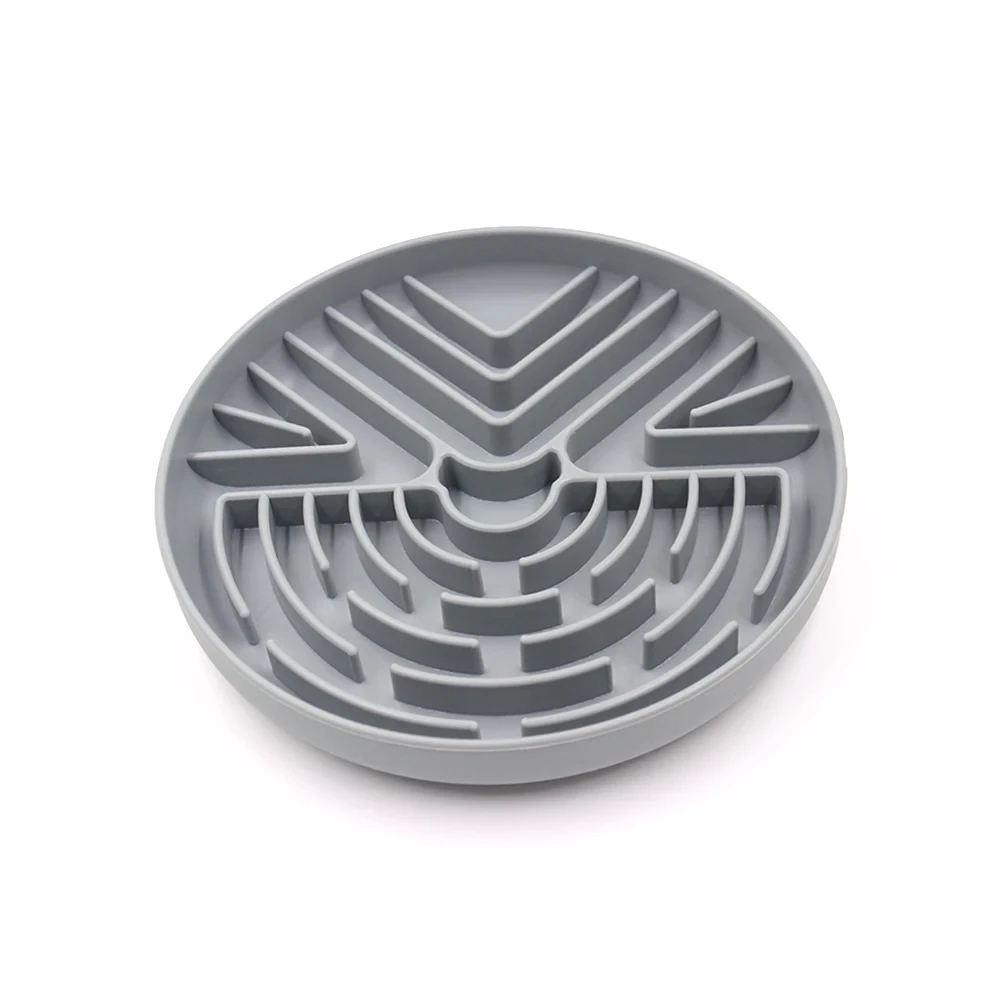
A structured cat slow feeder bowl relies on raised interior walls, curved tracks, or small pillars built into the bottom of the dish. These physical obstacles stop your cat from opening wide and vacuuming up food. Your cat has to lick carefully around tight bends or reach in with a paw to hook single kibbles out of the grooves.
A prime example is the Gray Cat-Head Pattern Slow Feeder Bowl, which features a shallow gray bowl with a cat-head outline and raised interior ridges. Shallow ridges are vital for felines because deep, steep labyrinths designed for dogs can frustrate a cat or pinch delicate facial features.
Whisker Fatigue: The Hidden Drawback of Deep Bowls
Feline whiskers are packed with nerve endings that register the slightest breeze and measure doorway widths in the dark. When a cat eats out of a deep dish with steep sides, those whiskers press against hard plastic or ceramic every time they lower their chin.
This sustained tactile friction floods the feline nervous system with sensory noise, producing whisker stress or whisker fatigue. Cats troubled by whisker tension often pace restlessly around their dish, scoop food onto the bare floor, or walk away hungry after taking only a few bites. When evaluating cat whisker fatigue bowl vs mat options, choosing an open flat surface reliably prevents this sensory overload.
Slow Feeder Mats: Whisker-Safe Foraging and Scent Work
A cat slow feeder mat replaces tall vertical dish walls with an open, accessible feeding surface. In daily pet care, slow feeder mats fall into two primary designs: textured silicone lick mats for wet foods and soft fabric snuffle mats for dry foraging.
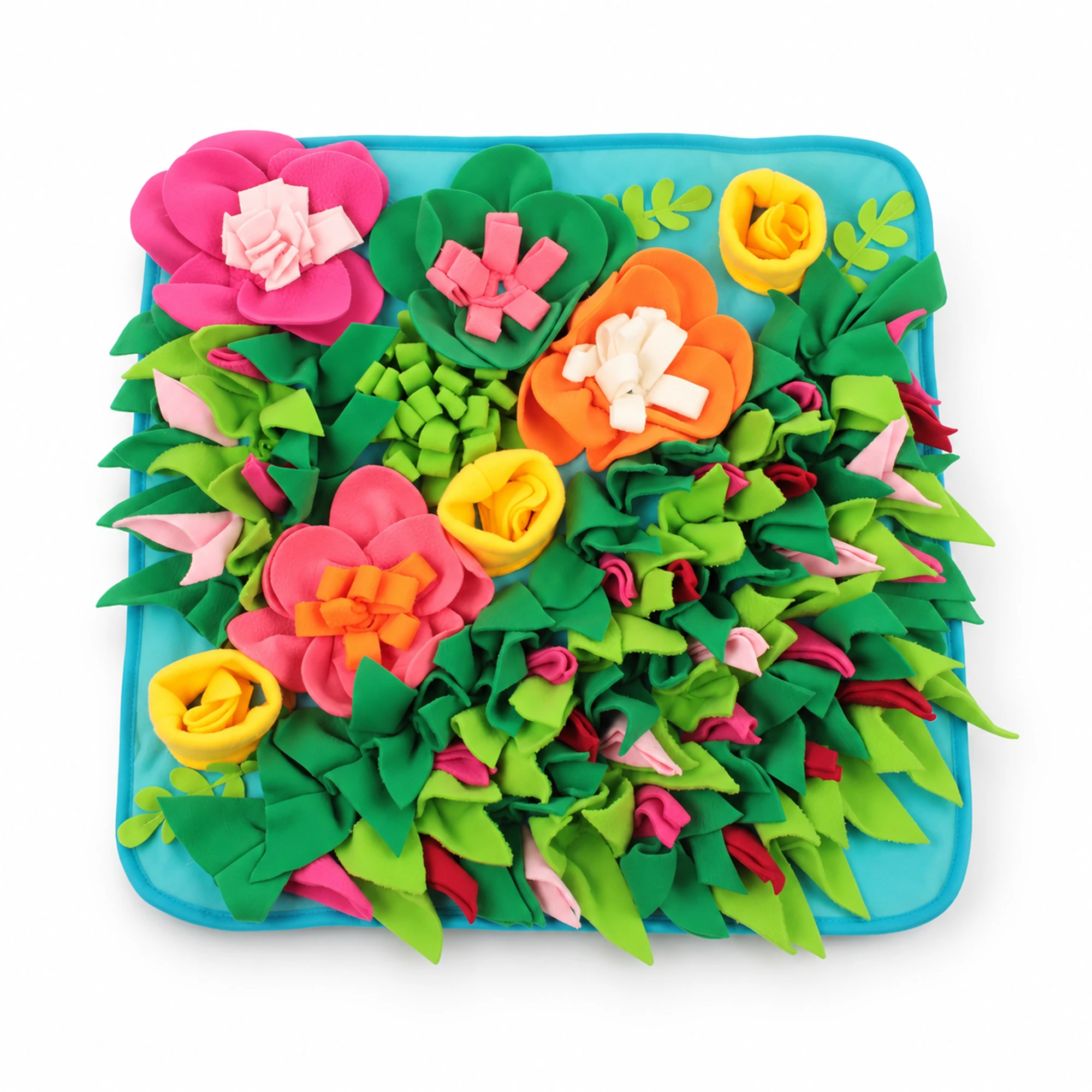
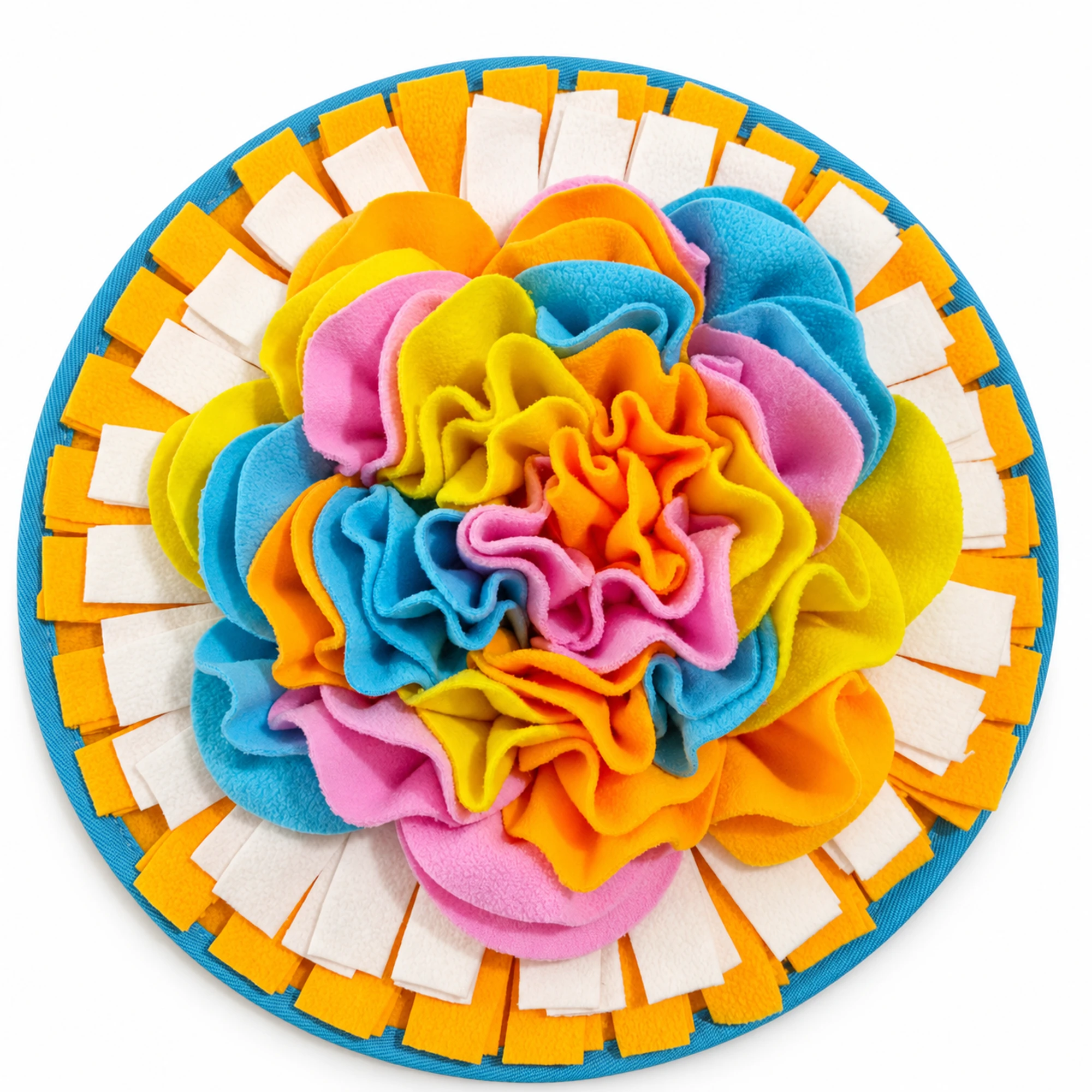
Fabric snuffle mats, such as the Leaf Garden Snuffle Mat, offer layered fabric leaves, flowers, and rolled cups that hold kibble for nose work. Similarly, the Round Ruffle Flower Snuffle Mat combines soft ruffled fleece folds with fringe rings designed to conceal treats for scent exploration.
With no vertical rims in the way, a cat’s whiskers stay relaxed the whole time they eat. Instead of bumping into rigid barriers, the cat follows their nose to tease kibble out of plush cloth pockets. That shifts a frantic thirty-second binge into an unhurried foraging session that calms nerves and satisfies natural hunting drive.
Direct Comparison: Mats vs Bowls
Choosing between a mat and a bowl requires balancing food type, feline personality, and daily cleaning logistics. The comparison below breaks down key differences.
| Feature | Slow Feeder Bowls | Slow Feeder Mats (Silicone / Fabric) |
|---|---|---|
| Primary Food Type | Dry kibble, wet pate, raw meat | Dry kibble for fabric; wet pate for silicone |
| Whisker Clearance | Variable; shallow models work, deep models pinch | Outstanding; open flat surfaces protect vibrissae |
| Eating Speed Reduction | High; physical barriers stop large mouthfuls | Moderate to high; relies on searching and licking |
| Cleaning Effort | Quick; most are dishwasher safe | Fabric requires machine washing; silicone needs scrubbing |
| Durability | Rigid, long-lasting, stable base | Fabric can fray if chewed; requires supervision |
| Sensory Enrichment | Physical problem solving and paw work | Olfactory tracking, natural scent foraging, calming licking |
Hygiene, Food Safety, and Maintenance Rules
Food safety is a crucial factor when selecting feeding gear. Cats are notoriously sensitive to bacterial residue and lingering odors, which can lead to chin acne or food aversion.
Cleaning Rigid Bowls
Stainless steel and ceramic offer the cleanest surfaces because they resist tiny scratches where bacteria hide. Plastic options work well on a budget, but you will want to replace them if you spot gouges from teeth or claws. Wash ridge bowls after every meal with warm water and fragrance-free soap so grease does not build up in the tracks.
Caring for Foraging and Lick Mats
Give fabric snuffle mats a good shake outside after meals to clear out loose crumbs and dried saliva. Run them through the washing machine on a gentle cycle every week using an unscented detergent, then let them air-dry completely. Never smear canned pate, gravy, or raw food onto fleece mats, because meat residue sinks deep into fabric fibers and breeds harmful bacteria.
How to Choose for Your Household
Every cat brings a unique combination of eating habits and physical traits to the bowl. Use these guidelines to select the best match for your companion.
When to Pick a Slow Feeder Bowl
- Your cat eats primarily wet food, stew pouches, or raw formulations.
- Your cat tends to chew and swallow loose textiles or strings.
- You need a dishwasher-safe solution that resets in seconds.
- You have a long-snouted cat breed that navigates shallow ridges without whisker strain.
When to Pick a Slow Feeder Mat
- Your cat exhibits whisker sensitivity by pawing food out of dishes or leaving food along edges.
- Your cat eats dry kibble and needs cognitive enrichment to relieve indoor boredom.
- You have a flat-faced brachycephalic cat, such as a Persian or Exotic Shorthair, that cannot reach into narrow crevices.
- Your cat eats too quickly out of anxiety and benefits from calming scent work.
For households looking to combine meal pacing with wider mental stimulation, rotating between puzzles and feeder mats offers optimal enrichment. You can explore complementary strategies in our guide on cat puzzle feeders for indoor cats and learn how to manage schedules in our article on how to rotate cat toys.
Frequently Asked Questions
Can cats get bloat from eating too quickly?
Cats do not experience gastric dilatation volvulus, commonly known as canine bloat, which is a life-threatening twisting of the stomach seen in deep-chested dog breeds. However, rapid eating in cats causes acute gastric distension, painful gas buildup, and immediate regurgitation. Slowing their eating pace eliminates these digestive upsets even though true bloat is not a feline medical risk.
Do slow feeder bowls cause whisker fatigue in cats?
Deep slow feeder bowls with tall, rigid walls frequently cause whisker fatigue because a cat’s vibrissae brush against the sides with every bite. To prevent whisker stress, select shallow models with wide spacing between obstacles, or switch to an open slow feeder mat that allows complete whisker clearance.
Are fabric snuffle mats safe for cats to use with kibble?
Yes, fabric snuffle mats are safe and beneficial for cats when used with dry kibble or dehydrated treats under supervision. Always inspect the mat for loose threads, and avoid using fabric mats with cats that chew cloth or display pica tendencies.