Key Takeaways
- Kittens under six months need lightweight, soft toys that protect fragile deciduous teeth while developing hand-eye coordination.
- Adolescent cats between six and twelve months channel explosive predatory bursts through multi-tier track towers with captive rolling balls.
- Adult cats over one year require cognitive resistance puzzles and mechanical levers that reward deliberate problem-solving.
- Supervised wand play prevents dangerous string ingestion during intense kitten hunting games.
- Rotating toy categories weekly prevents sensory habituation and keeps indoor adult cats physically active.
When comparing kitten toys vs adult cat toys, the secret is matching feline motor development and natural predatory instincts with mechanical toy design. Selecting the best toys for kittens and adult cats requires understanding how age shifts feline stamina and mental focus. Kittens under six months possess razor-sharp baby teeth and developing motor coordination, making lightweight batting lures and soft yarn wands ideal for safe play. As cats enter adolescence, their energy spikes into explosive chasing bursts that benefit from multi-tier track towers with captive rolling balls. Mature adult cats operate with calculated predatory efficiency, meaning they quickly ignore simple chasing toys unless presented with tactile cognitive challenges like mechanical lever puzzles. Reviewing suitable toys for adult cats ensures your companion stays safely entertained while preventing indoor boredom.
Developmental Milestones: Why Kitten Play Differs from Adult Play
A young kitten views the living room floor as a training arena for essential predatory motor skills. Between eight and sixteen weeks of age, kittens develop binocular depth perception, precise paw-eye coordination, and spatial awareness. During this formative window, play manifests as clumsy leaps, frequent belly flops, and frantic swatting at every drifting dust speck. Because kittens are actively shedding deciduous baby teeth, their gum tissue remains tender and prone to irritation. Hard plastics or heavy metal bells can cause oral discomfort or even crack developing teeth. Lightweight toys crafted with plush textures and soft fabric ribbons let tiny kittens capture, chew, and carry their mock quarry without mouth injuries.
Adult cats approach playtime with a fundamentally different hunting strategy. In the wild, a mature feline stalks motionless in tall grass before executing a single explosive strike. Domestic adult cats mirror this conservative energy pattern, rarely running after passive plastic balls unless the toy mimics authentic prey behavior. Furthermore, adult felines possess fully set adult teeth and powerful jaw muscles capable of shredding flimsy threads or snapping cheap plastic joints. Providing an adult cat with simple kitten rattles causes mental boredom, which quickly manifests as daytime lethargy, midnight yowling, or compulsive overeating.
| Life Stage | Age Range | Primary Play Drive | Ideal Toy Mechanics | Common Safety Hazard |
|---|---|---|---|---|
| Kitten | 0 to 6 Months | Motor coordination and teething relief | Lightweight wands, braided yarn, soft plush lures | Small swallowable parts, thin elastic cords |
| Adolescent | 6 to 12 Months | High-speed chase and energy depletion | Multi-tier ball towers, spring teasers | Overturning lightweight towers during rough play |
| Adult | 1 to 7 Years | Tactical problem-solving and stalking | Mechanical lever boxes, hide-and-seek puzzles | Splintered plastic from high jaw pressure |
| Senior | 7+ Years | Low-impact sensory engagement | Gentle floor rollers, textured crinkle mats | Stiff neck strain, joint fatigue |
Kitten Toys: Soft Textures and Lightweight Interaction
Young kittens require play accessories that yield immediately to gentle batting and light jaw pressure. Heavy plastic objects can easily intimidate a small kitten or cause painful bruises during clumsy pouncing sessions. Instead, an interactive cat teaser wand operated by human hands offers the ideal blend of social bonding, physical exercise, and safe predatory rehearsal.
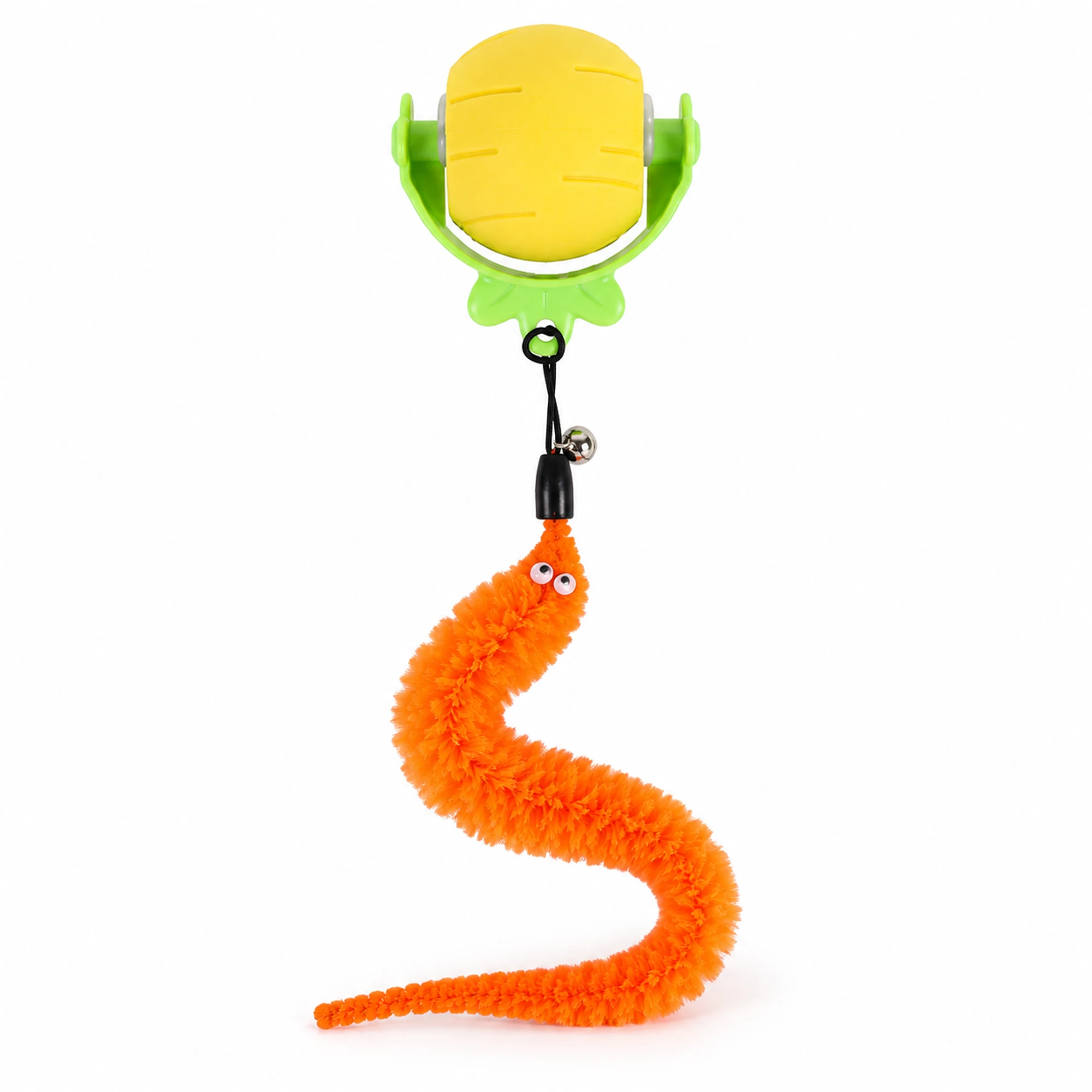
According to JoyPetPlay merchant catalog listings, Green Yarn Monster Cat Wand Teaser Stick features a short wooden handle with authentic textured bark and thick strands of braided green yarn. The featherweight puppet lure flutters through the air with minimal wrist flicking, motivating kittens to track, crouch, and leap across carpets or sofas. Soft braided yarn strands provide a gentle chewing surface for sensitive gums, soothing teething urges without risking dental damage. Because the wand avoids loose plastic beads or electrical wires, pet parents can direct spontaneous chasing sessions that build coordination and physical confidence in growing kittens.
When presenting wand toys to young kittens, keep each session short, aiming for five to ten minutes of activity. Kittens exhaust their glycogen reserves rapidly, and prolonged chasing can trigger heavy panting or physical distress. Always ensure the kitten captures the yarn lure before ending the game. Concluding each session with a tangible capture satisfies their hunting cycle and prevents predatory frustration.
Adolescent Transition: Active Ball Tracks and Solo Energy Release
Between six and twelve months of age, young felines enter their energetic adolescent phase. Their muscular strength and endurance surge dramatically, giving rise to wild midnight sprints and sudden leaps across furniture. During this developmental period, simple dangling toys fail to satisfy their need for continuous physical exertion when owners are working or away from home.
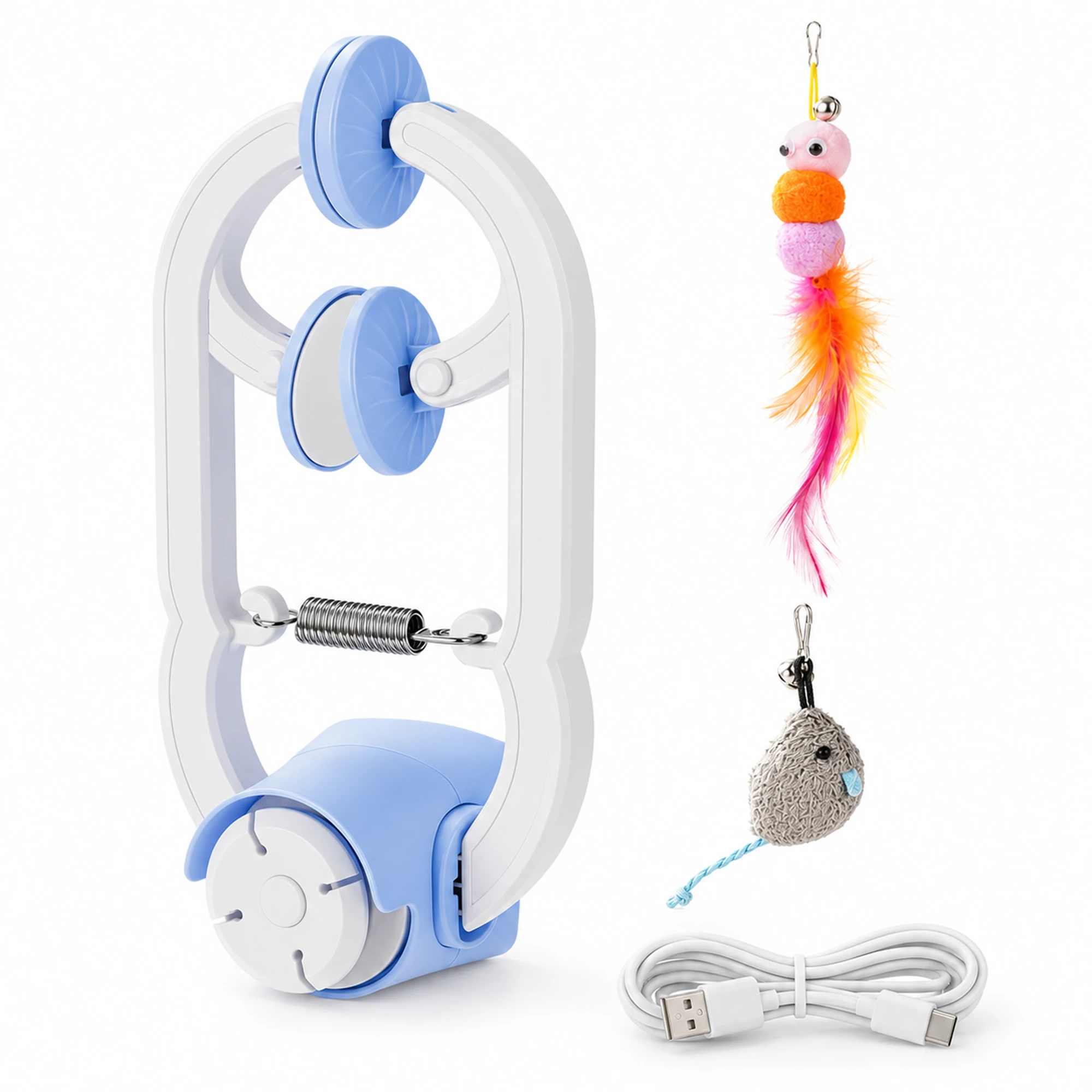
Adolescent felines thrive on dynamic self-play stations like a spring cat toy that responds dynamically to paw strikes. According to JoyPetPlay merchant catalog listings, Blue Oval Track Spring Cat Toy Feather Tower features three tiers with wide oval rim openings and an upright flexible steel coil tipped with blue feathers. Smooth perimeter channels enclose captive rolling balls, allowing adolescent cats to sprint around the tower and bat from multiple directions without sending balls underneath heavy living room couches.
The spring-mounted apex feather introduces unpredictable vertical recoil. When an energetic adolescent swats the upper lure, the flexible coil snaps back and bobs continuously, keeping the cat intensely focused. Standing forty-three centimeters tall with a stable seventeen-centimeter wide base, this multi-tier tower absorbs high-speed paw strikes while remaining firmly upright on the floor. It bridges the gap between fragile kitten batting lures and complex adult puzzle boxes by channeling raw adolescent speed into safe solo play.
Adult Cat Enrichment: Cognitive Levers and Tactile Problem-Solving
Once an indoor cat reaches physical maturity at one year of age, play motivation transitions from mindless sprinting to calculated problem-solving. Adult indoor felines sleep between twelve and sixteen hours every day, deliberately conserving calories for purposeful predatory tasks. Standard batting balls or static plush mice fail to hold interest because they lack interactive responsiveness. The best toys for adult cats feature tactile cause-and-effect mechanics that stimulate feline cognitive focus.
Mechanical puzzle stations satisfy this deliberate adult hunting instinct. According to JoyPetPlay merchant catalog listings, Wooden Three-Hole Paw-Lever Cat Toy is built from solid pine wood with three circular holes revealing soft plush mice activated by carved paw levers. When an adult cat steps or presses down on an external lever, the internal wooden seesaw mechanism lifts a concealed mouse through the top opening. This unexpected movement mimics a rodent darting from a ground burrow, instantly triggering focused stalking behavior.
Because this interactive station functions purely through mechanical leverage without electric motors, battery packs, or buzzing gears, cautious felines can investigate the puzzle at their own comfortable tempo. Pet parents can also tap the levers to initiate cooperative games, showing curious cats how paw pressure reveals the hidden plush targets. The solid pine construction provides enough ballast to resist aggressive paw swipes and body bumps from large felines, ensuring dependable durability over years of daily play.
Toy Safety and Supervised Play across Age Transitions
Maintaining safe play conditions requires adapting your inspection routine as your cat matures. A soft fabric toy that was safe for an eight-week-old kitten can become a dangerous choking hazard for an adult cat with powerful jaws, while a heavy wooden puzzle box might pinch tiny kitten paws without careful parental guidance.
Adhere to these essential safety guidelines across all feline life stages:
- Never leave ribbon or string wands out unsupervised. Kittens easily chew through threads, and swallowed linear foreign bodies cause life-threatening intestinal blockages requiring emergency veterinary surgery. Store wand lures securely inside a closed drawer immediately after use.
- Inspect plush seams and plastic components regularly. Discard fabric mice when seams split to expose polyfill stuffing, and retire plastic towers if hard edges chip or crack into sharp corners.
- Match toy weight to physical strength. Ensure solo puzzle towers have wide weighted bases that will not tip over when an enthusiastic fifteen-pound adult cat lands on top of them.
- Establish scheduled toy rotation. Rather than leaving ten toys scattered across the living room carpet, leave out only three items at a time and rotate them every seven days. Scenting stored toys inside an airtight container with fresh catnip restores predatory interest when they re-emerge.
Frequently Asked Questions About Feline Age and Play
Can adult cats play with kitten toys safely?
Adult cats can safely play with many kitten toys, but pet owners must inspect items for bite vulnerability. A mature cat bite can easily sever thin strings or dislodge small plastic eyes that a kitten could not dislodge. Avoid letting adult cats chew on delicate kitten plushies unsupervised.
How do I know if my adult cat is bored or just lazy?
Cats are not inherently lazy; they are predatory conservationists. If your cat sleeps all day, ignores toys, but stalks your ankles or vocalizes loudly at night, they are suffering from mental boredom. Introduce tactile puzzles like paw-lever boxes or slow foraging mats to re-engage their cognitive curiosity.
Why do kittens bite and swallow string toys?
Kittens have barbed, backward-facing tongue papillae that make spitting out string very difficult once it enters the mouth. Combined with teething impulses that drive heavy chewing, kittens instinctively swallow threads they cannot dislodge, creating a severe gastrointestinal foreign body risk. Always supervise wand play.