Sharing a living room with several cats doubles the warmth of a household, but communal life frequently sparks silent friction over daily play items. Watching two or three felines gather around one small object reveals how quickly playful curiosity gives way to stiff postures, sudden swipes, or high-speed hallway chases. Cat parents often notice the most confident cat claiming every single mouse while a more timid companion watches quietly from under a dining chair. Investing in thoughtful cat toys for multi-cat homes changes that household dynamic by trading narrow access points for spacious, open geometric stations.
Felines evolved as solitary hunters who stalk small prey alone. Unlike dogs that enjoy cooperative group games, cats treat any moving object as their private catch. Tossing one small rolling ball into a room of three waiting felines creates immediate competition instead of mutual enjoyment. Providing lasting enrichment in multi-pet homes calls for interactive cat toys for multiple cats designed for simultaneous, parallel engagement without forcing direct head-to-head contact.
Why Multi-Cat Play Needs Open Geometry and Multiple Stations
Most basic cat accessories come with tight entry holes, closed tunnels, or small compartments that only one pair of paws can reach at a time. A solitary plush mouse or single treat cup works well for an only cat. In a shared home, however, that small physical footprint turns into an immediate focal bottleneck.
Physical bottlenecks breed resource guarding. A confident resident cat rarely needs to hiss to take control of an item; simple physical blocking or prolonged unblinking stares can keep submissive housemates away. If an item offers access from only a single opening, whichever cat stands at the front owns the entire toy. Cats waiting behind get no chance to bat or chase, building up quiet frustration that frequently boils over into evening swatting matches.
Open circular and multi-tier designs solve this spatial problem by giving animals 360-degree perimeter access. With an open ring or tiered track, one cat can lie on the northern edge while a second animal swats from the opposite southern side. Neither feline is forced into direct eye contact, which cats read as an active challenge. This physical distance unlocks parallel play, an established behavioral pattern where animals pursue predatory instincts beside each other in peaceful company.
Station 1: 360-Degree Ball Track Towers for Independent Group Batting
Tiered track towers serve as the cornerstone of relaxed, independent entertainment in multi-cat spaces. These standing units feature stacked concentric levels where lightweight spheres glide through smooth channels. Because the balls stay trapped within the tracks rather than rolling under heavy credenzas, the entertainment stays open to any passing cat throughout the day.
The Blue Oval Track Feather Tower stands approximately forty-three centimeters tall with a seventeen-centimeter base and three tiers of captive rolling balls. That specific vertical structure creates distinct tactile zones for cats of varying body sizes and activity levels:
- Base Level Tracking: Kittens and smaller cats can stretch out on the rug while batting the bottom sphere through wide side access slots.
- Mid-Tier Swatting: Standing adult felines often slide a single paw into the middle ring, sending the ball into smooth orbits that click gently against the molded interior.
- Elevated Spring Action: The upper cap holds an oscillating spring-mounted feather teaser that bobbles whenever vigorous paw work vibrates the lower levels.
Supported by its steady seventeen-centimeter base, firm swatting from a muscular ten-pound adult will not flip the tower onto a companion nearby. Two cats can settle on opposite sides of the oval perimeter, batting the rolling spheres back and forth without crowding each other.
| Feature Comparison | Single-Entry Tunnel Toys | Multi-Tier Track Towers |
|---|---|---|
| Access Angle | Single directional portal | Full 360-degree perimeter |
| Concurrent Players | One cat inside | Two to four cats simultaneously |
| Conflict Risk | High bottleneck risk | Low parallel play layout |
| Movement Vector | Linear back-and-forth | Multi-directional circular orbits |
Station 2: Multi-Sided Rotating Wheels for Parallel Feline Play
Anchored multi-sided wheel stations offer another dependable option for homes with active feline hunters. Unlike lightweight plush toys that get knocked under dressers, fixed wooden wheel units stay securely in designated play zones, keeping sightlines clear for every cat in the room.
The Small Wooden Ball Wheel Cat Toy features a balanced circular rotor with captive wooden spheres nested inside carved perimeter tracks. When one cat gives the wheel a gentle swipe, the entire cylinder revolves smoothly on its center spindle, causing the interior wooden beads to roll and tap. That subtle acoustic clicking sparks curiosity without startling sound-sensitive companions.
Rotating wheels perform exceptionally well in shared spaces because batting force ripples around the whole circumference. When Cat A pushes the wheel down on the left, Cat B on the right side sees balls roll directly past their paws. This shared mechanical response resembles predatory exploration around fallen trees, where multiple hunters examine different openings in the same piece of wood.
Built with solid pine components, these wooden wheels offer substantial weight and natural texture, preventing noisy skidding across smooth floors. Adding cat track toys for multi cat home routines produces an engaging setup that holds up to daily group play.
Station 3: Guided Wand Sessions for Controlled Turn-Taking
Self-directed towers and spinning wheels give cats plenty of solo entertainment, but interactive wand play needs active guidance from pet parents. Wand teasers awaken acute hunting drives, triggering the complete sequence of stalking, waiting, sprinting, and striking. In a shared home, that intense stimulation can spark conflict if a lure is waved carelessly between two excited hunters.
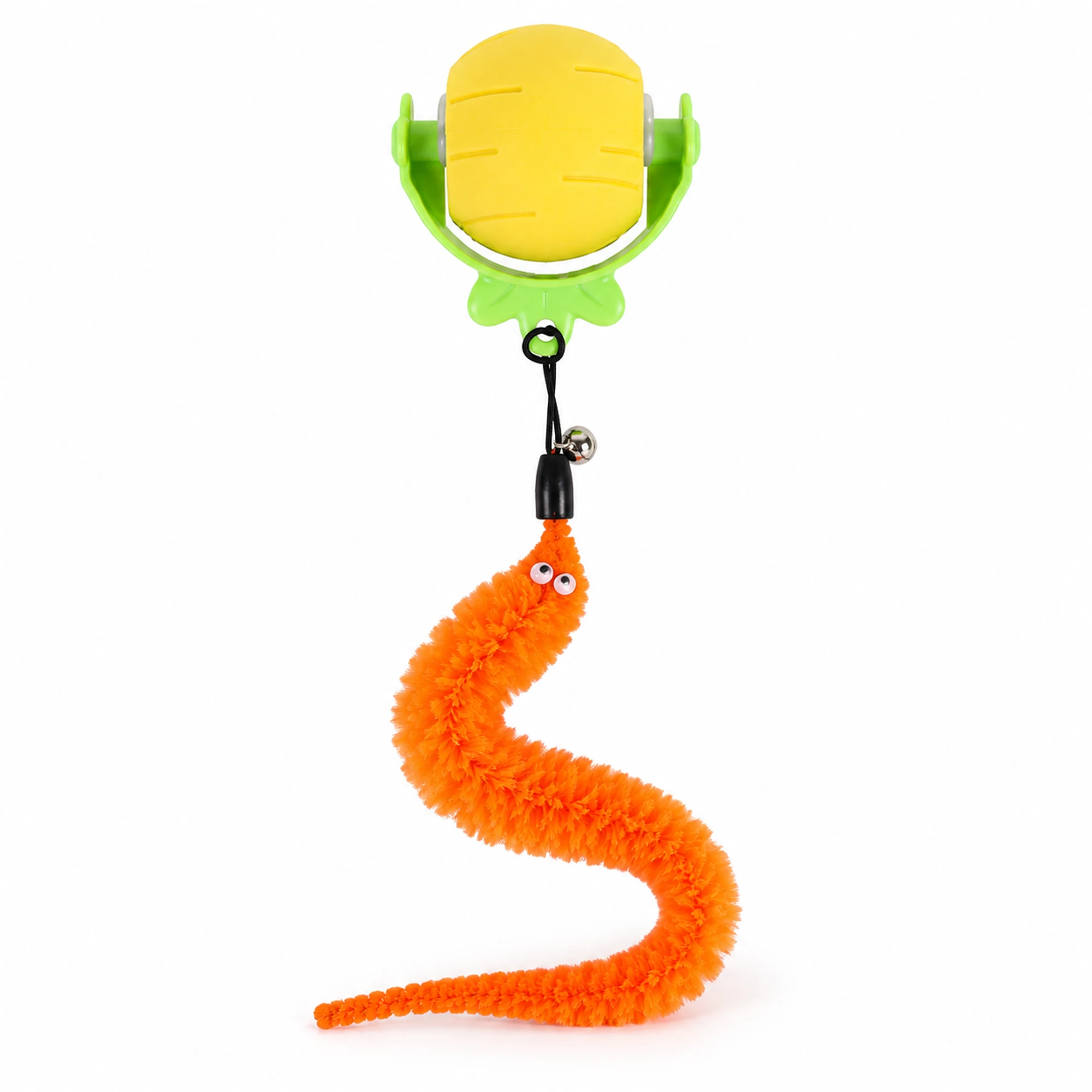
Using a durable tool like the Green Yarn Monster Cat Teaser Stick gives owners precise control over the lure. Its flexible rod provides plenty of distance, protecting human hands from stray claws while letting you steer the yarn bundle along smooth paths. To keep multi-cat wand time calm and fair, follow these basic practices:
- Build Adequate Distance: Sit near the center of the room and keep your cats spaced at least six to eight feet apart before starting the toy.
- Trade Off Chases: Direct three or four low passes toward Cat A so they can track and strike the yarn cluster. Next, sweep the lure in a broad arc toward Cat B, giving them an uninterrupted turn.
- Protect Shy Players: If a bold cat pushes past a quieter housemate, use your body or a light cushion to shield the gentler cat. Present the lure near their level to encourage confident participation.
- Finish with Real Catches: Make sure each feline gets to seize the yarn monster firmly in their paws. Follow the final catch with a small protein snack to mark the natural end of the predatory cycle.
How to Arrange Multi-Cat Play Zones to Prevent Bottlenecks
Piling every toy into a single corner invites disputes, even when you purchase the best toys for two cats available. Cats navigate household territory through sightlines and vertical tiers. If reaching the track tower requires walking directly past a resting rival in a narrow hallway, small squabbles will eventually happen.
Set up separate activity zones across different rooms:
Zone 1 (Active Common Space): Place the Blue Oval Track Feather Tower in your main living room where cats congregate during household routines. Keep at least three feet of open clearance around the base so walking cats can bypass an active player without brushing past.
Zone 2 (Elevated Window Station): Set lightweight batting items near high window benches or climbing shelves. Timid cats often prefer to swat and watch from higher positions where nobody can surprise them from behind.
Zone 3 (Quiet Corner Haven): Position wooden ball wheels or slow treat boards in lower-traffic bedrooms or home workspaces. This gives quiet felines a chance to explore enrichment peacefully while bolder housemates rest elsewhere.
Frequently Asked Questions About Multi-Cat Play
Can two cats play with a ball track tower at the same time?
Two or three cats can comfortably share a ball track tower at the same time. The circular tiers offer open perimeter access on all sides, letting cats sit opposite each other. When one feline bats a ball, it circles the track into the view of the second cat, creating enjoyable parallel play rather than territorial guarding.
What should I do if one cat monopolizes all the toys?
If one cat hoards toys, divide play into separate stations placed in different rooms. Put away high-drive wand teasers between play sessions rather than leaving them on rugs. Use guided wand play where you actively steer the lure toward the gentler cat while offering the bolder cat a ball tower or treat board in another room.
How do I know if my cats are playing or fighting over a toy?
Friendly play shows loose bodies, quiet movements, turn-taking chases, and ears turned forward. When you see flattened ears, tense freezing, low growls, hissing, or puffed tails near a toy, the encounter has shifted into conflict. Step between them with a piece of cardboard or cushion and gently guide the cats into separate spaces.