Feline Auditory Acuity and How Sound Frequencies Trigger Hunting Instincts
A domestic cat experiences the acoustic environment with exceptional sensitivity. While human auditory perception fades above twenty kilohertz, felines easily hear high-frequency vibrations up to sixty-four kilohertz. This remarkable hearing range developed so wild ancestors could hear small rodents squeaking beneath dry brush. Thirty-two separate muscles control each feline ear, letting them pivot independently up to one hundred and eighty degrees to pinpoint sound sources within three inches across a large room.
Because hearing precedes vision in wild hunting, toys that make sound carry immense fascination for indoor felines. When a silent ball sits motionless on a rug, a cat often walks past without interest. Yet the moment a faint high-pitched bell chimes, paper crinkles, or a hidden rattle stirs, both ears instantly pivot forward. Electrical impulses travel through the auditory cortex to spark hunting curiosity, turning a quiet afternoon snooze into an alert stalk.
Different sound profiles trigger unique predatory reactions. High-frequency bells echo the faint calls of injured fledglings or fluttering garden birds. Crinkly layers and crisp foil textures copy autumn foliage rustling as mice scurry along garden borders. Soft internal rattles mimic rodent claws scratching against hollow wood. Understanding these sound triggers helps pet parents choose noise-making toys that build joyful excitement rather than fear.
Successful sound enrichment relies on careful acoustic balance. While soft rustles and gentle chimes enchant cats, harsh electronic beeps or screeching whistles create anxiety. Because feline ears amplify sounds far better than our own, toys that sound moderately loud to humans can overwhelm a cat. Well-designed toys use soft, natural acoustics that encourage stealthy stalking without startling delicate ears.
Spring Feather Toys with Bells and Captive Track Spheres
Uniting visual motion, springy recoil, and musical ringing produces an engaging play experience. When several sensory pathways light up together, a cat enters an absorbed state of play that expends extra energy while refining coordination.
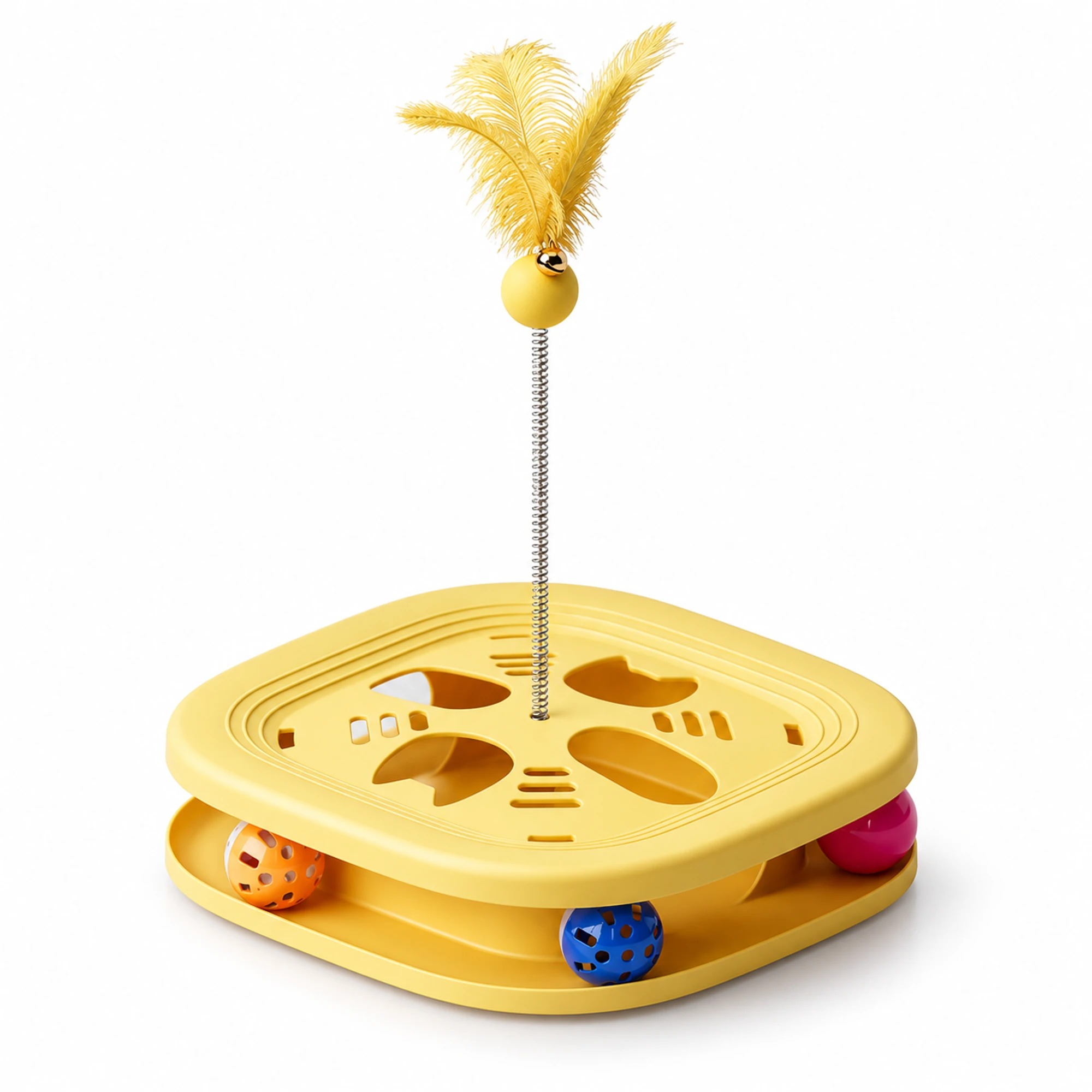
The Yellow Feather Spring Cat Toy with Ball Track demonstrates this multi-sensory balance beautifully. Built with an eye-catching yellow tiered base, this toy features cute cat-face cutouts where rolling balls glide inside an enclosed circular track. Rising from the center is a sturdy steel spring carrying fluffy natural feathers and an attached brass jingle bell.
When an energetic cat bats the central spring, the flexible stem sways back and forth, making the feathers dance while the brass bell tinkles rhythmically. This cheerful chime rewards each paw swat with instant sound feedback, proving the prey is active. At the same time, casual paw swipes send the lower captive balls rolling around the channel. The pleasant mix of smooth rolling balls and musical bells keeps active pets happily occupied for hours without human intervention.
Solid build quality is essential for spring toys with bells. The upright spring must resist repeated batting without warping out of shape. The jingle bell needs a secure heavy-duty ring clasp so sharp claws and teeth cannot pull it loose and create a swallowing risk. Dependable craftsmanship ensures that energetic batting stays safe and carefree.
Crinkle Paper Textures and Soft Rattles That Mimic Rodent Nesting Sounds
While brass bells capture bird-hunting instincts, ground-level rodent hunting relies on textured crinkling and subtle rattles. Many cats ignore smooth plastic objects but become fascinated whenever brown wrapping paper or tissue paper crinkles on the floor.
Crinkle-filled kicker toys and textured play mats speak directly to this dry-leaf hunting instinct. Modern manufacturers create this distinct sound by sealing safe crinkle film inside soft plush covers or heavy canvas shells. When a cat pounces on the toy, the inner layer makes a crisp paper-crunch sound that vibrates against sensitive paw pads. The tactile sensation feels just like catching prey hidden inside dry garden grass.
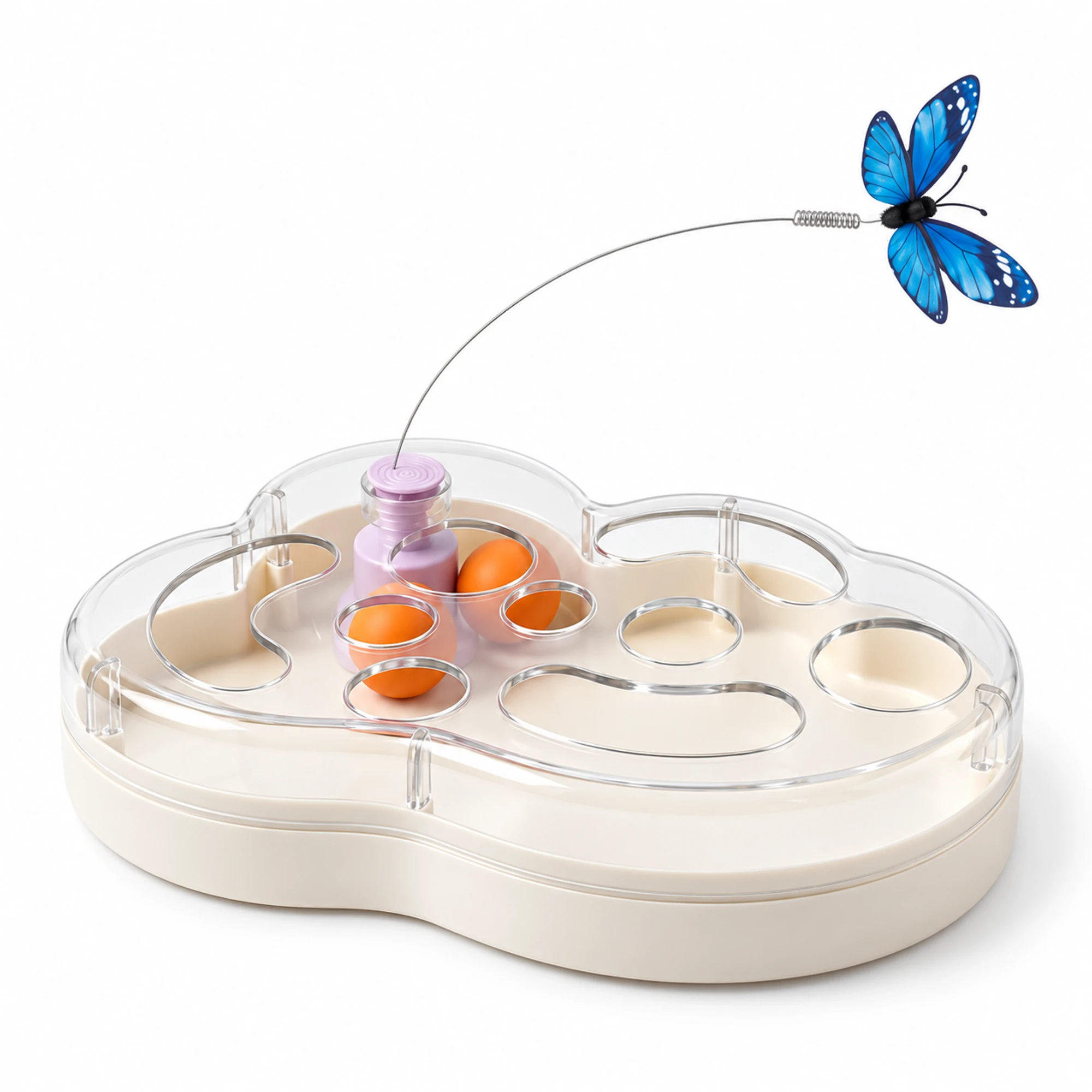
Rolling rattle toys offer another satisfying layer of ground-level sound. The Cream Cloud Butterfly Cat Toy Track Station utilizes lightweight plastic spheres that produce quiet rolling clicks as they orbit composite tracks. Instead of piercing rattles, these cat ball toys rely on the gentle, rhythmic hum of smooth spheres gliding across composite channels. Felines appreciate this predictable sound because it signals ball speed without creating startling clatter.
Motorized units also incorporate soft acoustic feedback. The Blue Swirl Rechargeable Rolling Ball produces a muted motor hum alongside gentle floor contact sounds as it navigates room corridors. As this interactive cat ball navigates around household furniture, its soft outer coating softens floor strikes while creating enough sound cues to guide a curious cat from across the room.
Balancing Auditory Stimulation to Prevent Sensory Fatigue in Sensitive Cats
Even though sound-producing toys offer great cognitive benefits, constant loud racket causes sensory fatigue or nervous tension. A toy that rings whenever a cat walks past its resting bed can turn a cozy sanctuary into an irritating space.
Guardians should learn to read body cues between eager playfulness and anxious vigilance. When a cat pins its ears back, thrashes its tail against the rug, or crouches tense and low during play, the sound level has crossed into discomfort. On the other hand, upright ears, relaxed posture, and confident paw taps show genuine enjoyment.
Hard floors and bare walls often cause loud toy sounds to echo. To keep playtime gentle, place noisy toys on woven area rugs or carpeted floors that absorb extra noise. Soft carpets stop bells and plastic spheres from creating piercing echoes that could alarm timid cats or interrupt quiet work calls.
Sound enrichment should also alternate with periods of calm quiet. After fifteen minutes of swatting bells and kicking crinkly toys, peaceful quiet helps reset a feline sensory system. Placing cozy hiding baskets and high resting perches far from noisy toys ensures your companion can always relax when playtime concludes.
Safe Sound Toy Design Protocols and Daily Rotation Strategies
Sustaining enthusiasm for noise-making toys calls for regular inspections and smart rotation schedules. Acoustic novelty fades fast when the same bell rings in the exact same corner every single day.
Use these practical recommendations to build a safe sound routine:
- Inspect all bell toys daily before play to make sure clappers are secure and attachment rings stay closed.
- Throw away plush toys once seams split open to expose internal crinkle film or plastic rattle beads.
- Move noisy toys out of bedrooms at night to guarantee quiet, restful sleep for pets and family alike.
- Organize an acoustic rotation schedule by sorting toys into bell, crinkle, and rattle collections.
- Bring out bell spring wands on Monday and Tuesday to inspire energetic leaping and batting.
- Offer crinkle kickers and textured mats on Wednesday and Thursday for ground-level wrestling.
- Roll out rattle spheres and interactive balls on Friday and Saturday for hallway chases.
- Store resting sound toys in closed containers with dried organic catnip to refresh their scent appeal.
- Alternate noisy toys with quiet food puzzles to present varied sensory challenges across the week.
- Supervise small kittens during bell play until you are sure of their strength and safe play habits.
With thoughtful toy selection and attentive rotation, auditory enrichment brings joy and vitality to your cat everyday life, answering deep hunting instincts while maintaining peace throughout the home.