Every pet guardian eventually navigates the familiar living room carpet trade-off between caloric snacks and synthetic toys. On one side rests a half-consumed animal tendon or dental chew, growing sticky against the floorboards while contributing unmeasured calories to the afternoon. Across the rug sits an expensive durable synthetic bone, entirely neglected because it lacks tempting scent trails and immediate food reinforcement.
Distinguishing between an edible dog treat and a durable non-edible chew toy empowers pet parents to satisfy natural oral drives while actively safeguarding canine digestion and healthy weight targets. Both tools serve distinct behavioral purposes. Edible treats deliver immediate reinforcement and rapid dopamine rewards during training sessions. Non-edible chew toys provide sustained jaw exercise, anxiety relief, and instinctive oral stimulation without contributing surplus calories.
Striking the right balance keeps dogs satisfied, calm, and physically healthy throughout each developmental stage.
The Dual Instincts: Why Dogs Seek Both Chewing and Food Rewards
Canine behavior involves two distinct primary drives: the foraging drive and the oral settling drive. When a dog works for an edible treat, their predatory and foraging instincts take charge. Scent detection, tracking, and quick consumption dominate the sequence. Once swallowed, the reward cycle ends immediately, prompting the dog to seek the next morsel.
Non-nutritive chewing operates on an entirely different neurological path. Repetitive jaw pressure against a resilient surface releases endorphins and dopamine in the canine brain. This repetitive motion helps dogs down-regulate nervous energy after vigorous exercise, soothe teething discomfort, or cope with mild environmental stress when owners work nearby.
Problems arise when owners mistake a dog’s natural need for jaw exercise as a continuous demand for edible calories. Offering high-calorie edible chews every time a dog displays restless mouthiness often leads to rapid weight gain and digestive imbalances.
Side-by-Side Comparison: Edible Chews vs Non-Edible Chew Toys
To select the right tool for each moment of the day, compare how edible chews and non-edible chew toys perform across critical health and safety criteria.
| Assessment Factor | Edible Dog Treats and Chews | Non-Edible Dog Chew Toys | Hybrid Treat-Dispensing Toys |
|---|---|---|---|
| Caloric Contribution | High (50 to 250+ kcal per chew) | Zero calories | Low and controlled (kibble or thin spread) |
| Duration of Session | Brief to moderate (2 to 20 minutes) | Extended and repeatable (hours over weeks) | Moderate to long (20 to 45 minutes) |
| Dental Action | Chemical enzymes or rapid abrasive crunch | Mechanical plaque scraping along tooth surface | Variable mechanical contact and tongue work |
| Gastrointestinal Risk | Choking on soft ends, rapid blockage, loose stool | Foreign body obstruction if chewed into chunks | Safe with supervised sizing and sound materials |
| Primary Behavioral Goal | Training reinforcement and quick high value lure | Sustained self-settling and jaw release | Mental problem-solving and slow foraging |
Edible chews (such as compressed rawhide alternatives, dried tendons, and baked biscuits) excel at rewarding compliance during structured training. However, they disappear quickly and count against a dog’s daily nutritional intake. Non-edible toys offer long-term utility, provided the dog finds sufficient reason to interact with them.
The Calorie Dilemma in Daily Dog Care
Veterinarians consistently highlight excess weight as a primary contributor to joint degradation, canine arthritis, and cardiovascular strain. When an owner provides multiple bully sticks or dried chew ears weekly without reducing baseline food rations, that intake quickly adds hundreds of excess calories.
According to veterinary nutrition standards, supplementary treats and edible chews should never make up more than 10 percent of a dog’s daily caloric requirement. The remaining 90 percent must come from balanced commercial or veterinary-formulated diets. Because dogs possess intense chewing stamina, satisfying that drive exclusively through edible chews almost guarantees caloric excess.
Conversely, offering non-edible toys provides a completely calorie-free outlet. The challenge lies in motivation: without flavor or scent, many dogs ignore hard rubber or nylon bones entirely. This is where hybrid toys bridge the gap.
The Hybrid Solution: Combining Scent, Texture, and Puzzles
Treat-dispensing chew toys provide the ideal middle ground. Instead of offering an edible chew that vanishes in ten minutes, owners can insert small portions of dry kibble or low-calorie wet smears into textured silicone or rubber openings.
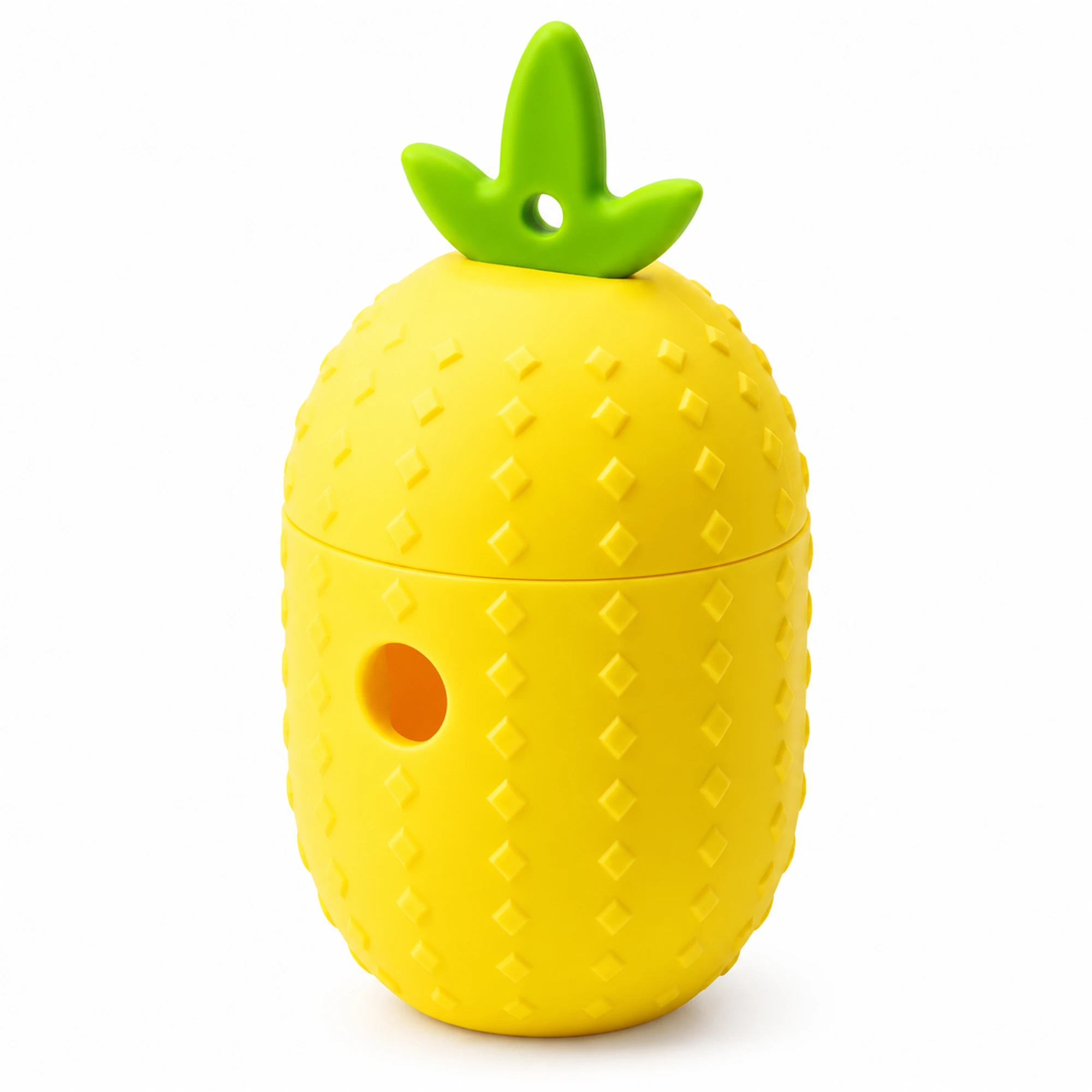
First, consider rolling multi-chamber dispensers like the Yellow Pineapple Roll & Treat Toy. Yellow silicone pineapple dog toy with horizontal and diagonal ridges, flexible silicone leaves and treat fill opening. Includes one assembled toy. Supervise play and remove if damaged. Supplier piece dimensions: 11.5 × 8 × 8 cm; supplier-reported SKU piece weight: 140 g. These figures are not independently measured; net/gross weight and packaging inclusion are unspecified. By filling the central chamber with kibble measured directly from your dog’s regular evening meal rather than sugary biscuits, owners turn routine feeding into a thirty-minute mental puzzle that burns mental energy with zero extra calories.
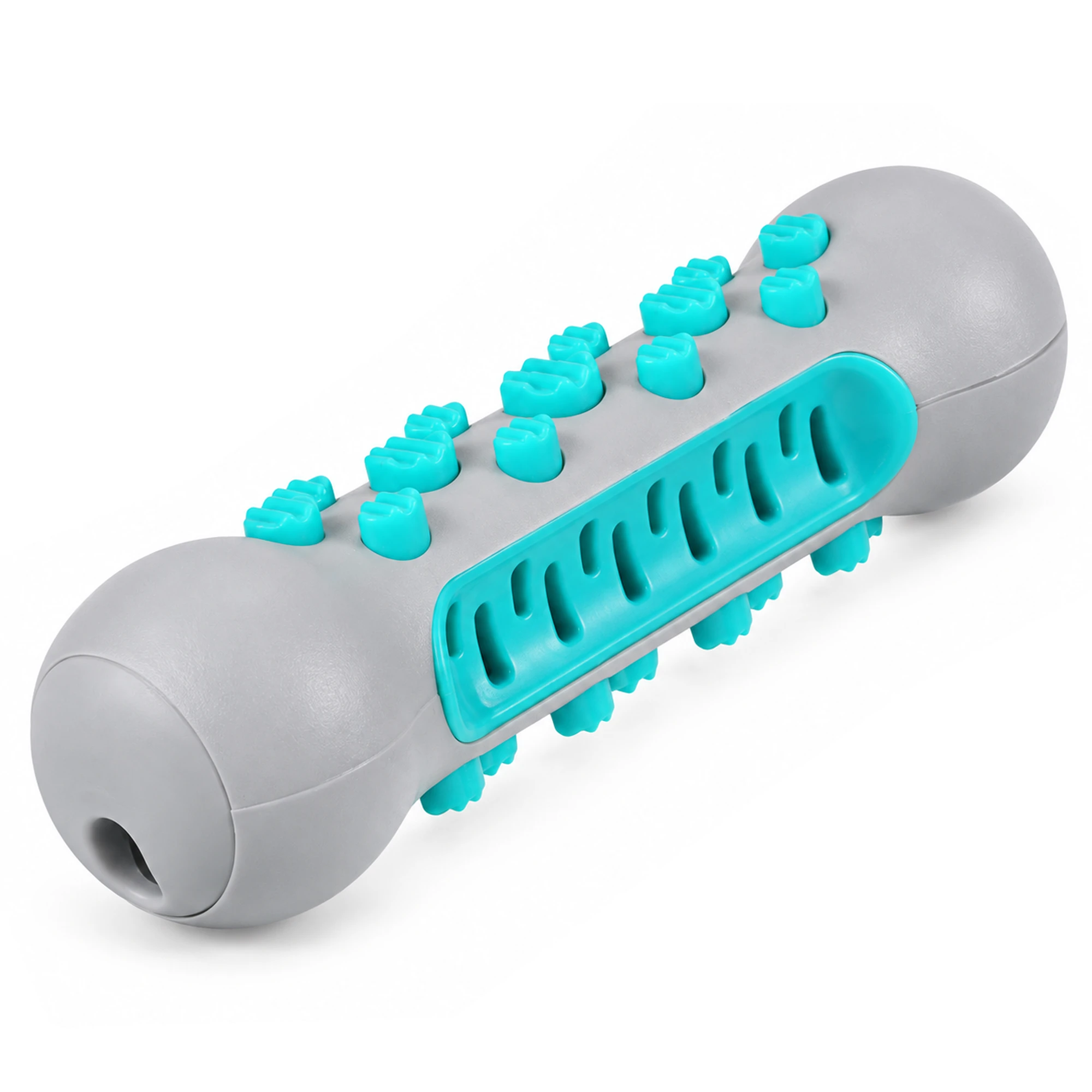
Second, consider stationary bone-shaped toys with specialized surface grooves for textured oral engagement. A gray bone-shaped dog toy with turquoise-blue raised nubs, a slotted side panel, rounded ends and an end opening. Includes one assembled toy. Supervise play and remove if damaged. Supplier-reported SKU piece weight: 147 g; supplier piece dimensions: 15 × 4.6 × 4.6 cm. These figures are not independently measured; net/gross weight and packaging inclusion are unspecified. Caregivers can smear a teaspoon of wet food, plain pumpkin puree, or low-fat plain Greek yogurt into the slotted side panel and freeze the toy for two hours before presentation. The cold rubber numbs tender teething gums, while the frozen paste requires patient tongue work rather than aggressive destructive biting.
These hybrid tools transform chewing into an active enrichment ritual without risking the digestive distress or obesity tied to rich commercial edible chews.
Practical Daily Schedule: Integrating Training, Chewing, and Puzzle Sessions
A balanced household routine avoids treating chew toys and edible rewards as mutually exclusive choices. By assigning each item a dedicated role throughout the day, owners satisfy every canine drive smoothly.
1. Morning Active Engagement (Edible Training Treats)
During morning walks, leash manners drills, or obedience practice, use tiny, high-value edible treats roughly the size of a green pea. These rapid rewards reinforce desired behaviors immediately without disrupting the dog’s focus or requiring long chewing pauses.
2. Midday Independent Play (Rolling Treat Dispensers)
When transitioning to remote work or quiet indoor hours, introduce a rolling toy like the Yellow Pineapple Roll & Treat Toy loaded with standard meal kibble. As the dog pushes the toy across rugs or hardwood, they practice natural foraging and stay physically occupied without human intervention.
3. Evening Decompression (Textured Chew Bones)
After dinner and the evening walk, dogs experience a natural settling window where oral comfort aids relaxation. Provide a textured chew item such as the Blue and Gray Bone Dog Toy with a thin layer of frozen paste in the side slot. The repetitive licking and chewing lowers pulse rate, encourages deep breathing, and prepares the dog for restful sleep in their crate or bed.
Routine Inspection, Hygiene, and Toy Retirement
Because hybrid chew toys encounter moisture, food oils, and saliva, maintaining strict cleaning and inspection standards protects canine health.
- Daily wash cycles: Rinse treat cavities with warm water and pet-safe mild soap immediately after use. Clean inside openings with a bottle brush to prevent bacterial growth or mold accumulation from dried food remnants.
- Weekly structural audits: Flex rubber and silicone bodies under bright light to check for micro-tears, tooth punctures, or missing pieces.
- Prompt retirement rules: If a chew bone shows deep cracks, missing nubs, or sharp edges that could tear oral tissue, retire the toy immediately. Never leave a heavily worn rubber toy unattended with an aggressive chewer.
Frequently Asked Questions
Can a chew toy replace edible treats during training?
No, non-edible chew toys cannot replace rapid edible treats during active obedience training. Training requires immediate primary reinforcement that the dog can swallow within two seconds so the handler can mark the next repetition. Chew toys serve a calming, sustained post-training role rather than a rapid marking signal.
How do treat-dispensing toys prevent dogs from ignoring plain rubber chews?
Treat-dispensing toys introduce olfactory motivation. Dogs that ignore sterile rubber will enthusiastically engage with the same material when it carries the scent of peanut butter, salmon oil, or soaked kibble. Once the dog builds a habit of licking and working the textured surface, they learn to associate the physical toy with satisfaction.
Are edible chews like rawhide safe for aggressive chewers?
Many traditional edible chews present substantial choking and gastrointestinal blockage risks. When dogs chew rawhide or hard dental sticks into soft, slippery chunks, they frequently attempt to swallow large sections whole. Durable rubber chew toys with treat slots offer a much safer alternative because the toy body cannot be swallowed when sized correctly.
How many calories should come from dog treats each day?
Edible treats and training rewards should never exceed 10 percent of a dog’s total daily caloric requirement. The remaining 90 percent must come from a complete and balanced commercial or veterinary-formulated diet to prevent nutritional deficiencies and excessive weight gain.