Many pet parents experience the heart-dropping discovery of a chewed toy with missing corners or ragged edges. Learning how to stop a dog from swallowing toy pieces is one of the most pressing safety responsibilities for pet guardians. Chewing serves natural canine emotional needs, yet swallowing synthetic pieces creates severe medical emergencies. Gastrointestinal foreign body blockages routinely require intensive veterinary hospitalization or surgical extraction.
Protecting an eager chewer means learning instinctual chewing habits, noticing micro-tears before structural failure happens, and keeping consistent trade routines. To prevent dog from swallowing toys, owners must redirect static jaw pressure into interactive puzzles that provide reliable, long-term safety. This guide covers straightforward prevention steps, early inspection checkpoints, and durable toy designs that protect your pet from accidental ingestion.
Behavioral Drives: Distinguishing Predatory Shredding from Compulsive Pica
To curb dangerous chewing habits, owners must first ask: why does my dog eat pieces of toys instead of leaving them on the floor? For most domestic canines, tearing items into fragments is an extension of ancestral predatory sequences. The motor sequence of searching, catching, biting, and dissecting drives dogs to dismantle tactile objects. In the wild, canids strip feathers or hide from prey before consuming edible tissue.
Most of the time, piece ingestion happens by accident during energetic play. A dog working to separate rubber nubs or cloth seams can easily swallow a loose scrap as saliva collects in the mouth. In other situations, dogs gulp items down from stress or sudden possessiveness. When owners sprint across the room shouting, dogs frequently swallow the detached fragment so they do not lose their prize.
True dietary pica, by contrast, involves persistent, non-discriminative ingestion of non-food objects like gravel, socks, or drywall. If your dog actively searches for inedible items to swallow outside of play sessions, consult your veterinarian to screen for nutritional deficiencies, gastrointestinal parasites, or anxiety disorders.
Community discussions highlight how common dog swallowing toy pieces is among caretakers. On r/DogAdvice, one owner shared their distress after realizing a toy fragment was gone: “Usually my dog is really good at spitting stuff out when he chews on his toys but I cannot find this missing piece spit out, so I am worried he ate it. It is made from real leather and natural fabric. Cause for concern? He is 88lbs.”
This real-world experience demonstrates that even dogs with reliable spitting habits can inadvertently swallow detached materials. Learning how to keep dogs from swallowing toy parts demands constant environmental vigilance rather than relying on a pet’s judgment.
Gastrointestinal Obstruction Hazards: What Swallowed Fragments Do to the Intestines
When a canine swallows a toy fragment, the item begins a perilous passage through the digestive tract. While saliva and stomach acid can break down organic matter, vulcanized rubber, dense polymers, and synthetic rope threads remain impervious to gastric enzymes.
Small fragments may pass through the wide stomach cavity without immediate resistance, only to become lodged at the pyloric sphincter or along the narrow twists of the duodenum and jejunum. When a firm rubber piece wedges against the intestinal wall, it exerts constant mechanical pressure against sensitive mucosal tissue. Within twelve to twenty-four hours, localized blood supply diminishes, resulting in pressure necrosis and potential intestinal perforation.
Linear objects, such as unraveled rope fibers or braided threads, present an even greater clinical threat. If one end of a string anchors in the stomach or upper intestine while the trailing end moves forward, peristaltic contractions cause the bowel to accordion along the taut strand. This sawing action can lacerate multiple loops of bowel, triggering life-threatening septic peritonitis. Preventing accidental ingestion through proactive supervision is far safer and less costly than emergency exploratory surgery.
The Drop-It Trade Protocol: De-escalating Resource Guarding and Panic-Swallowing
One of the most frequent triggers for foreign body ingestion is human overreaction. When an owner notices a dog chewing off a corner and charges forward with outstretched hands shouting drop it, the dog perceives an imminent threat of theft. This reaction triggers a competitive panic-swallow, where the animal hastily gulps down the dangerous chunk before the human can seize it.
To safely prevent dog swallowing toy fragments, replace confrontation with a structured trade-up routine:
First, maintain neutral body language. Walk toward your dog calmly without making direct, menacing eye contact or raising your voice. Keep your movements deliberate and predictable.
Second, present a higher-value reward. Hold out a handful of fragrant freeze-dried liver, cheese cubes, or roasted chicken at arm’s length, tossing a piece two feet away from the dog.
Third, wait for voluntary release. As the dog shifts its focus to sniff and consume the high-value food reward, calmly pick up the compromised toy from the floor without fanfare.
Fourth, reward the exchange generously. Offer two additional treats while securing the damaged plaything in a closed cabinet. By consistently proving that releasing an item brings superior rewards, you eliminate the frantic urge to gulp down broken pieces.
Physical Inspection Standards: The Three-Millimeter Crack Threshold
The most reliable strategy to stop fragment ingestion is removing compromised playthings before they separate completely. Pet owners often wait until a toy is in shreds before throwing it away, but waiting for total destruction invites catastrophe.
Authoritative animal welfare standards establish clear guidelines for retiring worn toys. Humane World for Animals states: “Discard toys when they start to break into pieces or are torn.” This direct instruction highlights that toys should not be kept once material tearing begins.
Inspect your dog’s play items weekly against these physical inspection benchmarks:
Check for deep surface fissures or puncture pockets that flex open under thumb pressure. Any tear exceeding three millimeters in depth creates a structural failure point that will shear off under molar pressure.
Examine rope attachments and seam threads for unraveling fiber loops. If braided strands loosen into independent strings longer than three centimeters, retire the item immediately.
Measure the remaining size of rubber chews against the dog’s mouth. Any item small enough to pass behind the rear molars presents an immediate choking hazard.
Feel for softened zones or thinning edges on thermoplastic rubber toys. Saliva enzymes and sunlight exposure weaken polymer matrices over time, causing material to crumble.
To review systematic physical retirement thresholds for toys, read our detailed guide on when to throw away dog toys.
Anchored Play and Rolling Treat Redirection
Preventing fragment ingestion does not mean eliminating playtime. Instead, owners should introduce interactive treat dispensers that redirect shearing jaw force into rewarding mental puzzles.
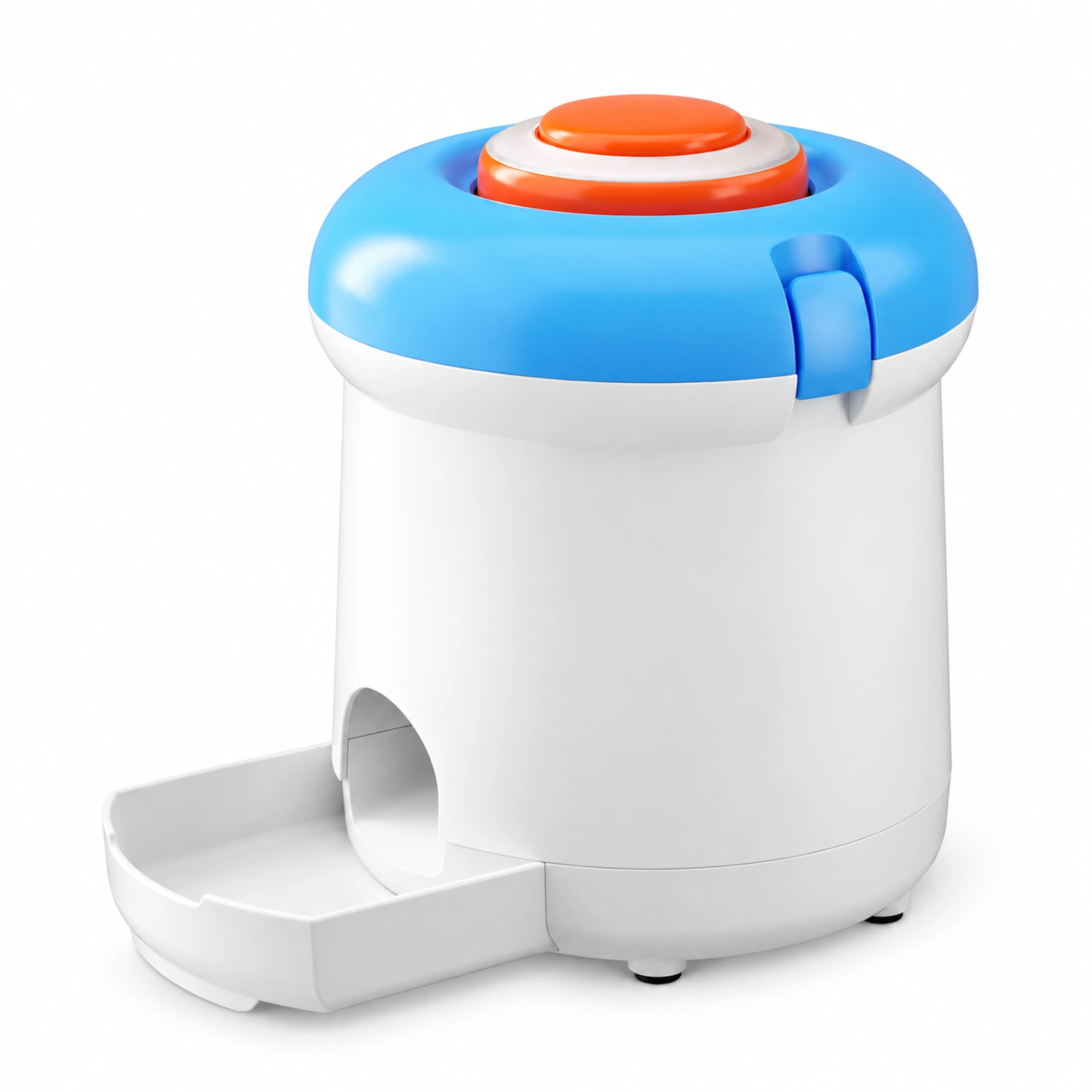
The JoyPetPlay Yellow Roll & Adjust Treat Dumbbell ($20.00) offers an outstanding format for eager chewers. Featuring durable lime end grips and an adjustable central dispensing cylinder, this design invites dogs to nudge, roll, and chase the toy across the floor to release dry kibble. Because the dumbbell rolls continuously under paw and muzzle pressure, the dog cannot anchor the toy between its paws to apply focused carnassial shear. The mental challenge of treat extraction satisfies foraging instincts while keeping jaws actively engaged in non-destructive movement.
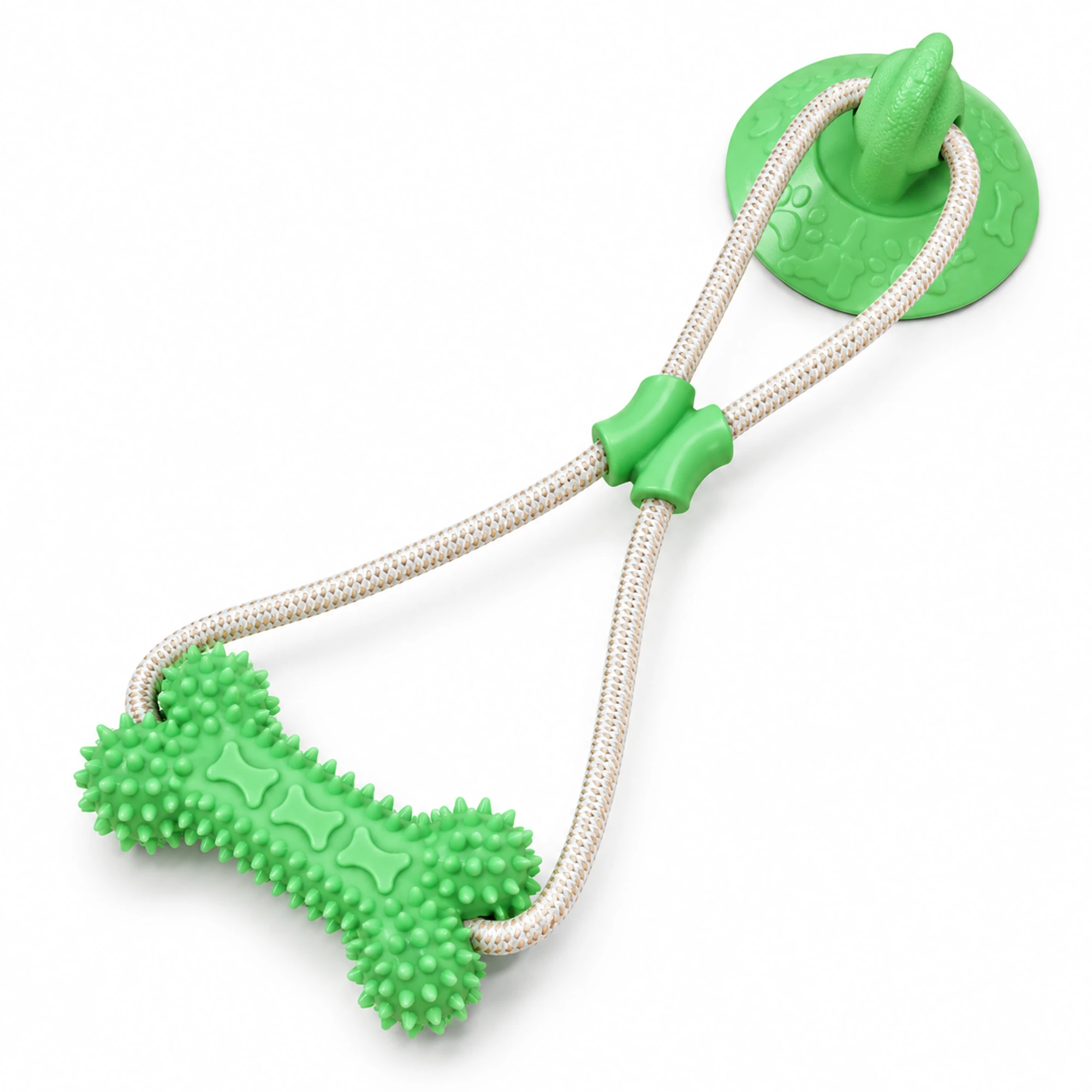
For dogs that crave stationary gnawing, anchored toys provide structured resistance without swallowable loose ends. The JoyPetPlay Green Suction & Rope Bone Tug Game ($8.50) secures firmly to smooth tile or hardwood surfaces using a heavy-duty suction flange. The attached textured rubber chew bone allows energetic dogs to pull and gnaw under tension, but because the bone is securely fastened to the floor anchor, the animal cannot maneuver the entire toy into the back of the mouth.
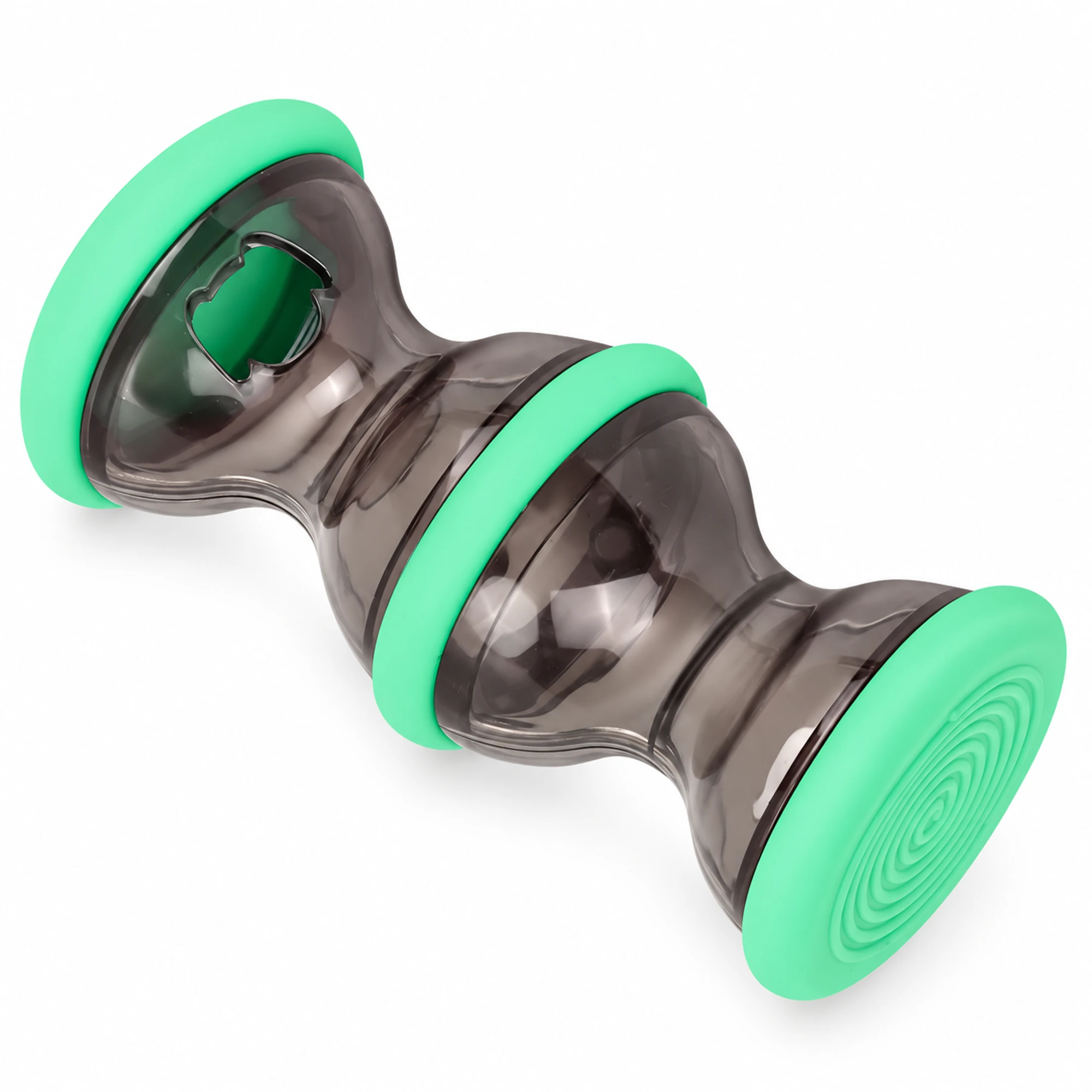
Another helpful alternative is the JoyPetPlay Mint Roll & Reward Toy (Small) ($11.30). Its smoky transparent rolling body with grooved mint end caps encourages gentle sniffing and nudging rather than frantic gnawing. You can also review material resilience standards in our guide on whether rubber dog toys are safe for daily chewing.
Emergency Action Protocol: What to Do If Ingestion Has Already Occurred
Even with careful supervision, accidents can still happen. If you suspect your dog swallowed a toy fragment, follow this immediate action plan:
Remain calm and avoid chasing the dog, which triggers hasty swallowing.
Conduct a gentle oral check if the dog is cooperative, removing loose fragments from the tongue or cheek pouches.
Account for all toy fragments on the floor to gauge the size, shape, and sharpness of the missing component.
Call your primary veterinarian or emergency pet hospital immediately. Describe the material, dimensions, and time of ingestion.
Never induce vomiting at home without direct veterinary instruction. Sharp plastic shards or jagged rubber chunks can cause severe esophageal lacerations on the way back up.
Monitor your dog for clinical obstruction symptoms over the subsequent 48 hours. Key warning signs include persistent vomiting, loss of appetite, painful abdominal guarding, lethargy, and unproductive straining during bowel movements.
Common Ingestion Prevention Questions
Why does my dog eat pieces of toys instead of spitting them out?
Dogs do not possess human concepts of edible versus inedible items. Intense chewing releases soothing endorphins, and when a small fragment detaches in a saliva-filled mouth, the swallowing reflex is easily triggered. Practicing positive trades with high-value treats prevents panic-swallowing driven by resource guarding.
How can I prevent dog swallowing toy fragments during solo play?
Reserve destructible fabric, plush, or thin vinyl toys exclusively for supervised interactive games. During unsupervised periods, provide sturdy rolling puzzle feeders or durable food-dispensing toys that encourage licking and nudging rather than stationary gnawing.
Can a dog digest rubber or plastic toy pieces?
Synthetic polymers, vulcanized rubbers, and dense plastics cannot be broken down by canine gastric acids or digestive enzymes. While tiny smooth fragments may occasionally pass through the digestive tract, larger or jagged pieces risk lodging in the pylorus or intestinal loops, causing dangerous blockages.