Finding shredded plush fabric scattered across your living room rug is an exhausting routine. When a dog tears through every new plaything within minutes, it is rarely acting out of spite or stubbornness. Biting, shaking, and dissecting objects are wired directly into canine predatory motor sequences. These actions also provide physical relief when a dog carries extra energy or feels nervous. Once you recognize the biological triggers behind this behavior, you can shield your pet from foreign body hazards and guide strong jaws toward durable, rewarding toys.
Solving toy destruction requires a clear three-part plan: identify the exact drive fueling the chewing, select materials engineered for extreme mechanical force, and build consistent household boundaries around playtime.
Why Dogs Destroy Toys: Instinct, Boredom, and Stress
Domestic canines inherit an innate predatory loop from ancestral hunters: search, stalk, chase, catch, bite, kill, and dissect. For dogs with high prey drive, a soft squeaking toy replicates small prey with striking accuracy. The squeak mimics distress calls, prompting the dog to isolate the sound chamber, rip apart seams, and gut the interior fiberfill. Once the squeaker is dead and the stuffing is loose, the biological loop clicks shut.
On r/dogs, user khushnand noted that their dog ripped apart plush toys, extracted the batting, and chewed the loose fluff, prompting a search for soft options that contain zero interior stuffing. This chewing habit creates serious medical emergencies. Swallowed polyfill wads and loose squeaker capsules frequently trigger life-threatening mechanical obstructions in the stomach and intestines.
Destruction also spikes when dogs lack daily cognitive tasks or sustained exercise. A bored dog invents its own job, turning living room cushions, footwear, and fragile toys into personal chew targets. Chronic stress and isolation anxiety generate similar destruction patterns, because rhythmic chewing stimulates calming endorphins that soothe an overstimulated nervous system.
Canine Jaw Mechanics: Understanding Destructive Biting Force
Stopping toy destruction begins with respecting canine jaw mechanics. A dog’s jaw operates as a mechanical lever powered by the temporomandibular joint, the large temporalis muscle, and the masseter muscle.
Skull morphology dictates where bite pressure concentrates. Dolichocephalic breeds with narrow, elongated muzzles, such as Greyhounds, show less clamp force at the incisors but can grip tenaciously further back. Mesocephalic and brachycephalic dogs with wide zygomatic arches, such as American Staffordshire Terriers, Rottweilers, and Boxers, generate massive crushing forces along the fourth upper premolars and first lower molars (the carnassial pair).
Laboratory bite studies demonstrate that domestic dogs can produce crushing pressures between 150 psi in medium dogs and well over 320 psi in large working dogs. The carnassials act like heavy industrial shears. When a dog clamps down on a plush seam or thin hollow vinyl toy with its molars, the toy fabric experiences shear stresses far beyond its tensile strength.
Chew Toy Destruction Risk and Material Failure Matrix
| Toy Construction Material | Primary Mechanical Failure Mode | Gastrointestinal Hazard Level | Recommended Durable Alternative |
|---|---|---|---|
| Standard Polyester Plush with Polyfill | Seam separation and unraveling threads | High (Linear foreign body and plication) | Dense rubber suction tugs or flat unstuffed canvas |
| Thin Squeaker Vinyl or Hollow Latex | Puncture, tearing, and squeaker ingestion | High (Esophageal or pyloric obstruction) | Solid natural rubber or thick vulcanized polymers |
| Braided Cotton Rope Strands | Individual thread shedding and swallow | Extreme (Linear bowel perforation) | Solid core thermoplastic elastomers without loose fringe |
| Hard Nylon or Rigid Plastic | Sharp splintering and tooth micro-fractures | Moderate to High (Oral lacerations and chipped enamel) | Flexible food-grade silicone or grooved treat rollers |
Structured Redirection Protocol: The Four-Stage Arousal Management Plan
Stopping toy destruction never requires physical corrections or yelling. Real success comes from teaching your dog where and how to expend natural biting drive.
Stage 1: The Trade and Disengage Response
Never sprint toward a dog that has grabbed a destructible object. Chasing immediately turns the item into high-stakes prey, spiking adrenaline and triggering rapid panic swallowing. Keep smelly, high-value treats nearby in a sealed jar. Toss two or three treats slightly away from the dog. When the dog leaves the object to eat the food, quietly remove the forbidden toy without scolding.
Stage 2: Chew Zone Conditioning
Dogs thrive when they have an explicit area reserved for serious chew sessions. Set up an orthopedic bed or rubber-backed mat in a quiet household spot. Every time you present an approved chew toy, guide your dog to this station. Offer calm praise as your dog settles onto the mat. After several weeks of repetition, your dog will naturally carry high-value chews directly to this zone.
Stage 3: Olfactory and Problem-Solving Redirection
Many power chewers destroy soft items because their brains crave engagement. Rather than handing over a plain rubber bone, introduce enrichment puzzles where your dog must roll, push, and sniff for rewards. Scent-driven foraging tires a dog much faster than mindless chewing, draining nervous energy in a constructive way.
Stage 4: Decompression Chewing Routines
Schedule dedicated chewing periods right after high-intensity activities like neighborhood walks or agility drills. When your dog steps inside with elevated heart rates and cortisol, offering a chilled rubber toy gives them an outlet to settle their nervous system back to baseline.
Immediate Intervention: Chew Zones and Toy Rotation
Ending toy shredding requires a clean sweep of your home and a structured rotation system.
Start by inspecting your floor and toy baskets. Remove every thin fabric plushie, squeaker toy, and brittle novelty item. Power chewers must never have unrestricted access to these vulnerable items when home alone. If your dog still loves tearing textures, learn more about handling polyfill extraction in our guide on dog toy stuffing and what to do when the dog pulls it out.
Establish clear chew stations throughout your living spaces. Teach your dog to take approved chews to a designated bed or mat. Rewarding this behavior reinforces a clear boundary between appropriate chew toys and household rugs or furniture.
Run a disciplined toy rotation schedule. Leaving ten toys strewn across the floor makes each one lose its appeal. Bored dogs frequently destroy familiar toys simply to invent novel stimulation. Keep two or three durable toys available at one time, rotating them every three days to maintain high novelty and curiosity.
Durable Play Outlets: Floor Tugs and Treat Rollers
Preventing toy destruction does not mean eliminating playtime excitement. The most effective approach swaps out flimsy fabric novelties for engineered toys that handle bite forces or convert chewing into mental challenges.
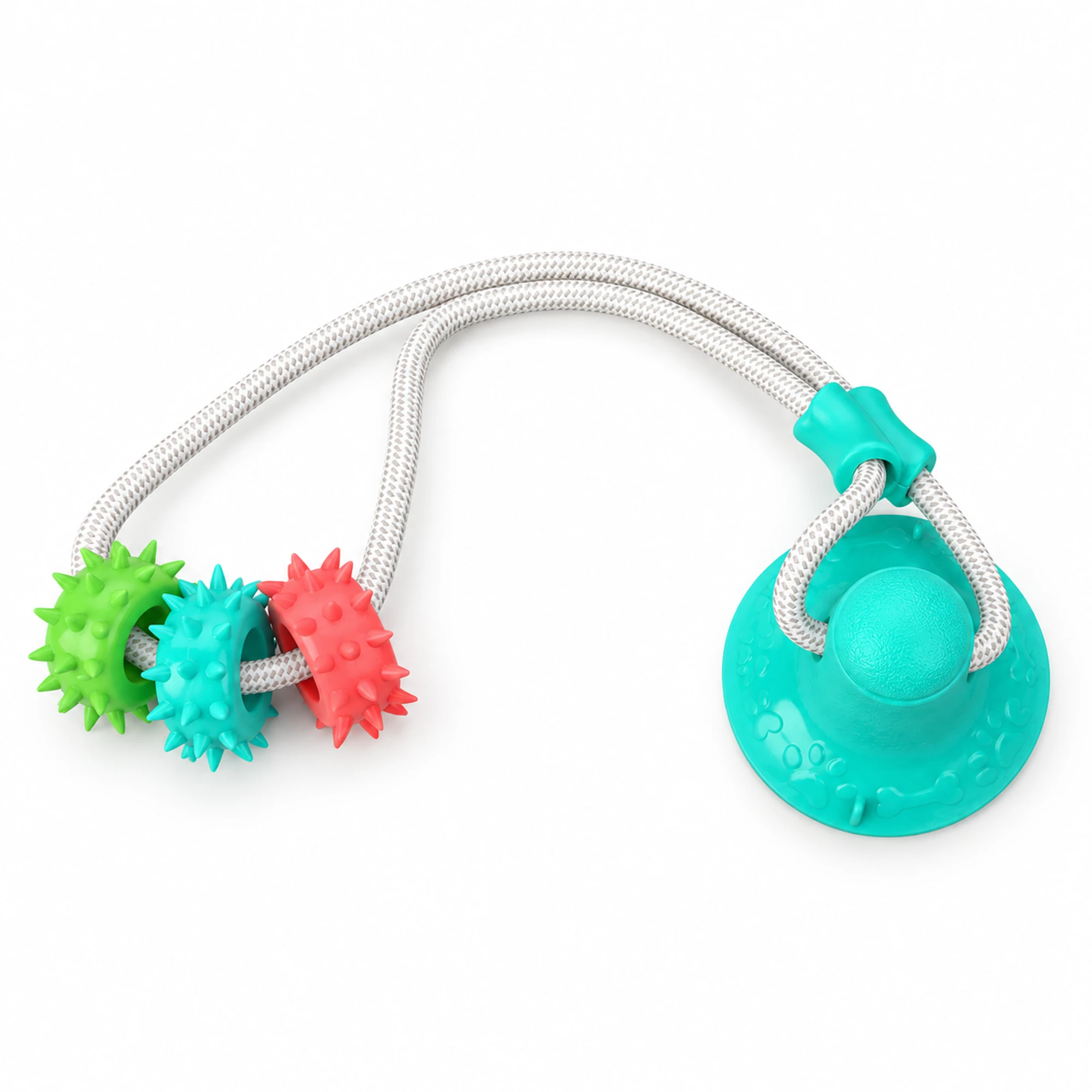
For dogs that crave intense pulling and head-whipping, stationary floor-anchored tugs offer an exceptional workout. The Cyan Three-Ring Suction Tug Toy ($8.50) features a cyan suction base and rope slider connect to three colourful spiked chew rings for a dog to sniff and tug during floor-mounted play. Secured firmly to smooth tile or polished hardwood, the suction base anchors the toy against strong tugging motions, while the textured rings massage gums and satisfy biting urges without fabric seams that unravel.
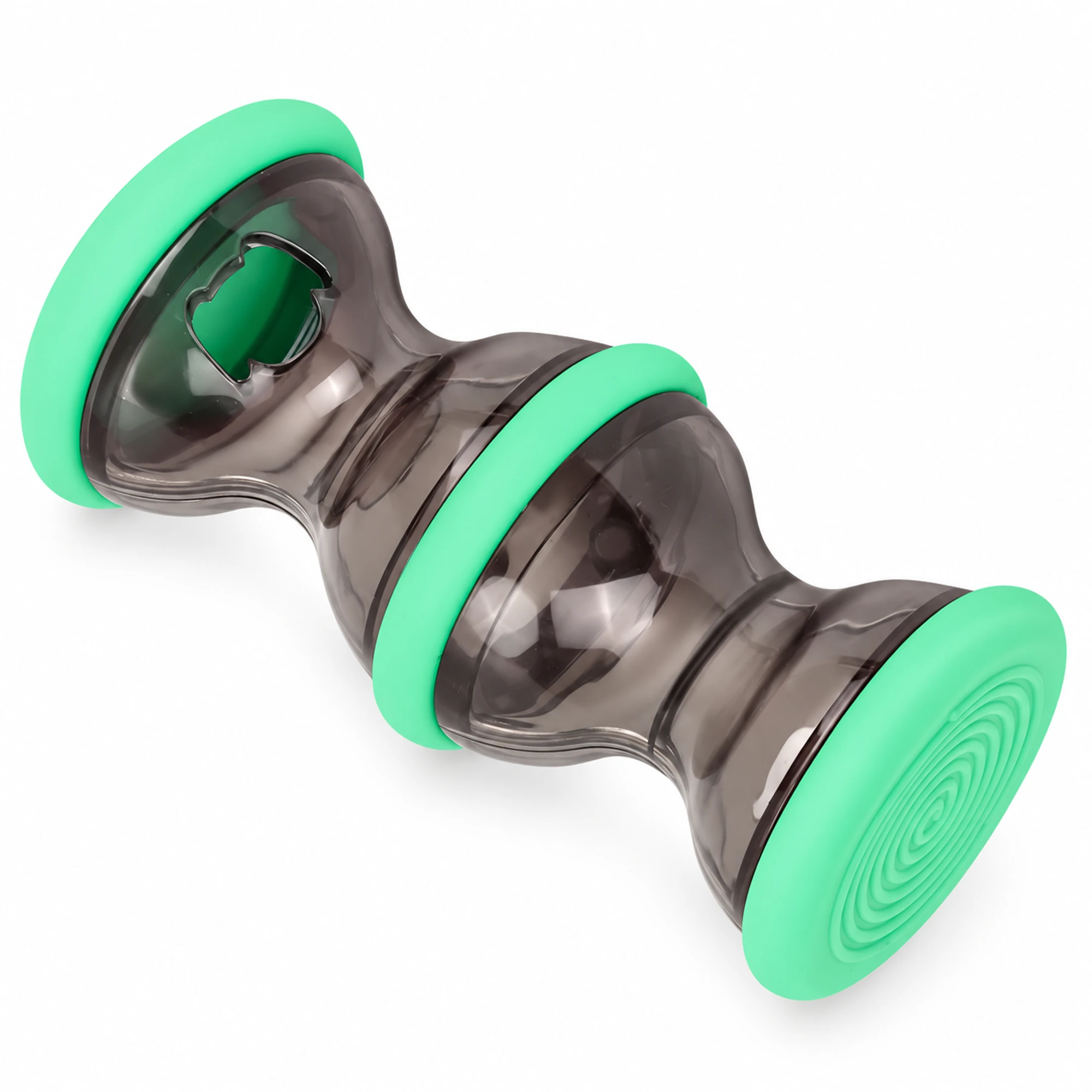
For dogs driven by scent and food exploration, rolling treat dispensers turn jaw power into problem-solving. The Mint Roll & Reward Toy (Small, $11.30) features a see-through treat chamber with grooved mint end caps designed to roll, nudge and discover small dry treats through the side openings. Because the dog must roll the cylinder across the floor to dislodge treats, jaw power shifts from static gnawing to active exploration.
If you want to review material durability and safety testing, explore our detailed breakdown on whether rubber dog toys are safe for powerful chewers.
Dental Safety and Durometer Testing: Protecting Canine Teeth
While selecting durable toys is crucial, choosing materials that are rock-hard can shatter your dog’s teeth. Veterinary dentists routinely treat slab fractures on the upper fourth premolars after dogs chew on cow hooves, whole antlers, dense soup bones, and unyielding nylon plastics.
Canine enamel is remarkably thin, measuring just 0.1 to 0.6 millimeters across the crown surface. When a large dog clamps down on an unyielding surface with hundreds of pounds of pressure, the tooth enamel absorbs the entire force. If the toy has zero give, the tooth shears off, exposing the sensitive dental pulp and necessitating extraction or endodontic surgery.
Dog owners can perform two practical tests before offering any new toy:
- The Thumbnail Impression Test: Firmly press your thumbnail into the surface of the toy. If the material dents slightly and springs back, it possesses the elastic give needed to spare tooth enamel. If your nail makes zero impression and feels like concrete, the toy is too rigid for unsupervised biting.
- The Kneecap Impact Test: Lightly strike the toy against your own kneecap. If the strike causes sharp discomfort, the material is too hard for canine teeth to compress safely.
Stick to toys made with vulcanized natural rubber, food-grade silicone, or flexible polyurethane polymers. These compounds absorb bite force through elastic deformation rather than resisting with rigid brittleness.
Safety Inspection and Long-Term Chew Habits
Humane World for Animals advises that many factors contribute to toy safety depending on dog size, activity level, and preferences, and warns to buy toys of appropriate size because small toys or fragments can be swallowed or lodge in a dog’s throat.
Maintain a weekly check on your dog’s entire toy inventory:
- Inspect for loose chunks, deep bite grooves, or frayed sections that could detach during play.
- Discard any chew item that has worn down small enough to fit behind your dog’s carnassial teeth.
- Wash treat dispensers and grooved rings regularly with warm water and pet-safe detergent to remove bacterial deposits.
- Align material density with your dog’s bite habits. Durable toys must remain safe, and rigid bones or antlers should never replace flexible rubber items.
Frequently Asked Questions
Can you train a dog not to destroy plush toys?
Canines follow deeply ingrained predatory motor patterns when handling plush items. While impulse control games and treat trades help interrupt the behavior, an unsupervised power chewer will almost always shred soft seams eventually. Transitioning to resilient rubber toys and suction tugs provides a much safer long-term solution.
What toys are best for dogs that shred soft toys?
Dogs that shred fabric thrive on heavy-duty floor suction tugs and interactive treat-rolling cylinders. Solid rubber toys satisfy intense jaw pressure, while treat rollers channel mental focus into foraging rather than tearing seams apart.
Why does my dog destroy new toys within minutes of receiving them?
Novel scents and textures trigger a fast spike in canine arousal. High-drive dogs direct this excitement into tearing and dissecting. Engaging your dog in a short interactive play session first burns off initial adrenaline before you leave them with the toy.
How do I tell if a toy is tough enough for an aggressive chewer?
Look for thick-walled natural rubber without external glued parts or exposed squeaker stems. Ensure the toy passes the thumbnail impression test, confirming it flexes under pressure while resisting puncture tears.
What should I do if my dog swallows a piece of a shredded toy?
Immediately determine the dimensions and material of the missing piece. For small, soft fragments, your veterinarian may recommend high-fiber meals and close observation. If your dog swallowed a rigid squeaker, long rope thread, or dense rubber chunk, call your veterinarian promptly for urgent imaging or endoscopic removal.