Canine guardians regularly question whether rubber toys provide genuine long-term safety for everyday chew sessions. When pet parents research are rubber dog toys safe, the definitive clinical answer is yes, provided the article is manufactured from food-grade natural rubber rather than cheap petrochemical plastics laden with toxic chemical softeners.
Natural rubber stands out as one of the most reliable materials in modern pet manufacturing. It combines structural resilience, predictable elasticity, and gentle dental compliance that cushions aggressive jaw impacts. However, the commercial pet market also contains low-cost imported toys crafted from polyvinyl chloride (PVC) and unregulated synthetic blends that present substantial health hazards. Selecting the safest rubber toys requires understanding the underlying polymer chemistry, monitoring dental abrasion ratings, and executing regular household safety inspections.
Vulcanization Polymer Chemistry: Cross-Linked Polyisoprene vs Toxic Vinyl
Evaluating rubber toy resilience requires analyzing the underlying macromolecular architecture of the polymer. Genuine natural rubber begins as latex sap harvested from the Hevea brasiliensis tree, composed primarily of cis-1,4-polyisoprene polymer chains. In its raw form, natural latex is tacky and temperature-sensitive.
Through vulcanization, raw latex is combined with sulfur and subjected to controlled heat and pressure. Sulfur atoms form covalent cross-links between adjacent polyisoprene chains, transforming the material into a three-dimensional elastomeric network. When an adult canine bites down with hundreds of pounds of pressure, these cross-linked polymer strands stretch and flex to absorb kinetic energy, snapping back into their original shape once the jaw releases.
In stark contrast, inexpensive synthetic chew items frequently utilize polyvinyl chloride (PVC) or low-grade synthetic rubbers. PVC is inherently rigid and brittle. To make PVC soft enough for dog toys, manufacturers blend in high concentrations of chemical plasticizers, primarily ortho-phthalates such as DEHP, DINP, and DBP.
These phthalate compounds do not bind covalently to the polymer matrix; instead, they remain freely suspended between plastic molecules. When an active dog chews on a PVC toy, warm saliva, friction, and mouth enzymes cause phthalates to leach directly into the oral mucosa. Toxicological studies associate chronic phthalate exposure with endocrine disruption, liver impairment, and reproductive toxicity in domestic animals. Pure vulcanized natural rubber requires zero phthalate softeners, making it fundamentally safer for canine oral contact.
| Material Classification | Polymer Base Structure | Typical Shore Hardness | Dental Safety Rating | Chemical Leaching Risk | |:---|:---|:---|:---|:---|:---| | Vulcanized Natural Rubber | Cross-linked cis-1,4-polyisoprene | Shore-A 40 to 65 | Superior (Absorbs kinetic impact) | Zero (Food-grade organic latex base) | | Thermoplastic Elastomer (TPE) | Block copolymer matrix | Shore-A 50 to 70 | High (Pliable and elastic) | Very Low (BPA and phthalate-free grades) | | Hard Molded Nylon | Polyamide synthetic resin | Shore-D 75 to 85 | Poor (High slab fracture risk) | Low (Chemically stable but physically hard) | | Soft Plasticized PVC | Polyvinyl chloride with plasticizers | Shore-A 30 to 50 | Moderate (Punctures easily) | High (Toxic phthalate migration into saliva) |
The comparison table above demonstrates why material composition matters just as much as toy dimensions. While plasticized PVC might feel soft to the touch, its chemical leaching risk makes it unacceptable for sustained oral chewing. Conversely, natural rubber delivers an optimal balance of structural strength and non-toxic safety.
The Dental Abrasion Index and the Practical Durometer Test
Canine dental health directly correlates with elastomeric rebound and toy surface friction. A dog’s premolars and molars are covered by an enamel shield measuring less than one millimeter in thickness. Although canine jaws can exert bite pressures exceeding four hundred pounds per square inch, their tooth enamel is brittle when subjected to unyielding resistance.
When canines chew on excessively hard materials like natural antlers, real animal hooves, or hard nylon slabs, the concentrated impact creates vertical slab fractures along the maxillary fourth premolar. Conversely, abrasive toys like standard tennis balls act like sandpaper, wearing down tooth crowns and exposing sensitive pulp canals over time.
Natural rubber provides an ideal dental solution because it possesses low surface abrasiveness and compliant elasticity. To evaluate whether a rubber toy is safe for your dog’s teeth, conduct the fingernail durometer test:
- Position your thumbnail against the thickest chewing ridge of the toy.
- Press inward firmly with moderate thumb pressure for five seconds.
- Observe the indentation. If your nail creates a visible dent that slowly springs back, the rubber falls within the safe forty to sixty-five Shore-A durometer range.
- If the material feels as hard as concrete and leaves no mark, the toy carries an elevated risk of fracturing adult premolars.
Ingestion Hazards: Mechanical Plication vs Smooth Evacuation
While natural rubber is structurally durable, no toy is completely indestructible. Determined power chewers can eventually shear through rubber edges if left unmonitored for extended periods.
When a canine swallows a toy fragment, digestive outcomes depend heavily on the size, shape, and elasticity of the ingested material. Hard, sharp plastic shards can lacerate esophageal linings or perforate the intestinal wall. In contrast, small smooth fragments of natural rubber often pass through the gastrointestinal tract without damaging mucosal surfaces, provided they clear the gastric pylorus and ileocecal junction.
However, large rubber chunks exceeding thirty millimeters in diameter can easily create mechanical obstructions in the duodenum or jejunum. An intestinal blockage halts nutrient transit, cuts off localized blood flow, and requires emergency exploratory surgery. To mitigate this hazard, dog owners must select rubber toys sized generously larger than the dog’s oral cavity and retire items the moment surface tears exceed two millimeters in depth.
Safe Chew and Treat Toy Options for Daily Play
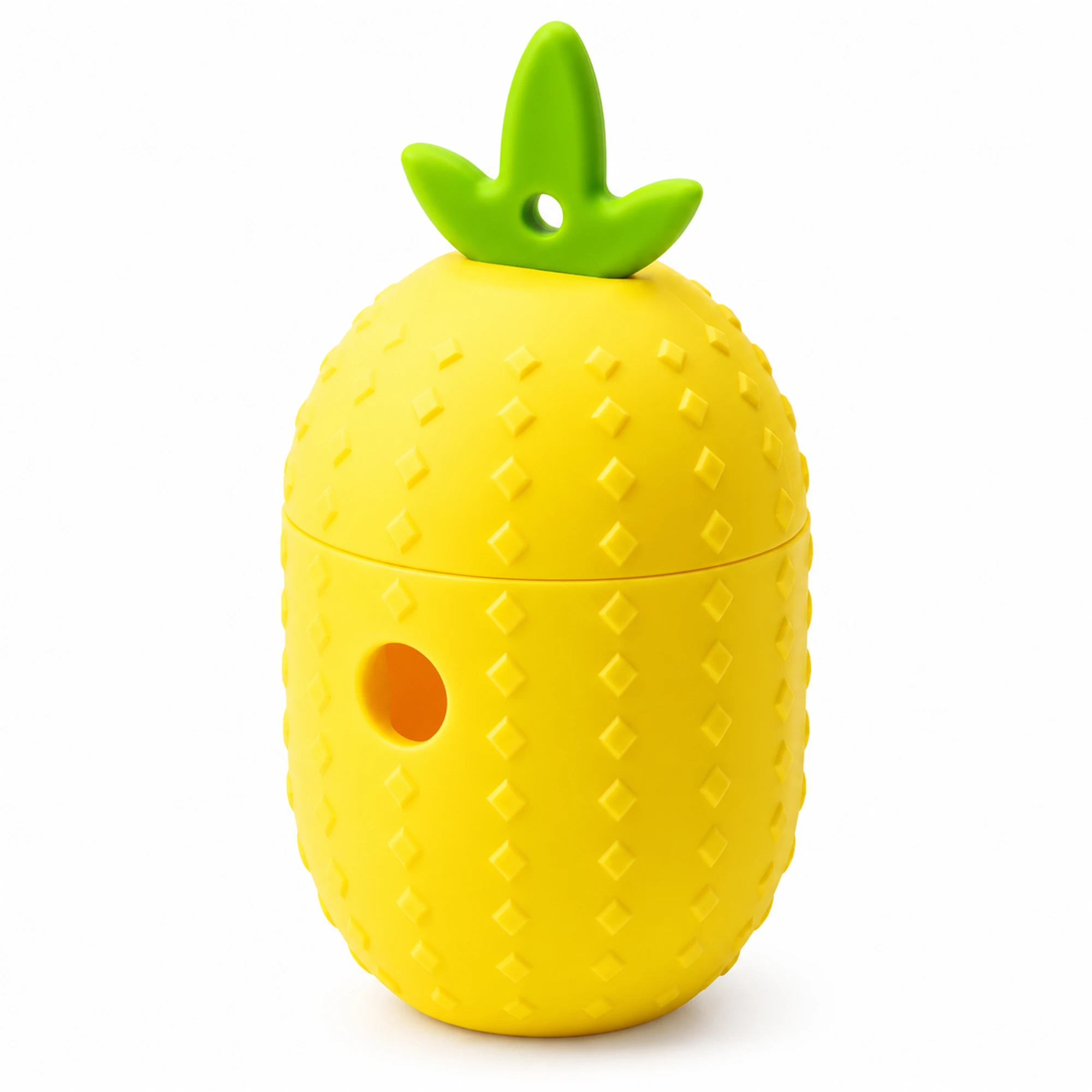
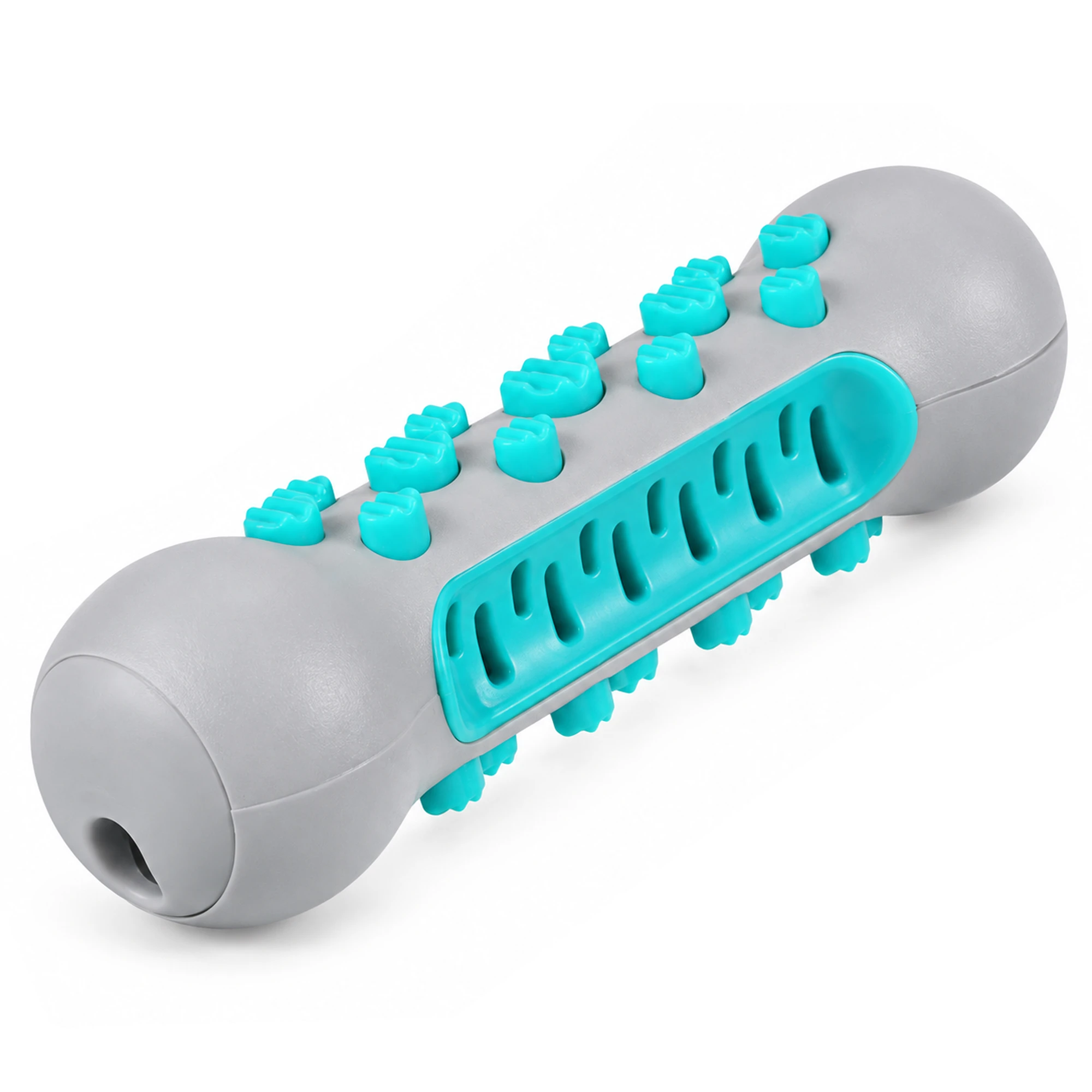
The JoyPetPlay collection features two high-grade rubber options engineered specifically to combine non-toxic purity with engaging enrichment mechanics:
1. Yellow Pineapple Roll and Treat Toy
The Yellow Pineapple Roll and Treat Toy is molded from heavy-duty, food-grade vulcanized natural rubber. Shaped like a textured pineapple with leafy crown details, this toy serves as both an interactive treat dispenser and an ergonomic chew article.
The exterior body features deep horizontal grooves that can be filled with peanut butter, plain pumpkin puree, or wet dog food. As your dog licks and chews to extract the food, the pliable rubber ridges flex against teeth and gums, sweeping away plaque without scraping enamel. The cylindrical form rolls unpredictably across floor surfaces, engaging your dog’s predatory pursuit drive during independent indoor sessions.
2. Blue and Gray Bone Dog Toy
For dogs that prefer classic skeletal silhouettes, the Blue and Gray Bone Dog Toy offers an ultra-durable alternative to splintering animal bones. Crafted with high tensile strength rubber, this two-tone bone features bulbous ends that allow canines to anchor the toy securely between their forepaws.
The central shaft exhibits raised circular nubs that massage periodontal tissues as the dog clamps down with rear molars. The vulcanized rubber matrix absorbs intense crushing pressure without developing sharp edges or splintering into brittle shards. Its balanced density makes it suitable for indoor fetch, gentle outdoor retrieving, and controlled daily chewing sessions.
Practical Supervision, Cleaning, and Maintenance Protocols
To ensure rubber dog toys remain completely safe throughout their operational lifespan, implement these straightforward maintenance standards:
- Supervise Initial Play: Always monitor your dog during their first three sessions with any new rubber toy. Observe their chewing technique to confirm they are gnawing surface ridges rather than attempting to slice through structural seams.
- Routine Sanitization: Saliva and food residues create a breeding ground for harmful oral bacteria. Wash rubber toys weekly in warm water with mild, fragrance-free dish soap. Use a small bottle brush to scrub internal treat chambers.
- Avoid Harsh Heat: Never expose natural rubber toys to boiling water, high-heat drying cycles in dishwashers, or direct outdoor sunlight for extended days. Excessive thermal energy accelerates polymer chain degradation, making the rubber brittle or sticky.
- Enforce Retirement Benchmarks: Inspect toys weekly under good lighting. Discard rubber toys immediately if you detect missing pieces, deep perimeter gouges, or tacky surface textures that indicate chemical polymer breakdown.
Frequently Asked Questions
Can natural rubber dog toys cause allergic reactions in pets?
Canine latex allergies are exceedingly rare in veterinary medicine. The vast majority of dogs tolerate vulcanized natural rubber without any dermal or gastrointestinal sensitivity. However, if your pet develops localized lip swelling, redness, or contact hives after chewing a new natural rubber toy, remove the item immediately and consult your veterinarian.
How do I tell if a rubber dog toy contains toxic phthalates before buying?
Examine product labeling for explicit food-grade, BPA-free, and phthalate-free certifications. In addition, perform the olfactory sniff test. Safe natural rubber possesses a mild, earthy organic scent. In contrast, plasticized PVC toys emit a strong, chemical petrochemical odor that smells like a new vinyl shower curtain. Avoid any toy with a sharp synthetic smell.
What should I do if my dog accidentally swallows a piece of a rubber toy?
If your dog swallows a rubber fragment larger than a coin, contact your primary veterinary clinic or emergency animal hospital immediately. Do not induce vomiting at home without veterinary instruction, as broad objects can lodge in the esophagus during regurgitation. Monitor your dog closely for signs of intestinal obstruction, including repeated vomiting, refusal to eat, lethargy, and abdominal tenderness.