Living with a powerful, determined chewer can quickly become an exercise in continuous frustration and financial drain. Within forty-eight hours of bringing home a brand-new plush duck or lightweight squeaker bone, you find yourself sweeping up shredded fabric fluff or fishing plastic shards out of your dog mouth. In response, desperate pet owners often swing to the opposite extreme: purchasing rock-hard nylon chews, bleached beef marrow bones, or dried deer antlers advertised as indestructible.
While those ultra-hard products certainly resist destruction, they introduce a far more severe problem: expensive and painful canine dental emergencies. Veterinary dentists frequently treat slab fractures on the upper fourth premolars (the carnassial teeth) caused by power chewers bearing down on unyielding surfaces.
Choosing the right chew toy for a strong jaw requires understanding canine biomechanics, material density, and selecting toys that offer safe structural give while redirecting intense gnawing energy.
The Power Chewer Paradox: Balancing Extreme Durability with Dental Safety
Canine jaws are evolutionary masterpieces designed to grip, crush, and shear through tough materials. Large breeds and terrier mixes can easily generate bite forces exceeding three hundred pounds per square inch. When a dog bites down with full muscular force on an object that has zero flex, that entire kinetic load rebounds directly into the tooth enamel.
The upper fourth premolar is particularly vulnerable. This tooth functions as a shearing blade against the lower first molar. When a dog clamps down on an unyielding deer antler or hard nylon toy with the side of their mouth, the concentrated lateral leverage shears off a slab of outer enamel and dentin. This exposes the sensitive pulp canal underneath, resulting in immediate nerve pain, microbial infection, and the eventual need for surgical tooth extraction or expensive root canal therapy.
A safe chew toy must yield slightly under maximum jaw pressure. True durability relies on material elasticity and tear resistance rather than sheer unyielding rigidity.
The Veterinary Thumbnail Indentation Test
Veterinary dentists recommend a practical rule of thumb when evaluating potential chew toys: the thumbnail indentation test.
Before purchasing any chew toy, press the edge of your thumbnail firmly into the surface of the material:
- If your thumbnail leaves a slight, temporary indentation that rebounds after release, the material has sufficient elasticity to cushion canine enamel during biting.
- If the material is so dense that your nail cannot make a visible dent, or if tapping the toy against your knee makes an audible solid clack, the toy is too hard for safe unsupervised chewing.
This test quickly filters out dangerous novelty items like baked cow hooves, whole antlers, synthetic composite woods, and rigid nylon bones that routinely cause dental trauma.
The Science of Vulcanized Natural Rubber
For heavy chewers, vulcanized natural rubber represents the gold standard of chew toy materials. Natural rubber is harvested as liquid latex from the Hevea brasiliensis tree and processed through heat vulcanization with sulfur. This chemical process creates cross-linked polymer chains that give the rubber extraordinary tensile strength and elastic recovery.
When a power chewer sinks their canines into vulcanized rubber, the material flexes and yields momentarily, absorbing the kinetic force of the bite. Once the jaw relaxes, the cross-linked polymers snap back to their original shape without developing fractures. Quality natural rubber is also naturally free from toxic chemical plasticizers, heavy metal stabilizers, BPA, and phthalates, ensuring that prolonged oral contact remains completely safe.
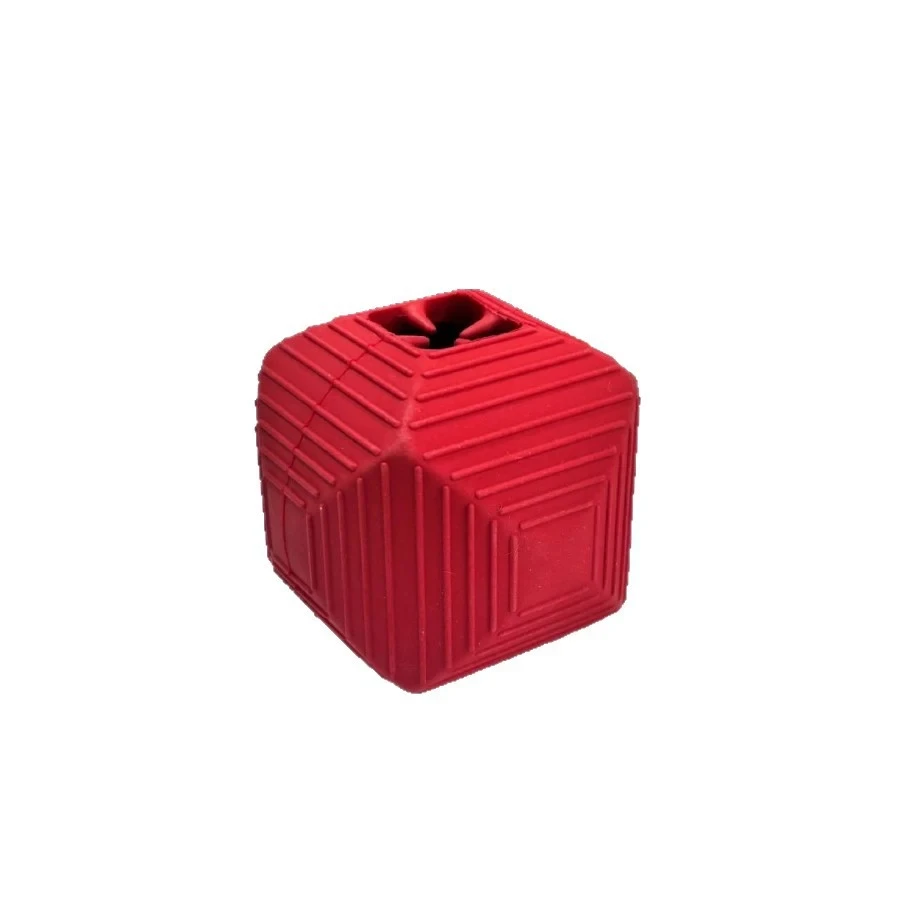
Deep Dive: The Dark Red Ribbed Cube Dog Toy
The Dark Red Ribbed Cube Dog Toy is engineered specifically for dogs that demolish standard rubber balls within days. Manufactured from dense, high-durometer vulcanized rubber, this cube combines structural mass with smart mechanical features.
The exterior walls feature deep horizontal and vertical ribs. When your dog bites down on the cube, these flexible rubber ribs fold under tooth pressure, scraping mechanically along the tooth surfaces down to the gum line. This action disrupts bacterial biofilms and soft plaque accumulation without abrasive wear on enamel.
The cube geometry provides unpredictable, erratic bounces when thrown across a room, preventing dogs from easily settling into stationary grinding habits. Additionally, the central hollow chamber can be packed with wet kibble, canned dog food, or smooth pumpkin puree and frozen solid before offering. The frozen filling encourages slow, meditative licking and gentle gnawing rather than brute force biting, extending chewing sessions up to forty-five minutes.
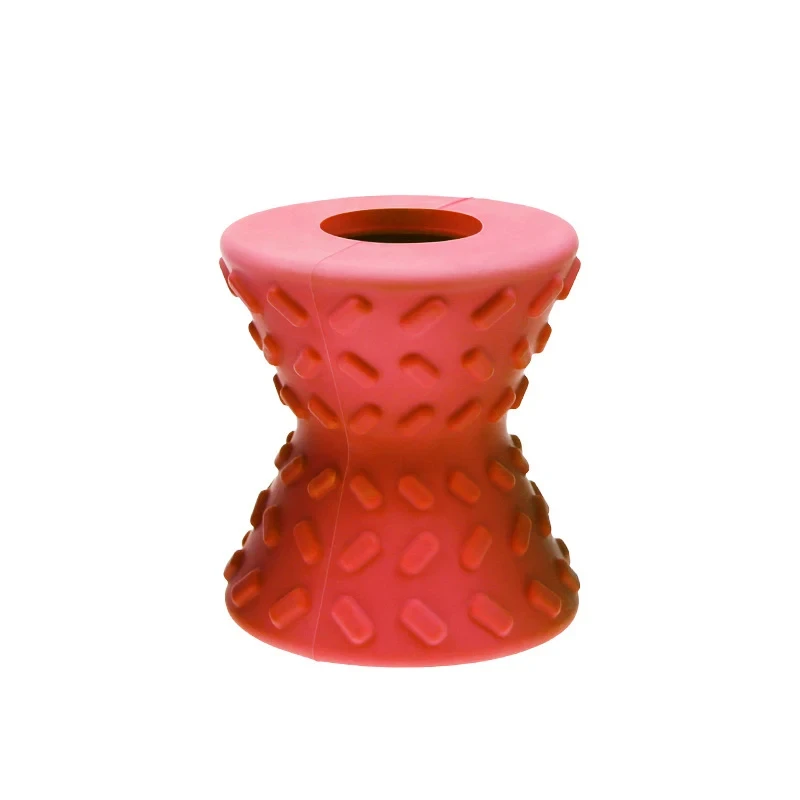
Deep Dive: The Red Textured Spool Dog Toy
Dogs often struggle to hold spherical or cylindrical chew toys steadily between their paws, leading to awkward jaw angles that increase dental stress. The Red Textured Spool Dog Toy solves this biomechanical challenge through its dual-flange hourglass architecture.
The wide circular flanges at both ends allow dogs to comfortably pin the toy against the carpet using their front paws while applying deliberate gnawing pressure with their posterior premolars. The central barrel is reinforced with thick rubber walls that withstand sustained bilateral compression without collapsing or tearing.
Covering the exterior surface are rounded sensory nodules that massage the gums and stimulate salivation. Canine saliva contains natural bicarbonate and antimicrobial enzymes that help neutralize oral acidity and protect teeth between regular brushings. The spool shape also functions as a dual-ended fetch toy, bouncing upright on its rims when tossed across outdoor turf.
Comprehensive Chew Toy Material Comparison
Understanding how different toy materials perform across safety and durability metrics allows you to make informed purchases:
| Material / Toy Type | Bite Force Resistance | Dental Enamel Safety | Ingestion Hazard Level | Recommended Chewer Profile |
|---|---|---|---|---|
| Vulcanized Natural Rubber (JoyPetPlay Red Cube & Spool) | High (absorbs shock through elastic recovery) | High (passes the thumbnail test, cushions enamel) | Very Low (resists tearing into ingestible chunks) | Power chewers, bully breeds, energetic working dogs |
| Low-Grade Synthetic TPR / Vinyl | Low (punctures easily under moderate pressure) | Moderate (soft, but tears rapidly into sharp pieces) | High (sharp plastic shards cause bowel perforations) | Gentle toy breeds and teething puppies only |
| Bleached Rawhide Chews | Moderate (softens with saliva after prolonged gnawing) | Moderate (softens, but causes painful dental wedges) | Extreme (swallowed expanding chunks cause intestinal blockages) | Not recommended for unsupervised heavy chewers |
| Dried Deer Antlers & Beef Hooves | Extreme (resists all canine jaw force indefinitely) | Very Low (causes frequent carnassial tooth slab fractures) | Moderate (splinters into sharp bone needles) | Strictly avoided for aggressive power chewers |
| Rigid Synthetic Hard Nylon | Extreme (virtually impossible to puncture) | Very Low (acts like concrete against canine enamel) | Moderate (creates micro-shavings that irritate stomach lining) | Low-energy chewers with gentle mouth pressure only |
The Psychology of Chewing and Stress Reduction
Chewing serves as a fundamental neurological coping mechanism for domestic dogs. When a dog engages in rhythmic chewing, the brain stimulates the trigeminal nerve and triggers the release of endorphins and dopamine. This biochemical cascade lowers heart rates, reduces systemic cortisol levels, and activates the parasympathetic nervous system, helping dogs transition into a calm, relaxed emotional state.
Dogs chew for various underlying reasons:
- Teething Discomfort: Young dogs between four and eight months chew to soothe inflamed gums as permanent adult teeth erupt.
- Mental Under-Stimulation: High-drive dogs chew when their environment lacks sufficient problem-solving opportunities.
- Separation Distress: Anxious dogs chew near entry doors or household belongings to relieve departure panic through displacement activity.
By recognizing the emotional origin of chewing, you can pair the Dark Red Ribbed Cube or Red Textured Spool with calming enrichment routines, offering frozen chews twenty minutes before departure to establish a relaxed household atmosphere.
Inspection, Sanitization, and Retirement Rules
Even the most durable vulcanized rubber toys experience material fatigue over months of daily gnawing. Establishing regular inspection protocols prevents accidental ingestion of degraded fragments.
Weekly Physical Audit
Examine your dog chew toys every weekend under bright lighting:
- Flex the Toy: Bend the rubber in multiple directions to expose hidden cracks or micro-tears along structural seams.
- Surface Feel: Check for rough, jagged rubber burrs where your dog has concentrated their bite. Small burrs can be smoothed with a nail file.
- The Golf Ball Standard: If chunks have separated from the toy that are smaller than a regulation golf ball, or if the overall size has eroded enough to fit entirely behind your dog rear molars, retire and replace the toy immediately to avoid choking risks.
Sanitization and Dishwasher Safety
Rubber chew toys collect dried saliva, dust, and food particles, creating a breeding ground for bacterial colonies. JoyPetPlay vulcanized rubber toys are top-rack dishwasher safe. Run them on a standard cycle without heated dry, using gentle unscented detergent. Alternatively, soak the toys in a sink with warm water and white distilled vinegar for twenty minutes, scrubbing inside hollow treat cavities with a bottle brush, then allow them to air dry completely.
Frequently Asked Questions
Is there genuinely any such thing as an indestructible dog toy?
No dog toy is truly indestructible. Any material hard enough to withstand the absolute maximum bite force of a large dog without ever showing wear will inevitably be hard enough to crack canine teeth. Responsible toy engineering focuses on calculated durability: selecting resilient elastomeric materials that offer long service life while yielding safely under jaw compression to protect tooth enamel.
How long should a heavy chewer be allowed to chew each day?
Chewing sessions should ideally last between twenty and forty-five minutes at a time. Prolonged uninterrupted chewing exceeding an hour can cause muscular fatigue in the temporomandibular joint and irritate the gum margins. Offering a frozen, treat-stuffed Dark Red Ribbed Cube for thirty minutes twice daily provides optimal mental decompression without overworking jaw musculature.
What should I do if my dog swallows a piece of rubber?
If you notice a piece missing from a toy and suspect your dog swallowed it, observe your pet closely for signs of gastrointestinal distress: vomiting, loss of appetite, lethargy, abdominal tenderness, or inability to keep water down. Small smooth rubber crumbs usually pass harmlessly through the digestive tract within forty-eight to seventy-two hours. However, if your dog shows any signs of distress or if a large chunk was ingested, contact your veterinarian immediately for radiographic evaluation.
Why does my dog chew toys to pieces instead of playing fetch?
Chewing and fetching tap into different components of the canine predatory sequence. Fetching satisfies the chase and capture instinct, whereas chewing satisfies the dissect and consume phase. Dogs with strong possession drives or high bite drive naturally prefer the tactile oral pleasure of gripping and deconstructing objects. Providing dedicated heavy-duty chew items like the Red Textured Spool allows them to express this innate need safely without destroying household furniture.