Living in a busy household shared by both cats and dogs inevitably creates moments of playful crossover. You might walk into the family room to find your golden retriever nudging a tiny plush mouse across the rug, or your terrier batting at a fluttering feather teaser hanging from a doorknob. At first glance, this curiosity appears harmless and charming. However, allowing dogs to play with cat toys presents genuine veterinary risks that can escalate into medical emergencies within seconds.
Canines and felines possess fundamentally contrasting predatory behaviors, physical jaw architectures, and destructive capacities. A toy engineered to withstand the delicate swat of a nine-pound domestic shorthair quickly disintegrates under the crushing bite force of an energetic dog. Reviewing foundational cat toy safety rules helps owners distinguish between harmless curiosity and genuine danger, protecting both pets while providing tailored, enriching play opportunities for every animal in the home.
The Biomechanical Divergence: Why Feline Toys Cannot Withstand Canine Jaws
To evaluate whether dogs can safely interact with feline playthings, one must first examine the biomechanics of how each species plays. Cats are opportunistic ambush predators. In the wild, their hunting sequence consists of stealthy stalking, rapid sprinting, paw batting, and a precise, localized bite to the neck of tiny prey. Consequently, cat toys are designed around visual agility, lightweight construction, high-frequency vibration, and delicate aerial movement. They feature micro-components such as tiny bells, synthetic feathers, thin nylon strings, and pliable hollow plastic spheres.
Canines follow an entirely different evolutionary hunting pattern. Dogs are cursorial pursuit predators that capture targets using endurance chasing, powerful jaw clamping, violent head shaking, and sustained gnawing. Even a diminutive toy breed such as a French Bulldog or a Yorkshire Terrier can generate biting pressures between 150 and 200 pounds per square inch. Medium and large sporting breeds, including German Shepherds and Labradors, routinely exceed 250 to 300 pounds per square inch of bite force.
When a dog bites into a lightweight cat toy, the structural integrity of the object fails almost instantaneously. Thin plastic shells collapse into razor-sharp fragments. Glued fabric seams split apart under canine saliva and shearing premolars. What began as mild exploratory mouthing frequently transitions into accidental ingestion of fragmented parts.
Critical Veterinary Hazards of Cat Toys for Dogs
Veterinary emergency clinics treat thousands of cases each year involving foreign body ingestion, many of which stem from dogs chewing items meant exclusively for cats. Ingesting delicate feline playthings presents a severe dog foreign body hazard that veterinary surgeons take seriously. The specific hazards fall into several well-documented clinical categories.
Linear Foreign Bodies and Bowel Plication
Linear foreign bodies represent one of the most perilous surgical emergencies in veterinary medicine. Cat toys frequently incorporate dangling yarns, satin ribbons, elastic cords, or braided nylon tethers designed to trigger feline stalking instincts.
When a curious dog swallows a string-based toy, one end of the cord frequently anchors itself in the pylorus of the stomach or the base of the tongue. As the digestive tract attempts natural peristaltic contractions to propel the remaining length downward through the small intestine, the anchored cord pulls taut. The intestine crawls up along the taught string, bunching up accordion-style in a process known as plication.
Over a matter of hours, the taut string acts like a cheese wire, cutting through the mesenteric border of the intestinal wall. This causes leakage of contaminated gastrointestinal contents into the peritoneal cavity, resulting in acute peritonitis, systemic sepsis, and potentially fatal septic shock. Surgical intervention to repair plicated intestines is complex, traumatic, and carries substantial veterinary expenses.
Choking and Upper Airway Obstruction
Canines investigate their world primarily through oral grasping. Because feline toys are scaled down to match the compact oral cavity of a cat, they pose an extreme choking risk for dogs. Miniature plush mice, jingle bells, felt pom-poms, and ping-pong balls match the exact diameter of a dog pharynx.
If a dog snatches a cat mouse while running or catches an errant feline ball mid-air, the object can easily bypass the epiglottis and lodge directly over the trachea. Total airway occlusion results in acute hypoxia, cyanosis, loss of consciousness, and permanent brain damage or cardiac arrest within four to six minutes unless immediate Heimlich maneuvers or emergency tracheostomy protocols are administered.
Gastrointestinal Obstruction from Miniaturized Non-Linear Parts
Even when a swallowed object does not obstruct the airway, it remains a severe danger inside the digestive tract. Tiny plastic bells, squeaker capsules, plastic faux eyes, and microchip rattle cores cannot be broken down by gastric stomach acid.
These objects can remain trapped in the stomach for weeks, causing chronic vomiting, anorexia, and weight loss, or they can travel down into the narrow duodenum and ileum where they cause complete mechanical blockages. A complete bowel obstruction cuts off local blood supply, causing ischemic necrosis of the bowel tissue within twenty-four hours.
Sharp Plastic Lacerations and Internal Bleeding
Many interactive cat toys utilize thin, injection-molded polystyrene or lightweight polycarbonate shells. These brittle plastics are engineered to roll with minimal friction across carpets when tapped by a cat paw.
When subjected to canine bite forces, these plastics do not flex; they shatter. The resulting shards have needle-sharp points and jagged edges capable of inflicting severe oral lacerations, puncturing the soft palate, perforating the esophagus, or slicing the mucosal lining of the stomach.
Motorized Units and Battery Leakage
Modern cat play often involves motorized flapping birds, rolling electronic balls, and automated wand devices. These devices house tiny lithium button cells or miniature rechargeable batteries.
If a dog chews into an automated feline toy, canine teeth can easily puncture the battery casing. Punctured lithium batteries generate extreme exothermic reactions, creating thermal tissue burns in the mouth and esophagus. Furthermore, leaking alkaline electrolytes cause severe liquefactive chemical necrosis within hours, requiring intensive critical care.
Can Dogs Eat Catnip? Canine Biology and Nepetalactone
A frequent concern among multi-pet owners is the presence of catnip (Nepeta cataria) inside feline toys. Pet owners often wonder whether the herb itself is toxic to canines if a dog rips open a catnip-stuffed kicker.
Catnip is completely non-toxic to dogs. The volatile organic compound in catnip that affects felines is nepetalactone, an iridoid terpene that binds to olfactory receptors in cats, mimicking feline pheromones and inducing temporary euphoria, rolling, and playful hyperarousal.
Canines possess entirely different olfactory and neurochemical receptor pathways. In dogs, nepetalactone produces no euphoric response whatsoever. In fact, when consumed in modest amounts, catnip acts as a mild sedative and calmative for dogs. Some veterinarians occasionally suggest small amounts of catnip tea to soothe canine motion sickness or mild anxiety.
However, if a dog tears open a cat toy and ingests large quantities of concentrated, dried catnip leaf, the rough plant fibers can trigger physical gastric irritation. Symptoms typically include mild vomiting, excessive drooling, and transient diarrhea. The genuine peril remains the synthetic fabric, polyester stuffing, and plastic pellets surrounding the catnip, rather than the dried botanical matter itself.
Cat and Dog Toy Safety Comparison
To highlight the fundamental physical differences, the following table summarizes how key design factors contrast between feline products and canine-safe gear:
| Physical Factor | Feline Toy Design | Canine-Safe Toy Design |
|---|---|---|
| Primary Material | Thin plastic, feathers, ribbons, unreinforced plush | Heavy-duty vulcanized natural rubber, thick nylon, double-stitched ballistic canvas |
| Target Bite Force | Under 15 pounds per square inch | 150 to over 300 pounds per square inch |
| Component Fastening | Light glue, small staples, thin hanging cords | Molded single-piece construction or deeply recessed reinforced anchors |
| Sizing Standard | 1 to 3 inches in diameter | Sized larger than the canine jaw width to prevent swallowing |
| Digestive Risk Profile | High risk of linear foreign body and rapid choking | Engineered to yield or resist fragmentation during mastication |
Catalog Showcase: Sturdy Canine Solutions Versus Feline Teasers
Understanding the differences between feline and canine engineering becomes evident when comparing specific products from the JoyPetPlay collection.
Feline Vertical Movement Devices
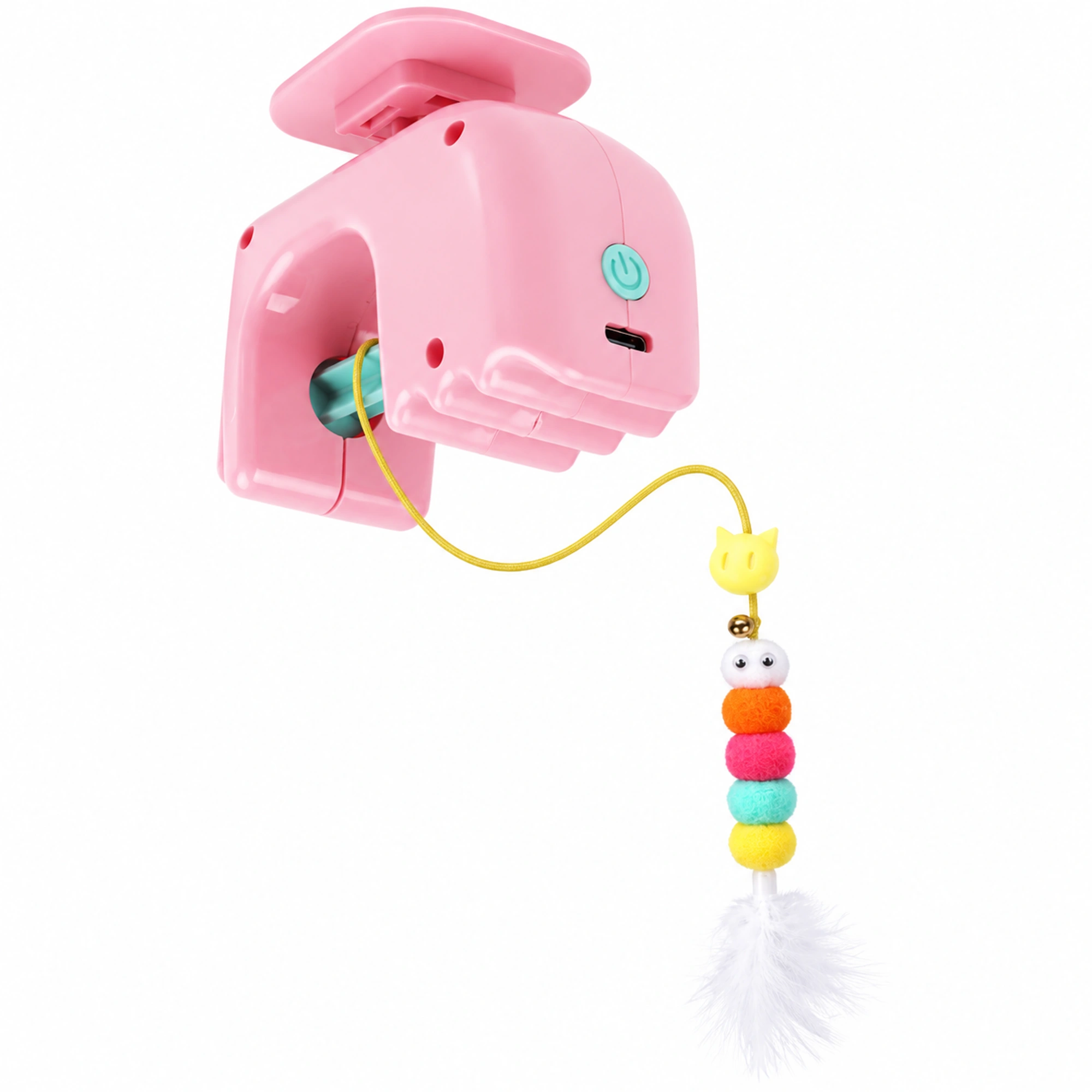
Consider automated motion toys designed specifically for vertical feline agility. The Pink Hanging Cat Teaser ($6.94) features an overhead motor mount, a motorized reel, and a suspended lure designed exclusively for featherweight paw batting. When hung from a door frame or ceiling mount, it mimics the unpredictable flutter of small prey, encouraging cats to leap and stretch safely.
However, if an enthusiastic dog is allowed access to this hanging teaser, the thin cord and motorized mechanism will snap instantly under a canine bite. The suspended cord presents an immediate linear entanglement and ingestion hazard for dogs. This piece of feline equipment must remain installed in high zones completely off-limits to household dogs.
Canine-Approved Treat Rolling and Suction Play
When pet owners want engaging, self-directed toys that can safely coexist in shared living rooms, durable canine puzzle gear provides the ideal solution.
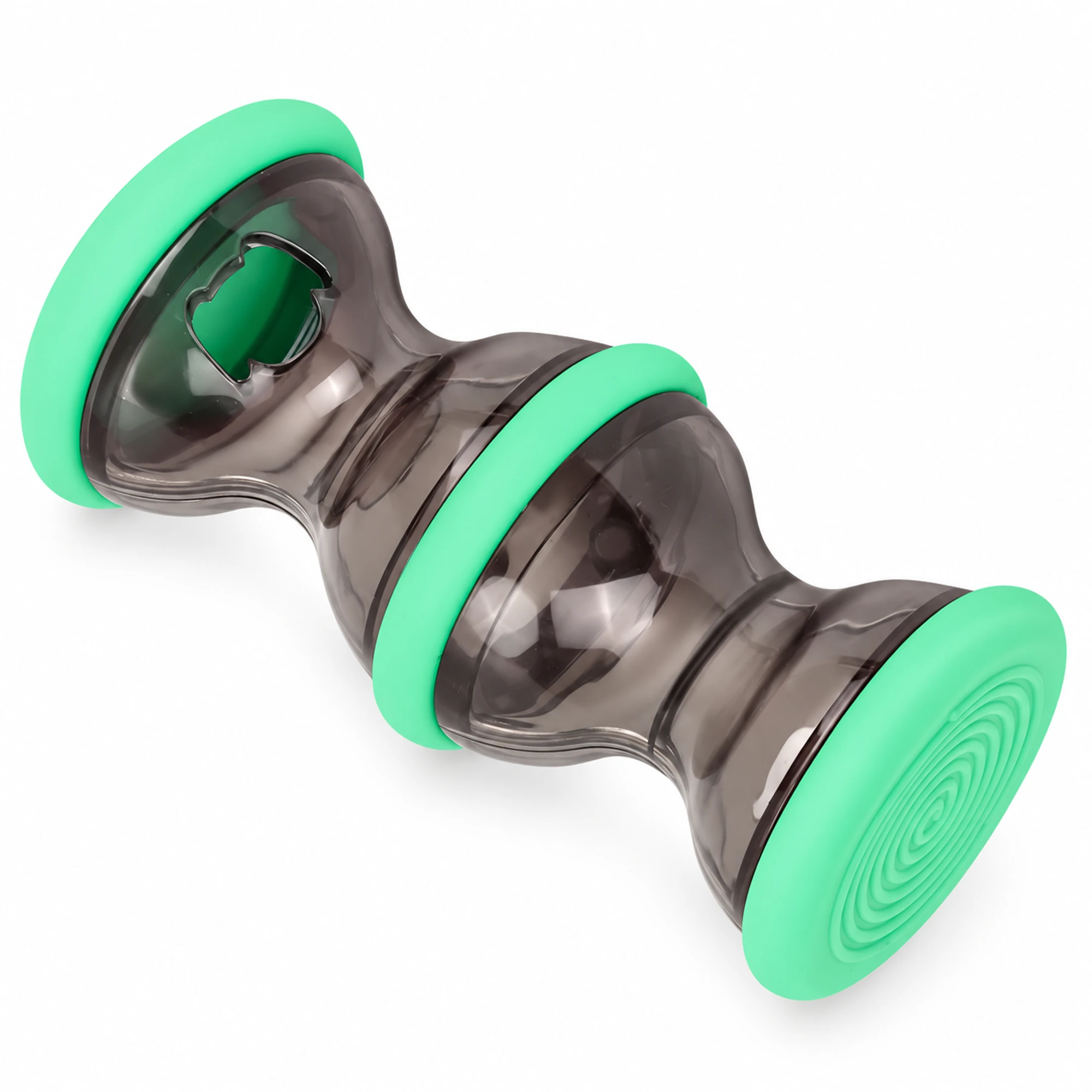
The Mint Roll & Reward Toy ($11.30) is built with thick, resilient walls and secure mint-scented end caps with concentric textured grooves. Unlike brittle cat rolling balls, this durable cylinder withstands curious dog paws and exploratory nudges while dispensing small kibble across the floor. It channels the same natural chasing and foraging drive without presenting fragile shells or choking hazards.
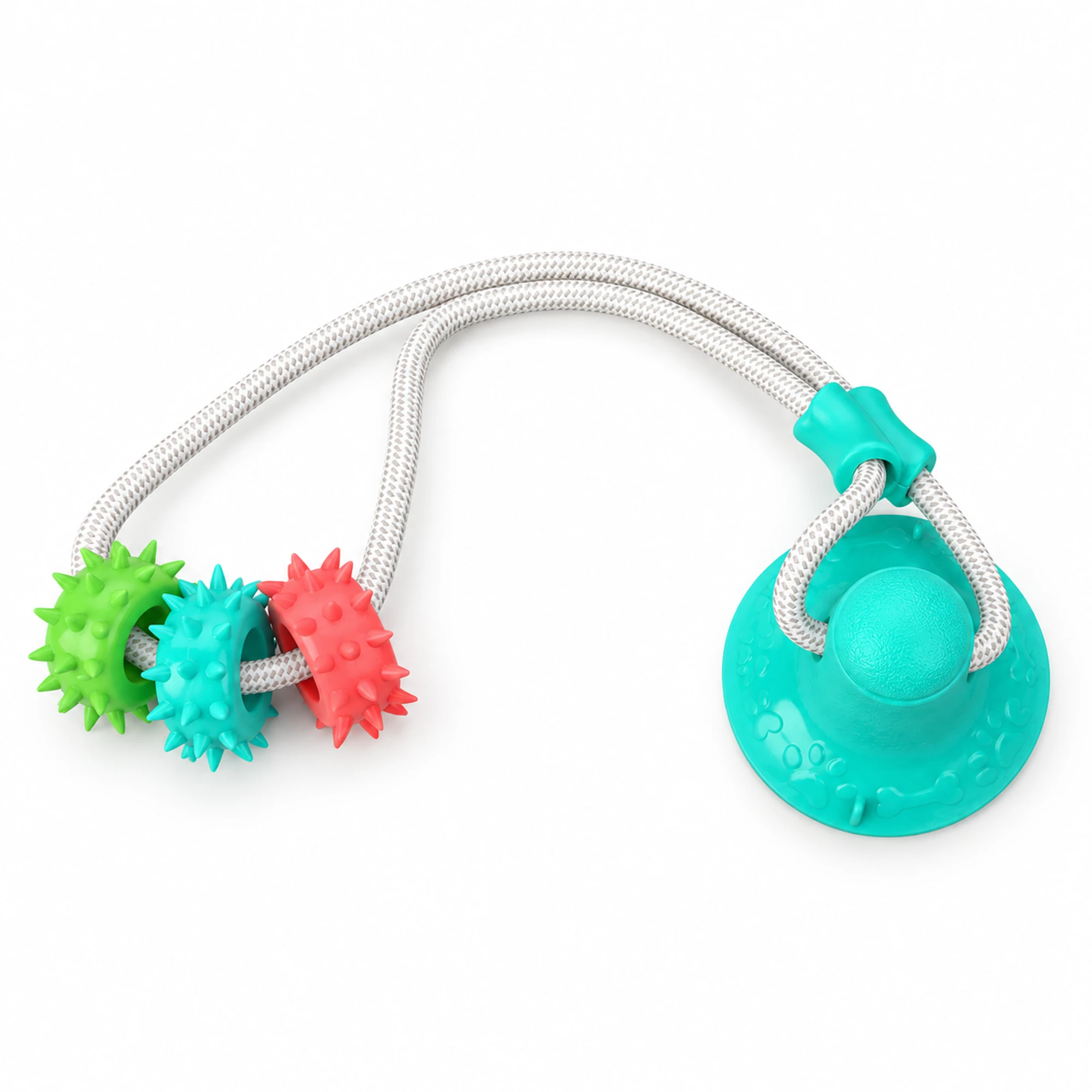
For dogs that obsessively try to yank on cat wands or teaser strings, the Cyan Three-Ring Suction Tug ($8.50) satisfies the urge for dynamic physical resistance. With its industrial suction base and thick spiked chew rings, it anchors firmly to flat flooring, allowing canines to tug and chew vigorously with zero risk of frayed strings or shredded plastic rods.
Practical Household Rules for Multi-Pet Environments
Maintaining harmony and safety in a multi-pet home requires intentional environmental management:
- Establish Elevated Feline Play Sanctuaries: Utilize tall cat trees, sturdy wall-mounted shelving bridges, and gated rooms to keep cat toys in elevated zones that dogs cannot reach.
- Utilize Pet Gates with Cat Pass-Throughs: Install sturdy metal safety gates equipped with miniature pet doors that allow slender cats to traverse rooms while blocking dogs from entering cat feeding and play zones.
- Practice Strict Toy Storage Routines: Wand toys, string teasers, and small plush mice should never be left loose on living room rugs when play sessions end. Store them in secure, latched drawers or high closets.
- Inspect Common Living Areas Daily: Perform a quick nightly sweep under couches, radiators, and low furniture where stray cat mice and ribbons tend to collect.
- Provide Species-Specific Enrichment Simultaneously: When cats enjoy active wand play in an adjacent room, provide your dog with a frozen rubber puzzle or lick mat to keep both companions constructively engaged.
What to Do If Your Dog Swallows a Cat Toy
If you witness your dog swallow a cat toy or find remnants of a destroyed feline plaything, take immediate and decisive action:
- Do Not Induce Vomiting Without Professional Guidance: Never administer hydrogen peroxide or attempt home remedies without consulting a veterinarian. If the swallowed toy contained sharp plastic edges or long string, inducing vomiting can lacerate the esophagus or accelerate bowel plication.
- Contact an Emergency Veterinarian Promptly: Immediate veterinary intervention within two hours of ingestion allows clinicians to perform an endoscopic retrieval while the object remains safely inside the stomach, entirely avoiding invasive surgical laparotomy.
- Monitor for Warning Clinical Signs: Watch for persistent vomiting, retching, lethargy, abdominal distention, painful groaning when touched, refusing food, or bloody diarrhea. These symptoms indicate a critical mechanical obstruction that demands urgent surgery.
Providing dedicated, durable canine toys alongside secure feline vertical play keeps your household peaceful, active, and free from preventable veterinary emergencies.