For decades, the familiar fuzzy yellow tennis ball has remained the ultimate sign of outdoor canine fun. City parks, farm pastures, and suburban lawns frequently host energetic retrievers sprinting after bright green spheres. Yet veterinary dentists and emergency animal clinicians provide a sobering medical assessment. Standard tennis balls create genuine health dangers for domestic dogs. From slow dental enamel destruction to lethal choking incidents, allowing dogs to chew or retrieve conventional sporting balls requires thoughtful reassessment.
Examining the structural materials and impact physics of sports tennis balls helps caring owners make informed choices. By trading coarse athletic felt for smooth, veterinary-tested rubber balls, pet parents protect canine teeth and respiratory pathways while enjoying vigorous daily exercise.
The Dental Abrasion Problem: How Tennis Ball Felt Acts Like Sandpaper
The most widespread chronic injury caused by tennis balls affects the canine mouth. Tennis balls are built for racquet sports rather than animal teeth. Producers cover the hollow core with a rugged weave of synthetic nylon and felt designed to survive high-speed asphalt friction and hard court impacts.
When an excited dog catches a tennis ball, oral saliva soaks the outer nap. This damp fibrous surface acts like a sticky sponge for dirt and grit. Microscopic silica sand grains, road dust, and soil particles lodge firmly into the woven nylon matrix.
As the dog repeatedly compresses the ball between its jaws, the grit-filled felt grinds across canine premolars, molars, and canines. Veterinary dental specialists call this steady mechanical wear dental blunting or attrition. Each chewing repetition functions like fine sandpaper rubbing across tooth surfaces.
Over months of steady retrieve play, this mechanical friction strips away the outer enamel shield. Canine enamel is thin, measuring under one millimeter in thickness across most dog breeds. When the protective enamel wears down, the yellow dentin layer beneath becomes exposed. Dentin contains open microscopic channels connecting straight to the live nerve pulp. Dogs develop painful sensitivity to cold water and chewing pressure. In severe cases of ongoing wear, oral bacteria penetrate the pulp chamber, causing painful pulpitis and deep root infections that require surgical extractions or root canal procedures.
Choking and Airway Obstruction: The Dynamics of Hollow Rubber Collapse
Aside from gradual tooth damage, tennis balls pose an immediate choking danger to medium and large dogs. The specific physical dimensions of a standard tennis ball make it risky during fast-paced play.
Official tennis balls measure about 2.7 inches (6.8 centimeters) across. During vigorous sprinting, a retrieving dog runs with an open mouth, panting hard to shed excess body heat. This deep panting forces the back of the mouth and the airway entrance wide open.
When a dog catches a fast-moving ball, bite pressure can exceed 300 pounds per square inch. The hollow rubber core flattens into an oval profile under heavy jaw force. Coated in slick saliva, this flattened shape easily slides past the rear molars and over the tongue base into the back of the throat.
Once inside the pharyngeal space, compressive jaw force vanishes. The flexible rubber core rebounds back to its circular shape instantly. It lodges firmly against the larynx and trachea, forming an airtight barrier. Because strong negative suction forms behind the ball as the dog tries to breathe, dislodging the sphere with human fingers in the field is nearly impossible. Emergency veterinarians report that complete tracheal blockage causes irreversible oxygen starvation within four to six minutes.
Gastrointestinal Foreign Bodies: Ingested Felt and Rubber Shards
The dangers of tennis balls also extend through the digestive tract. Many dogs settle on the grass after a fetch session, using front teeth to pull felt strips off the rubber shell.
Stomach acid and canine digestive fluids cannot digest synthetic nylon fabric. When a dog swallows plucked felt, the strands tangle together inside the gut. These dense fibrous masses, called bezoars, often grow too wide to exit the stomach through the pylorus. They stay trapped in the gastric cavity, provoking frequent vomiting, poor appetite, and ongoing stomach inflammation.
If swallowed felt travels into the small intestine, it can create a mechanical blockage requiring emergency abdominal surgery. In addition, weathered or cheap tennis balls crack into sharp rubber pieces under steady chewing. These jagged fragments can scratch the esophagus or block the ileocecal valve.
Toxic Chemical Formulations in Conventional Sports Balls
Standard tennis balls are designed for athletic gear, not animal consumption. Tennis equipment factories focus on ball bounce, felt adhesion, and air retention rather than pet safety.
Non-pet tennis balls often contain industrial curing agents, chemical plasticizers, and sulfur compounds added during factory processing. The bright neon green felt is treated with artificial dyes and stain chemicals that undergo no pet safety screening. When dogs chew on sports balls for long periods, they absorb these chemical compounds through the porous oral tissues.
In contrast, dedicated pet fetch toys use certified food-grade natural rubber or thermoplastic polymers free from lead, phthalates, and bisphenol compounds.
Safe Structured Fetch with the Orange Ball Return Station
Pet owners do not need to give up fetch games to keep their dogs safe. Structured games with clear rules prevent dogs from treating balls like permanent chew items.
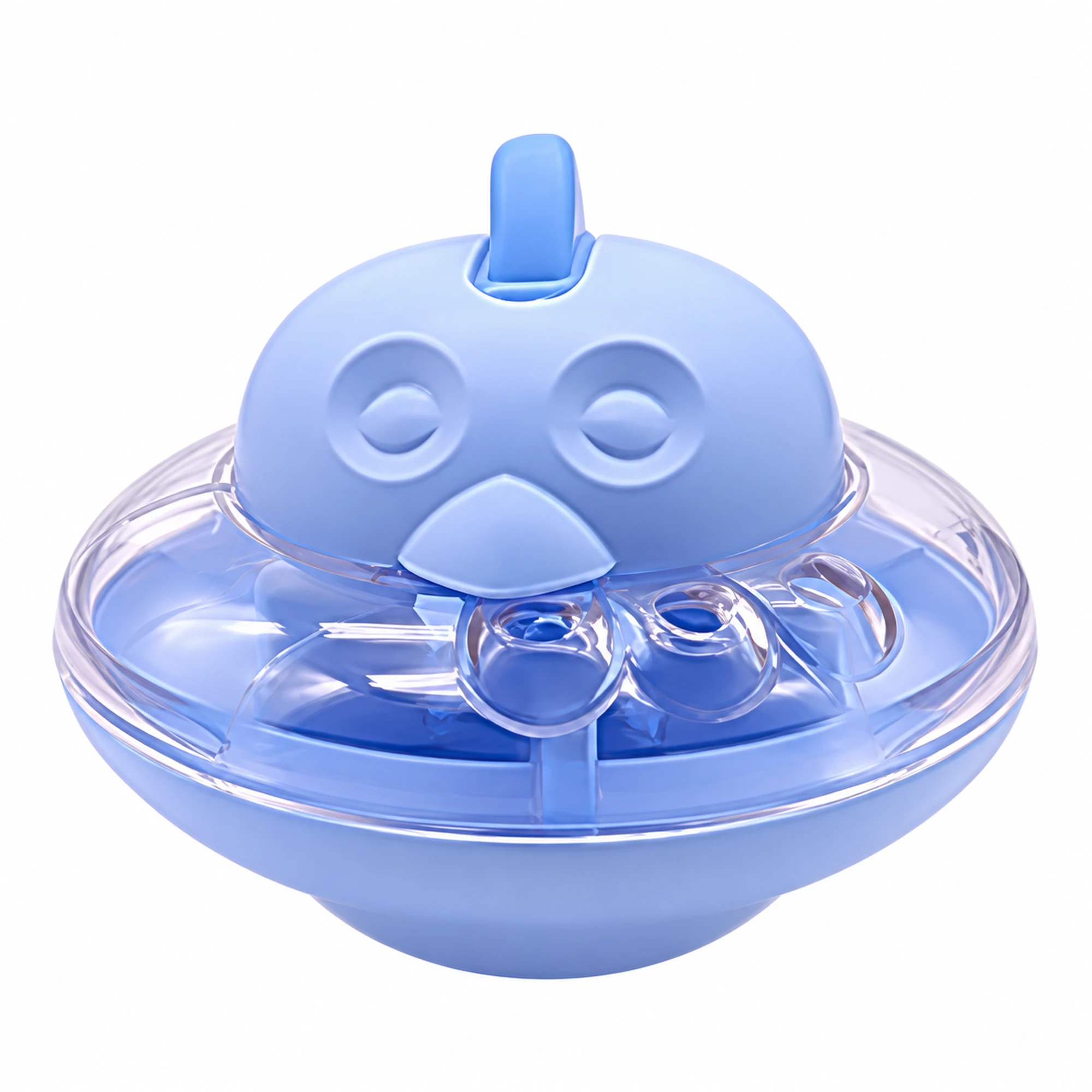
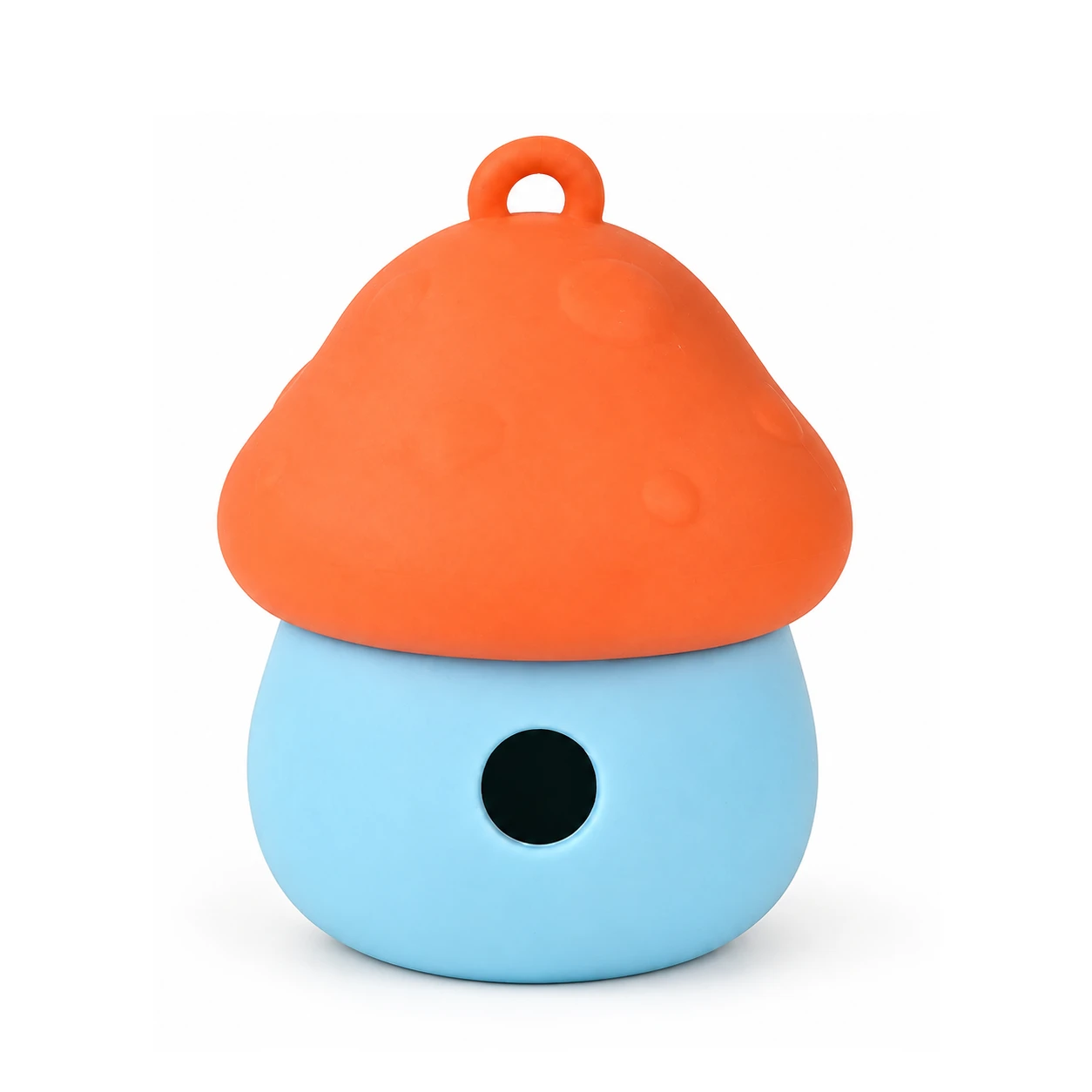
The Orange Ball Return and Reward Station provides a controlled, safe fetch experience. Rather than throwing balls into wide fields where pets lie down to chew dirty felt, this mechanical station channels play into an interactive loop. Owners drop a smooth ball into the top orange bowl. The ball rolls down through the front exit channel, and two side treat dishes reward the dog for completing the return.
Because the station combines retrieval with instant treats from the side compartments, it teaches dogs to drop the ball promptly upon return. Dogs learn that releasing the ball yields a crunchy biscuit, stopping the habit of prolonged chewing. Keep station sessions supervised, and store the equipment away when play ends.
Modern Felt-Free Alternatives: The Blue Swirl Rechargeable Rolling Ball
For dogs that enjoy tracking moving objects across indoor floors, modern electronic toys remove felt dangers completely. The Blue Swirl Rechargeable Rolling Ball replaces abrasive tennis fuzz with a solid, grooved polymer shell.
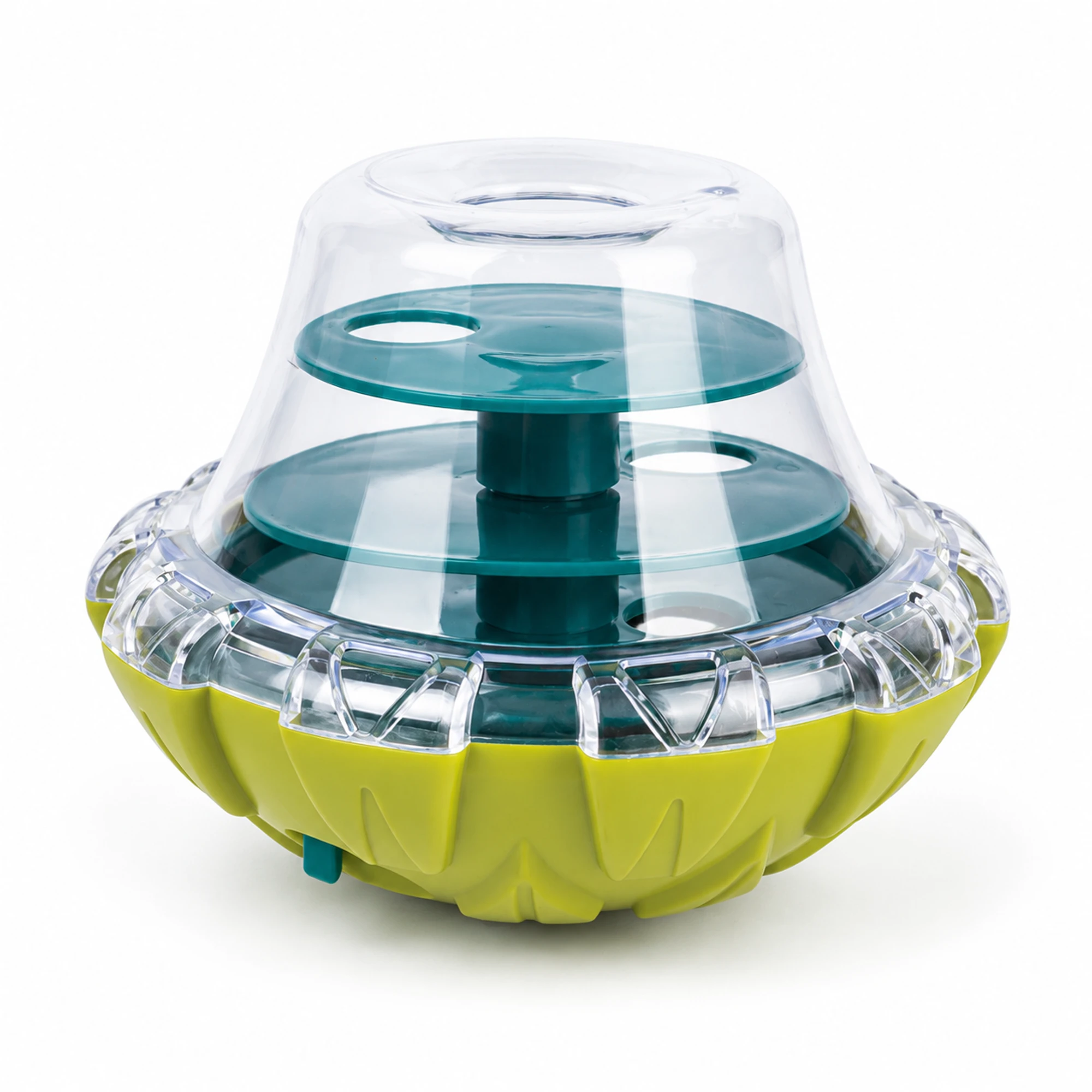
This compact battery-powered ball features curved exterior grooves that provide solid paw grip without trapping abrasive silica sand. A central switch activates an internal motor that rolls unpredictably across smooth flooring. The rolling movement stimulates canine chase instincts without high-speed airborne catches that risk throat choking.
The smooth polymer surface rinses clean under warm running water in seconds. Because the shell contains no fabric weave, saliva and dirt wash off completely between play rounds.
Comprehensive Toy Comparison: Safety Profiles
Evaluating common fetch toys across essential medical factors shows why standard tennis balls carry unnecessary hazards:
|:---|:---|:---|:---| | Toy Type | Dental Abrasion Risk | Airway Choking Risk | Chemical Safety Rating | | Standard Tennis Balls | Severe enamel wear from grit-trapping nylon felt | High risk of pharyngeal collapse and airway sealing | Low industrial athletic grade with chemical dyes | | Smooth Natural Rubber Balls | Zero abrasive felt wear on canine tooth enamel | Minimal risk when diameter exceeds throat capacity | High non-toxic food-grade vulcanized rubber | | Solid Molded TPR Balls | Smooth surface rinses clean without sand retention | Low risk due to solid uncollapsible core | Certified pet-safe thermoplastic elastomer | | Interactive Electronic Balls | Rigid grooved polymer shell with no fabric fuzz | Low risk with controlled floor-rolling motion | High pet-safe polymer with sealed battery core |
Practical Ground Rules for Safe Fetch Play
Pet owners can maintain the exercise benefits of retrieval play by following straightforward safety rules:
- Replace Felt Tennis Balls Promptly: Swap tennis balls for smooth natural rubber balls sized specifically for your dog breed.
- Follow the Clearance Sizing Rule: Select balls that remain visibly wider than your dog’s mouth opening. The ball should show outside the canine lips when held in the mouth.
- End the Game When Fetch Concludes: Never leave retrieval balls in the garden or living room as unsupervised chew toys. Once running ends, store the balls in a closed container.
- Inspect Fetch Gear Before Every Session: Check rubber balls for surface splits, deep punctures, or soft areas. Discard worn toys before play starts.
- Learn the Canine External Heimlich Technique: Learn how to position your hands behind a choking dog’s ribs to deliver firm upward thrusts in an emergency.
Choosing smooth, durable materials instead of abrasive tennis balls shields your dog’s teeth and airway, supporting years of active, injury-free play.