Few sights thrill pet owners quite like a cat springing through the air, focused entirely on a feathery lure dancing at the end of a wand. Flexible teasers and string toys supply fantastic daily enrichment for indoor felines. They tap into hunting instincts, sharpen visual focus, and turn stored energy into great aerobic exercise. Behind that excitement, however, sits one of the most serious hazards seen in veterinary clinics: the accidental ingestion of string, yarn, ribbon, and thread.
Feline anatomy turns swallowing string into a medical crisis. Unlike rounded kibble or small balls, flexible strands can anchor inside digestive organs, quickly creating an emergency. Keeping your companion safe while still enjoying vigorous workouts requires understanding why cats chew strings, picking sturdy equipment, providing active supervision, and locking string toys away after every game.
The Feline Predatory Drive and Fascination with Strings
To understand why strings captivate felines, consider how their senses perceive motion. Cats evolved as ambush hunters tuned to spot small rodents darting through tall grass. A thin cord snaking across living room rugs looks remarkably like a mouse tail or a small garden snake. That sudden flick, brief pause, and fast dart triggers an automatic stalking instinct cats cannot ignore.
Physical mouth anatomy makes this attraction dangerous. A cat tongue features backward-pointing, keratin barbs called filiform papillae. In nature, these rigid barbs act like miniature combs, helping wild felines groom fur and pull meat from bone. Inside an apartment, however, those same hooks become a one-way mechanical trap.
When a feline nibbles on a string or yarn piece, the papillae push the strand backward toward the throat. Once a cord reaches the rear of the tongue, cats find it nearly impossible to spit out. The throat swallowing reflex takes over, drawing the rest of the string down the esophagus even if the pet only meant to hold it. Playful gnawing quickly turns into accidental swallowing.
The Anatomy of Linear Foreign Body Emergencies in Felines
Veterinarians rank linear foreign bodies among the most dangerous surgical issues in small pets. When a cat eats a coin or hairball, the item often travels through the intestines or creates a localized blockage that surgeons can remove easily. A linear strand behaves very differently and causes far greater trauma.
As string travels through the stomach, the front end often gets caught on an anatomical anchor. Common snagging spots include the base of the tongue, where thread loops around the frenulum, or the stomach exit valve into the small intestine. While that upper end stays stuck, natural muscular waves pull the free tail end deeper into the intestinal tract.
Because the anchored string cannot travel forward, the contracting intestine bunches up along the tight line like fabric along a pulled drawstring. With every wave of digestion, the taut cord saws against the delicate intestinal wall. It can slice through intestinal tissue, causing severe internal tears, septic peritonitis, shock, and fatal complications if an emergency surgeon does not intervene quickly.
Linear foreign body procedures involve major abdominal surgery, multiple incisions, or bowel removal, bringing steep bills and real risks. Preventing string swallowing through direct supervision is an essential duty for every cat owner.
Essential Design Features of Safe Cat Wands and Teasers
Understanding the dangers does not mean you must throw away every cat wand. Guided play with a sturdy teaser gives unmatched mental and physical workouts. The key is choosing well-made wands with durable attachments rather than cheap novelties that tear apart easily.
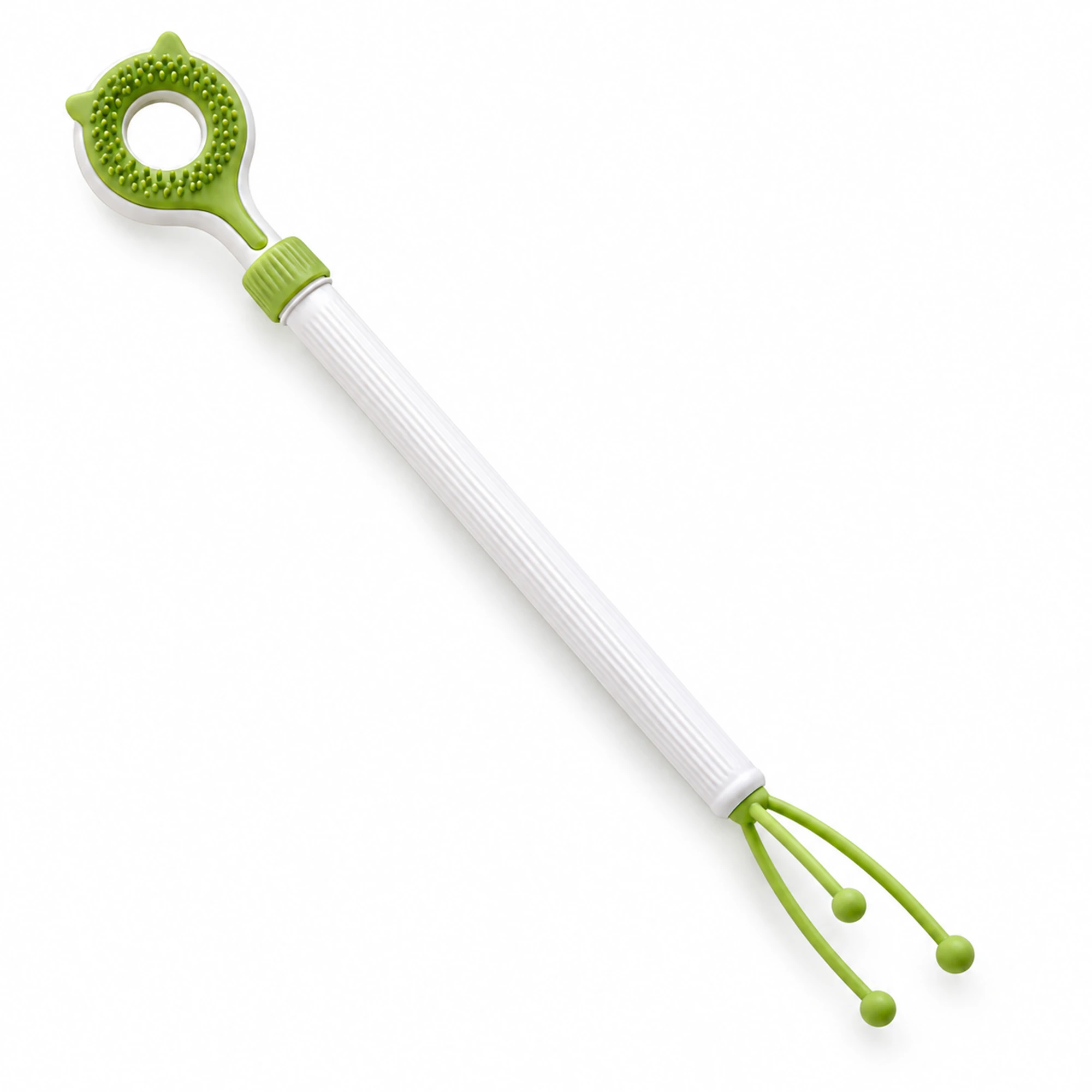
A great example of thoughtful engineering is the Green Telescoping Three-Tip Cat Play Wand, priced at 5.50 dollars. Instead of using thin thread or loose elastic cords, this manual cat teaser wand relies on three flexible rounded tips mounted on a telescoping rod with a firm twist collar. The extendable handle lets you direct movement from several feet back, protecting human hands from claws while maintaining direct control of the lure. Because it features no loose strings for a solo pet to chew, it provides safe exercise under human control.
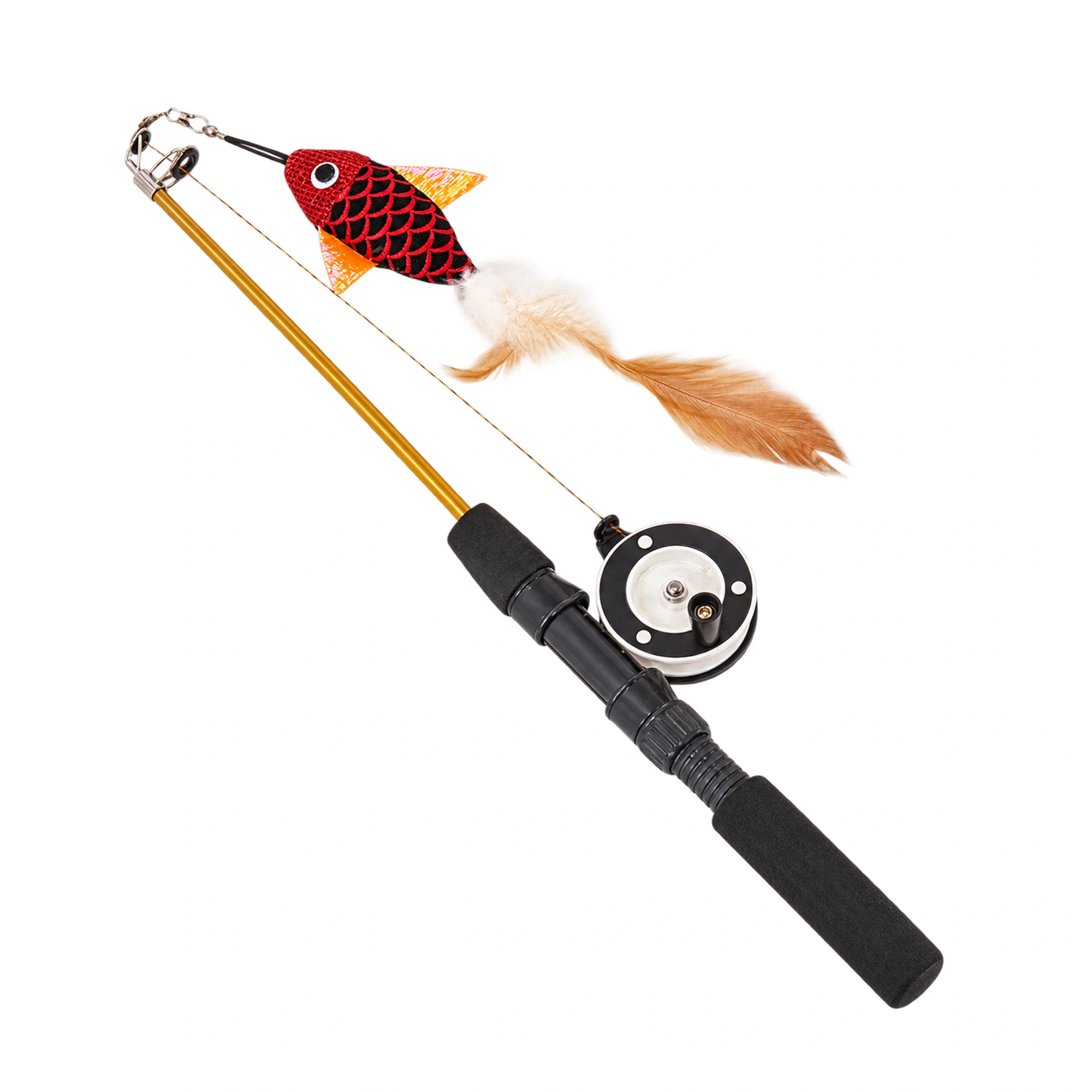
For homes with plenty of open running room, the Mini Fishing Reel Feather-Fish Wand, retailing at 6.83 dollars, offers controlled distance play. Built with a compact hand-cranked reel, a telescoping gold shaft, and a sturdy braided line guide, it lets you cast and retrieve a red fabric feather-fish lure over carpets. The crank allows you to wind up line immediately once your cat catches the fish, stopping pets from sitting on the floor to gnaw on slack line.
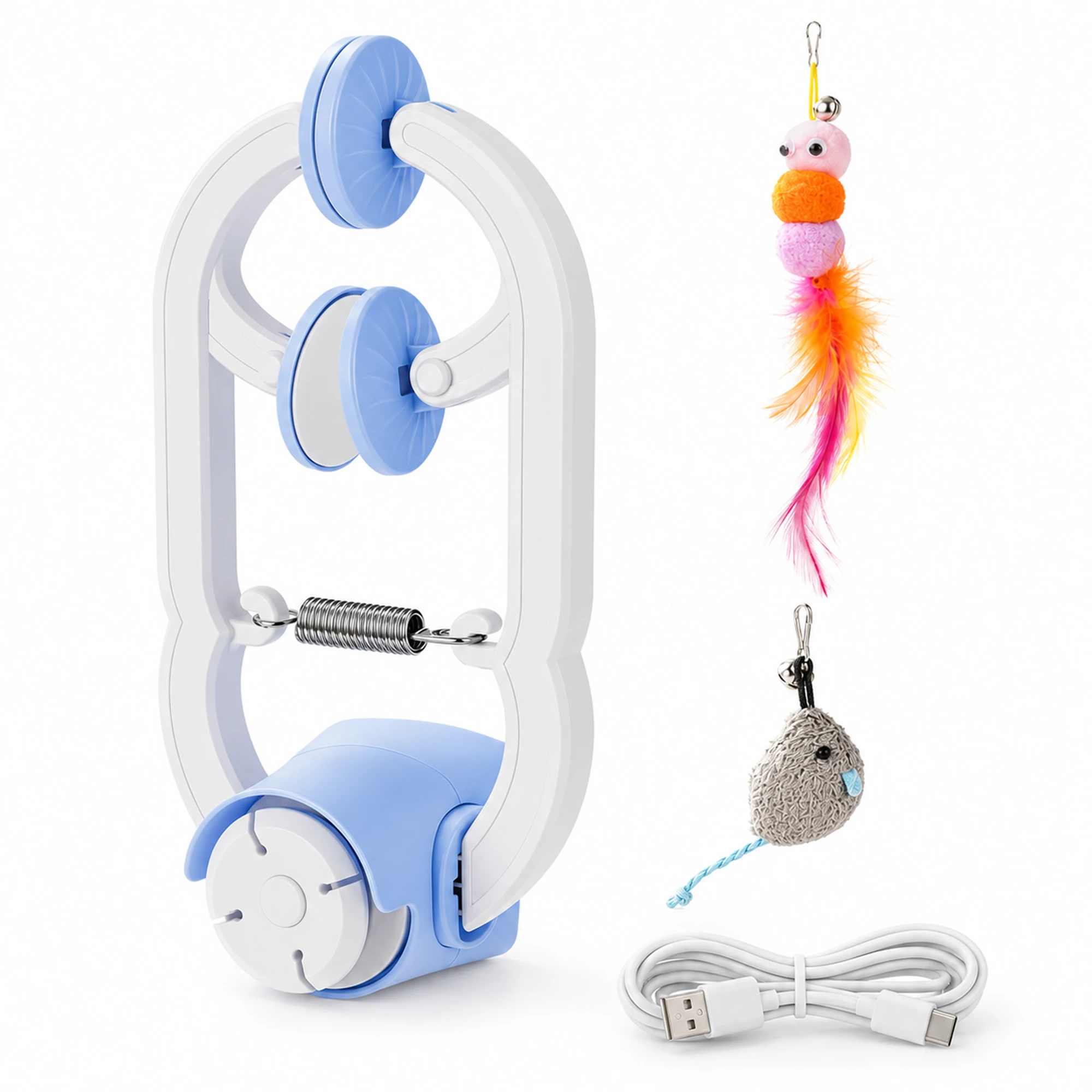
Automated toys also demand close attention. The Blue-White Rise & Fall Clamp Cat Teaser, available for 21.00 dollars, attaches securely to table edges while a small motor lifts and lowers a feather or mouse lure on a thin suspension cord. Although this automated device offers great solo exercise, never leave it running in an empty room. Staying present ensures that if a line loops around a leg or your cat bites the cord, you can shut off the motor right away.
Best Practices for Supervised Interactive Wand Play
Supervision requires genuine attention rather than sitting nearby while looking at a phone screen. Building clear safety steps into your daily cat play routine delivers fun without the hazards.
Always keep a firm grip on the wand handle during play. Never knot a wand toy to door handles, table legs, or chair backs hoping your cat will play alone while you run errands. An entangled cat can loop string around its neck, creating a strangulation emergency within seconds.
Sweep the lure away from your cat rather than jiggling it toward their nose. Moving prey triggers pursuit instincts, prompting the cat to stalk and leap from behind. Once your cat grabs the lure, let them hold and bite it for several seconds to savor the victory. After they let go, move the lure away before they start chewing on the attachment cord.
Check your gear before each session. Look over attachment clips, check cords for worn spots, and confirm that feathers or ribbons stay firmly anchored. If a lure sheds plastic parts, small bells, or loose tinsel, swap in a fresh attachment right away.
Secure Storage Protocols and Immediate Warning Signs
The riskiest period for string toys arrives right after playtime ends. A cat that spent twenty minutes hunting a lure often remains curious. If the wand sits on an armchair, the pet may return in the dark to chew on cords carrying scents of feathers and saliva.
Adopt strict storage habits:
- High Closets: Store interactive wands and spare lures inside lidded bins on top closet shelves behind closed doors.
- Solid Containers: Long plastic storage tubes keep flexible shafts straight while locking cords away from paws that can open cardboard boxes.
- Keep Counters Clear: Never leave yarn, dental floss, sewing thread, package ribbons, or hair elastics sitting on tables or bathroom sinks.
Cat owners should also know the common symptoms of swallowed string. If you find a chewed wand or notice missing ribbon, watch for key signs:
- Frequent vomiting or dry retching, particularly after drinking water
- Sudden lethargy and hiding under sofas
- Refusing food and turning away from treats
- A painful, guarded belly accompanied by cries when picked up
- A visible thread under the tongue or in the mouth
Important Safety Notice: If you spot a string coming out of your cat mouth or rear, never pull it. Pulling an anchored cord can cut through delicate intestinal lining, turning a treatable situation into a life-threatening injury. Keep your pet still and drive straight to an emergency veterinary clinic for ultrasound scans and surgical care.
By using sturdy toys, maintaining attentive supervision, and locking equipment away after play, you can enjoy all the excitement of a cat teaser while keeping your feline companion safe.