Launching a tennis ball across the lawn only to witness your canine companion stare indifferently or wander away is an intensely familiar frustration. Many pet guardians assume retrieving constitutes an innate canine impulse hardwired into every growing puppy. When an adolescent dog sniffs a rolling sphere and trots leisurely in the opposite direction, owners frequently misinterpret this behavior as stubbornness or disinterest. Standard fetch routines falter because rigid felt spheres offer zero tangible sensory reinforcement to dogs lacking obsessive prey-ball drive.
Transforming a hesitant dog into an engaged retriever requires harmonizing with their natural behavioral motivators rather than imposing rigid play expectations. By replacing plain felt spheres with reward-dispensing puzzle bones or textured prey-style plushies, you transform fetch from a confusing chore into an engaging, multi-sensory partnership.
Why Plain Tennis Balls Fail with Non-Retrievers
Standard tennis balls work brilliantly for specialized retrieving breeds like Golden Retrievers or Labradors, whose working lineage selected for high motor focus on distant moving objects. For hounds, terriers, companion breeds, or rescue mixes, a bare green sphere provides almost no intrinsic value. It does not smell like food, does not yield beneath their teeth, and offers no tangible payoff when carried back across a yard.
A dog owner shared on Reddit r/dogs that their playful dog will chase a thrown ball or stick, but refuses to bring it back because the dog is heavily food oriented and fixates only on the treat bag. This dynamic highlights the core obstacle: chasing is a natural predatory reflex, but returning the prize requires cooperative motivation. When a dog realizes catching a tennis ball yields nothing edible or interactive, they drop the object or refuse the chase altogether.
Furthermore, traditional tennis balls have abrasive felt exteriors that collect dirt and wear down canine tooth enamel like sandpaper during heavy chewing. Hard molded rubber balls can feel unpleasantly stiff in a sensitive mouth, discouraging puppies and gentle chewers from holding them on a return sprint.
The Treat-Dispensing Solution: Scent and Reward Retrieval
For dogs motivated by appetite rather than chase mechanics, treat-dispensing toys establish an immediate reason to pursue and return an object. Instead of chasing a hollow plastic core, your dog pursues the aroma of their favorite biscuits or savory jerky strips.
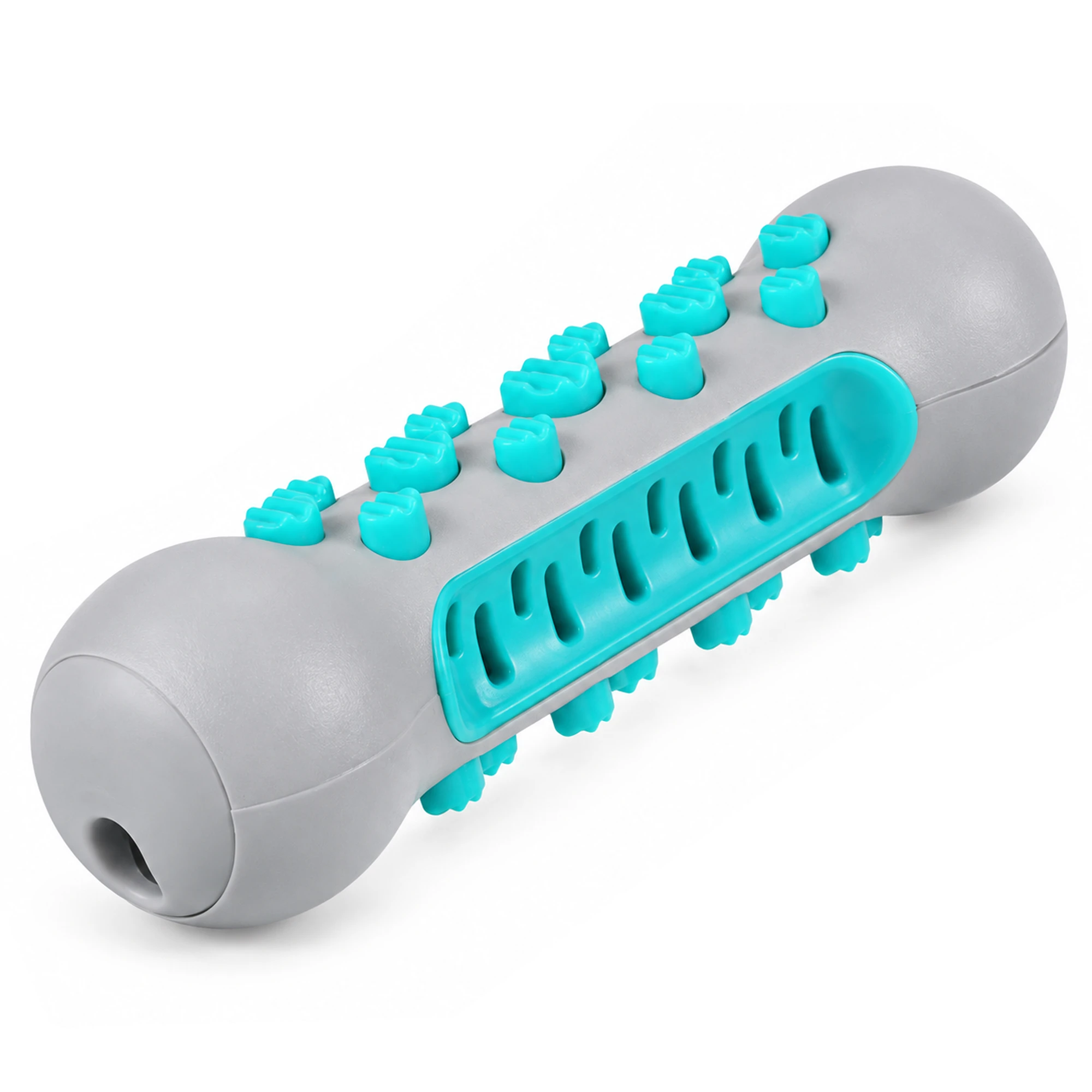
The Blue and Gray Bone Dog Toy illustrates how functional texture and food cavities support retrieval training. A gray bone-shaped dog toy with turquoise-blue raised nubs, a slotted side panel, rounded ends and an end opening. The central slotted cavity holds dried meat strips or peanut butter, releasing scent trails in mid-air and upon ground impact. At a supplier-reported SKU piece weight of 147 g and dimensions of 15 × 4.6 × 4.6 cm, the bone provides substantial presence without overwhelming small or medium jaws.
When you load the slotted side panel with high-value treats and toss the bone just three feet away, your dog investigates because their nose detects a tangible reward. Because the end opening makes food accessible only when held or manipulated with human assistance, your dog quickly learns that carrying the toy back to your hands unlocks the prize.
Triggering Prey Drive: Floppy Limbs and Tactile Grab
Not all non-fetchers are driven solely by food; many crave tactile satisfaction and physical movement. Dogs that ignore balls often light up when chasing items that mimic the erratic flopping of small prey.
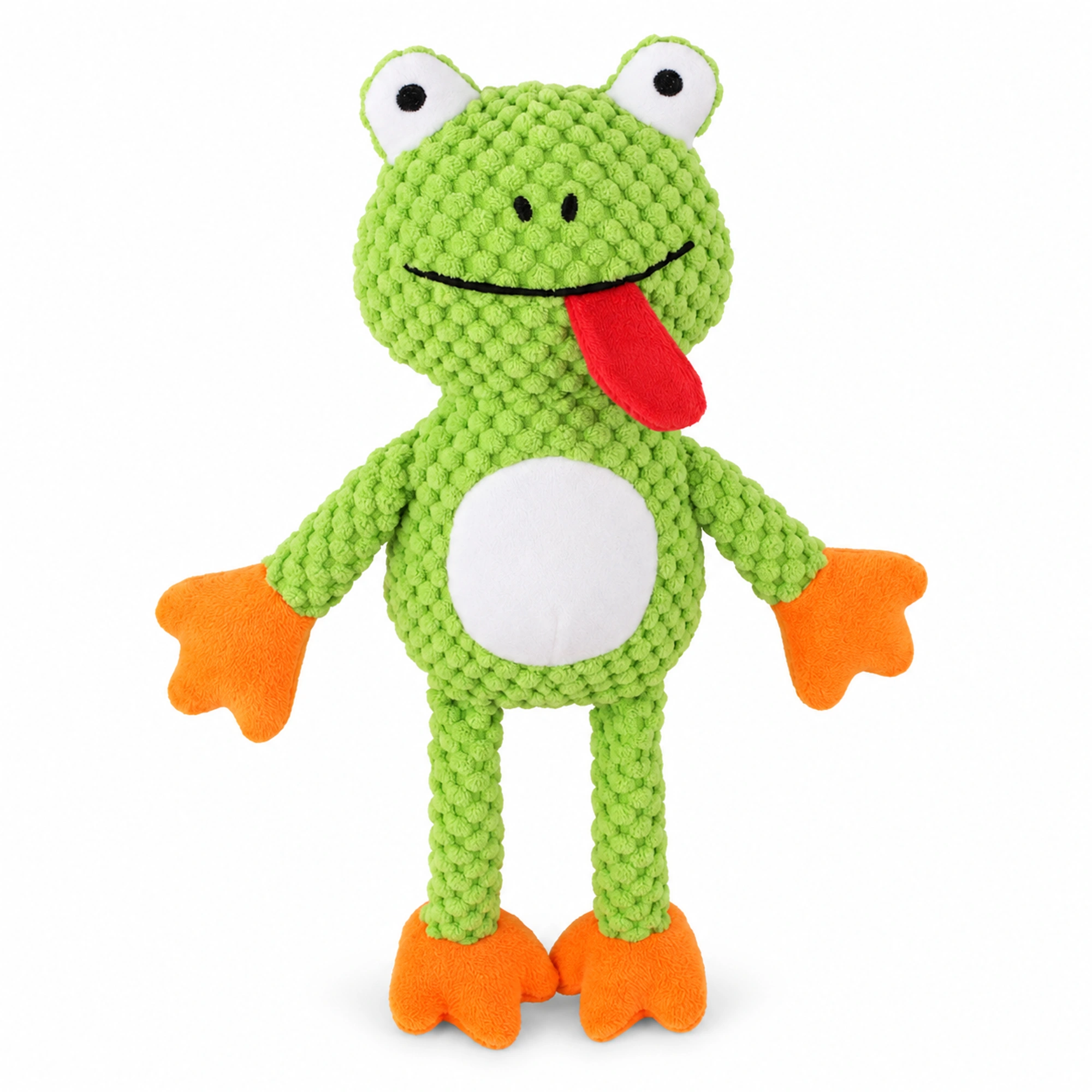
The Pose & Pull Frog channels this instinctual interest through interactive movement. Lime bobble fleece, a stitched smile, a red fabric tongue and orange webbed hands and feet give this supplier-described dog plush its playful character. Gently adjust the frog’s fabric-covered limbs by hand to change their visible length and arrange a new pose. When tossed across carpet or grass, the asymmetrical limbs trail behind, creating unpredictable flight paths that stimulate canine visual tracking.
Unlike rigid spheres that bounce out of reach, the tactile bobble fleece provides immediate purchase for a dog’s teeth. Your dog can grab an orange webbed foot or the soft lime torso without jaw strain. By extending the limbs before a throw, you create built-in handles that invite cooperative tugging the moment your dog brings the plush back to you.
Three Practical Steps to Teach the Return Cue
Transforming a reluctant fetcher into an eager retriever does not require force; it requires clear reinforcement stages.
-
Start with the Two-Foot Exchange: Begin indoors with zero distractions. Sit on the floor with your loaded Blue and Gray Bone Dog Toy. Drop it two feet in front of you. When your dog picks it up by the textured rubber nubs, immediately offer a piece of freeze-dried liver from your opposite hand while saying “give” or “drop.” This teaches your dog that bringing the toy to your hands always produces a superior treat.
-
Introduce Short Movement with High-Value Prey: Once your dog happily trades the bone at close range, introduce the Pose & Pull Frog. Drag the soft plush along the rug like a darting rodent to pique their natural prey drive. Toss the frog five feet away. The moment your dog scoops up the bobble fleece body, run backward two steps and cheer enthusiastically. Dogs naturally chase retreating handlers; running backward encourages them to run toward you with the toy in their mouth.
-
Fade the Direct Treat Lure: As retrieval becomes consistent across ten to fifteen feet, transition the reward directly into the game. When your dog delivers the Pose & Pull Frog, reward them not with an external biscuit, but with thirty seconds of energetic tug-of-war using the adjustable fabric-covered limbs. The game itself becomes the self-reinforcing prize.
Supervised Play and Toy Rotation
Every dog interacts with toys differently depending on their jaw strength, energy level, and daily stimulation. Supervise play and remove any toy if damaged to ensure materials stay safe and intact. Rotating between the treat-dispensing bone and the floppy plush frog keeps retrieval sessions novel, preventing boredom and sustaining your dog’s enthusiasm across every play session.
Frequently Asked Questions
Why does my dog chase the ball but never bring it back?
Chasing an object taps into the canine predatory pursuit sequence, which feels naturally self-rewarding. Returning an object, however, is a cooperative social behavior that must be actively reinforced. Many dogs play “keep-away” because human pursuit feels like a fun chasing game. By using treat-dispensing toys like the slotted blue-gray bone and trading the returned toy for high-value food, you show your dog that returning the prize is far more rewarding than hoarding it.
Can treat-dispensing toys really teach a reluctant dog to retrieve?
Yes. For dogs that lack genetic drive to hold rigid items, food provides the necessary initial bridge. When a toy contains aromatic treats in its slotted openings, the dog views the item as valuable prey worth picking up. Guiding your dog to bring the loaded toy back so you can help release the treat establishes the foundational return habit.
How heavy should a fetch toy be for a reluctant dog?
Fetch toys should be lightweight enough for effortless carrying without causing jaw fatigue. The Blue and Gray Bone Dog Toy features a supplier-reported piece weight of 147 g and dimensions of 15 × 4.6 × 4.6 cm, making it easy for most dogs to balance in their teeth while trotting across the yard.