Many pet guardians purchase toys simply because a plush animal or neon ball catches their eye in the aisle. Back home, their dog or cat sniffs the object once and walks away into another room. In other households, an energetic terrier destroys a soft squeaker in under five minutes, leaving plastic stuffing scattered across the living room carpet. These common mismatches occur when humans select items based on visual novelty instead of natural play style.
Domestic pets carry ancestral motor patterns inherited directly from wild hunters. One pet channels predatory energy into relentless sprint chases. Another companion prefers firm jaw pressure, slow scent mapping, or systematic fabric dissection. When you identify the play profile of your pet, shopping becomes simple and predictable. The right toy channels built-up energy into safe exercise, saves upholstery from claw marks, and shields animals from ingesting dangerous parts.
Understanding Primary Feline and Canine Play Profiles
Trainers divide companion play into five distinct behavioral styles: chewers and dissectors, persistent tuggers, sprint chasers, cognitive foragers, and patient ambushers. Young pets often try every behavior during puppyhood or kittenhood. Mature animals, however, usually settle into one or two habitual patterns. Watching your pet handle common household items reveals which group fits best.
Dogs that shred cardboard boxes, gnaw fabric tags off cushions, or strip felt off tennis balls are dedicated dissectors. These pets seek tangible material breakdown and tactile resistance. Dogs that bite pant cuffs, shake heavy ropes, or lean backward against physical resistance belong to the tugger group. They enjoy cooperative contests and continuous mechanical tension.
Cats and agile hunting dogs operate primarily as sprinters. They focus on quick horizontal movement across hallways, lunging whenever an object zips past their vision. Pets that push noses under couch cushions, sniff out kitchen crumbs, or explore dark hallway corners are natural foragers. These curious animals crave mental challenges rather than raw cardiovascular exertion. Learning how to choose safe dog toys begins by identifying these biological tendencies.
Foragers and Problem Solvers: Interactive Treat Puzzles
High intelligence pets quickly lose interest in stationary rubber balls. When bright animals lack cognitive problems, frustration shows up as compulsive paw licking, barking at minor sounds, or raiding kitchen trash cans. Introducing a challenging dog treat puzzle toy redirects that curious energy toward orderly mental tasks.
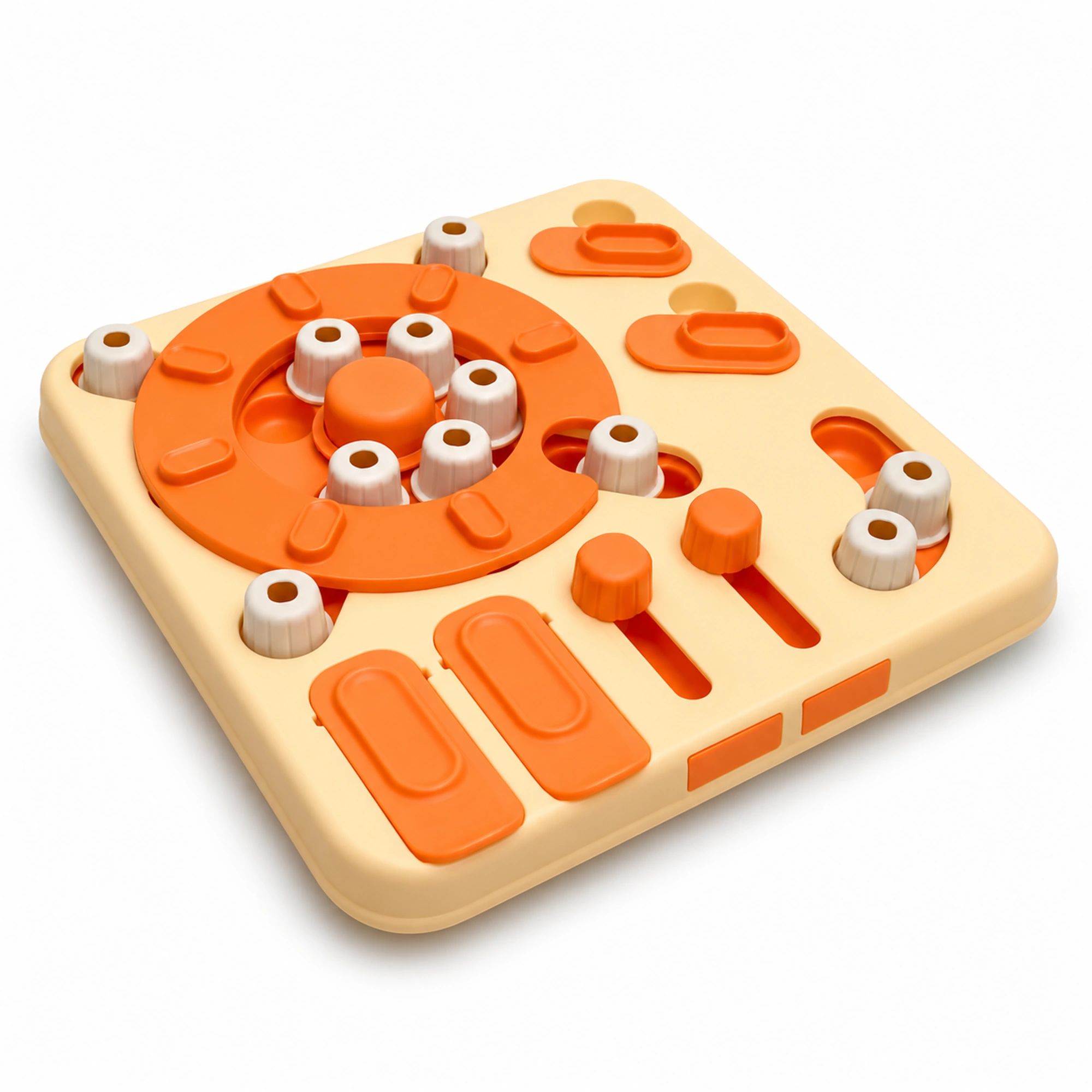
The Orange Turn, Slide and Lift Dog Puzzle Toy ($46.00) gives persistent foragers an advanced challenge. This heavy activity station contains revolving top plates, pull-out treat drawers, and lift-off caps that hide tasty snacks. A dog cannot force open the chambers with pure jaw strength. Instead, the dog must nudge sliders with their wet nose pad and hook their claws onto drawer tabs in a logical order.
Solving multi-step mechanical locks challenges the canine brain and reduces anxiety markers. Canine behavioral research shows that fifteen minutes of focused scent foraging tires an active dog as thoroughly as forty minutes of brisk neighborhood walking. Solid ABS construction keeps sliding panels moving freely without warping or snapping under claw strikes. For dogs that swallow food in seconds, serving meals inside these puzzle compartments slows digestion and prevents life-threatening stomach twists.
High Energy Tuggers: Anchored Tension Gear
Tug play fulfills deep predatory grip instincts, strengthening shoulder stabilizers, neck tendons, and spinal muscles. Dogs driven by high tug drive frequently grab kitchen dish towels, walking leashes, or sofa cushions to initiate games. Traditional tug sessions demand continuous arm power from owners, which is hard to provide during busy remote work routines.
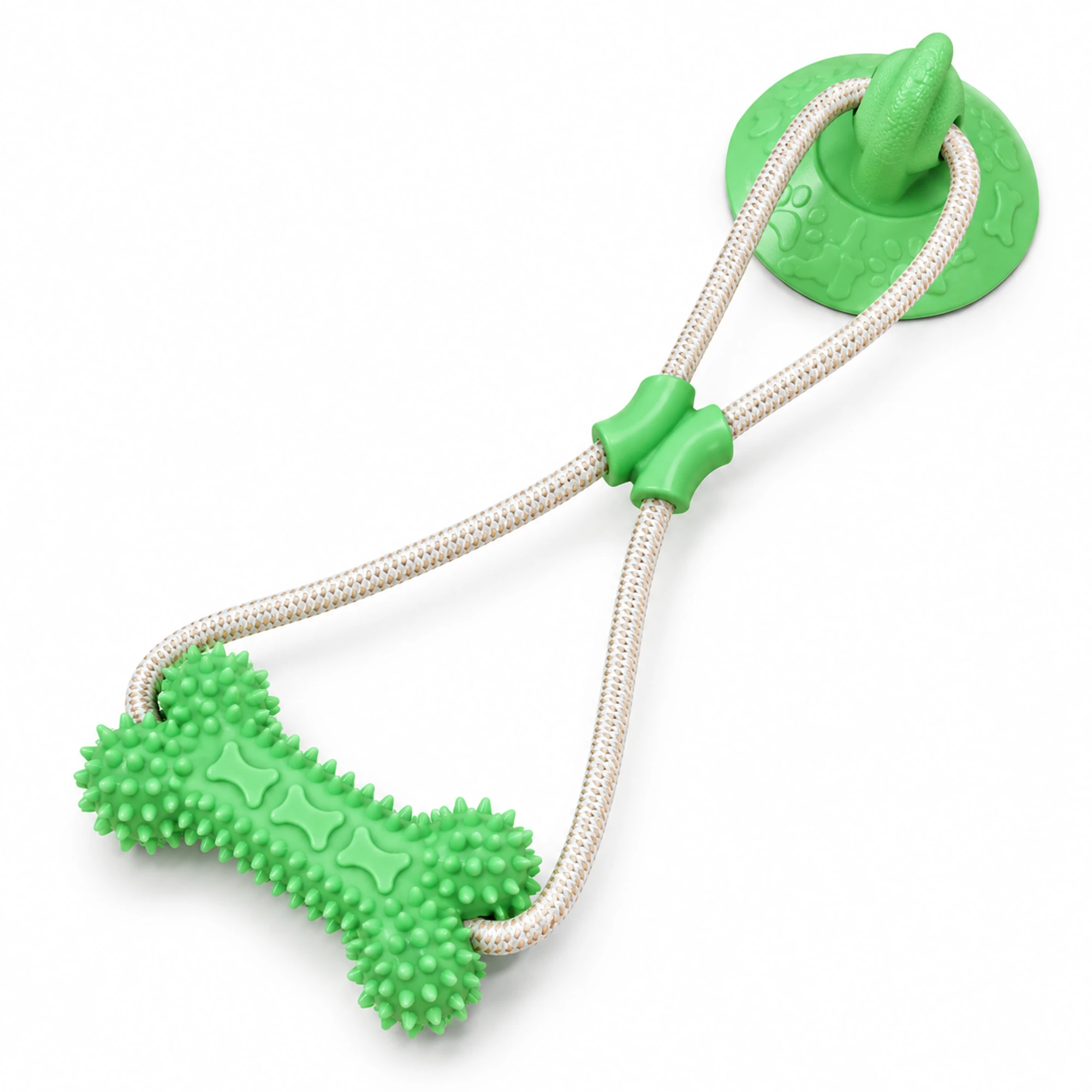
The Green Suction Cup Dog Tug Toy ($8.50) offers a sturdy anchored station for independent tug sessions. The product combines an industrial floor suction plate, a thick woven cord, and a tough rubber chew bone. When pressed firmly onto glazed ceramic tile, smooth sealed wood, or glass patio doors, the suction mechanism resists up to thirty-five kilograms of lateral pulling force.
A dog sinks their teeth into the textured bone, plants all four paws, and pulls backward against resilient cord tension. This resistance builds muscle tone across the shoulders while sparing human wrists and elbows from painful jerks. Firm rubber ridges across the bone rub against gum tissue to scrub away dental plaque during chewing. The braided cord absorbs abrupt snaps, allowing enthusiastic dogs to thrash their heads safely without damaging floor finishes.
Tactile Ambushers and Trackers: Multi-Tier Feline Stations
Cats experience play through quiet stealth, prolonged observation, and rapid pouncing. A cat sitting motionless beside a doorway calculates speed and landing points before springing into action. Stationary toys left lying on rugs become invisible to felines because feline retinas prioritize sudden movement over static shapes.
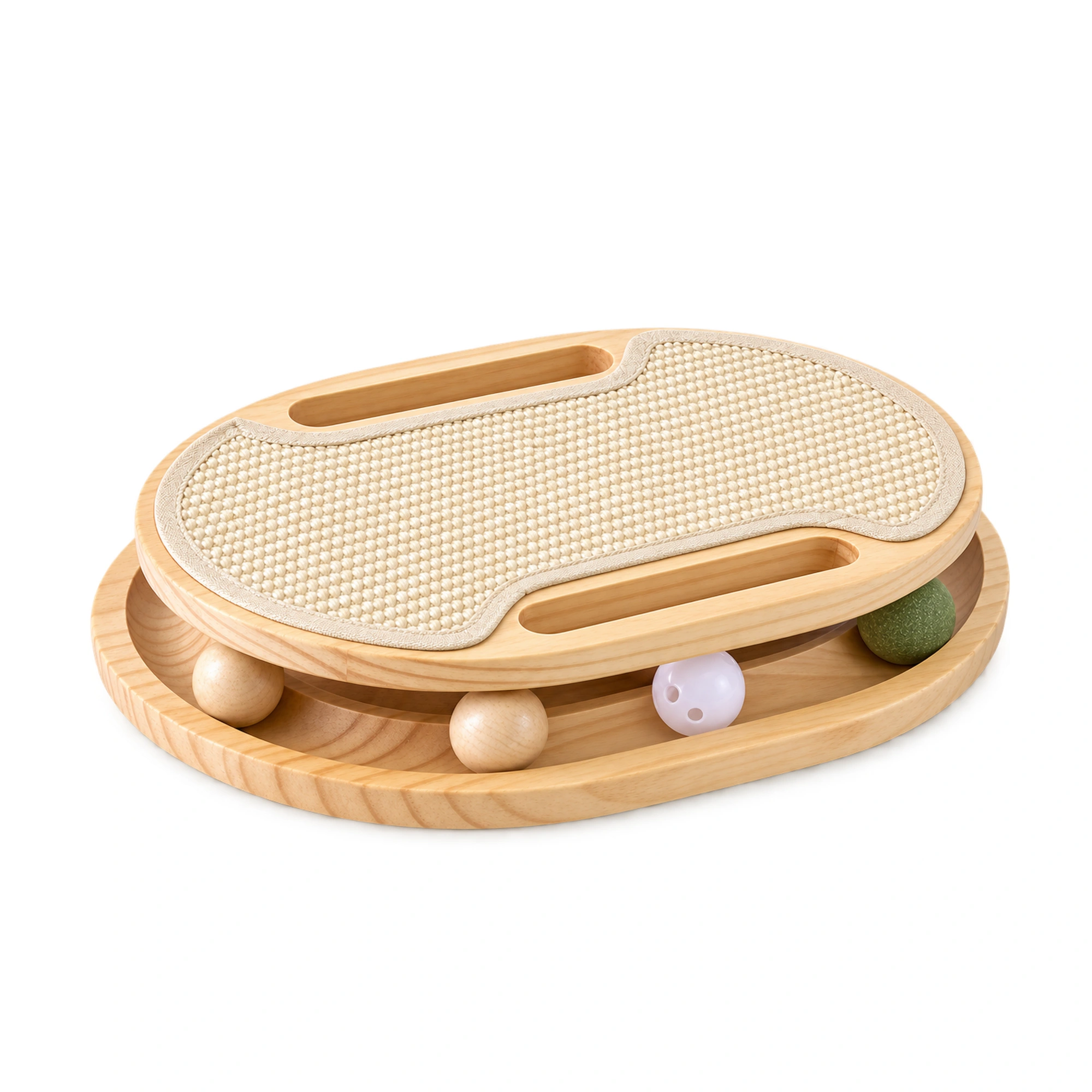
The Sisal Island Wooden Cat Track Toy ($28.69) accommodates tactile ambushers by combining vertical clawing fiber with captive ball runways. Dual outer channels hold polished wooden spheres that roll freely when batted. When a cat swipes at a ball, the sphere races along the wooden track, bounces off curved boundary blocks, and returns toward waiting paws.
Because the balls remain trapped within smooth grooves, they never vanish under dressers or refrigerators. The station center features a thick circular pad of wound natural sisal rope. Cats sink their claws into the dense fiber to steady themselves while batting moving targets with an agile front paw. This layout satisfies territorial clawing needs alongside kinetic hunting drives. Weighted solid wood keeps the circular base firmly planted during vigorous jumping attacks.
Sprinters and Chasers: Automated Kinetic Toys
Pets driven by intense pursuit drives need erratic, high-speed movement that copies fleeing rodents or fluttering birds. Tossing manual tennis balls works well in grassy parks, but indoor apartments restrict long throwing arcs. Working owners also cannot spend hours rolling balls across rooms during busy conference calls.
The Blue Swirl Rechargeable Rolling Ball ($9.50) satisfies active sprinters through automated motorized navigation. An internal gyro motor produces unpredictable rolling paths, sudden direction pivots, and reverse spins across low-pile rugs and polished floors. Integrated optical obstacle detectors notice approaching walls, redirecting the sphere toward open pathways before impacts occur.
A glowing horseshoe pattern around the outer body attracts feline and canine vision in low light, sparking fast chases. Food-grade silicone wraps the spherical core, softening wall collisions and protecting pet teeth during fast catches. An integrated USB port simplifies recharging, while an automated shutoff timer pauses operation after ten minutes to prevent sensory burnout. These interactive dog toys for solo play maintain healthy metabolic rates and prevent excess weight gain in indoor environments.
Senior Pets and Low Mobility Play Adaptations
Older companions retain genuine play motivation even when arthritis, clouded eyes, or reduced muscle mass restrict athletic movement. Demanding that a senior dog leap after plastic discs or expecting an older cat to jump high up scratching posts causes joint inflammation. Adjusting physical toy mechanics lets aging companions stay mentally active without suffering aches.
When selecting cat toys for senior cats, choose low floor profiles, generous paw openings, and rich herbal scents. Infusing fabric items with organic catnip or silvervine wakes up aging feline brains without requiring strenuous leaps. Cat track toy stations that lie completely flat let senior cats swat at moving spheres while resting comfortably on soft rugs.
For aging dogs, replace hard nylon bones with soft rubber treat mats and gentle dispenser spheres. Flexible rubber yields to gentle jaw pressure, safeguarding brittle teeth and worn gum lines. Placing puzzle trays on low footstools four inches above the carpet keeps senior dogs from bending stiff neck joints while foraging. Regular low-impact play protects cognitive abilities and slows mental decline in older companions.
Summary of Play Style Profiles and Toy Recommendations
-
Cognitive Foragers: Sniff furniture seams, hunt hidden treats, and paw open cabinet doors. Recommended mechanics feature multi-tier sliders, drawers, and scent compartments. Featured catalog match: Orange Turn, Slide and Lift Dog Puzzle Toy ($46.00).
-
Active Tuggers: Clench fabric hems, shake thick ropes, and brace against walking leashes. Recommended mechanics feature heavy-duty suction bases and shock-absorbing braided lines. Featured catalog match: Green Suction Cup Dog Tug Toy ($8.50).
-
Tactile Ambushers: Crouch near doorways, swipe trapped spheres, and scratch floor runners. Recommended mechanics feature stacked ball tracks and coarse sisal scratch pads. Featured catalog match: Sisal Island Wooden Cat Track Toy ($28.69).
-
High-Speed Sprinters: Pursue floor reflections, gallop across corridors, and chase rolling spheres. Recommended mechanics feature gyroscopic motor units and obstacle-sensing guidance. Featured catalog match: Blue Swirl Rechargeable Rolling Ball ($9.50).
-
Gentle Seniors: Walk with stiff joints, tire quickly, and enjoy calm scent discovery. Recommended mechanics feature ground-level foraging mats and pliable rubber chew toys.
Safe Material Selection and Durability Guidelines
Choosing the right toy profile provides little benefit if materials break apart during normal play. Veterinary surgical wards treat thousands of foreign body obstructions every year caused by swallowed plastic splinters and frayed fabric threads. Protecting companion animals demands rigorous inspection of raw materials and joint seams.
Reject cheap toys manufactured from brittle vinyl plastic loaded with chemical softening agents. Safe pet gear relies on heavy natural rubber, food-grade silicone, and thermoplastic elastomers. These pliable compounds absorb biting pressure without cracking into sharp points. Check plush seams for reinforced double stitching, and immediately throw away squeaker toys when outer covers split open.
For cats, confirm that glued plastic eyes, loose bells, and feather wands are stitched securely or detached before play. String accessories should stay locked away when pet parents are not actively watching, as swallowed cords cause severe internal tangling that requires emergency surgery. Keep wand teasers secured inside hallway closets between play routines. Cleaning toys weekly in warm soapy water eliminates saliva deposits and preserves equipment integrity for months of safe play.