Move the lure as something your cat can follow and catch. Try a brief movement, pause, and allow a pounce to end in contact instead of pulling the toy away every time. Watch your cat’s response before choosing the next movement.
Blue Cross’s cat-play guide describes the appeal of movement resembling a mouse or bird. For fishing-rod toys, it advises allowing time to catch the lure and avoiding movements so high that they encourage jumping. Use those principles to shape the game rather than aiming for constant motion.
Set up a game you can stay involved in
Choose an area where you can see the lure and your cat throughout play. Read your wand’s own instructions and check its condition before starting. Decide where the toy will go when the session ends, so you can remain involved through the final catch and putting it away.
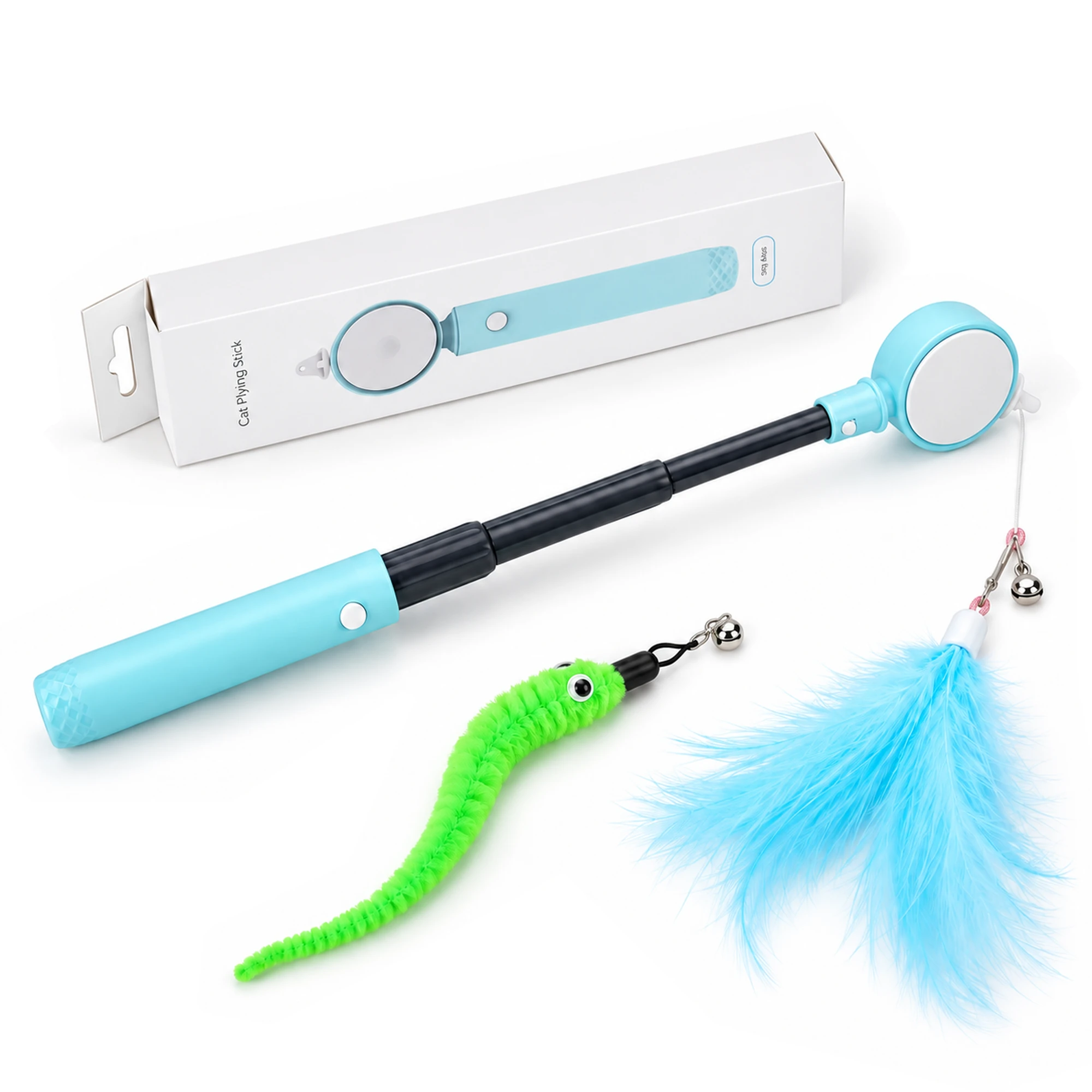
Identify the parts you’re handling. JoyPetPlay’s Sky-Blue Telescoping Cat Fishing Wand is described with a round top-mounted reel, black telescoping shaft and line. Its listed lures are a green fuzzy worm and a sky-blue feather lure, each with a silver-colored bell.
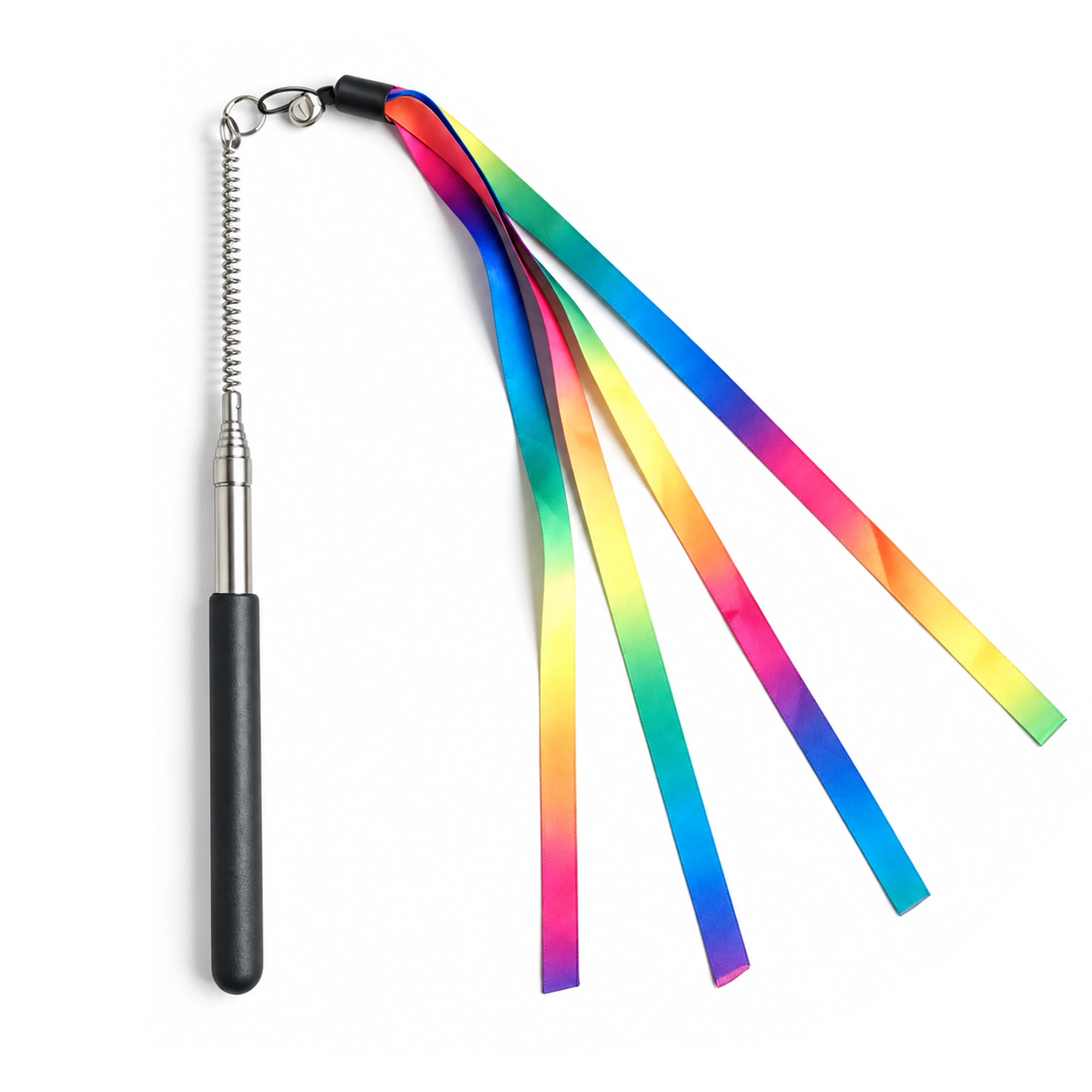
The Rainbow Ribbon Cat Wand is described with a black grip, telescopic silver-colored rod, spring connector, small bell and rainbow ribbons.
These descriptions identify the equipment. Follow the supplied instructions for extending a shaft or operating a reel; the movements below are suggestions for presenting the lure, not instructions for those mechanisms.
Try a movement, then leave room for a response
Use this as a flexible starting sequence:
- Begin with the lure in view. Try a short movement along the floor, away from your cat. Watch whether your cat turns toward it, follows or reaches with a paw.
- Pause. Let the lure settle. Give your cat an opportunity to approach or pounce before choosing another movement. There is no prescribed number of seconds to count.
- Change one detail. On the next movement, try a different direction or a shorter distance. Keeping the change small gives you a clearer note about what you offered.
- Allow the catch. When your cat reaches the lure, stop moving it long enough to allow contact. Avoid turning every approach into another escape.
- Choose whether to continue. If the game continues, repeat a movement and pause. If your cat walks away, finish rather than pursuing your cat with the toy.
These are suggested actions to try, not a promise that a particular pattern will work. Blue Cross notes that different cats prefer different games and advises never forcing play.
Use the catch as part of the game
Blue Cross advises giving a cat time to catch the fabric lure with its paws and mouth, explaining that withholding that opportunity can lead to frustration or loss of interest.
Make that practical by watching the lure at the moment your cat reaches it. If your usual response is to whisk it away, try stopping the movement instead. Keep supervising the catch, and follow the toy’s instructions if you need to end the interaction.
A catch doesn’t require you to leave the wand behind. Blue Cross says fishing-rod toys should be put away after play because of entanglement and swallowed-piece risks.
Adjust from what you actually see
| Observation | A change to try |
|---|---|
| Your cat watches a moving lure but doesn’t approach | Pause and offer an opportunity to investigate; don’t label watching as failure. |
| Your cat reaches it, but you keep pulling it away | Include a catch before beginning another movement. |
| You keep making the same sweeping motion | Try a shorter path or a change of direction, then pause again. |
| Your cat leaves the play area | Finish the session and put the toy away. |
Use this table to select an action, not to diagnose why your cat behaved that way. A useful note is “followed the low pass, touched it during the pause.” “Loves feathers” says more than one such observation establishes.
End while you are still part of the session
Blue Cross favors several short sessions over one long session. Let your stopping point reflect the interaction you are having and your ability to remain involved.
Offer a final opportunity to catch, then put the whole toy away. For the next game, remember one movement your cat responded to and one change you want to try. That is enough to start with; you don’t need an increasingly elaborate routine.