Hide small, dry treats in the mat’s fabric and stay with your dog for the search. Start with the instructions for your exact mat, and keep the activity supervised from setup to putting it away.
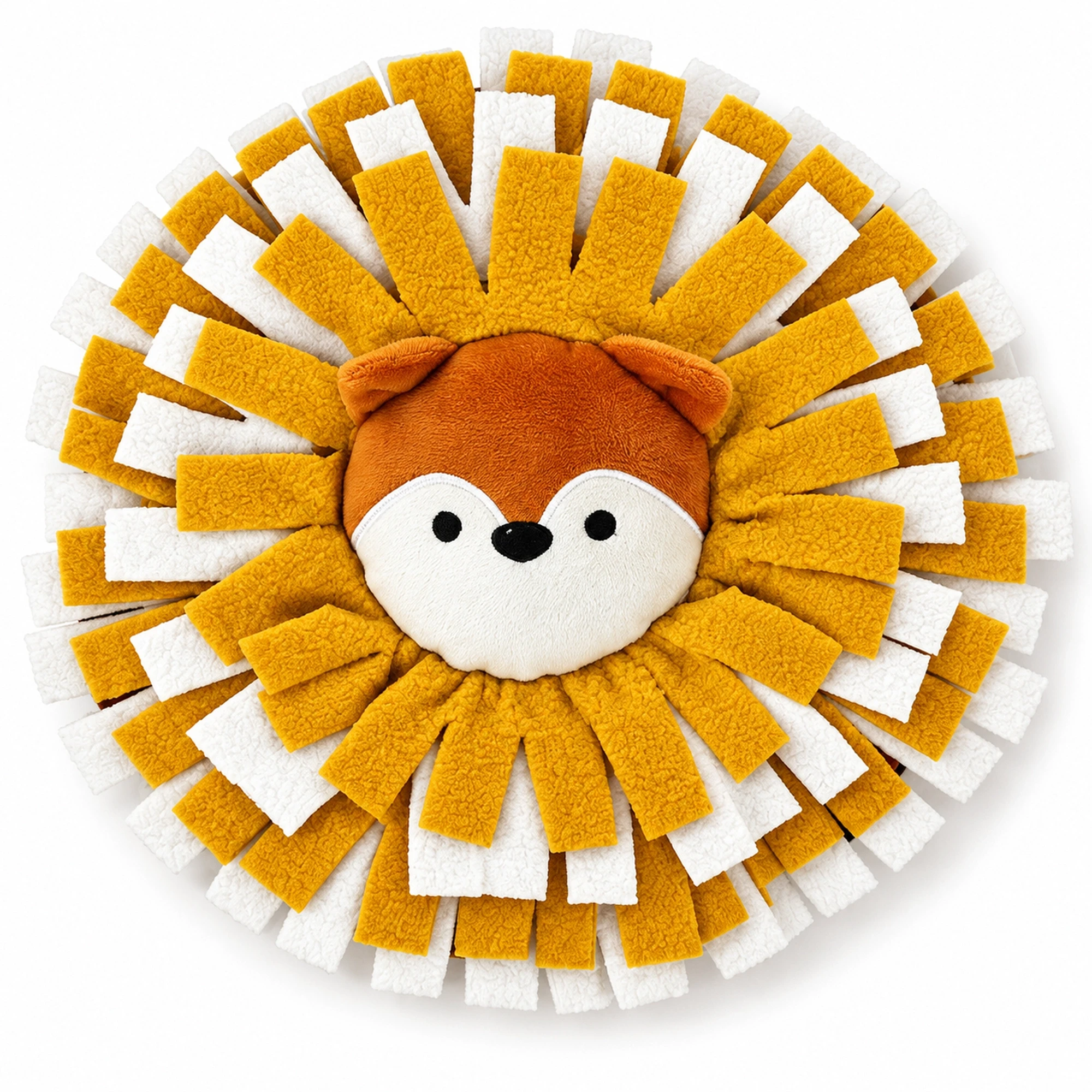
The Yellow Shiba Crinkle Snuffle Mat listing tells owners to hide small dry treats among its strips for supervised sniff-and-find play.
This guide explains the idea behind a snuffle mat, shows what three product descriptions say, and outlines one brand’s introduction routine. The sources used here provide no testing or timing of these JoyPetPlay mats; keep the brand routine below with its named maker.
What a snuffle mat is for
Whole Dog Journal describes a typical snuffle mat as fabric strips attached to a base, with food hidden for a dog to find by sniffing.
The magazine presents snuffle mats as an outlet for dogs’ foraging instincts.
When choosing a snuffle mat for dogs, keep that basic task in mind: offer a supervised food search. Do not use this guide as a promise that a particular design will calm your dog, solve picky eating or occupy them for a set time.
Read your mat before filling it
Look at the exact product description and identify where it says to put the food. Use that information to plan the session, rather than assuming every fabric shape works in the same way.
The Shiba listing describes a round mat with a raised Shiba face, layered yellow and white strips, crinkle material and a dotted black backing.
Use the strip description and the supervised sniff-and-find instruction together. Keep the focus on finding the treats, rather than treating the face or backing as a separate play feature.
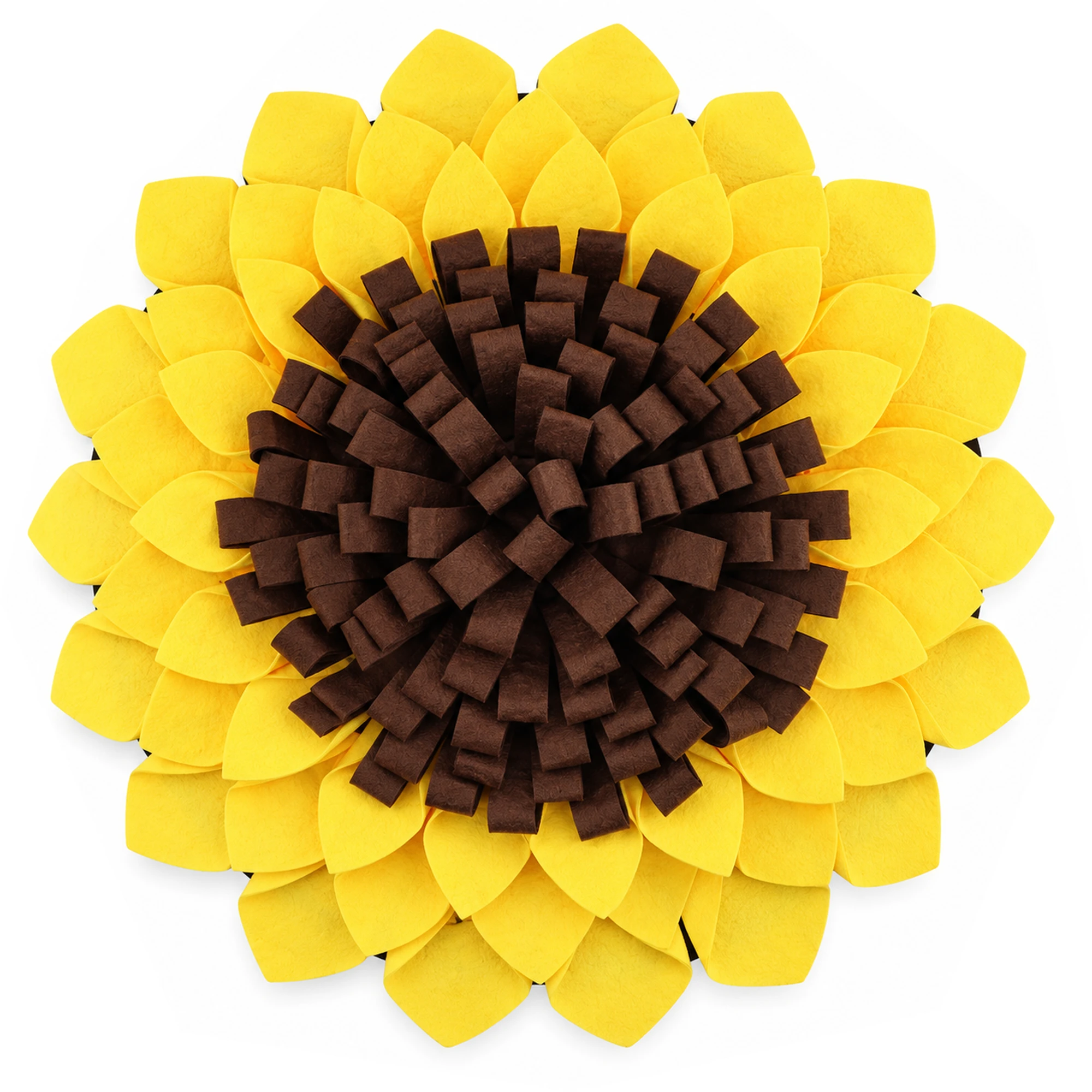
The Yellow Sunflower Snuffle Mat listing describes layered yellow petals and a brown folded-strip center for hiding treats. It says to supervise play and remove the mat if damaged.
For your setup check, locate those hiding areas before adding food. Do not assume the petals have the same depth or capacity as another mat’s strips.
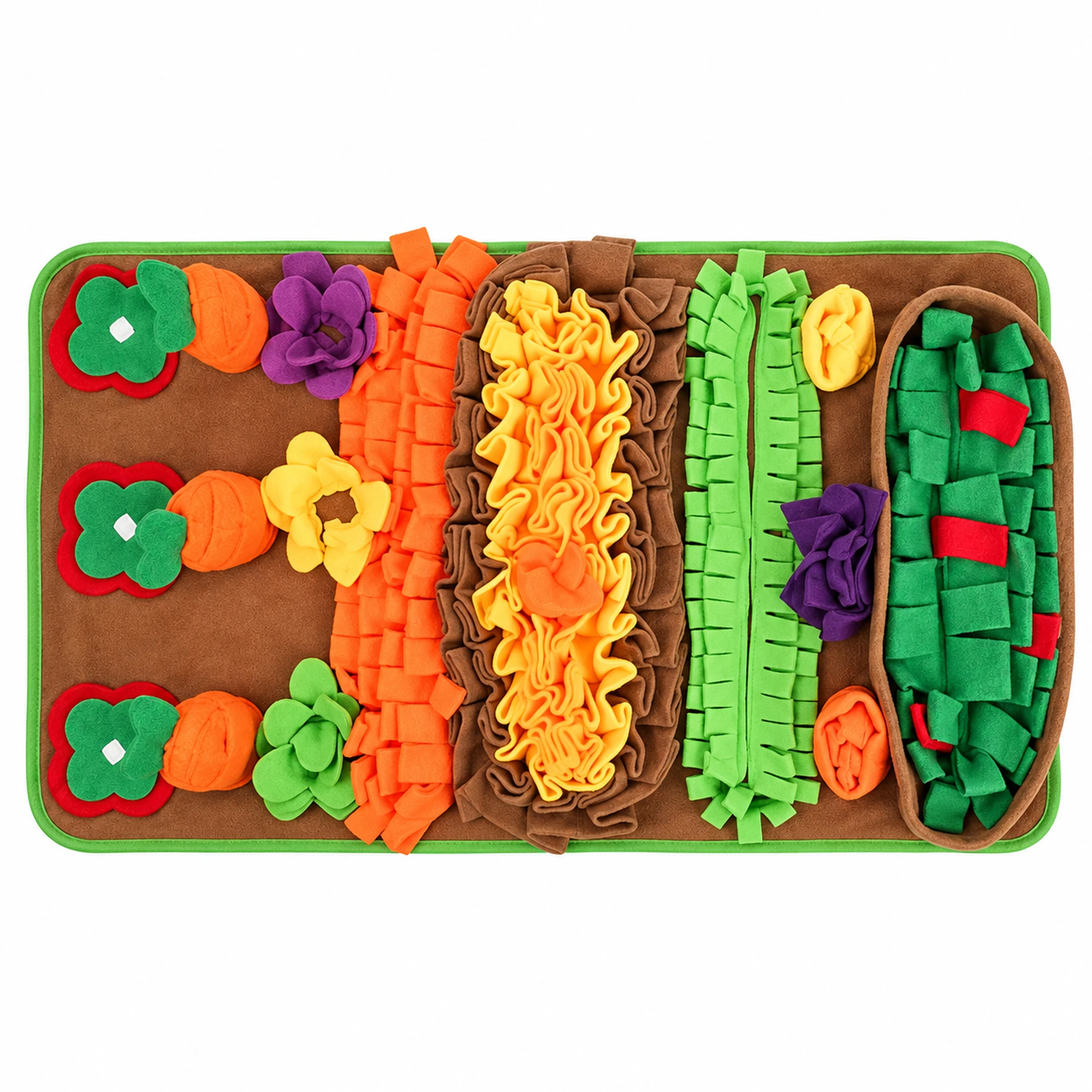
The Vegetable Plot Strip-and-Pocket Snuffle Mat description lists layered ruffles, rows of fabric strips and a raised fabric pocket. It says to supervise play and remove the mat if damaged.
Read the instructions for the mat you own when deciding which areas to fill. A description of a pocket or ruffle is not a difficulty rating, and this guide does not rank these three mats by how long the search takes.
How to use a snuffle mat: a brand routine with clear limits
Ruffle Snuffle’s introduction guide starts with three to five appealing treats placed loosely on top of its mat and asks owners to stay with the dog.
If the dog lifts or pulls the mat, the brand suggests asking for a sit or leave-it response, then pointing out the treats again.
Ruffle Snuffle says to put its mat away when all the treats are found and repeat the exercise twice daily for the first few days.
Its next step is to hide treats deeper, then mix the appealing treats with regular kibble.
These are that brand’s instructions for its own mat. Use them to understand one approach to introduction, while following your own product’s instructions. They do not establish a schedule, treat capacity or learning time for any JoyPetPlay design.
Before trying a session, decide who will supervise and where you will put the mat afterward. If you need to leave, end the activity rather than leaving the mat out while you do something else. For questions about what food or amount suits your dog, ask your veterinarian.
Will the food search take longer?
Whole Dog Journal says the Pet Parents Forager and PAW5 Wooly mats offer many hiding places and take dogs longer to find all the food. Its reviewer says the PAW5 took her two dogs the longest to complete among the mats she tested.
Keep those observations attached to the named mats. They do not provide a time estimate for the Shiba, Sunflower or Vegetable Plot designs. If your buying decision depends on a guaranteed session length, this guide cannot supply one.
For your own notes, record which mat you used, where you put the food and how the session went. Treat that as a record of your dog and your setup, not a benchmark for other dogs or a reason to leave the activity unsupervised.
Finish the session and check the mat
Ruffle Snuffle recommends supervising pets throughout use and removing its product if it becomes damaged.
Make your closing check part of the activity: finish the food search, look over the mat and put it away. Follow the exact product’s damage and care instructions before using it again. Do not choose a washing method from its appearance alone; confirm the method for that model.
Frequently asked questions
Are snuffle mats for foraging?
That is the use described by Whole Dog Journal above: finding food by sniffing through the mat. For the Shiba example, follow the listing’s specific instruction to hide small dry treats among the strips during supervised play.
Are snuffle mats actually good for dogs?
Use the foraging description to decide whether a supervised food search is an activity you want to try. This guide offers no measured health, calming or training benefit for JoyPetPlay mats. Ask your veterinarian about suitability if you have concerns about your dog’s eating or behavior.
Does the same introduction routine apply to every mat?
Use the instructions for your exact product. The routine above belongs to Ruffle Snuffle; do not assume its numbers or progression are validated for a different design.