The Promise and Skepticism Surrounding Automated Play
Most pet guardians have experienced buying an electronic pet toy only to see their cat back away in suspicion or bolt under the bed. Retail pet stores stock spinning laser towers, self-rolling balls, and battery-driven feather domes promising complete independent entertainment. Skeptical pet parents wonder whether automated toys deliver genuine physical exercise or just create annoying motor sounds while sitting forgotten on the floor.
The true outcome depends on acoustic engineering, mechanical design, and your individual pet predatory temperament. Automated devices fail when they emit loud whines, run along predictable loop pathways, or resist when caught. Conversely, smart electronic units succeed when they replicate the stop-and-start rhythms of live critters. Real mice rarely sprint across open rooms without pausing. They dart three feet, stop dead against a baseboard, twitch their tails, and slip under furniture.
Feline biology clarifies why specific automated gadgets engage pets while others fall flat. Indoor felines crave cognitive engagement throughout long solitary workdays. Calculating how long to play with cat helps balance direct human interaction with scheduled electronic toy sessions. Active domestic felines benefit from two separate twenty-minute sessions spaced across the day. Weaving automated play intervals into your daily cat play routine fills the quiet hours between morning feeding and evening cuddle time.
Self-Propelled Spheres and Obstacle Navigation Sensors
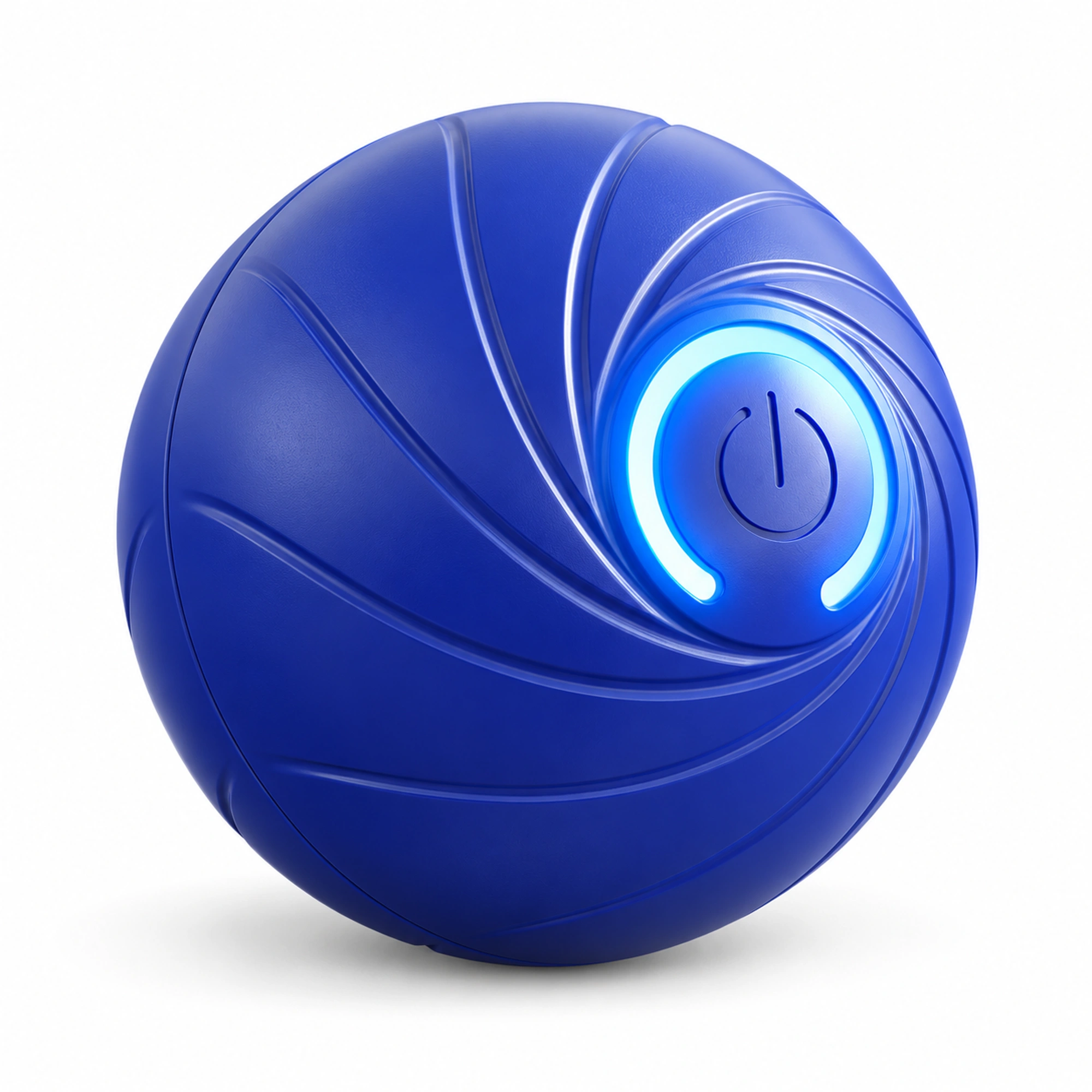
Early battery-powered balls rolled forward in rigid paths until wedging behind radiators or beneath heavy couches. Modern robotic spheres fix these navigation issues using internal balance sensors and off-center weights. The Blue Swirl Rechargeable Rolling Ball priced at $9.50 demonstrates modern robotic steering. Encased in textured food-grade silicone, this compact ball rolls across tiles and rugs with whisper-quiet grip.
Whenever the internal sensor registers a solid obstacle like a table leg or door frame, the motor reverses rotational drive and rolls into open floor space. This auto-correcting movement makes the unit a reliable autonomous interactive cat ball. Felines fascinated by erratic motion track the blue swirl graphics as the sphere zigzags down hallway corridors. The soft outer silicone muffles floor impacts, eliminating the sharp plastic rattles that frighten timid kittens.
Power management dictates whether a motorized toy gets used daily. Disposable miniature batteries drain within hours and create ongoing replacement costs. Contemporary motorized cat ball designs feature sealed lithium-ion cells charged with common USB-C cables. An internal sleep timer halts rolling after eight minutes to preserve power and prevent mental burnout. If your cat paws the resting sphere later, integrated touch sensors wake the drive motor for another chase sequence. Two selectable speed modes let timid cats watch a slow crawl before graduating to rapid swerving runs.
For guardians residing in studio apartments, quiet self-navigating spheres operate as dependable apartment cat toys. They steer cleanly around low furniture without tangling in television cords or overturning wastebaskets.
Pop-Out Feather Boxes and Ambush Predation
Rolling balls satisfy chase sprinting, but ambush predation demands patience, concealment, and sudden pounces. In natural settings, wild felines spend most hunting hours sitting quietly beside burrow openings waiting for small critters to show themselves. Automated hide-and-seek boxes copy this burrow dynamic through multi-hole peek-a-boo consoles.
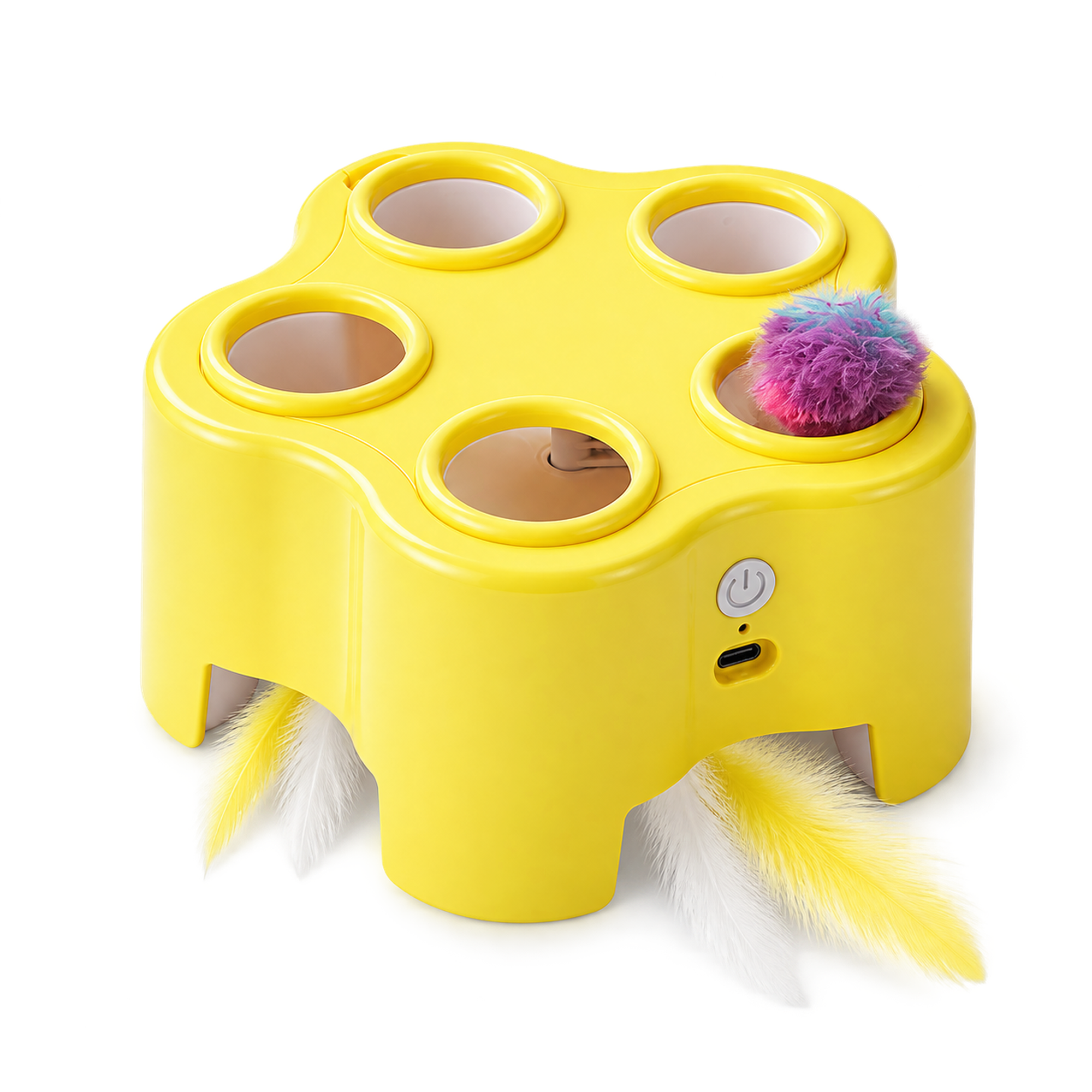
The Yellow Five Port Pop Feather Cat Toy priced at $17.00 creates an engaging ambush arena. Built inside a sturdy composite shell, the console includes five perimeter portals. A motorized feather wand pokes through a random portal, twitches for two seconds, and ducks back inside before claws can strike. The internal program varies hole choices and rest pauses, preventing the repetitive mechanical patterns that cause feline disinterest.
Cats stalk these ambush consoles with patient focus. They crouch low, steady their hind feet, and wait for the feather lure to peek out. Swatting claws into the portal provides tangible reward when paw pads grasp the soft plumage. Non-skid silicone feet keep the unit anchored to hardwood floors during energetic leaps. Built-in optical sensors detect approaching paws, activating the feather motor as soon as your cat walks near the box.
Vertical Tension Clamps and Motorized Rise-and-Fall Systems
Many domestic felines show little interest in floor-based rolling toys, favoring aerial targets that flutter up in the air. Hanging motorized systems target this vertical hunting instinct without requiring wall nails or ceiling brackets.
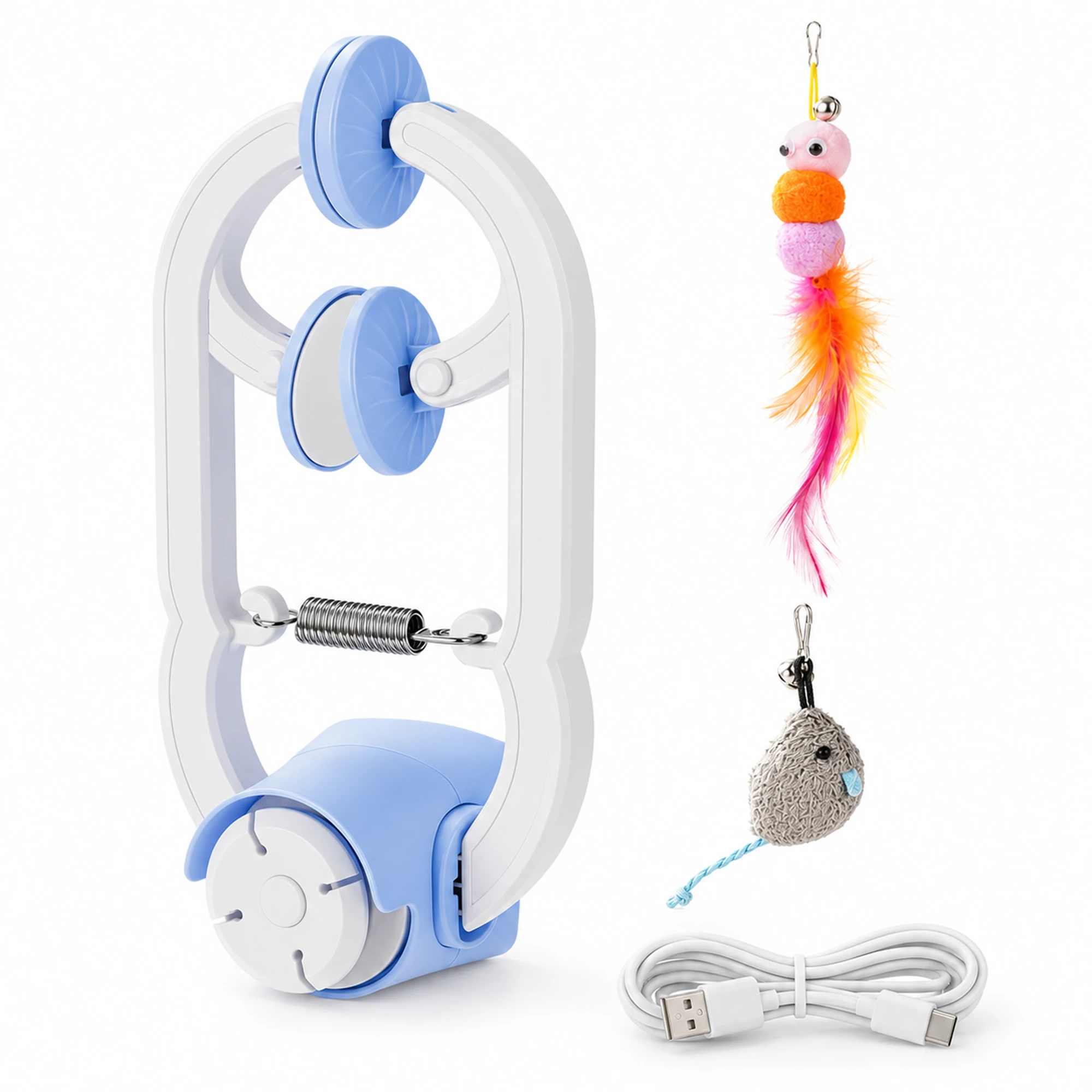
The Blue and White Clamp Cat Teaser priced at $21.00 fastens securely to office desks, dining tables, or cat tree edges with rubber-lined vice jaws. Inside the compact shell, a quiet motorized spool unspools a dangling teaser cord near the rug, stops, and jerks upward in short hops. This erratic vertical bounce mimics moths or birds flitting through low branches.
Tension safety sensors are essential for suspended motorized toys. When a leaping cat catches the lure in mid-air, the internal clutch feels sudden pull resistance and shuts off the motor spool immediately. This release clutch prevents strain on cat teeth and prevents string breakage. When your pet lets go of the target, the spool mechanism resumes winding after a brief delay. The internal rechargeable battery powers multiple play sessions on a single charge. Miniature planetary gears ensure smooth cord lifting through thousands of consecutive cycles.
For pet parents who prefer non-motorized kinetic movement, hybrid stations like the Cream Cloud Butterfly Track Toy priced at $39.90 unite stacked marble channels with an upright flexible butterfly teaser. Swatting the track balls flexes the upper wire rod, causing the butterfly to dance without electric motors or charging cables.
Acoustic Dampening and Feline Sensory Sensitivity
Feline ears detect frequencies up to sixty-four kilohertz, far beyond human auditory limits of twenty kilohertz. A small motor gear that seems quiet to human ears can emit a sharp high-pitched whine to a sensitive cat. These high-frequency gear noises trigger defensive caution rather than hunting instincts.
Top-tier electronic pet toys employ precision nylon gears and enclosed brushless motors to minimize mechanical noise. Soft silicone outer layers absorb gear vibration before sounds echo across hardwood floors. If your cat seems nervous around a new motorized device, introduce it slowly. Place the powered-off device near feeding bowls with a sprinkle of catnip for twenty-four hours. Allow your cat to smell and inspect the unit before switching on the power switch.
Multi-cat homes require careful placement of automated devices. A bold territorial cat might monopolize an active toy, preventing shy companions from joining the chase. Setting up multiple interactive stations in separate rooms lets every cat hunt peacefully without territorial stress.
Key Selection Criteria for Buying Motorized Toys
When choosing automated cat enrichment devices, check these physical construction standards:
- Low Noise Output: Pick units that generate under forty decibels of motor sound during active play.
- Smart Sleep Cycles: Look for automatic shut-down intervals that preserve battery and prevent sensory fatigue.
- Modern USB-C Power: Insist on rechargeable lithium cells instead of wasteful disposable button batteries.
- Clutch Safety Stops: Ensure motorized lines and reels incorporate instant tension-release clutches.
- Robust Shell Materials: Verify non-toxic ABS plastic and food-grade silicone skins that withstand deep bites.
- Non-Linear Movement: Steer clear of simple single-circle runners that fail to hold attention.
- Quick-Change Lures: Confirm the presence of snap clips so chewed feathers or worn pom lures can be swapped quickly.
Motorized cat toys deliver real exercise when engineered around feline hunting biology. By pairing randomized movements, whisper-quiet motors, and safety clutches, automated toys supply valuable mental stimulation for indoor cats.