Cat feather toys are safe exclusively during supervised interactive play sessions where an owner controls the wand and monitors every bite. They become dangerous foreign body ingestion and choking risks the second they are left on the floor unattended, because cats naturally chew, pluck, and swallow bird plumage. For cat owners wondering about cat feather toys when are they safe, the answer rests on active supervision.
Feather wands and automated teasers trigger an intense predatory drive that ordinary plastic balls cannot match. Keeping your cat safe requires understanding the boundary between active shared exercise and unmonitored chewing. Here is what veterinary safety records and feline behavior show about when are cat feather toys safe to use, how different wand mechanisms change the risk, and how to protect your cat during every hunt.
The Predatory Appeal and Hidden Physical Risks
Feathers tap directly into a feline instinct known as the predatory motor pattern: stalk, pounce, capture, and bite. When a feather flutters through the air, its erratic motion mimics the erratic flight of a songbird. This stimulation provides vital mental enrichment and cardiovascular exercise for indoor cats.
Are feather toys safe for cats during independent play? Veterinary records confirm they are not. Problems begin when the hunt transitions into consumption. In the wild, cats catch prey and pluck plumage to reach meat. During indoor play, this same instinct drives cats to gnaw on the central quill shaft (rachis). Natural quills can splinter into sharp, rigid fragments when chewed. If swallowed, these rigid shafts can puncture the esophagus or create painful mechanical obstructions in the stomach or intestines.
Synthetic dyes, metal wire connectors, and decorative jingle bells add extra danger:
- Loose Bells and Fasteners: Metal bells crimped onto wands can detach when a cat bites hard, presenting an immediate choking hazard.
- Linear String and Wire: Flexible cords or nylon fishing lines attached to wands can cause linear foreign body obstructions if severed and swallowed, cinching intestinal walls like a drawstring.
- Chemical Treatments: Cheap dyed plumage may contain non-food-safe dyes or industrial glues that irritate the mouth and digestive tract.
Feather toys should never be treated as self-soothing plushies. They are active predatory instruments meant to be steered by human hands from start to finish.
Comparing Wand Mechanics: Flexible Wire vs Mechanical Reel
Different wand designs give owners distinct levels of control during interactive play. Picking the right mechanism depends on your cat’s hunting style and your indoor play space.
Flexible Wire Wands: Rapid Ground and Aerial Acrobatics
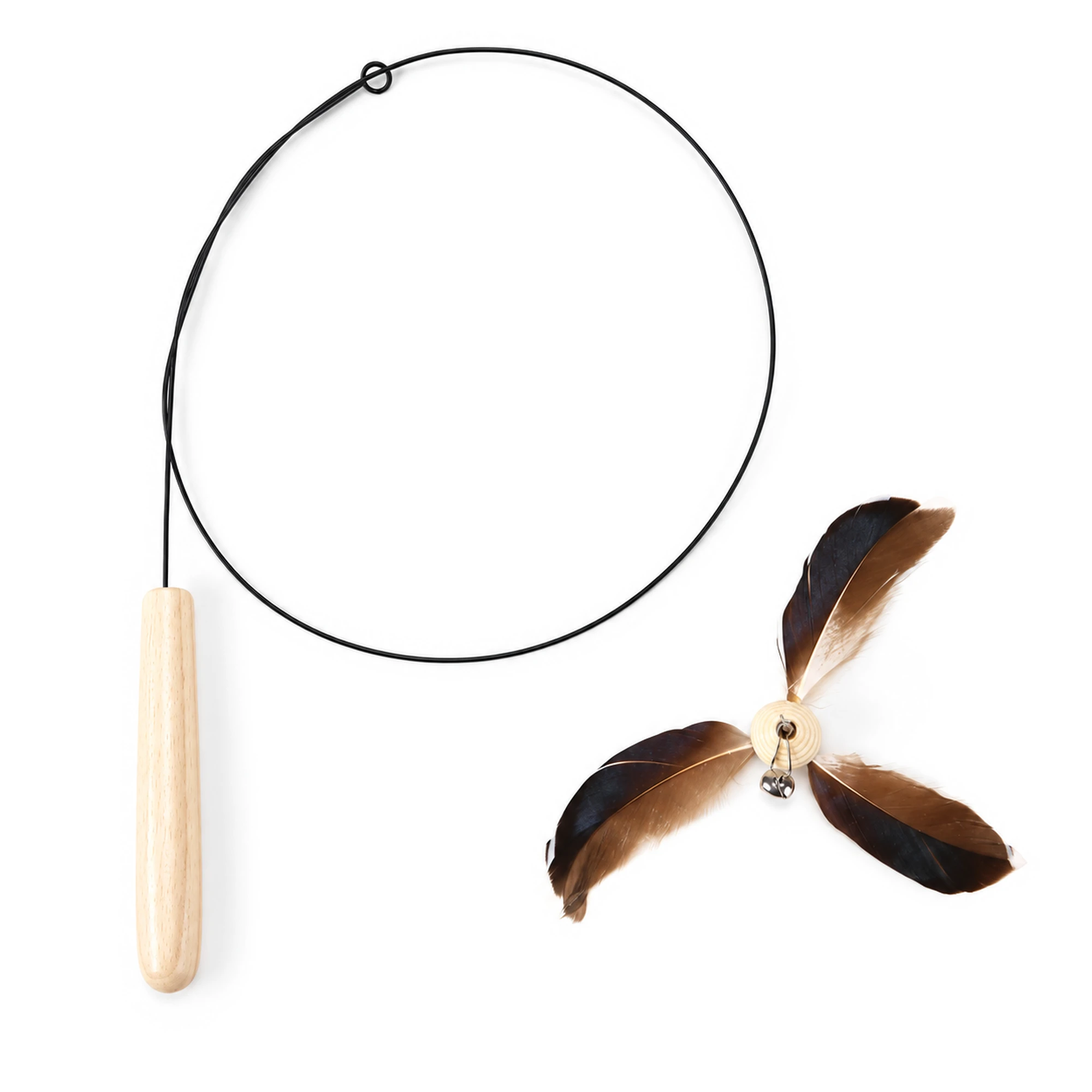
Wands with a slender steel wire rather than a textile cord offer crisp, responsive control. The Natural Three Feather Spinner Cat Wand pairs a solid wooden handle with a springy flexible wire, three natural feathers arranged around a central wood bead, and an attached metallic bell for supervised cat feather toy sessions.
The springy wire prevents the toy from tangling around a cat’s paws or neck during fast mid-air leaps. The three-feather spinner design spins smoothly when flicked through the air, mimicking an injured sparrow. Because the wire holds its shape, you can lift the feathers just out of reach before your cat chomps down completely on the central bead.
Cat feather toy safety rules for wire wands: Never let your cat grab the wire and run beneath furniture. If your cat catches the feather cluster, allow a two-second victory grip, then trade with a healthy freeze-dried treat before taking the wand back into the air.
Telescoping Reel Wands: Controlled Distance Chasing
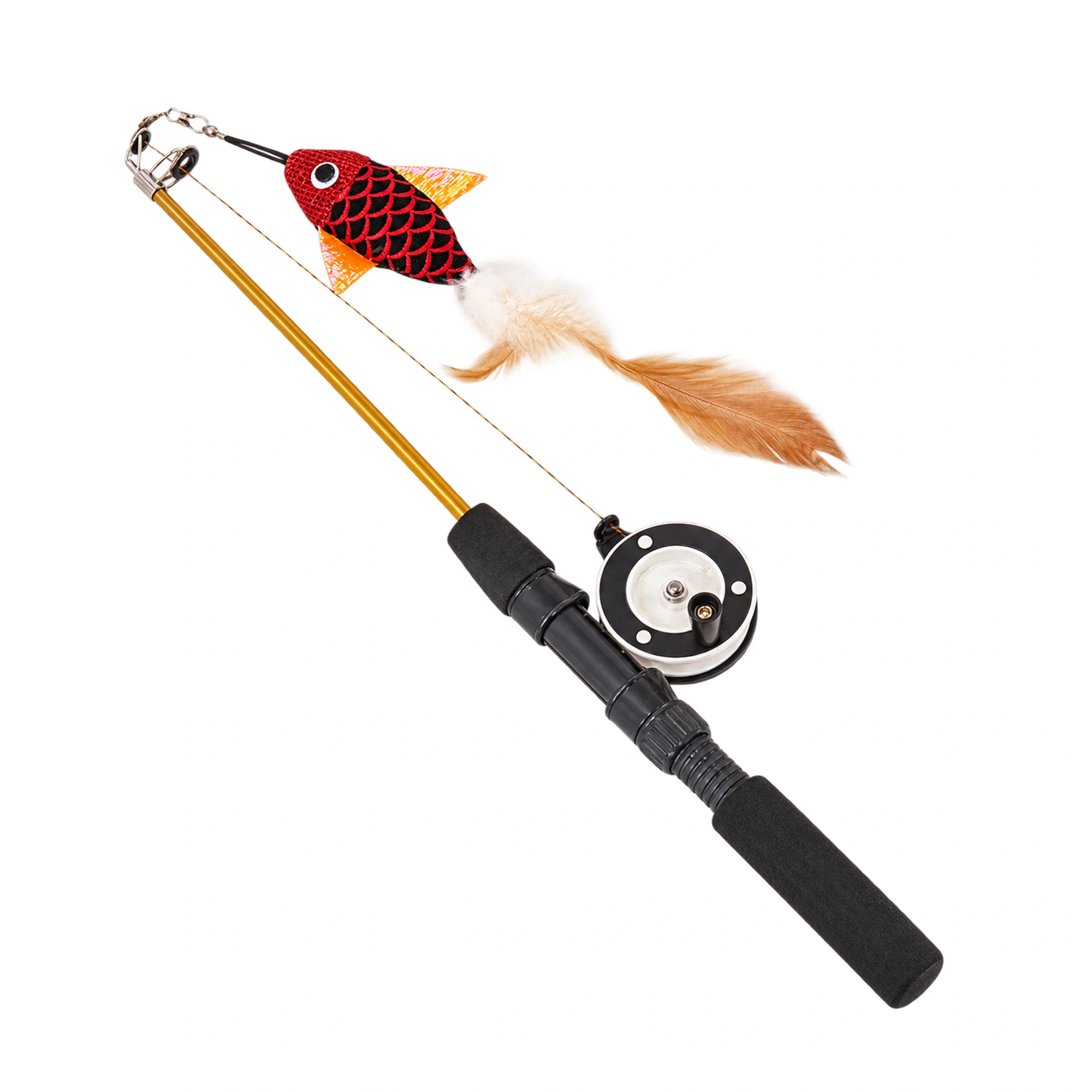
If you have a large living room or hallway, a fishing-style rod lets you cast and retrieve lures across carpet without running yourself ragged. The Mini Fishing Reel Feather-Fish Wand features a miniature hand-cranked reel and a telescoping gold-toned rod that guides a red fabric feather-fish lure during shared cat play.
The mechanical reel lets you crank the line back smoothly, keeping the red fabric fish dancing just ahead of an accelerating feline. Telescoping rods also allow you to adjust the overall reach to match your ceiling height and furniture layout.
Cat feather toy safety rules for reel wands: The thin line must always remain taut and under active tension. Never leave slack line coiled on the rug where eager paws or teeth can snarl in the filament. When the session finishes, reel the red feather lure all the way up to the rod tip before storing it away.
Motorized Feather Units: Pop-Up Mechanics and Safety Boundaries
Motorized teasers automate movement, making them tempting choices for busy pet parents. However, automated toys introduce specific safety boundaries that require active adult presence.
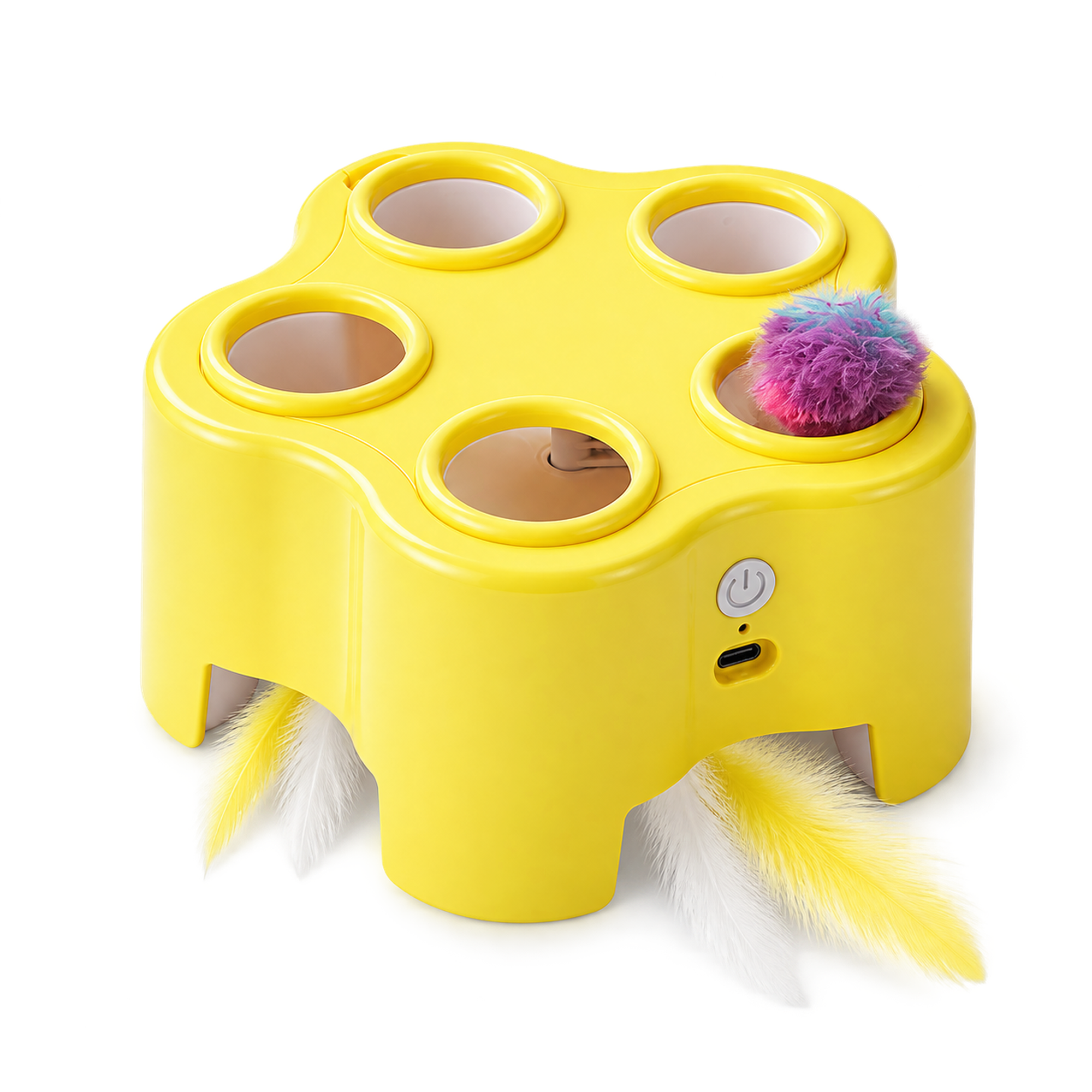
The Yellow Five-Port Pop and Feather Toy is a flower-shaped cat toy with five top ports for pom play and two rotating feather ends beneath the base. As the concealed motor spins, the feather ends dart unpredictably from beneath the petals, triggering a cat’s burrow-hunting instincts.
While automated pop-up toys keep cats engaged at ground level, you should never turn on a motorized feather unit and walk into another room. Here is why:
- Trapped Claws: If a cat hooks a claw firmly into the moving feather arm while the motor continues turning, it can strain a paw joint or pull a nail bed.
- Aggressive Plucking: Without human intervention to steer the toy away, a determined cat can hold the unit down with its paws and pluck the feathers clean off the rotating hub in minutes.
- Session Timing: Automated play sessions should last 10 to 15 minutes. Extended running can overstimulate cats or burn out the rechargeable motor.
Always sit in the room while the Yellow Five-Port Pop Toy operates, and switch the power button off the moment play winds down.
The Five-Point Pre-Play Safety Checklist
Before waving any feather wand or turning on a motorized base, run this quick five-point safety check:
| Component | What to Inspect | Immediate Action If Damaged |
|---|---|---|
| Quill Shafts | Check for cracked, chewed, or bent shafts. | Trim away broken quills or replace the feather refill. |
| Bell & Hardware | Confirm bells, jump rings, and swivel clips are tightly closed. | Remove loose bells completely or tighten clips with pliers. |
| Attachment Line | Run fingers along wire or string to feel for kinks or frays. | Cut and re-tie frayed string, or discard kinked wire. |
| Feather Attachment | Pull gently on individual feathers to test glue integrity. | Discard loose plumage so cats cannot pluck and swallow it. |
| Motor Ports | Inspect gaps for caught pet hair, dust, or bent components. | Clean motor ports before powering the device on. |
Post-Play Storage: The Lock-Away Protocol
The single most common cause of feather toy accidents is leaving the toy out on the carpet after the human gets tired. Cats revisit toys in the middle of the night or while owners are at work, chewing off plumage in boredom.
Follow this simple three-step lock-away routine:
- The Victory Exchange: End every play session on a positive note. Let your cat capture the lure, praise them, and offer a pea-sized piece of cooked meat or a crunchy dental treat in exchange for the toy.
- Wipe Down and Wind Up: Wipe saliva off the feathers with a dry paper towel to prevent mildew. Wind any dangling line tightly around the wand handle.
- Secure in a Latched Cabinet: Store all wands, refills, and motorized units inside a closed closet, lidded storage bin, or childproof drawer. Never leave wands leaning in a corner or hanging behind doors, as curious cats can easily reach and chew them.
Frequently Asked Questions
Can cats digest bird feathers if they swallow them?
Small barbs from clean natural feathers will usually pass through a cat’s gastrointestinal tract without complications. However, stiff central quill shafts (rachis) do not digest easily and can cause severe stomach irritation, vomiting, or intestinal impaction. If your cat swallows a whole feather cluster or plastic hardware, monitor for vomiting, lethargy, or loss of appetite and contact your veterinarian.
Are dyed craft feathers safe for cat toys?
No. Standard craft store feathers often use industrial chemical dyes that are toxic to felines when licked. Cat toy plumage should use either naturally colored feathers, such as the natural barred plumage on the Natural Three Feather Spinner, or certified non-toxic food-grade vegetable dyes.
How long should an interactive feather wand session last?
Interactive wand play should last between 10 and 15 minutes per session, once or twice a day. This mirrors a cat’s natural hunting cadence: intense bursts of stalking, sprinting, and leaping, followed by rest and eating. Stop earlier if your cat begins open-mouth panting or lies on its side ignoring the lure.