Indoor domestic cats lead comfortable and sheltered lives, yet eliminating natural hunting, stalking, and foraging routines frequently leaves predatory drives unchanneled. In wild habitats, felines dedicate extended energy toward tracking small prey intermittently across the day. When confined indoors beside a static food bowl, consuming a full meal takes mere seconds. This rapid ingestion frequently triggers regurgitation episodes, behavioral frustration, or unwanted weight gain.
Interactive cat puzzle feeders for indoor cats transform routine meals into stimulating problem-solving sessions. By requiring your cat to nudge, paw, or rotate a dispenser to retrieve kibble, an effective cat puzzle feeder triggers the natural hunt-catch-eat cycle. However, introducing an overly complex cat food puzzle too quickly can lead to frustration, disinterest, or bowl-tipping tantrums.
Here is how to choose the best cat puzzle feeder setup to match your cat’s current experience level, starting with a free-rolling cat treat dispenser for beginners and advancing to multi-tier rotary spinners.
Why Indoor Cats Need Feeding Enrichment Puzzles
Cats Protection UK emphasizes that feeding enrichment is especially vital for indoor felines, granting them opportunities to exhibit species-typical foraging behaviors. Conventional static food dishes eliminate cognitive engagement entirely.
- Slows Rapid Eating: Cats that inhale their meals without chewing frequently trigger digestive upset and vomiting. A well-designed cat puzzle feeder releases dry food piece by piece, enforcing measured bites and better digestion.
- Engages Natural Predatory Sequences: Cats are hardwired to search, stalk, and manipulate objects before eating. Cat food puzzles satisfy this mental loop, helping alleviate daytime boredom and stress-related behaviors.
- Encourages Physical Activity: Instead of slouching beside a dish, cats must walk, crouch, paw, and nudge their feeder around the floor, burning calories as they dine.
- Combats Boredom and Destructive Habits: A mentally stimulated cat is far less prone to midnight zoomies, counter-surfing, or persistent meowing for snacks.
Stage 1: Beginner Rolling Treat Balls for Low Frustration
For playful kittens, senior cats, or felines entirely unfamiliar with puzzle feeding, the primary priority is swift positive reinforcement. When a puzzle demands complicated paw maneuvers before dispensing a single kibble piece, many cats quickly disengage.
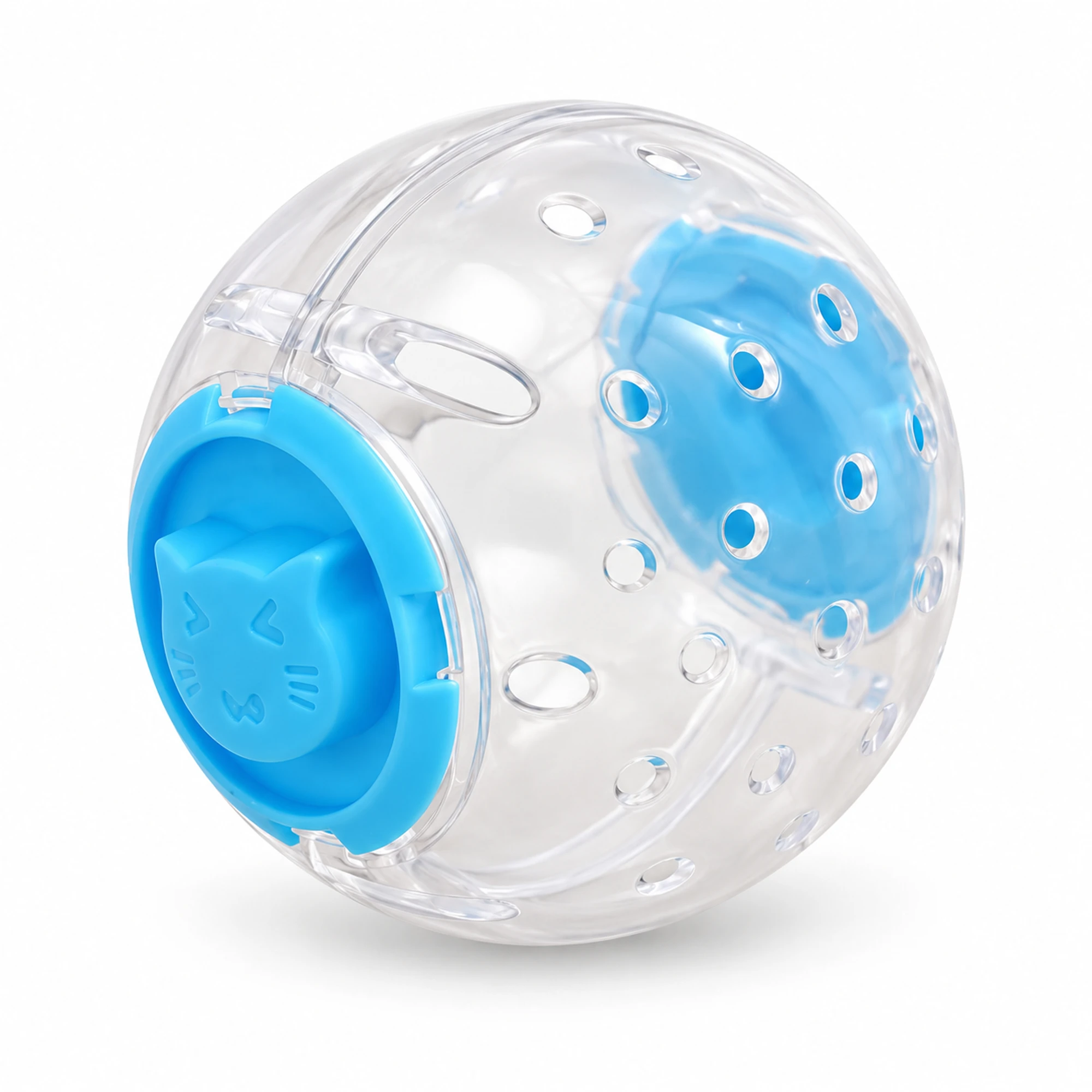
A mobile, single-chamber sphere like the Blue Cat-Face Roll and Treat Ball serves as the ideal introductory rolling cat treat dispenser.

Key Specifications & Mechanics
- Dimensions and Weight: Measuring 11.5 cm across and weighing 150 g, the sphere offers effortless movement for cats of all sizes.
- Material Composition: Built from durable ABS and food-grade clear PC plastic for safe, long-lasting indoor play.
- Interactive Chamber: Transparent walls let your cat see and smell rattling treats, while an internal labyrinth baffle prevents sudden dumping to prolong each foraging challenge.
How It Works for Novices
Because this rolling cat treat dispenser moves in every direction, virtually any contact, such as a curious nose boop or an exploratory front paw swat, causes it to roll and release kibble. The immediate reward teaches your cat the core cause-and-effect relationship: movement equals food.
Stage 2: Intermediate Rotating Treat Dispensers
Once your cat reliably bats rolling balls across the room and empties them with ease, they are ready for stationary mechanical puzzles that require deliberate multi-step coordination.
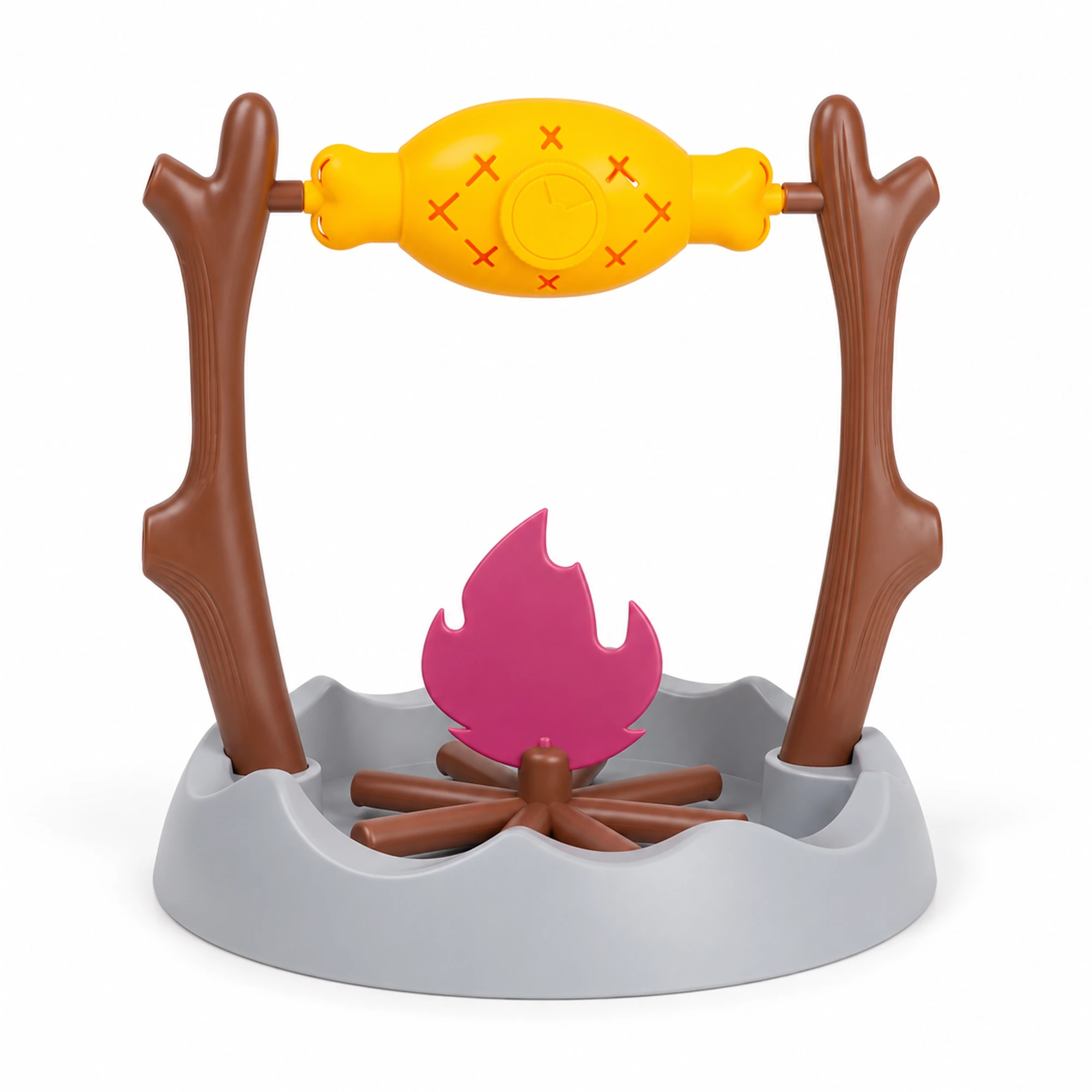
The Rotisserie Treat Barrel & Flame Spinner provides an elevated cognitive challenge.

Key Specifications & Mechanics
- Dimensions and Build: Sized at 30 × 30 × 29 cm and weighing approximately 536 g, the reinforced ABS frame provides a stable footprint.
- Dual Mechanical Play: Suspended horizontal barrels spin freely around a central axle, dropping kibble onto a rotating flame-shaped ground spinner.
- Targeted Coordination: Food requires purposeful strikes to release from above, keeping active felines mentally and physically challenged.
Why Intermediate Feeders Challenge Smart Cats
Stationary rotary puzzles demand fine motor control. Cats must learn to regulate the speed and force of their strikes so food drops cleanly onto the capture tray. This two-phase coordination, spinning above and foraging below, keeps agile, food-motivated felines thoroughly occupied.
Feature & Specification Comparison
| Feature / Metric | Blue Cat-Face Roll and Treat Ball | Rotisserie Treat Barrel & Flame Spinner |
|---|---|---|
| Best For | Beginners, kittens, hesitant foragers | Experienced solvers, food-motivated hunters |
| Puzzle Type | Dynamic mobile roller | Stationary multi-tier rotary dispenser |
| Dimensions | 11.5 × 11.5 × 11.5 cm | 30 × 30 × 29 cm |
| Weight | 150 g | 536 g |
| Primary Interaction | Nose boop, ground swat, floor roll | Upright paw batting, axle spinning, floor gathering |
| Material Construction | ABS + clear PC transparent chamber | Reinforced ABS with weighted non-skid base |
| Internal Flow Control | Internal maze baffles | Adjustable dispensing aperture slots |
| Price Point | .00 | .00 |
Step-by-Step: How to Introduce a Puzzle Feeder Without Frustration
Cats are creatures of habit. Abruptly throwing away their standard food bowl and locking their entire meal behind a complex puzzle can provoke stress and fasting. Follow this phased transition protocol:
Step 1: Prime the Object (Day 1 to 2)
Place the new feeder next to your cat’s regular bowl while it is completely unlatched or set to the easiest possible aperture. Scatter a few high-value, fragrant treats directly around the base of the toy so your cat associates the object with delicious rewards.
Step 2: Set to Maximum Payout (Day 3 to 4)
Fill the feeder chamber with a blend of standard kibble and fragrant treats. Adjust the opening so food drops out with the slightest touch. Demonstrate the movement yourself by nudging the ball or spinning the barrel in front of your cat.
Step 3: Shift Portion Ratios (Day 5 to 7)
Begin serving half of your cat’s dry ration in their conventional dish and the remaining half in the puzzle feeder. Once they consistently finish the puzzle portion first, retire the standard bowl for dry feeding sessions.
Step 4: Advance Complexity (Week 2 and Beyond)
Gradually tighten aperture settings or progress from the 150 g rolling ball to the multi-tier rotisserie spinner. Keep the experience fresh by rotating puzzle types every few days.
Nutrition and Weight Safety Rules
Interactive feeding should enhance your cat’s health, not cause unintentional weight gain.
- Deduct From Daily Caloric Intake: Cats Protection UK advises that food should be taken out of your cat’s daily amount of weighed biscuits to avoid obesity. Never treat puzzle meals as extra snacks on top of regular maintenance rations.
- Kibble Size Compatibility: Ensure the dry kibble pellets are slightly smaller than the feeder opening to avoid stubborn jams that cause frustration.
- Supervise Early Sessions: Watch your cat during initial interactions. If a cat becomes overly agitated, bites the plastic excessively, or attempts to knock the structure off elevated furniture, reset to an easier difficulty level.
Frequently Asked Questions
Can senior cats or kittens use puzzle feeders?
Yes. Senior cats benefit substantially from mild cognitive stimulation that preserves joint mobility and mental alertness, whereas young kittens develop foundational problem-solving coordination. For both age brackets, begin with lightweight mobile units like the 150 g Blue Cat-Face Roll Ball, requiring minimal physical leverage to set into motion.
How do I clean interactive treat dispensers?
Hand wash the chambers using warm water and pet-safe unscented dish soap. Rinse thoroughly to ensure no soap residue remains, and allow the components to air dry completely before refilling with dry kibble to prevent moisture buildup or mold.
What if my cat ignores the puzzle feeder completely?
Lack of interest almost always stems from two factors: either the cat is free-fed all day from an open bowl (meaning they have zero hunger drive), or the initial difficulty was set too high. Remove free-choice food, introduce high-value freeze-dried meat treats into the puzzle, and leave the dispensing holes fully open until interest is firmly established.