When your living room rug resembles a chaotic pet supply warehouse while your dog completely ignores the pile, you are encountering natural canine toy habituation. Leaving dozens of squeakers, plush toys, and rubber bones scattered permanently across the floor strips every item of its novelty value. Within a few short days, your dog perceives the entire assortment as stationary household furniture rather than captivating prey or puzzle opportunities.
Implementing a structured toy rotation framework resolves this indifference without demanding nonstop visits to the pet supply store. By categorizing canine playthings into functional subsets and restricting active access to three or four items at any time, you consistently revitalize your pet’s curiosity, extend material longevity, and intercept safety hazards before emergencies occur.
Why Dogs Get Bored of Toys: The Science of Habituation
Canine interest in toys is driven primarily by sensory novelty and predatory play sequences. In domestic environments, olfactory and visual familiarity set in quickly. When a toy remains on the living room rug for two weeks straight, its scent blends into the household background, and the dog no longer associates it with active reward or mental engagement.
Online communities frequently discuss this frustrating drop in canine enthusiasm. A dog owner shared that when they bring home a new toy their dog loves it, but after a few days he ignores it and leaves a basket full of expensive toys untouched, asking how to encourage him to reengage. This pattern does not mean the dog lacks play drive or dislikes the items. Instead, the dog’s nervous system has adapted to constant exposure. Reintroducing that same toy after two weeks hidden in a closed cupboard triggers the exact same neurological burst of excitement as unwrapping a brand-new purchase.
Understanding why rotate dog toys is essential for healthy behavioral management:
- Olfactory Reset: Dogs explore through scent. Confining inactive toys in sealed containers protects them from household odors and dust, keeping their distinct textures and play scents sharp.
- Preventing Satiation: Continuous availability makes an item ordinary. Scarcity generates intrinsic interest.
- Focused Attention: Too many items create choice fatigue. Dogs presented with an overwhelming pile often walk away completely, whereas two or three specific items encourage sustained focus.
Setting Up the 3-Bin Rotation Framework
The most dependable way to manage rotation is a simple three-bin system organized by play style. Instead of grouping toys by color, brand, or room, divide them according to how your dog interacts with them. This guarantees that your dog always has a balanced mix of physical exertion, mental problem-solving, and calming comfort available during each cycle.
Bin A: Solo Chew and Foraging
This category focuses on calming jaw exercise, independent crate time, and mental stimulation. Ideal items include slotted treat bones, durable rubber dispensers, and textured teething sticks. Limit access to one active toy from this bin per cycle.
Bin B: Interactive and Tug Play
This category channels physical energy, cooperative human-dog games, and impulse control training. Ideal items include floor-anchored suction tugs, braided rope tugs, and fetch balls. Limit access to one active toy from this bin per cycle.
Bin C: Comfort and Tactile Plush
This category satisfies gentle indoor carrying, sniffing, coddling, and soft tactile settling. Ideal items include unstuffed soft plush toys, squeaky fabric companions, and snuffle mats. Limit access to one active toy from this bin per cycle.
Reserve Bin: High-Value Supervised Rewards
Keep a separate reserve container stored completely out of sight and reach in a closet. This bin contains your dog’s highest-value toys, reserved strictly for training breakthroughs, veterinary visit distractions, or severe thunderstorm anxiety. Because access is rare and controlled, these items retain extreme motivational value for months.
Practical Scheduling: 3-Day vs. Weekly Rotations
Consistency matters far more than complexity. Choose a rotation schedule that matches your personal household routine.
The 3-to-4-Day Fast Cycle (Best for High-Drive Breeds)
Working breeds, adolescent puppies, and high-energy terriers habituate to toys rapidly. For these dogs, swap out active items every Sunday morning and Wednesday evening. This fast schedule ensures that by the time curiosity begins waning on day three, fresh options arrive to sustain engagement.
The Weekly Set-and-Forget Schedule (Best for Busy Guardians)
If juggling mid-week swaps feels unrealistic, establish a fixed weekly ritual every Saturday or Sunday morning. Gather the three active toys, run your safety check, wash slobbery surfaces, place them into their designated bins, and draw three fresh items for the coming week.
Signs It Is Time to Rotate Early
Rather than following a rigid clock, observe your pet’s body language. Swap a toy immediately if you notice:
- Your dog sniffs an active item and walks away within five seconds.
- The toy stays in the exact same spot on the floor for twenty-four hours untouched.
- Your dog begins seeking out non-toy household items, such as shoes, cardboard boxes, or table legs, indicating unmet chewing or foraging needs.
Integrating Daily Solo Puzzles and Active Tug Play
Selecting the right equipment within each bin category makes the rotation schedule significantly more effective. Durable catalog toys with multi-functional features deliver variety without clutter.
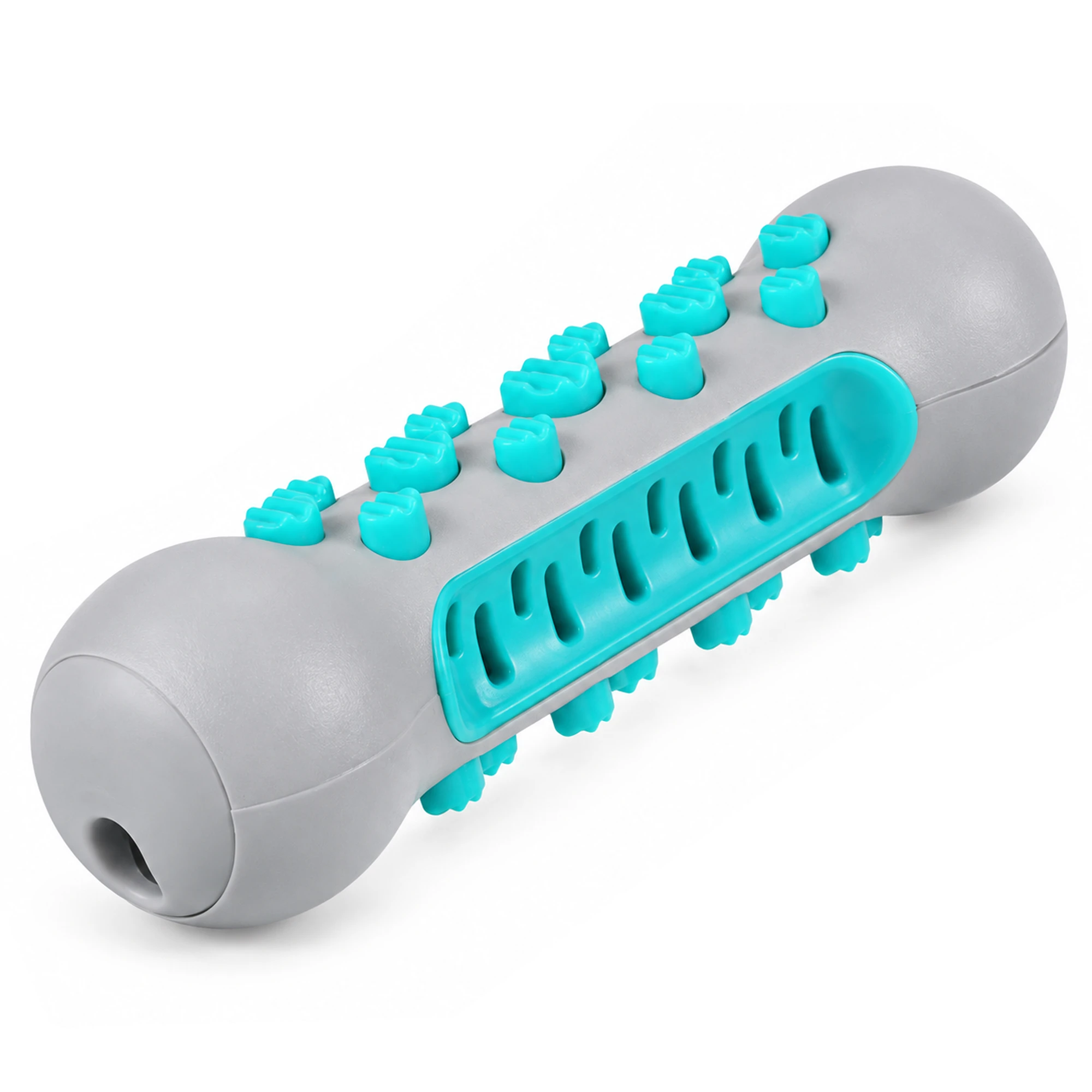
Solo Chewing and Mental Foraging: Blue and Gray Bone Dog Toy
For Bin A (Solo Chew and Foraging), combine jaw movement with treat-dispensing rewards to keep your dog focused during quiet hours or crate time.
A gray bone-shaped dog toy with turquoise-blue raised nubs, a slotted side panel, rounded ends and an end opening. Includes one assembled toy. Supervise play and remove if damaged. Supplier-reported SKU piece weight: 147 g; supplier piece dimensions: 15 × 4.6 × 4.6 cm. These figures are not independently measured; net/gross weight and packaging inclusion are unspecified.
The slotted side panel on this bone allows you to pack wet kibble, peanut butter, or carrot sticks into the interior cavity. As your dog works their tongue and teeth against the exterior raised nubs to extract the food, the prolonged licking releases soothing endorphins. Rotating this puzzle bone out after four days ensures that when it returns to circulation, your dog tackles the food challenge with renewed vigor.
For additional safety insights regarding natural rubber firmness and chew durability, read our guide on are rubber dog toys safe. If your dog solves mental games too quickly, explore our analysis on are puzzle toys good for dogs.
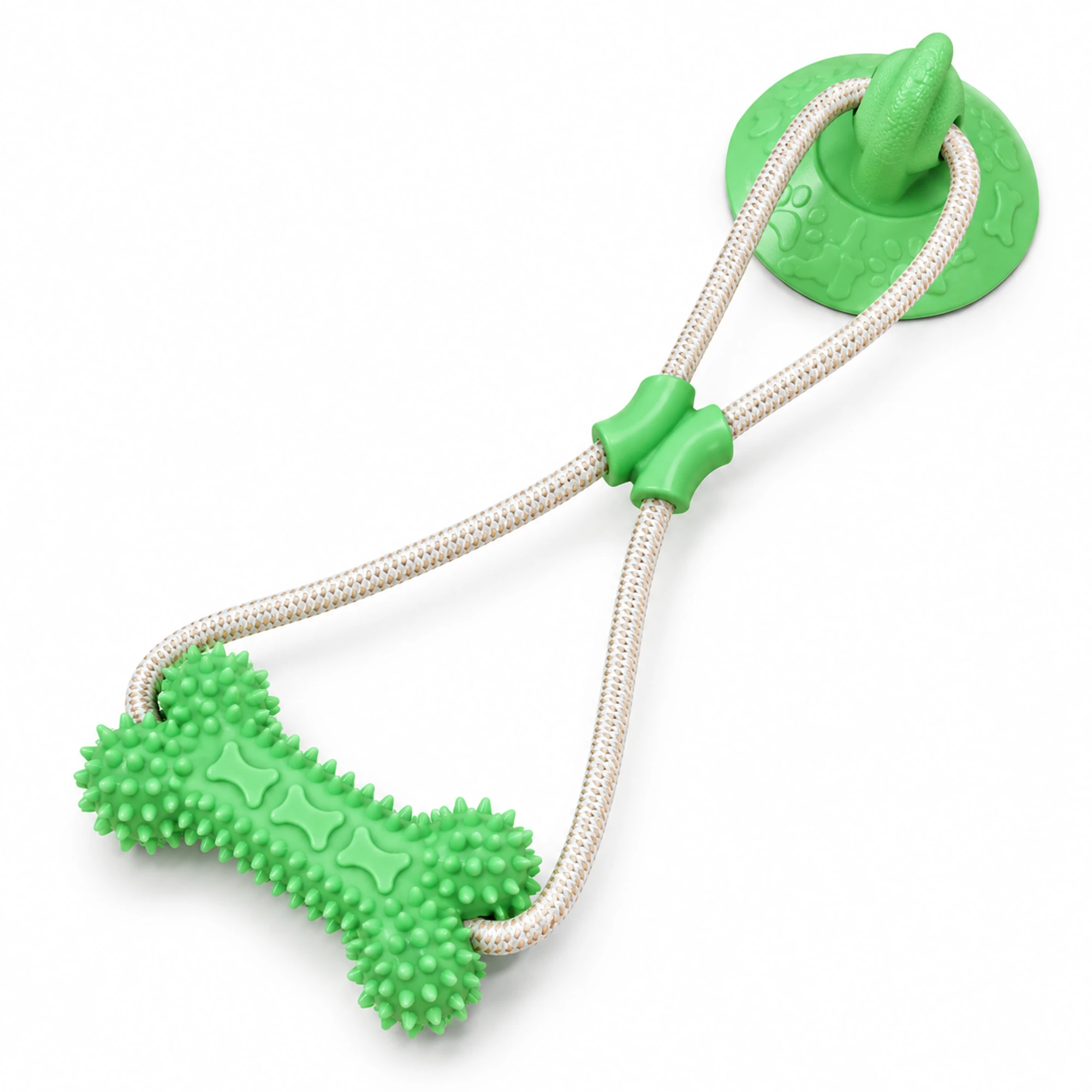
High-Energy Physical Engagement: Green Suction Bone Tug Game
For Bin B (Interactive and Tug Play), dynamic resistance channels canine energy into structured exercise.
Press the green suction base onto a clean, smooth floor and invite your dog to pull the textured bone. Slide the green rope adjuster to position the loop, then lift the base edge after the game.
This floor-anchored tug system gives your dog a satisfying physical workout indoors on smooth tile or polished hardwood. The adjustable rope loop accommodates different pulling angles, while the textured bone provides secure grip. Because active tug games generate high arousal, keeping this suction toy stored in Bin B and bringing it out only for scheduled rotation intervals preserves its perceived value and prevents overstimulation.
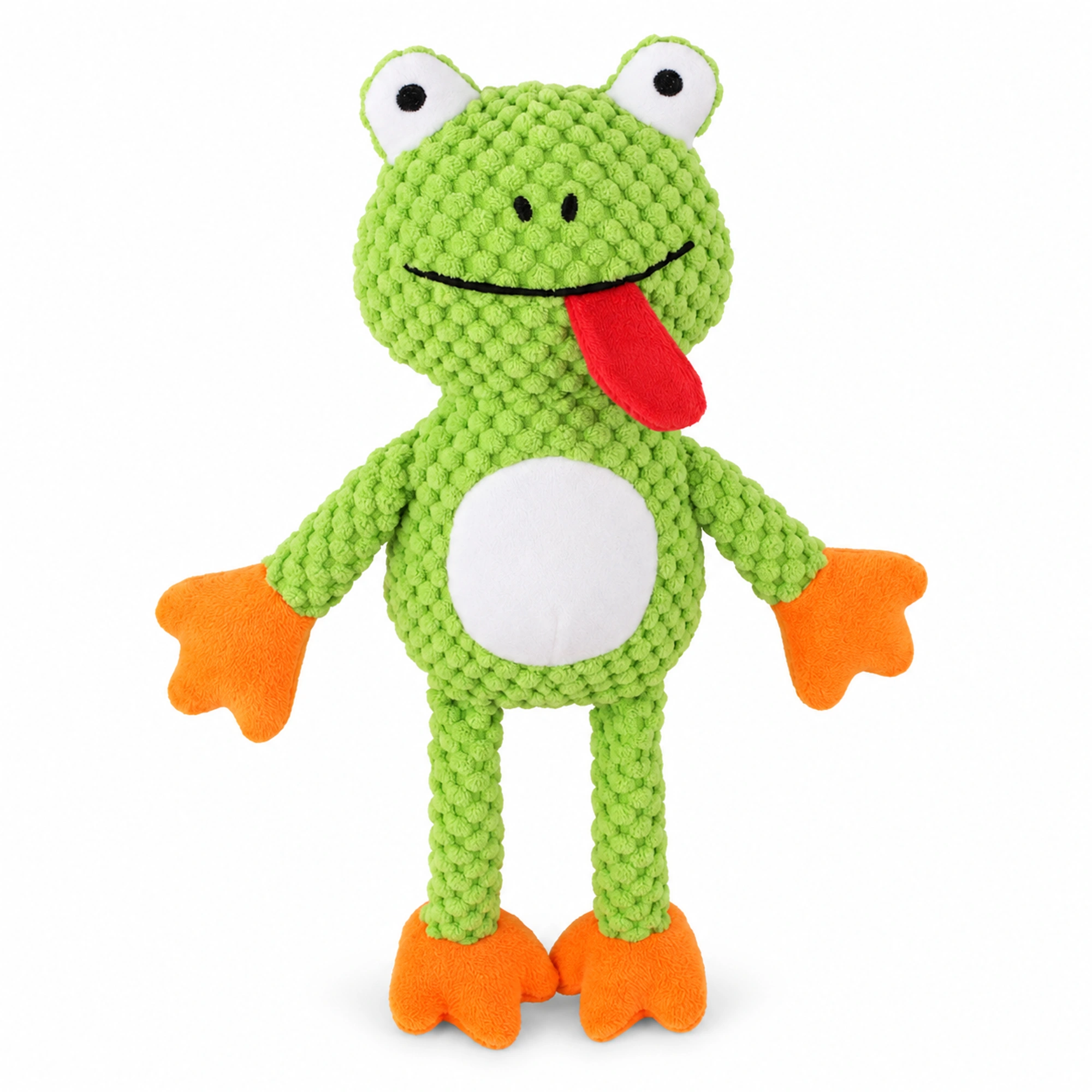
Soft Companionship: Pose and Pull Frog
For Bin C (Comfort and Tactile Plush), dogs that enjoy gentle carrying or resting their chin on a soft companion benefit from lightweight plush toys such as the Pose and Pull Frog. When rotating plush toys, verify that seams remain intact and inspect fabric surfaces for tearing. If your dog exhibits strong dissecting drives, consult our safety checklist on dog toy stuffing what to do when the dog pulls it out.
Inspection, Hygiene, and Retirement Checkpoints
A major hidden advantage of a systematic dog toy rotation bin system is routine maintenance. When all toys lie forgotten on the rug, owners miss subtle structural failures that pose serious choking or intestinal blockage hazards. Every rotation swap serves as a safety checkpoint.
The 4-Step Rotation Safety Protocol
- Inspect for Structural Damage: Examine rubber bones and suction toys for missing chunks, deep punctures, or torn edges. Discard any item with fragments small enough to swallow.
- Wash and Sanitize: Clean rubber and nylon items in warm water with pet-safe dish soap. Wash fabric plush items on a gentle cycle inside a laundry mesh bag. Removing old saliva and dirt prevents bacterial buildup.
- Completely Dry Before Bin Storage: Moisture trapped inside dark plastic storage bins creates mildew and odors. Allow all items to air-dry completely before placing them back into Bin A, B, or C.
- Enforce Safe Retirement: Never hesitate to throw away damaged goods. A frayed rope with loose fibers or a cracked chew toy must be retired immediately.
By sticking to this structured rotation and safety discipline, you keep your pet mentally sharp, physically active, and safe while protecting your household budget from endless toy replacements.