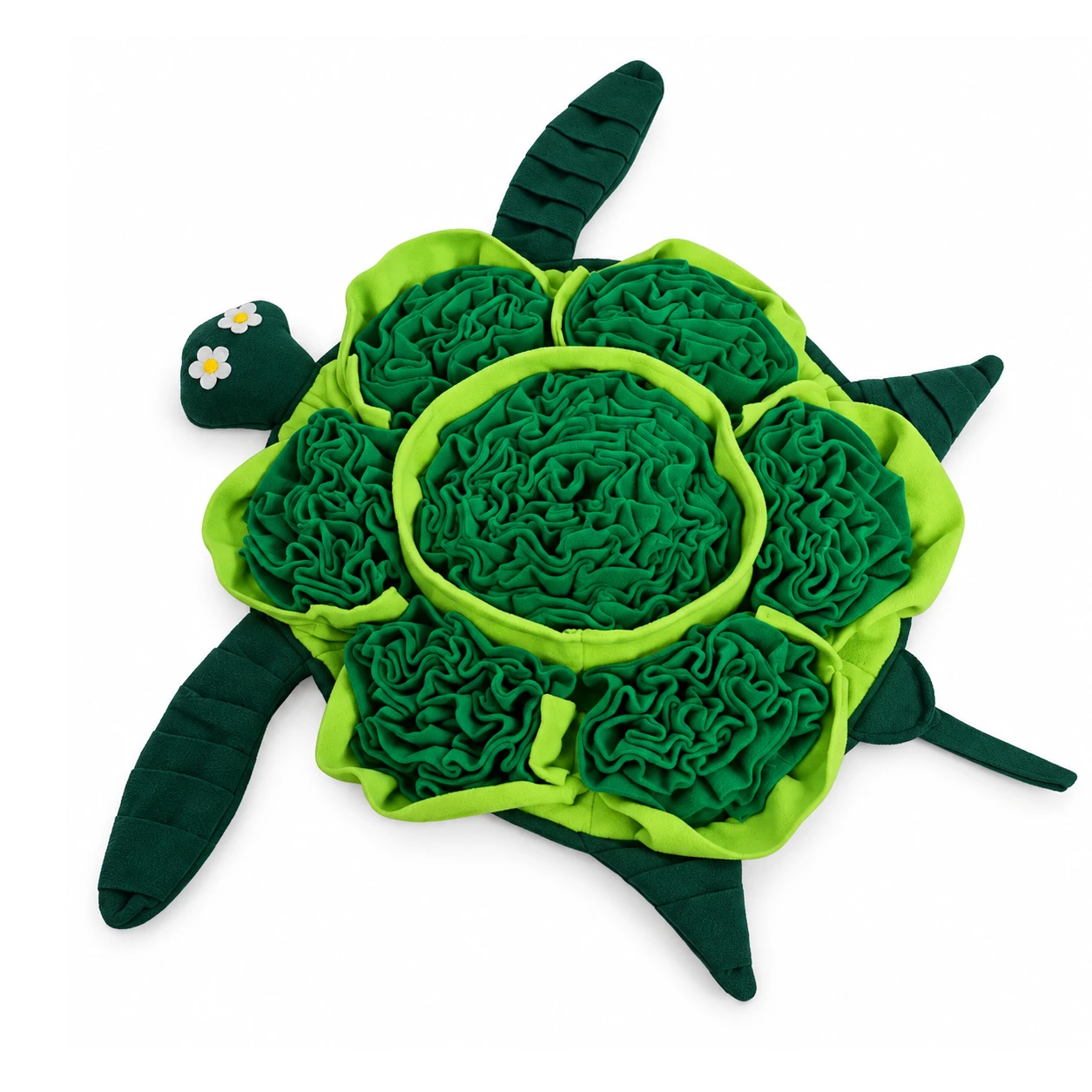
Lick mats are shallow silicone or flexible rubber plates patterned with textured ridges, nubs, and labyrinthine pockets. When you spread soft, pet-safe food across the surface, your dog works with the tip of their tongue to extract every morsel. This steady rhythmic licking triggers the release of soothing endorphins in the canine brain, easing anxious dogs during thunderstorms, nail trims, and firework displays. Lick mats also pace eager eaters, extending a thirty-second gulp into twenty minutes of quiet mental enrichment.
Handing an enrichment feeder to an excited dog without active guidance often invites gnawed corners, swallowed rubber fragments, or toy frustration. Teaching your dog calm tongue engagement right from the start protects the silicone, safeguards your companion, and delivers the full decompression value of each meal.
Why Dogs Benefit from Lick Mats: Calming Endorphins and Digestive Health
Licking is a natural self-soothing behavior for canines. Mother dogs lick their puppies to groom and comfort them, and adult dogs use licking to decompress after periods of high arousal. Offering a textured mat redirects oral fixation away from furniture or barking, channeling energy into a constructive task.
Beyond psychological comfort, lick mats support canine digestive health:
- Slowing Down Rapid Eaters: Dogs that inhale meals without chewing swallow excess air, increasing the risk of painful gas, regurgitation, and life-threatening gastric dilation-volvulus (bloat). Spreading wet food or rehydrated kibble across tiny compartments forces dogs to take small, measured licks.
- Stimulating Saliva and Oral Hygiene: The repetitive tongue friction stimulates salivary glands, generating enzymes that break down starch and rinse loose food particles off teeth and gums.
- Low-Impact Enrichment: For dogs recovering from surgery, elderly canines with limited joint mobility, or puppies awaiting vaccinations, lick mats provide mental stimulation without putting physical strain on hips and paws.
Step-by-Step Introduction: How to Prevent Your Dog from Chewing the Mat
The most common beginner mistake is placing a fully loaded lick mat on the floor and walking away. Dogs that are enthusiastic eaters or prone to shredding toys will quickly realize that biting the soft silicone is faster than licking it. Preventing destructive habits requires active training during the first few sessions.
Step 1: Start with Easy, High-Value Spreads
Do not freeze the mat for your dog’s initial trial. Choose an aromatic, soft spread like plain non-fat Greek yogurt, pumpkin puree, or wet dog food. Smear a thin layer only on the raised tops rather than pressing food deep into the grooves. This allows your dog to experience immediate success without becoming frustrated.
Step 2: Hold the Mat or Anchor It Securely
Sit on the floor with your dog and hold the edge of the mat in your hand. If the feeder features bottom suction cups, press it firmly onto a smooth tile floor or kitchen cabinet. Holding the mat teaches your dog that the object stays stable while their tongue does the work.
Step 3: Interrupt Teeth with a Neutral Cue
Watch your dog’s mouth closely. If they shift from licking to gnawing the silicone borders, issue a calm interruption cue such as “no” or “leave it”, gently lift the mat out of reach for five seconds, and wait until their mouth relaxes. Return the mat once they show gentle curiosity. Most dogs learn within two to three repetitions that licking keeps the toy in play, while biting makes the food disappear.
Step 4: Remove the Mat Immediately When Empty
Never leave an empty lick mat on the floor. Once your dog cleans up the final smear of puree, pick the feeder up, praise your dog, and offer a dry biscuit or a drink of fresh water. Leaving an empty mat unattended invites your dog to chew the textured silicone out of boredom or search behavior.
Healthy Lick Mat Recipe Ideas: Spreads Beyond Peanut Butter
Pet parents often start with peanut butter because it is sticky and universally loved. However, peanut butter is calorie-dense and high in fat, making it unsuitable for daily use or dogs prone to pancreatitis.
On Reddit r/dogs, a pet parent shared a common beginner question: “Pretty much the title.. our first foray into lick mats. I’ve got peanut butter covered, but curious what other things you use? (and apologies on the flair.. not really sure where this fit)”
Expanding your recipe rotation keeps mealtimes exciting while providing balanced nutrition:
| Recipe Layer | Ingredients | Preparation Method | Nutritional Benefit |
|---|---|---|---|
| Digestive Soother | 2 tbsp 100% pure canned pumpkin + 1 tbsp plain kefir | Whisk until smooth and spread evenly | Rich in soluble fiber to firm up stools and soothe upset stomachs |
| Protein Berry Blend | 2 tbsp plain non-fat Greek yogurt + mashed blueberries | Mash fresh blueberries into yogurt | Provides natural antioxidants and gut-friendly probiotics |
| Savory Fish Feast | Canned wild sardines in water (no salt added) | Mash half a sardine with a fork across nubs | Packed with omega-3 fatty acids for skin, coat, and joint care |
| Hydration Broth Mash | Unsalted bone broth + dog kibble | Soak kibble in warm broth, puree in a blender | Ideal low-calorie summer hydration for hot afternoons |
| Calming Herb Spread | Pureed steamed sweet potato + pinch of chamomile | Steam, mash, and cool completely | Complex carbohydrates and gentle herbal relaxation |
Essential Safety Guidelines: Avoid Toxic Ingredients
Always read ingredient labels before smearing commercial spreads:
- Never use products containing xylitol (birch bark extract): This artificial sweetener causes rapid insulin release and acute liver failure in dogs.
- Avoid added salt, sugar, garlic, and onion powder: Many human broths and packaged gravies contain allium seasonings that damage canine red blood cells.
- Check for chocolate, macadamia nuts, and raisins: Never include trail mix ingredients or human confectionery.
Room Temperature vs Frozen: Extending Enrichment Time Safely
Serving spreads at room temperature is best for beginners and dogs that lose patience quickly. A room-temperature mat takes seven to twelve minutes to complete.
Once your dog understands how to lick without biting, freezing the feeder extends the session to twenty or thirty minutes. Freezing solidifies liquid broths and thick purees, requiring extra tongue effort to thaw and loosen the meal.
How to Freeze Safely
- Prepare your spread and smear it into the grooves using the back of a spoon or a silicone spatula.
- Tap the mat on the counter to settle puree into deep corners.
- Place the mat horizontally on a baking sheet or cutting board inside your freezer.
- Freeze for two to four hours until solid.
Dental and Temperature Precautions
- Puppies: Teething puppies have sensitive gums and brittle deciduous teeth. Offer lightly chilled mats (refrigerated for thirty minutes) rather than rock-solid ice blocks to prevent gum irritation.
- Senior Dogs: Elderly dogs with dental disease or worn enamel may experience tooth sensitivity when licking frozen objects. If your senior dog pulls away, serve food at cool room temperature.
- Tongue Sticking Prevention: If the surface feels frosty straight out of the deep freeze, let it sit on the kitchen counter for two minutes or run a damp paper towel over the top to eliminate dry frost before giving it to your dog.
3D Enrichment Toys: Rolling Silicone Pineapples and Slotted Chew Bones
Flat lick mats are excellent for stationary licking, but active dogs often benefit from rolling and chewing formats that incorporate physical manipulation alongside tongue work.
Rolling Silicone Treat Dispensers
For dogs that prefer nudging and chasing toys across the floor, 3D rolling puzzle toys offer an interactive alternative to flat mats:
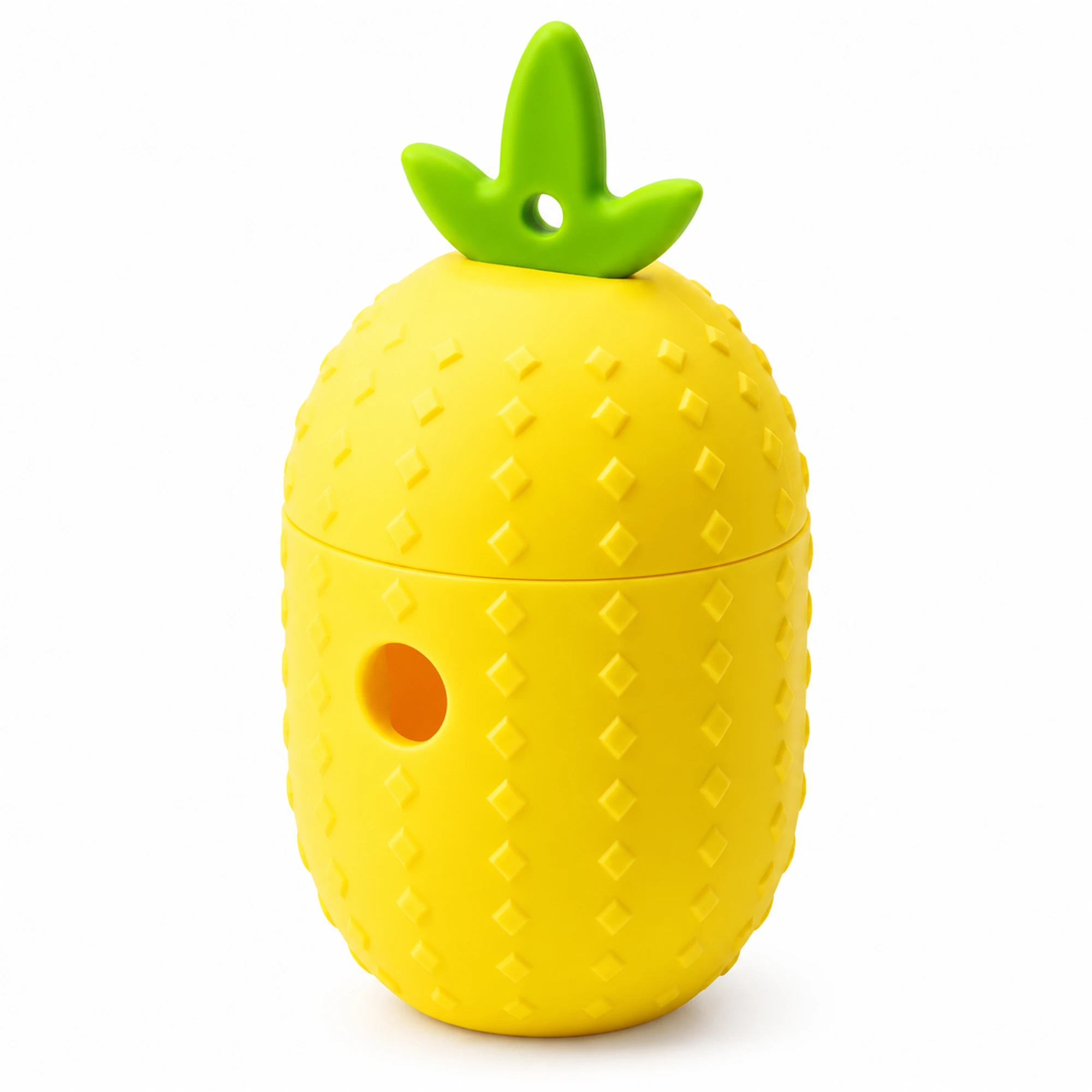
Open the pineapple at its middle join to add treats, close it, then let your dog nudge and roll it to release food through the side opening. The bright yellow silicone body has raised diamond bumps and a green leafy crown. Treats are not included.
The outer diamond bumps provide tactile stimulation as your dog’s muzzle contacts the surface, while the rolling action releases food unpredictably. This design encourages problem-solving and gentle physical movement for dogs that find flat mats too stationary.
Slotted Chew Bones for Dental Care
If your dog has strong chewing instincts and struggles to leave silicone mats alone, a textured chew bone with food slots channels chewing safely:
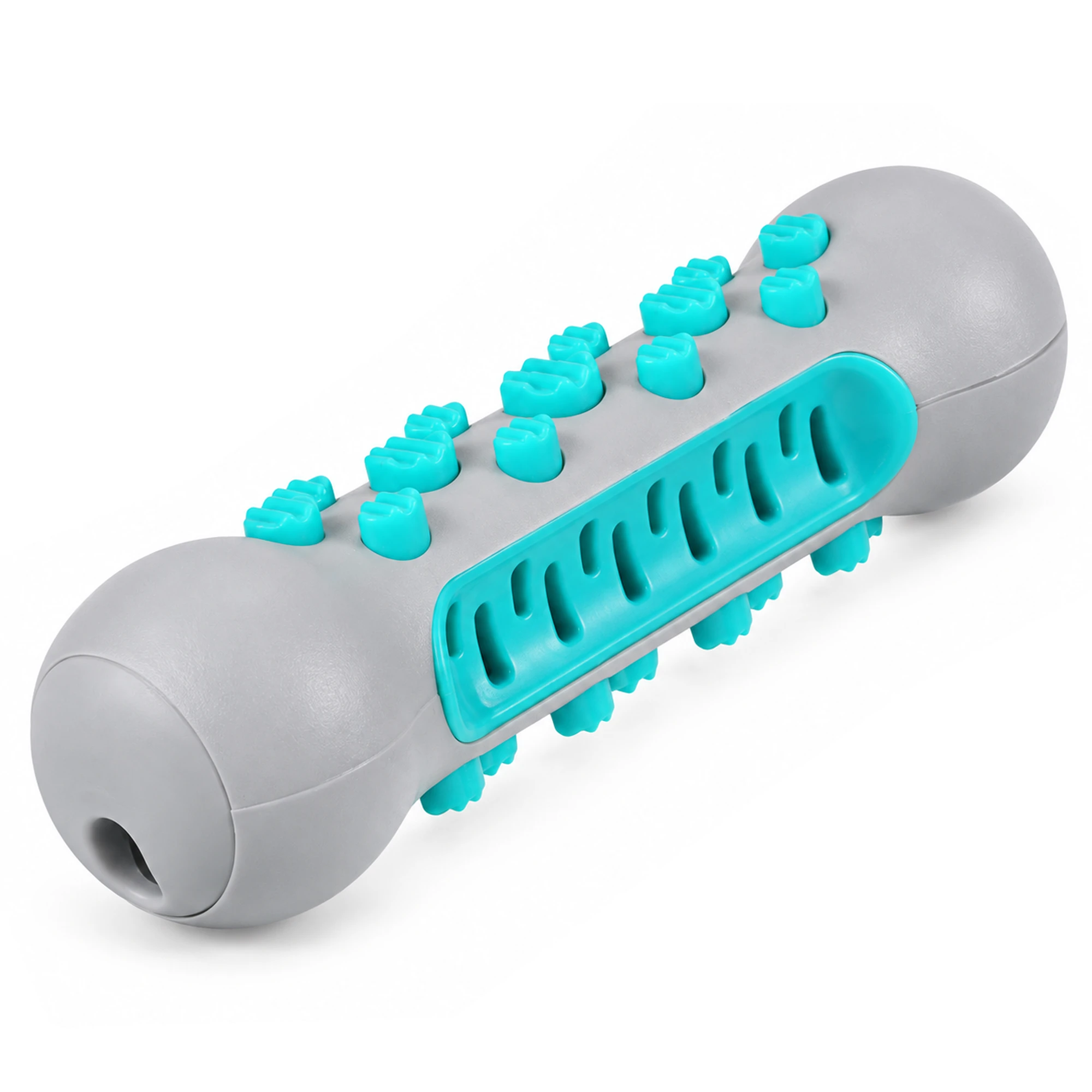
A gray bone-shaped dog toy with turquoise-blue raised nubs, a slotted side panel, rounded ends and an end opening. Includes one assembled toy. Supervise play and remove if damaged. Supplier-reported SKU piece weight: 147 g; supplier piece dimensions: 15 × 4.6 × 4.6 cm. These figures are not independently measured; net/gross weight and packaging inclusion are unspecified.
You can press thick peanut butter or sweet potato paste directly into the side slots of the bone. As your dog gnaws on the rubber nubs to reach the spread, the textured surfaces massage the gum line and scrape soft plaque off premolars. Always inspect chew toys before each play session and retire any item showing signs of cracking or excessive wear.
Frequently Asked Questions
How long should a dog use a lick mat in one session?
A typical lick mat session lasts between ten and twenty-five minutes depending on whether the food is served fresh or frozen. Remove the mat as soon as your dog finishes licking. Leaving an empty feeder with your dog encourages boredom chewing.
How do you stop a dog from chewing a lick mat?
Supervise the session from start to finish. Hold the mat or secure suction cups firmly to a flat surface. If your dog uses teeth to bite the corners, gently lift the mat away for five seconds, then return it. When the food is finished, pick the mat up immediately and reward your dog with a treat or a drink of water.
Can puppies use frozen lick mats?
Lightly chilled mats work best for young puppies. Solidly frozen purees can irritate delicate teething gums or cause sensitive reactions. Refrigerating wet food or pumpkin puree for thirty minutes offers cool relief without freezing into rock-solid ice.
What ingredients must never be put on a lick mat?
Never use ingredients containing xylitol (birch sugar), onions, garlic, grapes, raisins, macadamia nuts, or chocolate. Avoid peanut butter brands made with added sugar, excessive salt, or hydrogenated oils. Always choose single-ingredient or pet-formulated spreads.