If your dog solved a puzzle toy and now ignores it, the toy doesn’t have to be a lost cause. Several owners on an r/dogs thread described rotating puzzles: putting them away and bringing them back later.
The thread, titled “Do puzzle toys actually keep your dog interested, or is it just a phase?”, started with a poster whose dog gets super excited about puzzle toys for the first few days and then completely ignores them. So, are puzzle toys good for dogs? None of the sources behind this guide measures what puzzle toys do for dogs, so we won’t promise that one will tire your dog out or keep it busy for a set time. What this guide covers is what those owners say they do when a puzzle stops being interesting, how to read difficulty labels, and what to watch for while your dog plays.
Key Takeaways
- On r/dogs, owners describe dogs losing interest once a puzzle is solved. One commenter said it’s less about boredom than about the puzzle no longer being a challenge.
- What owners say helped: putting puzzles away and bringing them back later, making them harder a little at a time, and offering them when the dog has energy.
- “A few days” and “six months” are individual owners’ experiences, not a schedule.
- Nina Ottosson’s “Level 1” label describes that brand’s own puzzles. Use a brand’s rating only for the products it describes.
- Stay with your dog during play and remove damaged toys.
Why a solved puzzle stops getting attention
The original poster wasn’t sure whether their dog was getting bored or just figuring the toys out too fast. Several replies pointed to the second explanation.
One commenter wrote that “a lot of dogs “solve” the puzzle quickly, then it stops being interesting,” and said it’s less about boredom than about the puzzle no longer being a challenge. Another said their dog’s puzzles keep her interested until she solves them, which didn’t usually take very long. A third compared it to getting the same sudoku puzzle every day for three weeks: after a while, it stops requiring any brain power.
If that sounds like your dog, the fixes owners describe are about changing when and how the puzzle comes out.
What owners on r/dogs say they do
Put the puzzle away, then bring it back
Several commenters described rotating their puzzles. One commenter’s first tip was not to leave puzzles out all the time and to bring them back after a few days. Another wrote that most people rotate puzzles instead of leaving them out, and that this alone makes a big difference. A third said they rotate puzzles out a lot, and that after a six-month break, a puzzle that had become boring and easy was suddenly challenging again.
Those time frames are each owner’s own experience. Treat these accounts as suggestions to try, and notice whether the puzzle gets attention when it comes back.
Make it a little harder
Before changing how you fill or use a puzzle, check the instructions for that exact toy.
The commenter who suggested bringing puzzles back after a few days also suggested increasing difficulty gradually: layering puzzles, freezing food, and making the puzzle take longer. Another reply suggested making puzzles harder or switching things up so they aren’t exactly the same every time, for example by hiding the puzzle or combining it with other games.
Pick the moment
That first commenter also said to use puzzles when your dog has energy, not when he’s already tired. If your dog only sees a puzzle at the end of a long day, try offering it earlier.
Mix in other kinds of enrichment
Rotation doesn’t have to mean puzzles only. The same commenter suggested mixing puzzles with other enrichment such as snuffle mats and hide and seek. The owner who mentioned the six-month break said they also trade with friends who have vaccinated, clean dogs they trust, so the dogs get new smells. And one reply pointed out that some dogs just prefer interaction over solo puzzles, so an ignored puzzle isn’t always about the toy itself.
When “solving” means taking a shortcut
On the same thread, one owner said their dog figured out the second time they used a puzzle that picking it up and shaking it made all the treats fall out. Another said their dog resorts to brute force on anything that takes longer than a few minutes.
Those are individual dogs and unnamed toys, but they are a good reason to watch how your dog gets the food out. Stay with your dog and follow the instructions for the exact toy.
Difficulty labels belong to the brand that made them
Outward Hound’s Nina Ottosson Level 1 page says Level 1 dog puzzles are best suited to dogs that are naturally curious and love sniffing for treats, and to dogs that are new to nose work or puzzle toys. It describes them as having “one-step” solutions, where a dog might simply nudge a ball or remove an obstacle to get the hidden treats.
That description is about Nina Ottosson’s own Level 1 puzzles. Do not transfer “Level 1” or “one-step” from a Nina Ottosson description to another brand’s product. When you compare puzzles from different makers, look at what each listing says your dog has to move.
JoyPetPlay puzzles with different moving parts
If you want to try the owners’ “switch it up” advice, compare the layouts of the toys you already have before choosing another. Here is how the JoyPetPlay catalog describes the parts of four of its trays. Use these descriptions to compare the layouts; do not infer a difficulty rating or solve time from appearance.
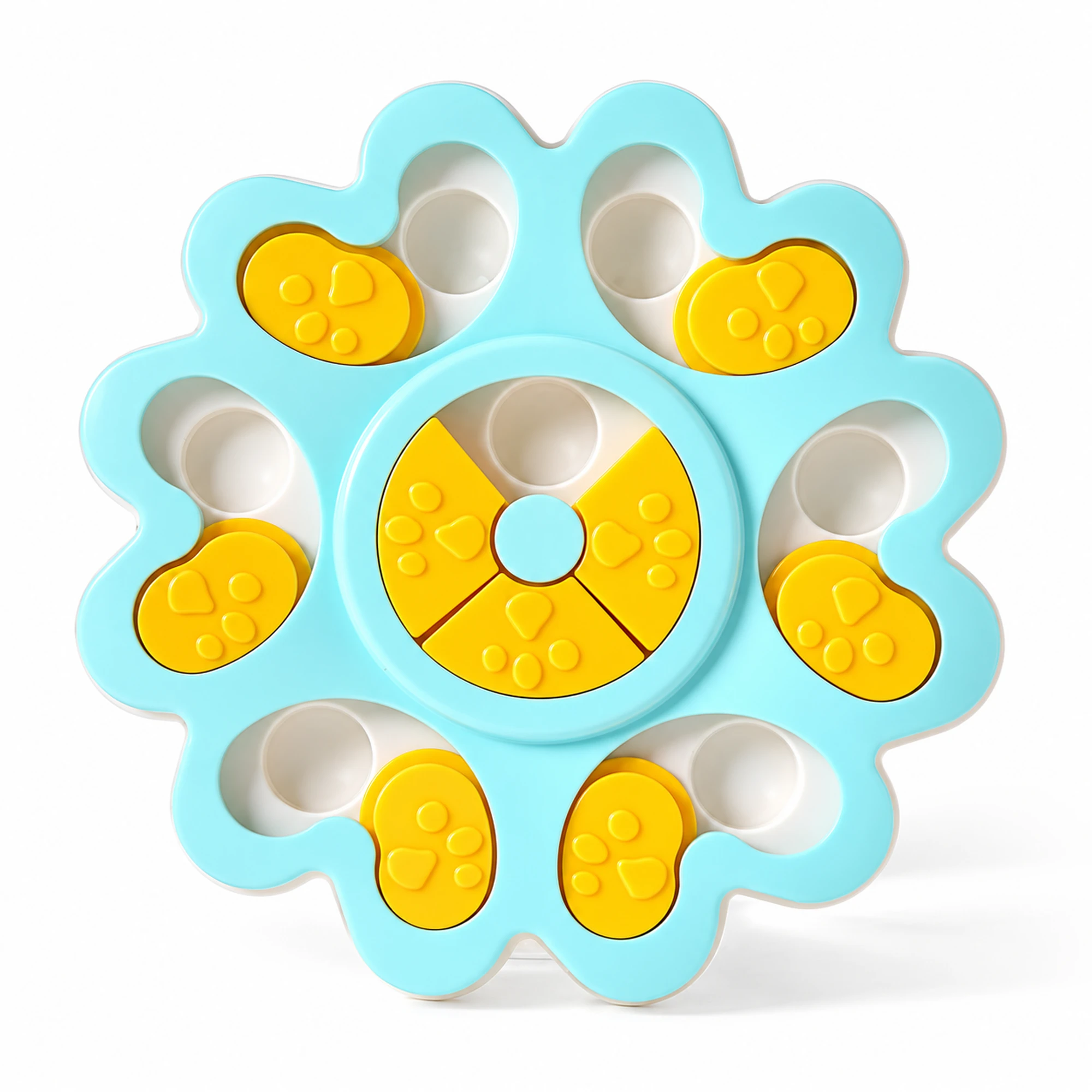
- Aqua Scalloped Six-Cover Treat Puzzle: six yellow outer paw covers, white recessed wells and three yellow center wedges around an aqua hub. Its listing says: “Supervise use and remove if damaged.”
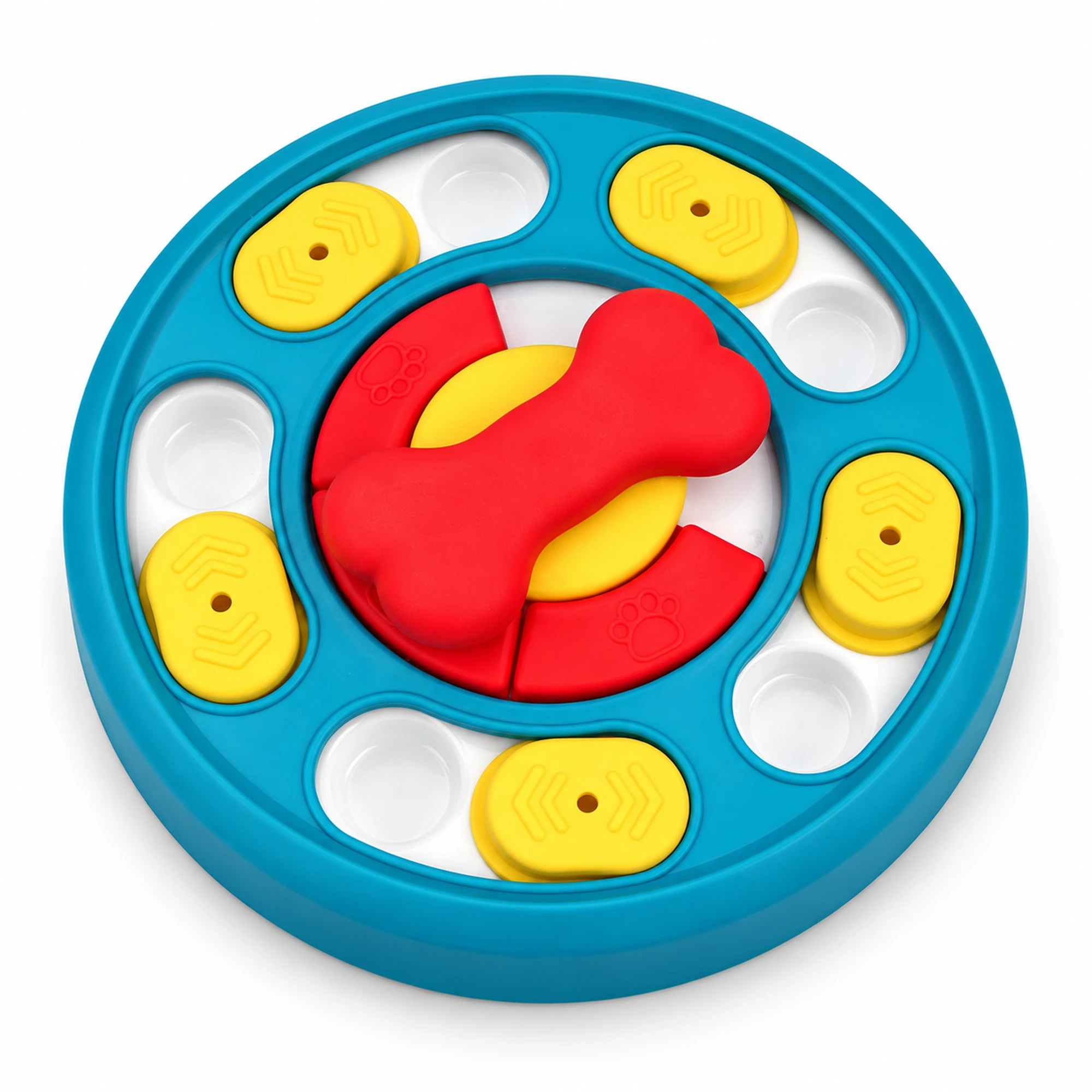
- Blue Five-Arc Red-Bone Treat Puzzle: a blue circular tray with five yellow double-hole outer sliders, three red central sectors and a large red bone-shaped handle. Its listing says: “Supervise play and remove if damaged.”
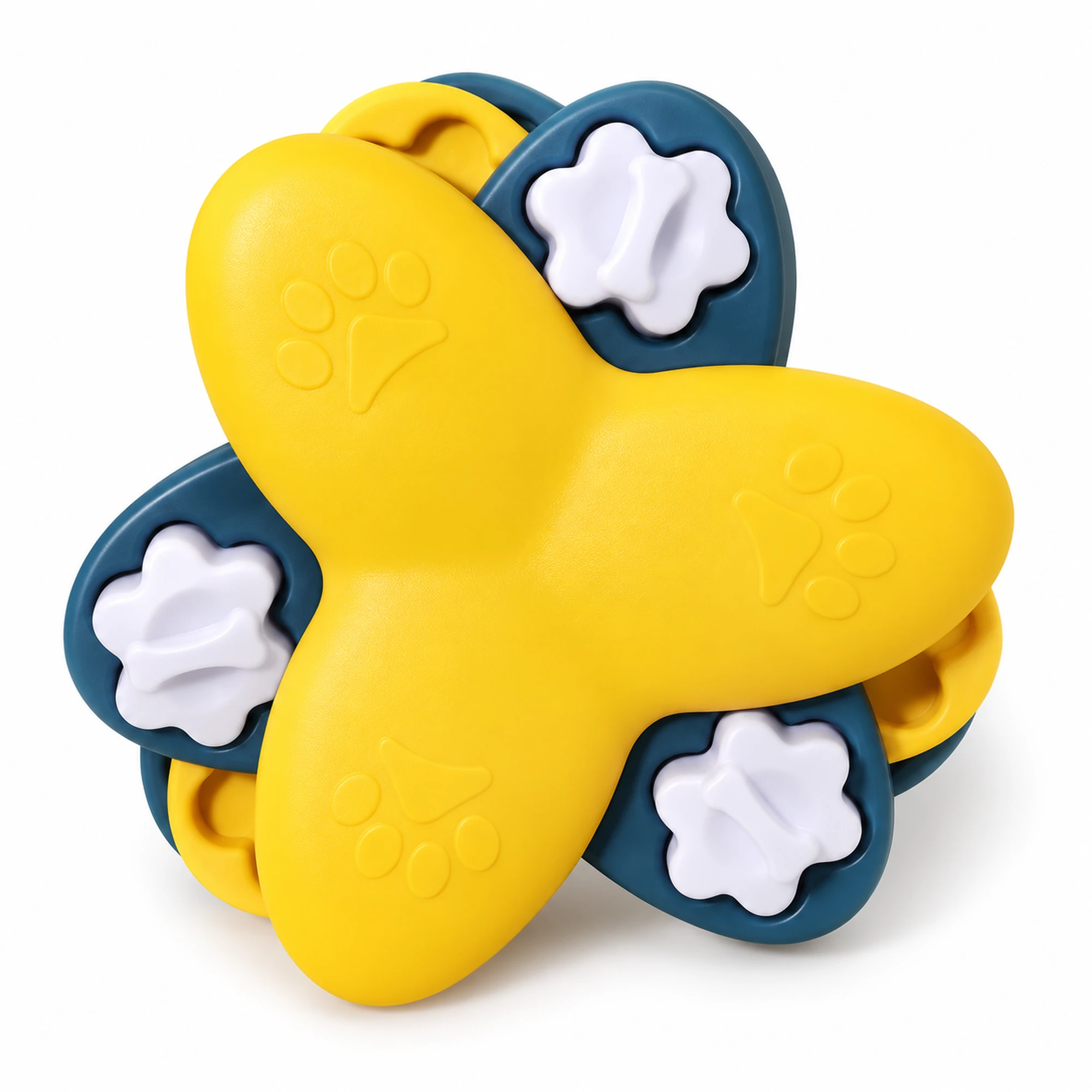
- Yellow Three-Lobed Layered Treat Puzzle: a yellow three-lobed puzzle with dark teal intermediate sections, white flower-shaped covers and molded paw details. Its listing says: “Supervise play and remove if damaged.”
- Blue and Yellow Twin-Disc Treat Puzzle: a large rotating disc, a small rotating disc, three lift-out pegs and two sliding-cover areas with seven covers in total. Its listing says: “Supervise play and remove if damaged.”
Compare the covers, sliders and discs in these descriptions, then check the exact toy’s instructions for how to use them.
Before a puzzle goes back in the cupboard
Rotation means a puzzle may sit in storage for a while, so it makes sense to clean it first. PetSafe’s support article on cleaning a treat-dispensing toy says to remove any remaining treats or kibble before cleaning, then hand wash all parts with unscented soap and warm water. Those are PetSafe’s instructions for its treat-dispensing toys. Before using a washing method on another brand’s toy, check that exact product’s care instructions or ask the seller.
So, are puzzle toys good for dogs that lose interest?
Owners on that r/dogs thread described puzzles losing appeal after their dogs solved them. Their suggestions included putting puzzles away and bringing them back, increasing difficulty gradually, offering puzzles when a dog has energy, and mixing in other kinds of enrichment. Try one change at a time, keep watching how your dog plays, and treat any timeline you read online, including the ones in this article, as one owner’s experience rather than a rule.
Frequently Asked Questions
What if my dog ignores a puzzle after a few days?
Put it away for a while instead of leaving it out. Owners on r/dogs said rotation helped: one brings puzzles back after a few days, and another found an easy puzzle felt challenging again after a six-month break. You can also make the puzzle harder gradually or offer it when your dog has more energy.
Should I rotate my dog’s puzzle toys?
Several owners on the r/dogs thread said they do. One commenter compared using the same puzzle every day to getting the same sudoku every day for three weeks. Rotation is an owner practice, not a tested method, so watch how your own dog responds.
Which puzzle difficulty should I start with?
Nina Ottosson’s level ratings describe that brand’s own puzzles. Outward Hound says Nina Ottosson Level 1 puzzles suit naturally curious dogs and dogs new to nose work or puzzle toys, and describes them as having “one-step” solutions. For another brand, compare the moving parts its own listing describes instead of assigning it a Nina Ottosson level.
How long should I put a puzzle away?
The owners in that thread describe different intervals. One commenter brings puzzles back after a few days; another said a six-month break made an easy puzzle challenging again. Neither is a schedule, so let your dog’s interest guide you.