Welcoming a young puppy into your home introduces pure delight alongside an inevitable biological transition: the demanding teething period. Between three and thirty weeks of age, young canines experience continuous cranial and dental shifts that trigger substantial periodontal discomfort. When tender gums swell, natural instinct drives puppies to seek firm counter-pressure by gnawing on everything within reach, including table legs, baseboards, rugs, and fingers. Finding the best dog toys for teething puppies requires matching compliant chew materials to each specific developmental phase, ensuring that young jaws receive soothing relief without risking dental fractures or intestinal blockages.
Selecting safe teething equipment involves understanding canine dental anatomy, managing thermal soothing techniques, and providing structured physical outlets. Rather than scattering random plush objects across your floor, experienced puppy guardians utilize specialized rubber rings, anchored tug mechanisms, and textured rollers. Pairing quiet crate chew gear with interactive floor games creates a predictable daily routine that protects your furniture while helping your puppy navigate tooth eruption safely.
Chronological Dentition Timeline: Eruption Stages from Week Three to Week Thirty
Young canine dentition unfolds across two sequential phases involving twenty-eight deciduous milk teeth and forty-two permanent adult teeth. Understanding this timeline explains why puppy chewing behavior changes dramatically across their first seven months:
- Weeks Three to Six: Deciduous milk teeth erupt through the gumline. Incisors appear first around three to four weeks, followed swiftly by needle-sharp deciduous canines and premolars. During this initial stage, puppies nurse and begin exploring soft food, testing their emerging teeth through exploratory mother and littermate interactions.
- Weeks Eight to Eleven: All twenty-eight temporary teeth are fully seated. Chewing during this window is primarily exploratory and social. Puppies mouth objects to explore physical textures and practice bite inhibition. Gentle tactile toys satisfy their curiosity without requiring intense structural counter-pressure.
- Weeks Twelve to Sixteen: The acute secondary teething phase begins as adult incisors and premolars push upward, dissolving the roots of temporary milk teeth. Periodontal tissues become visibly inflamed, erythematous, and tender. Puppies experience persistent throbbing along the gumline, prompting frantic chewing on hard surfaces.
- Weeks Sixteen to Twenty-Four: Permanent canine teeth and large rear adult molars erupt into the oral cavity. Jaw musculature strengthens rapidly, allowing older puppies to exert substantial crushing force. This stage represents peak destructiveness if appropriate chew outlets are missing.
- Weeks Twenty-Four to Thirty: The final adult molars emerge at the rear of the jaw, and tooth roots anchor deeply into the mandibular and maxillary bones. Teething discomfort gradually subsides, transitioning into mature adolescent chewing habits.
| Developmental Stage | Target Age Range | Erupting Dentition | Gum Sensation and Symptoms | Recommended Toy Category | Optimal Material Class |
|---|---|---|---|---|---|
| Primary Eruption | Weeks 3 to 6 | Deciduous incisors and canines | Mild initial tingling, tender gingival crests | Soft plush and light rubber teether | Pliable Shore-A 35 food-grade elastomer |
| Early Socialization | Weeks 8 to 11 | Complete set of 28 temporary teeth | Exploratory mouthing, soft tissue curiosity | Textured lightweight rings and soft fleece | Textured flexible silicone / braided cotton |
| Peak Premolar Eruption | Weeks 12 to 16 | Adult incisors and first premolars | Acute inflammation, gum swelling, drooling | Multi-ring treat toys and chilled rings | Compressible vulcanized rubber (Shore-A 45) |
| Rear Molar Influx | Weeks 16 to 24 | Adult canines, premolars, and molars | Deep jaw throbbing, strong clamping urge | Anchored suction tugs and grooved rollers | High-tensile natural rubber with rope core |
| Dentition Completion | Weeks 24 to 30 | Rear adult molars (42 adult teeth) | Residual root anchoring, strong jaw power | Durable treat dispensers and dense bones | Heavy-duty natural rubber (Shore-A 60) |
The chart above demonstrates why a single chew toy cannot serve a puppy throughout their entire growth cycle. A lightweight teether suited for an eight-week-old puppy lacks the physical durability and resistance needed by a twenty-week-old adolescent whose emerging molars require firm mechanical stimulation.
Veterinary Biomechanics: Why Rigid Bones and Cooked Antlers Fracture Puppy Enamel
Many pet guardians mistakenly offer natural antlers, hard nylon bones, or beef marrow bones to aggressive puppy chewers. Veterinary dental specialists frequently warn against this practice because young enamel is exceptionally fragile. The enamel cap on deciduous teeth and newly erupted permanent teeth measures under 0.5 millimeters thick, with dentinal tubules beneath remaining wide and sensitive.
When an energetic puppy clamps down on an unyielding surface with several hundred pounds of concentrated pressure, the force transfers directly to the tooth crown rather than compressing the toy. This kinetic impact causes severe slab fractures, particularly on the upper fourth premolars. A fractured tooth exposes live pulp tissue, causing agonizing bacterial infections that require surgical extraction under general anesthesia.
To verify whether a toy is safe for teething puppy enamel, use the thumbnail indentation test. Press your thumbnail firmly into the chewing surface. If the material yields and forms a temporary indentation, it possesses adequate elasticity to protect developing teeth. Avoid any toy that makes a hard clicking sound when tapped against a countertop.
Therapeutic Thermal Enrichment: Freezing and Chilling Textures
Thermal cooling therapy produces rapid comfort for acute gingival irritation. Just as human infants benefit from chilled teething rings, puppies experience significant pain reduction when chewing on cold surfaces. Low temperatures induce local vasoconstriction in swollen gums, decreasing blood flow, dulling nerve sensitivity, and soothing irritation.
However, pet owners must never provide solid ice cubes or rock-hard frozen nylon toys. Unyielding ice blocks can chip fragile puppy canines. Safe thermal enrichment relies on flexible rubber toys filled with wet ingredients and chilled in a standard freezer for one to two hours until slushy and firm, rather than frozen into solid rock.
Excellent soothing fillings include diluted low-sodium bone broth, plain pumpkin puree, unsweetened kefir, and wet puppy kibble blended with water. Placing these soft ingredients inside textured rubber rings provides both cooling pain relief and prolonged cognitive focus as the puppy licks and chews through the layers.
Multi-Textured Solutions from the JoyPetPlay Catalog
Providing varied tactile feedback helps puppies satisfy different chewing moods throughout the day. The JoyPetPlay collection features three distinct designs engineered specifically for young canine oral needs:
1. Multi-Ring Treat Dispenser for Crate Settling
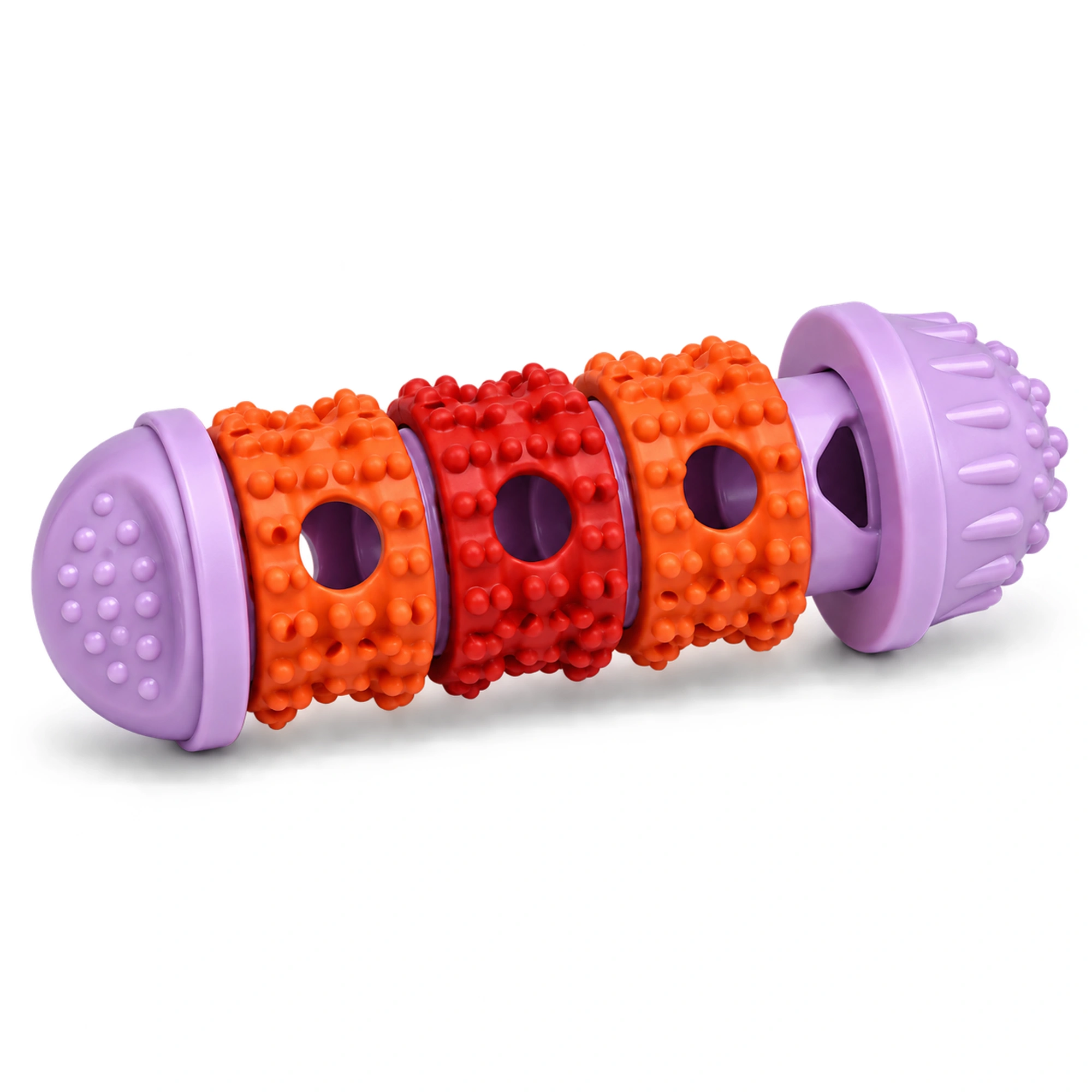
The Lavender Twist Treat Ring Toy serves as an ideal pacifier for quiet resting hours in the crate. This specialized toy features three textured rubber rings seated along a durable central core. Each individual ring exhibits unique ridges, bumps, and cross-hatch patterns designed to massage different zones of the mouth.
As a puppy rolls the core between their paws, the outer rings sweep across sore front incisors while the inner core reaches the rear premolars. Small recesses along the rings hold dry puppy kibble, encouraging calm problem-solving. A twist-adjustable clamp mechanism at the toy end allows owners to secure a healthy edible chew stick upright, preventing the dog from gulping down the final choke-hazard stub.
2. Floor-Anchored Suction Tug for High-Energy Biters
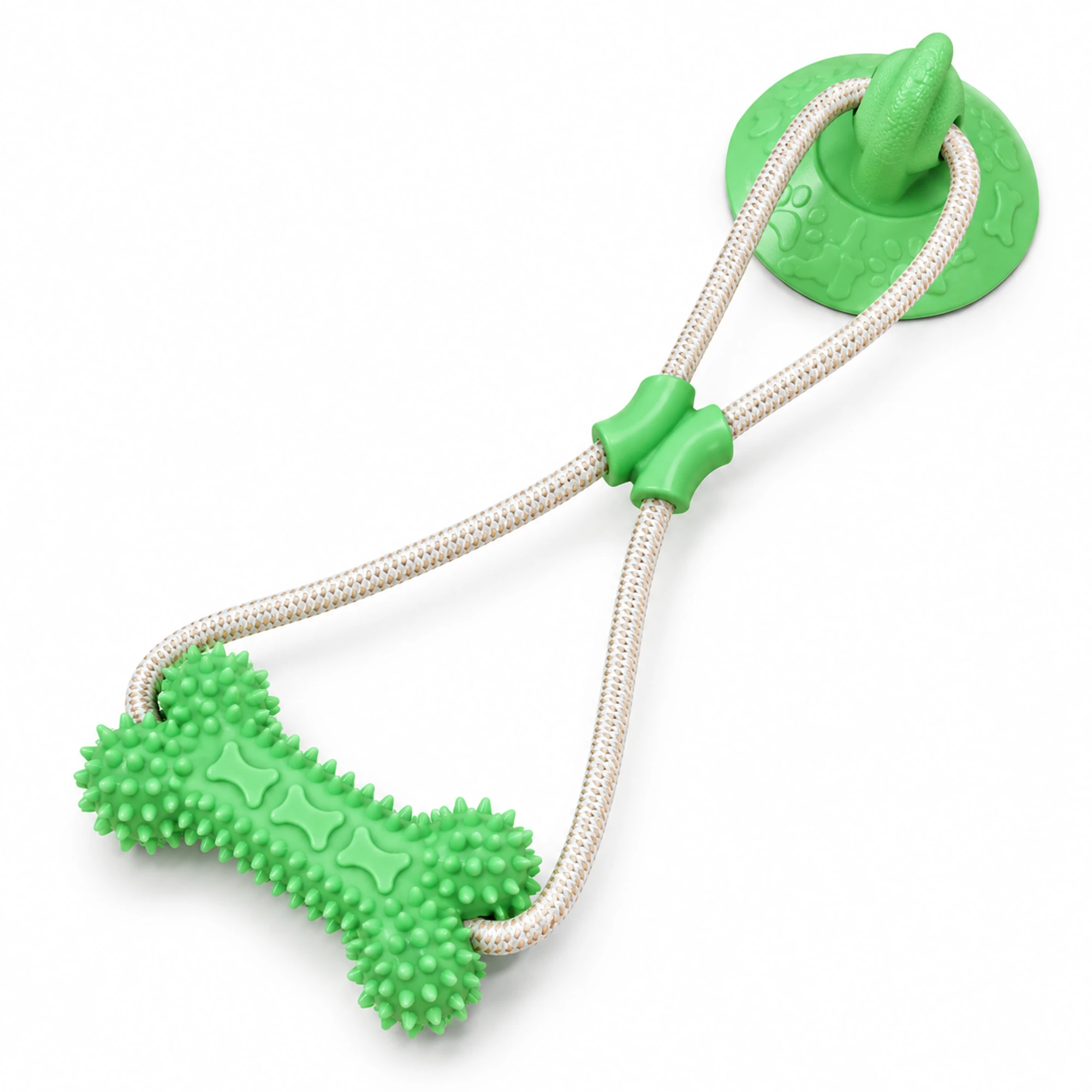
When puppies experience evening arousal spikes, they frequently direct their chewing toward human ankles, sleeves, and pants. The Green Suction Rope Bone Tug Game redirects this biting drive into productive physical exercise while keeping human skin completely out of reach.
The device anchors firmly to smooth tile, hardwood, or laminate flooring via a wide, heavy-duty suction base. A braided cotton rope connects the base to a textured rubber bone covered with rounded nodules. Puppies can grasp the bone and pull with full body weight against the rope loop. The nubbed bone surface stimulates gum circulation while the physical pulling motion expends excess kinetic energy before bedtime naps.
3. Cylindrical Grooved Roller for Gentle Plaque Sweeping
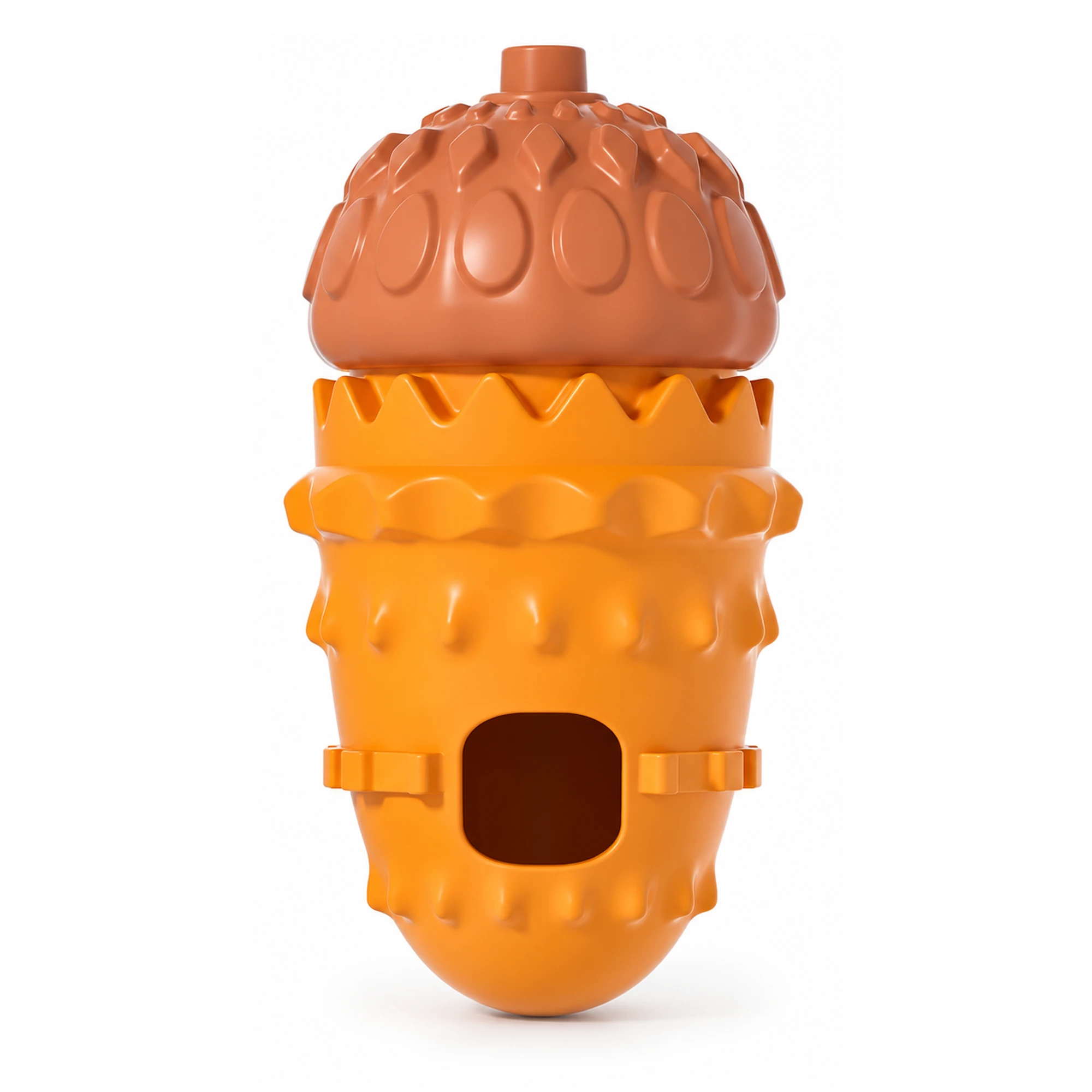
For compact breeds and young puppies requiring focused oral stimulation, the Mint Roll Reward Toy Small provides targeted dental support. Featuring a grooved cylindrical profile, this toy allows puppies to roll the piece across the floor or hold it between their paws.
Fine ribs along the roller gently clean the margins of emerging teeth, sweeping away soft food residues that accumulate around inflamed gum flaps. Small treats tucked into the lateral channels motivate continuous licking, releasing calming endorphins in the puppy brain during solitary play.
Behavioral Redirection and Daily Toy Rotation Protocol
Successfully managing a teething puppy requires consistent behavioral redirection. When a young dog begins chewing on furniture, shoes, or hands, shouting or scolding only increases stress and excitement. Instead, execute the immediate trade-up protocol:
- Keep Approved Chews Accessible: Stash safe teething toys in every room where your puppy spends time.
- Intercept Without Anger: As soon as teeth contact an illegal surface, present an approved textured toy directly in front of the puppy’s nose.
- Make the Toy Dynamic: Wiggle the toy across the floor or tap it lightly to engage their predatory tracking drive. A stationary toy on the carpet cannot compete with a wooden table leg unless the handler makes it move.
- Praise Immediate Redirection: The moment your puppy transfers their bite to the toy, deliver enthusiastic verbal praise and allow them to chew uninterrupted.
To maintain ongoing enthusiasm, divide your puppy’s toy collection into three distinct bins. Offer only two toys per day: one quiet crate pacifier like the Lavender Twist Treat Ring Toy and one active toy like the Green Suction Rope Bone Tug Game. Store the remaining toys out of sight, rotating them every forty-eight hours. Regular rotation preserves novelty, ensuring that your puppy remains engaged with approved items rather than seeking household targets.
Safety Inspection, Sizing Growth, and Retirement Benchmarks
Puppies grow at astonishing rates, with medium and large breeds frequently doubling their body weight between eight and sixteen weeks. A toy that fit safely in a two-month-old puppy’s mouth can easily become a choking hazard by month four.
Perform a thorough safety inspection before and after every play session. Examine rubber surfaces for tears or missing chunks over three millimeters in diameter. If a puppy chews off a piece of rubber, retire the toy immediately to prevent foreign body ingestion. Inspect rope elements for unraveling threads; trim frayed cords cleanly so long fibers are not swallowed.
Regularly evaluate toy dimensions against your puppy’s expanding jaw width. The shortest dimension of any toy must always exceed the width of the puppy’s open mouth at the rear molars by at least twenty percent. As your puppy matures and passes thirty weeks of age, transition them to adult-grade toys designed for mature jaw strength, ensuring lifelong dental health and satisfying play.