Understanding Small Herbivore Biology and the Need for Daily Enrichment
Too many families still look at rabbits and guinea pigs as simple starter pets requiring little more than a hutch and a water dispenser. Decades of veterinary behavioral science challenge this old-fashioned assumption. Both lagomorphs like rabbits and hystricomorph rodents like guinea pigs display sharp sensory awareness, intense exploratory urges, and distinctive metabolic rhythms that thrive on cognitive engagement. In wild meadow habitats, European wild rabbits and mountain guinea pigs spend up to seventy percent of their active hours hunting for food, tunneling through loose soil, evading hawks, and organizing group territories.
Confining small herbivores to barren enclosures without stimulating elements triggers rapid physical and psychological declines. Bored rabbits often adopt repetitive stress routines such as gnawing on metal cage bars, pulling out their own fur, overgrooming cage mates, or lunging defensively at approaching hands. In guinea pigs, emotional deprivation looks different but harms them just as deeply. They freeze for hours, turn lethargic, eat less hay, and stop interacting with cage companions. Animal behavior specialists organize small mammal enrichment around four primary channels: spatial habitat diversity, tactile foraging puzzles, cognitive problem solving, and social contact. Selecting purposeful toys for rabbits and guinea pigs is never an optional luxury. It is an essential care standard that protects gut motility and keeps these small companions mentally balanced.
Because herbivore physiology reacts immediately to emotional distress, mental stagnation easily sparks a life-threatening medical crisis. Inactivity and constant stress slow down gut peristalsis, often resulting in gastrointestinal stasis within hours. Setting up engaging rabbit toys and interactive foraging games gets pets moving across the pen, raises their pulse safely, prompts regular water consumption, and keeps the digestive tract working smoothly. Evidence-grounded enrichment provides predictable structure throughout the day, breaks up long nap spells, and lets captive small animals satisfy instincts inherited from wild ancestors.
Foraging Puzzles and Snuffle Mats: Activating Natural Ground Searching Instincts
Wild herbivores never encounter uniform pellets sitting ready inside a neat bowl. Out in natural grasslands, rabbits and guinea pigs track down fragrant clover, dandelion greenery, tender roots, and dried seed heads hidden among rocks and moss. Feeding these animals exclusively from stationary crocks encourages fast gorging on dry pellets and cuts out the mental satisfaction of working for lunch.
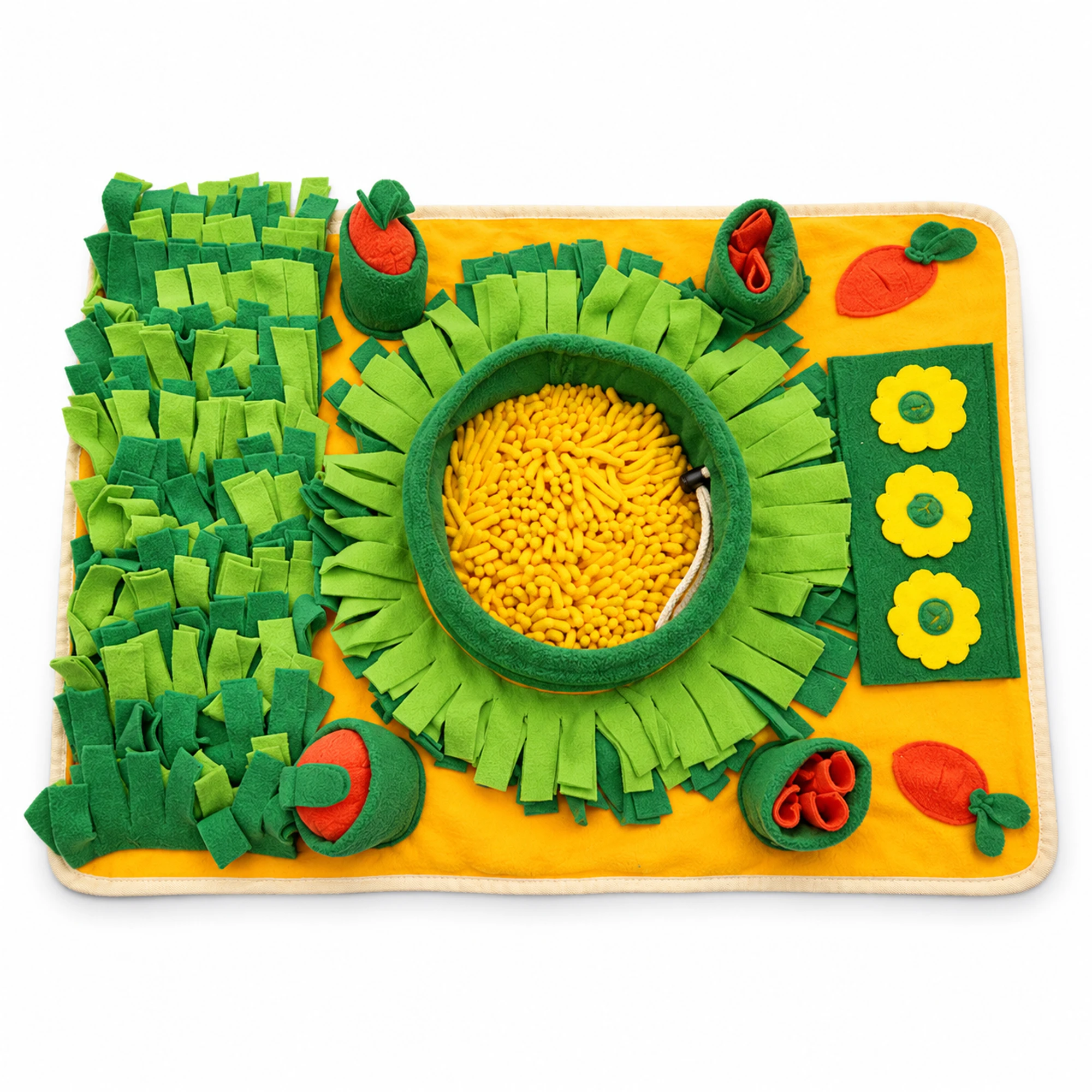
Fabric puzzles bring that natural searching rhythm right into your living room. Pet owners first used snuffle mats for canine scent training, but exotic animal veterinarians now rely on them as vital enrichment tools for small herbivores. The Gold Carrot Garden Snuffle Mat features dense fleece folds, gathered petal pockets, and detachable carrot toys that mimic field foraging. Tucking pinch portions of meadow herbs, pea crisps, or orchard grass pellets between the fleece layers encourages rabbits and guinea pigs to use their keen sense of smell and active front paws to untangle each pocket.
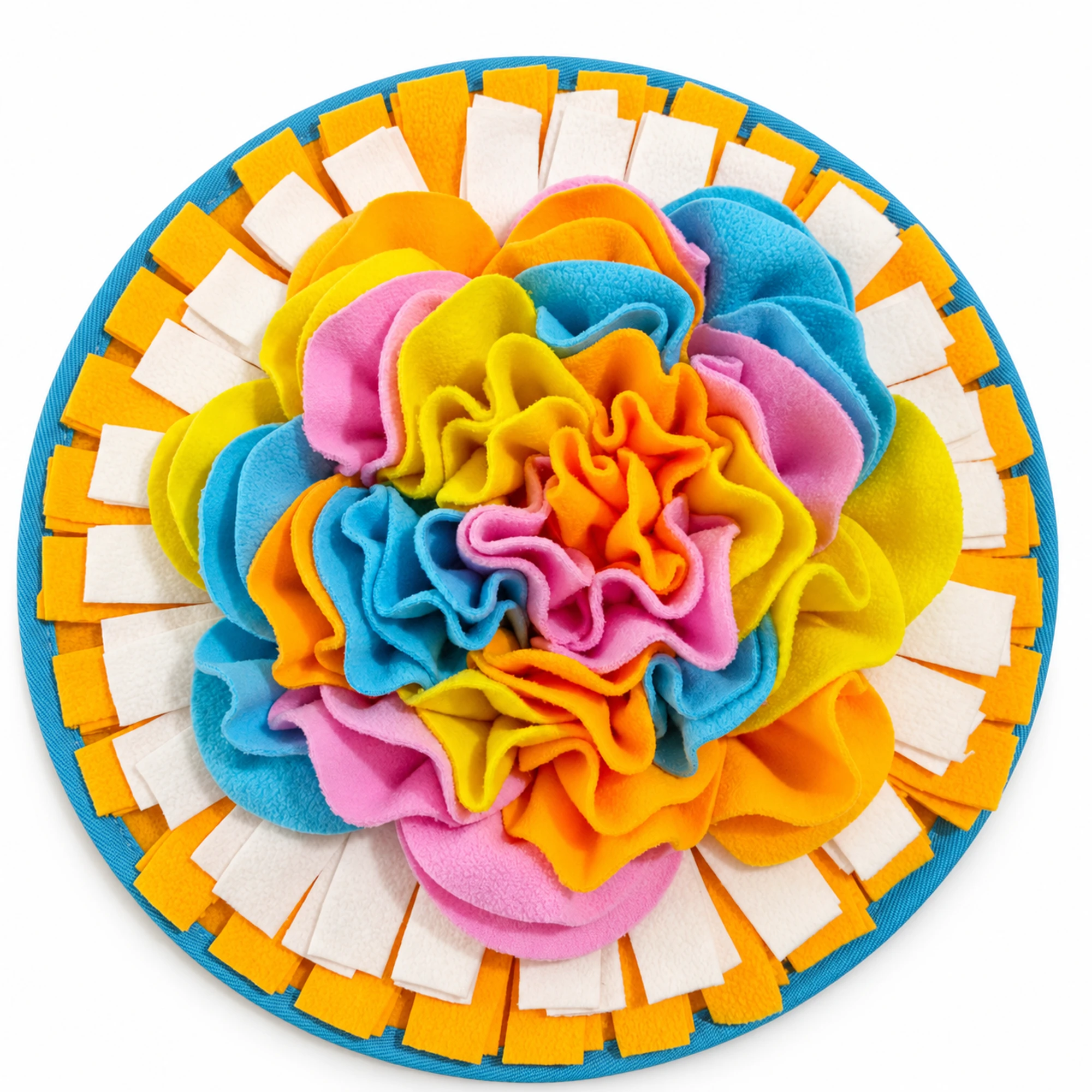
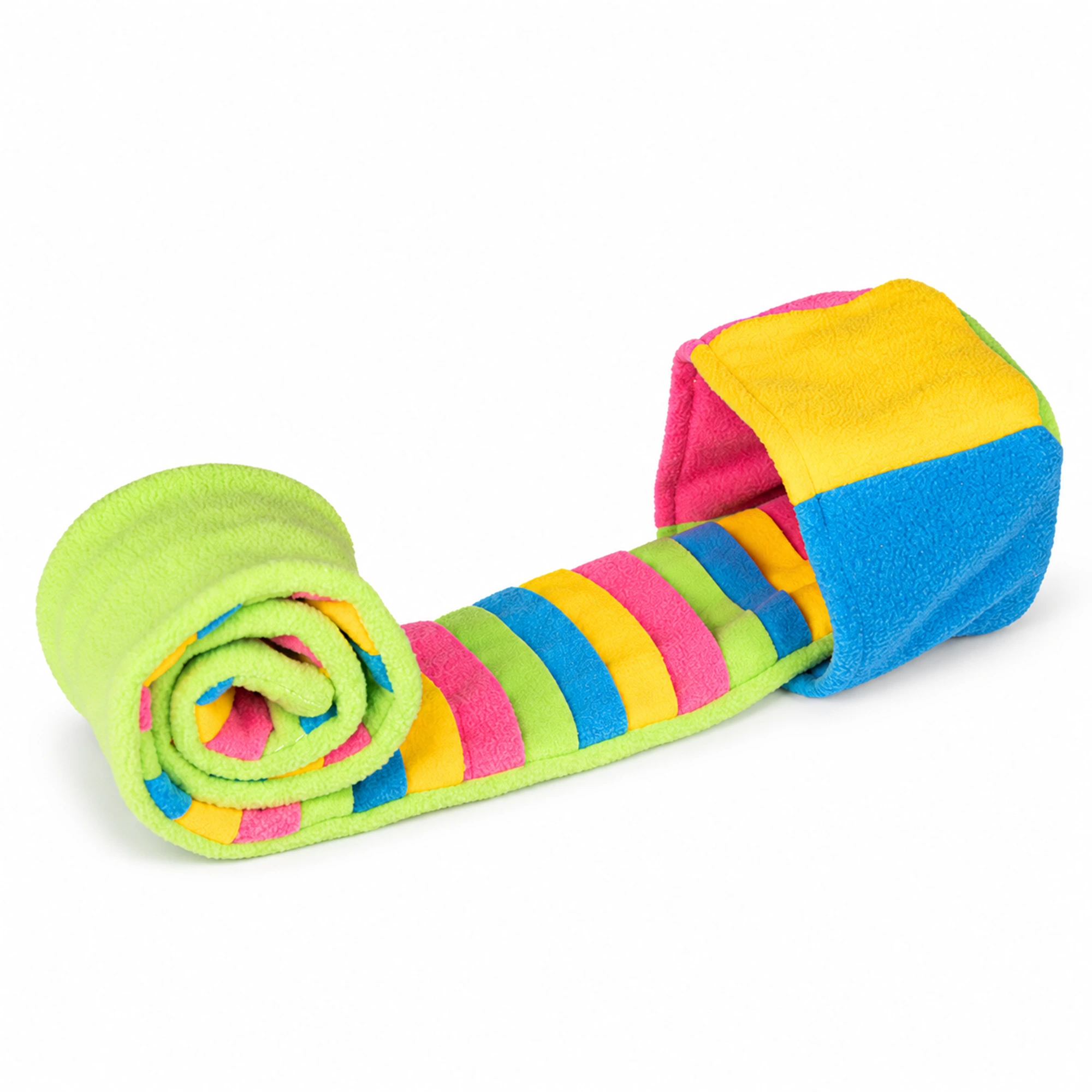
In a similar way, the Round Ruffle Flower Snuffle Mat arranges ruffled fleece in circular tiers of varying depths. This design allows you to adjust the challenge level, giving cautious animals easy rewards in the loose perimeter folds while hiding trickier treasures near the center. If your pets play in a travel pen or compact floor enclosure, the Small Rainbow Roll-Up Foraging Bowl provides a practical solution with its cinch drawstring rim. Pulling the cord converts the flat snuffle mat into a deep fabric bowl, keeping loose herbs and hay crumbs from scattering across room carpets.
Clinical trials tracking physiological markers show that rabbits foraging on snuffle mats demonstrate lower baseline stress hormones and settle into deeper rest afterward compared to bowl-fed pets. Rooting through soft fleece gives their whiskers the tactile sensation of digging through tall field grass, satisfying burrowing impulses without harming floorboards or baseboards.
Dental Health and Chew Enrichment: The Science of Continuous Tooth Growth
Continuous tooth development defines both rabbit and rodent anatomy. Front incisors alongside hidden molars grow without pause throughout life, adding between two and three millimeters of fresh enamel every single week. In natural habitats, constant chewing on coarse prairie grass, fibrous roots, and woody bark keeps teeth ground down to safe lengths. If teeth do not wear down fast enough, sharp enamel hooks called molar spurs develop along the dental margins, cutting into tongue tissue and cheek linings. The resulting ulcers cause intense pain, refusal to eat, and dangerous digestive standstills.
Quality timothy hay or meadow hay must always make up at least eighty percent of the daily diet, but safe chew toys offer valuable supplemental wear and exercise jaw joints. Items made from kiln-dried apple branches, woven willow balls, natural loofah wheels, and pressed grass blocks encourage the varied chewing angles needed to keep incisor crowns even. Rabbits naturally chew using a side-to-side figure eight movement, while guinea pigs grind food through a mix of front-to-back sliding and angled lateral strokes.
Before handing over any chew toy, always confirm that the wood has not been treated with synthetic pesticides, glossy varnishes, or chemical stains. Safe woods include dried apple, willow, birch, hazelnut, and pear. Avoid cedar, aromatic pine shavings, cherry, plum, and walnut, because their natural resins and oils irritate small mammal respiratory membranes and stress liver function. Offering clean wooden hanging mobiles, woven seagrass tunnels, and loofah slices gives small pets natural chewing outlets that help prevent costly veterinary dental surgeries.
Comparing Species Needs: Subtle Differences Between Rabbits and Guinea Pigs
Pet shops frequently lump rabbits and guinea pigs into one general category, but their evolutionary paths create distinct physical traits and behavioral priorities that influence which toys work best.
Locomotion Differences and Toy Mechanics
Rabbits move through powerful hind leg leaps, high vertical jumps, and acrobatic binkies. They need durable play gear that absorbs sudden energetic sprints. Guinea pigs stay close to the floor, moving in quick scurries, low belly glides, and sudden popcorn hops. Their play stations must sit flat and stable on room mats rather than encouraging risky climbing.
Instinctual Drives and Enrichment Focus
Ancestral rabbits love digging complex burrows, keeping watch from elevated hills, and marking perimeter zones with chin scent glands. They thoroughly enjoy deep dig boxes filled with shredded paper, cardboard hideaways, and lightweight willow balls they can toss around. Wild guinea pigs stay in compact herds, seek sheltered paths, and communicate through constant chirps and wheeks. They prefer low fabric tunnels, cozy fleece bridges, and shallow foraging pads where they feel covered and safe.
Dietary and Physiological Factors
Rabbits maintain sensitive cecal fermentation that demands rich long-stem fiber and minimal dietary starch. Guinea pigs cannot produce their own vitamin C and need daily dietary intake alongside steady dental grinding across compact jaws. Both species need completely untreated chew items that preserve gastrointestinal balance and prevent dental overgrowth.
Anatomical Vulnerabilities and Safety
A rabbit long spine fractures easily if the animal falls from an elevated perch or gets caught in cramped cage bars. Guinea pigs have short, fragile legs that easily twist, strain, or develop foot sores if forced to walk over wire floors or climb steep ramps. Keeping their enrichment equipment low to the ground protects their joints from unnecessary strain.
Safety Criteria, Material Verification, and Routine Enrichment Scheduling
Introducing new play gear requires attentive observation and thoughtful material checks. Many commercial items marketed for pocket pets actually carry hidden dangers that threaten fragile digestive systems. Work through these five practical safety checks before placing any toy inside your pet area:
- Fiber Digestibility and Ingestion Hazards: Rabbits and guinea pigs cannot vomit. When they swallow artificial carpet loops, frayed cotton twine, or tough nylon cords, those strands tangle inside the stomach into dense masses that completely block intestinal passages. Anti-pill polar fleece is the safest synthetic choice because biting teeth shred the tight knit into minute fuzz instead of long dangerous threads.
- Hardware and Clip Safety: Hanging cage toys often feature zinc-plated metal loops, thin wire clasps, or small bells. Lead and zinc poisoning remain real hazards in exotic pet medicine. Switch out metal hardware for natural sisal cord, unbleached jute, or vegetable-tanned leather thongs.
- Pesticide and Chemical Screening: Never gather tree branches from roadsides, public parks, or commercial orchards where exhaust residue, fertilizers, or herbicides might linger. Stick to certified untreated wood sourced from dependable pet supply crafters.
- Dimensions and Trapping Risks: Ensure every tunnel or wooden archway measures either clearly wider than your pet widest chest measurement or much too small for a nose to enter. Rigid circular openings between five and eight centimeters pose major strangulation risks where panicked animals can get their heads wedged tight.
- Scheduled Rotation and Novelty Maintenance: Small pets lose interest quickly when the same items sit untouched in their pen day after day. Setting up a three-tiered toy rotation keeps their curiosity fresh and active:
Plan an easy weekly rotation schedule using these three groups:
- Tier 1 (Daily Basics): Sturdy wooden hideout tunnels, clean cardboard boxes packed with fragrant meadow hay, and roomy timothy hay feeders stay inside the pen permanently.
- Tier 2 (Interactive Puzzles): Snuffle mats like the Gold Carrot Garden Snuffle Mat and treat-dispensing roller balls come out during active morning or evening foraging periods for an hour, after which you shake out debris and store them away.
- Tier 3 (Special Explorations): Multi-room cardboard mazes, hanging loofah garlands, and woven seagrass floor mats appear on alternating weekends to spark lively room exploration.
Pairing natural materials, practical foraging puzzles, species-specific floor layouts, and attentive safety checks transforms ordinary small pet pens into rich, engaging homes where rabbits and guinea pigs can thrive with vitality and joyful curiosity.