Sharing life with an aging canine companion brings steady companionship alongside meaningful routine adjustments. Whitening hairs dust the muzzle, morning movements show mild stiffness, and peaceful afternoon naps replace chaotic sprints across neighborhood parks. Even though physical stamina naturally recedes, an older pet’s desire for mental stimulation stays strong. Stopping play sessions altogether creates boredom, increases anxiety, and speeds up cognitive deterioration.
Elderly canines navigate genuine physical constraints that demand careful toy selection. Osteoarthritis, declining bite strength, flattened enamel, and clouding eyesight turn traditional toys into safety hazards. Heaving heavy vulcanized rubber spheres or engaging in high-intensity rope tugging risks joint trauma, muscular tears, and cracked tooth crowns. Introducing puzzle toys for senior dogs offers a safe way to channel mental focus without physical strain.
Enrichment for senior canines redirects daily energy toward ground-level olfactory hunting and tactile fabric exploration. Relying on a snuffle mat for senior dogs allows older pets to forage comfortably without twisting sore joints. By selecting plush textiles, low-profile bases, and effortless gliding mechanisms, pet parents keep mature minds sharp while shielding stiff limbs and tender gums.
Understanding the Physical Changes in Aging Dogs
Choosing practical enrichment items requires owners to understand how canine physiology shifts during late adulthood. Dogs past eight or nine years of age experience progressive changes throughout multiple anatomical structures:
Joint Stiffness and Degenerative Joint Disease
Chronic osteoarthritis challenges an immense proportion of aging dogs. Shock-absorbing cartilage lining the hips, stifles, elbows, and lumbar spine thins over time, making bounding strides, quick spins, and abrupt stops genuinely uncomfortable. Tossing bouncing toys over slick floor surfaces creates hazardous shear forces across sore joints. Toys built for older canines must keep all four paws securely grounded throughout play.
Dental Wear and Gum Sensitivity
Years of chewing food and bones naturally wear down molar cusps. Plenty of senior pets manage loose teeth, inflamed gingival margins, or previous tooth extractions. Rigid synthetic chews and dense polymer toys that suited adolescent jaw power can crack brittle roots or trigger painful bleeding. Older companions need pliable rubber textures, plush fleece fabrics, and flexible food-safe silicone.
Sensory Shifts in Vision and Hearing
Nuclear sclerosis and mature cataracts soften visual depth perception, leaving senior pets unable to track rapid movement in dim rooms. Age-related hearing impairment also blunts reactions to squeakers and verbal excitement. Scent ability, on the other hand, persists with remarkable durability into advanced age. Scent toys build upon your dog’s most reliable sensory faculty, restoring focus and offering deep fulfillment even when sight and hearing fade.
Why Cognitive Enrichment Matters for Senior Canines
Canine Cognitive Dysfunction (CCD), resembling dementia in people, touches many mature dogs. Warning signs include hallway disorientation, aimless midnight wandering, indoor accidents, and sudden withdrawal from loved ones. Rigorous veterinary research demonstrates that daily cognitive problem-solving helps protect synaptic pathways and delays degenerative mental decline.
Olfactory foraging functions as superb neurological conditioning for senior pets. Sniffing through layered textile pockets to pinpoint concealed food bits stimulates the olfactory cortex and memory retrieval zones. Twelve to fifteen minutes of structured snuffle work stimulates natural dopamine release, lowers resting stress levels, and brings deep contentment without muscular fatigue. A mentally stimulated senior dog rests peacefully throughout the night without nervous wandering.
Key Design Factors for Senior Dog Toys
Before bringing new enrichment gear home for an older companion, evaluate prospective designs against four crucial principles:
- Low Ground Clearance: Floor-hugging designs prevent neck over-extension. Older dogs with cervical spine discomfort struggle to rummage through tall bins or awkward angled containers.
- Non-Skid Base Construction: Senior pets struggle for traction across slick tile and hardwood floors. Slipping while searching risks acute joint hyperextension. Prioritize textured silicone grips and broad stabilizing bases that keep gear stationary.
- Soft and Pliable Materials: Heavy fleece textiles, soft felt foliage, and pliable food-grade silicone protect fragile teeth and delicate gums. If your thumbnail cannot leave a gentle impression in the toy surface, the material is too stiff for senior jaws.
- Minimal Mechanical Resistance: Puzzle compartments and sliding discs must glide smoothly under a gentle nose push or soft paw tap. Firm latches and intricate multi-step puzzles frustrate mature dogs and endanger brittle nails.
Best Dog Toys for Senior Dogs: Catalog Recommendations
The JoyPetPlay catalog offers specialized enrichment options crafted to support the anatomical and neurological needs of older canines:
Grey Ruffle Garden Snuffle Mat
The Grey Ruffle Garden Snuffle Mat stands as a premier example of zero-impact floor enrichment for aging dogs. Constructed from dense anti-pill fleece gathered into concentric circular ruffles, this mat provides deep scent channels without rigid internal frames. The velvety fabric ruffles touch sensitive muzzles softly, permitting dogs with missing dentition or gingival sensitivity to forage comfortably.
Its generous rectangular profile lets senior dogs hunt while resting flat on their chest in a relaxed position. A rubberized silicone dotted underside grips slick timber floors firmly, stopping the mat from sliding as your dog sniffs between fleece layers. Owners can tuck soft, low-calorie treats or kibble deep into the fabric ruffles, creating an engaging puzzle that requires zero joint strain.
Mushroom Pod and Fringe Foraging Mat
For mature dogs that appreciate tactile contrast, the Mushroom Pod and Fringe Foraging Mat unites plush upright fabric mushroom caps with loose fringe borders. The distinct mushroom stalks give visually impaired pets prominent physical markers, while the loose surrounding fringe allows easy treat extraction for dogs with reduced jaw precision.
This design serves pets coping with simultaneous vision loss and joint soreness exceptionally well. The distinct textile shapes form clear tactile maps that dogs read effortlessly using sensitive whiskers and rhinarium. The fully machine-washable build guarantees that saliva and dried food wash away quickly on a gentle cold cycle.
Blue Round Pivot Puzzle
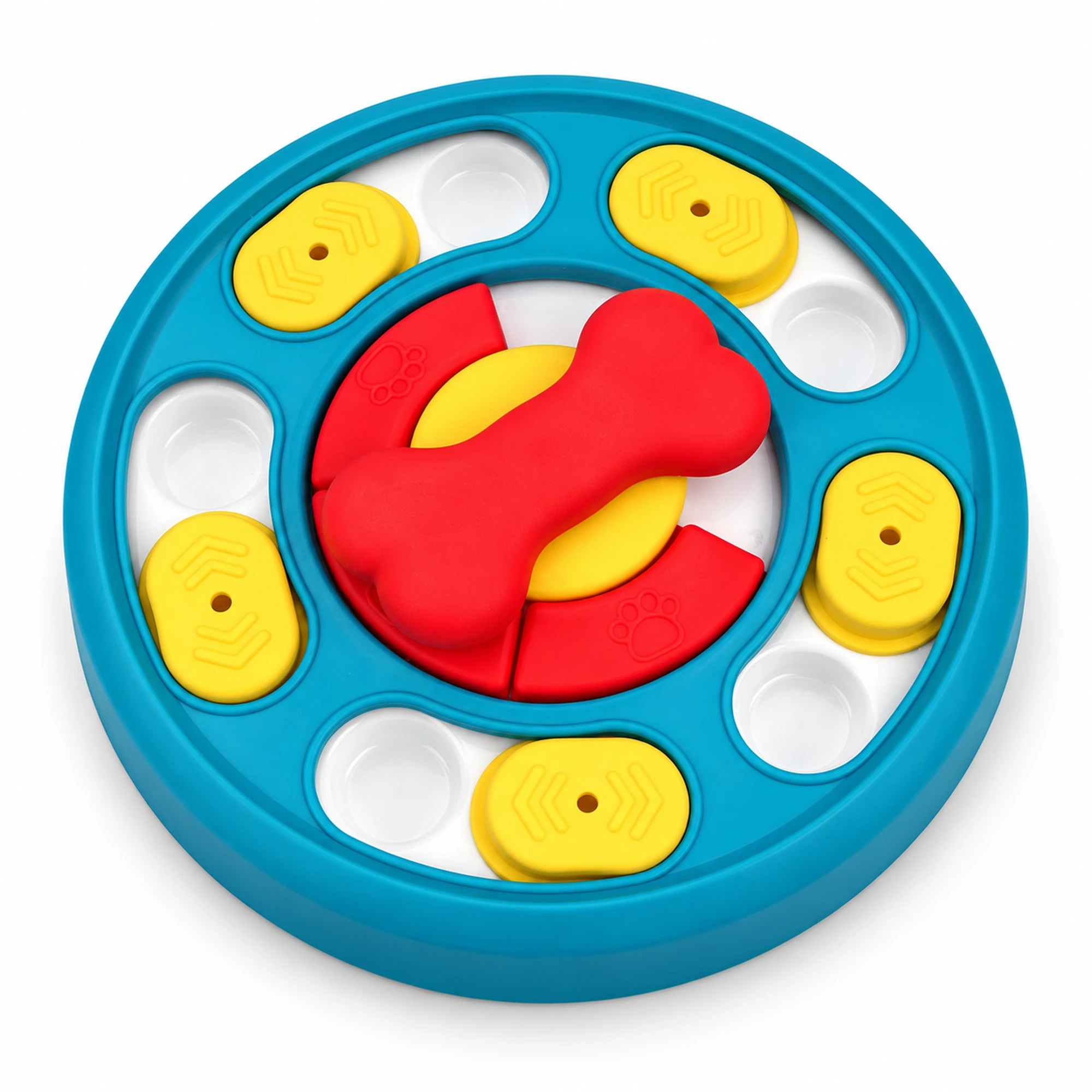
When your older canine seeks mechanical problem solving, the Blue Round Pivot Puzzle delivers satisfying mental challenges without heavy physical resistance. This disc-shaped station incorporates smooth plastic disc covers that swing effortlessly around a central pivot shaft.
Senior dogs easily sweep a snout or rest a gentle paw against the outer edge to reveal the hidden reward well beneath. Because the disc glides with almost zero resistance, dogs never need to bite or yank the pieces. The low profile keeps your pet’s neck in an anatomically neutral, comfortable position throughout play.
Green Triangle Press Treat Tray
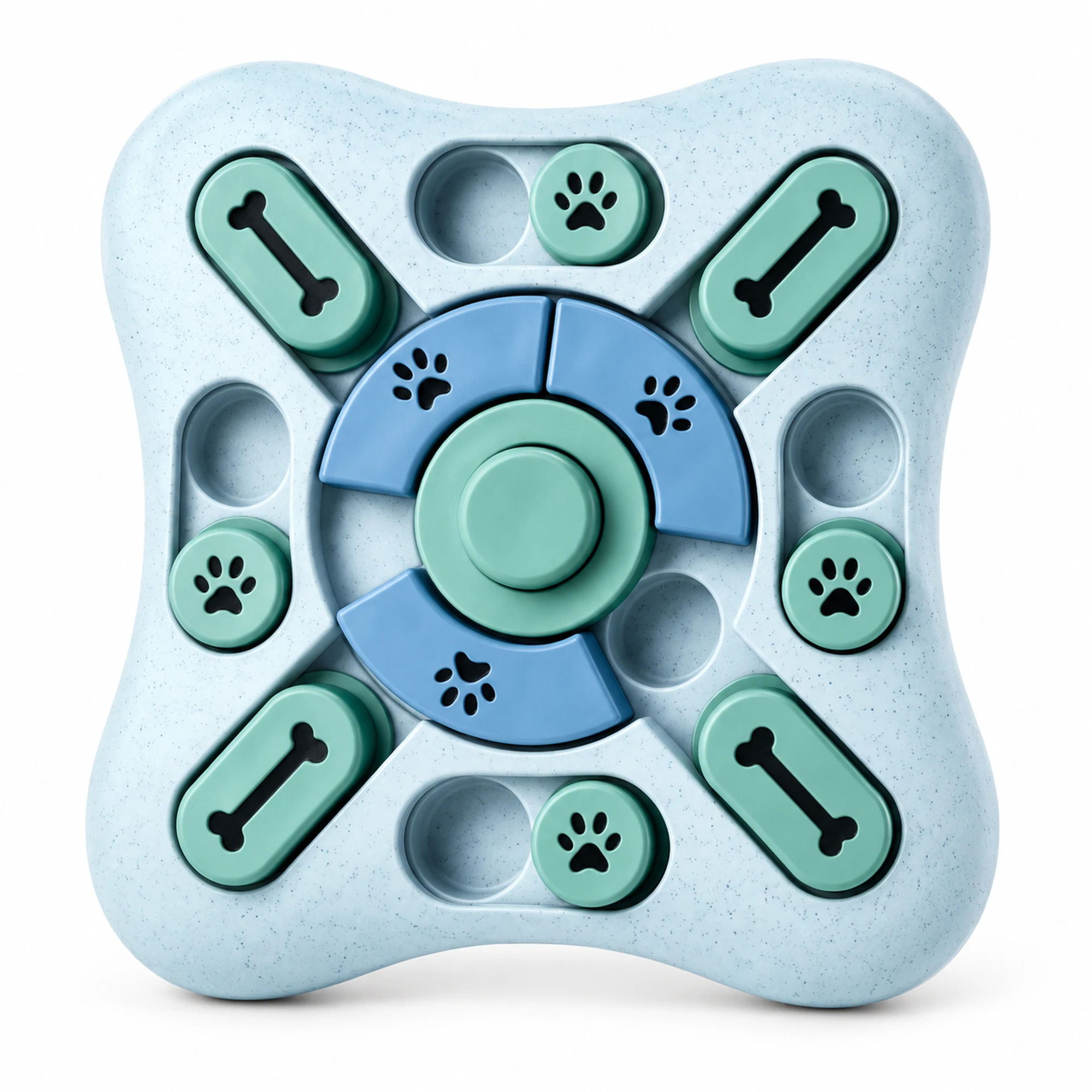
The Green Triangle Press Treat Tray supplies an equally gentle sliding puzzle choice for mature pets. Featuring smooth geometric covers nested within wide recessed tracks, this tray lets older dogs nudge lids aside using subtle nose taps.
Soft rounded outer contours prevent incidental mouth abrasions, while the broad footprint stays planted on rugs and play cushions. Dog parents can fill the compartments with tender freeze-dried poultry or soft kibble, creating a soothing, mentally rich meal experience.
Senior Dog Toy Selection Matrix
| Toy Model | Material Composition | Joint Stress Rating | Dental Impact | Best Suited For |
|---|---|---|---|---|
| Grey Ruffle Garden Snuffle Mat | Polar Fleece & Silicone Grips | Zero Impact (Lying down friendly) | Ultra-soft on gums and worn teeth | Dogs with arthritis, dental wear, or CCD |
| Mushroom Pod Foraging Mat | Felt, Flannel & Non-Skid Base | Minimal Impact (Slow foraging) | Very gentle on tender snouts | Dogs with partial vision loss and stiff necks |
| Blue Round Pivot Puzzle | Smooth BPA-Free Polymer | Low Impact (Stationary floor play) | Safe for gentle nose nudges | Cognitively active seniors needing brain games |
| Green Triangle Press Treat Tray | Food-Grade Polymer & Silicone | Low Impact (Grounded puzzle) | Zero jaw gripping required | Dogs with limited mobility and gentle paws |
Creating an Orthopedic Play Station
Mature canines experience the greatest enrichment success when their physical surroundings ease joint pressure. Setting up a supportive orthopedic play space takes minimal effort and greatly enhances comfort:
Begin by placing your snuffle mat or puzzle station atop an orthopedic dog bed or a thick closed-cell foam exercise mat. That cushioning relieves direct ground pressure on bony elbows, worn hocks, and arthritic hips while your dog works.
Next, ensure adequate room illumination. Because aging retinas process low light poorly, light the foraging area with warm, indirect illumination to help your pet spot tactile landmarks without squinting.
Finally, keep sessions calm and unhurried. Never rush a senior dog through a puzzle. Allow your dog to investigate at its own leisurely pace, taking frequent pauses to rest or drink water.
Safe Hygiene and Maintenance for Senior Dog Gear
Older dogs often have more delicate immune systems and may produce excess saliva during meal games. Regular cleaning keeps fabric toys hygienic and fresh:
- Machine Wash Snuffle Mats Weekly: Place fabric foraging mats inside a mesh laundry bag and wash on a gentle cycle using fragrance-free, pet-safe laundry detergent.
- Air Dry Thoroughly: Hang mats outdoors in sunlight or in a well-ventilated laundry room until completely dry to prevent mold growth inside dense fleece layers.
- Sanitize Plastic Puzzles: Wipe plastic sliding trays with warm water and mild soap after every session. Rinse thoroughly to ensure no detergent residue remains in the treat wells.
Frequently Asked Questions
How can you tell if a dog toy is too hard for a senior dog?
Perform the thumbnail test. Press your thumbnail firmly into the surface of the toy. If the material does not yield slightly to your nail, it is too hard for an aging canine’s worn enamel and fragile tooth roots.
What are the best dog toys for senior dogs with arthritis?
Flat fabric snuffle mats and low-profile sliding puzzle trays are the best options. These toys allow older dogs to play while lying down or standing comfortably, eliminating the jumping, pivoting, and running that inflames arthritic joints.
How often should an older dog engage in mental stimulation games?
One to two gentle sessions per day, lasting ten to fifteen minutes each, provide ideal mental enrichment. This frequency keeps older canine brains active and engaged without causing physical fatigue or cognitive overwhelm.
What treats work best inside senior dog puzzle toys?
Soft, highly aromatic treats work best. Consider soft freeze-dried salmon, tiny bits of cooked chicken breast, or slightly moistened kibble. Strong scents help compensate for diminished eyesight and encourage immediate engagement.