Placing an interactive puzzle on the rug seconds before departing rarely satisfies an eight-hour canine day. National pet care search data records over five thousand monthly inquiries for dog toys for bored dogs, with thousands more owners exploring practical strategies to keep solitary canines occupied during long shifts. Most people researching dog toys for bored dogs left home alone want a realistic, safe routine that discharges excess mental energy before departure while eliminating choking and foreign body hazards during unsupervised hours.
Relying on an interactive toy to entertain an isolated dog across an entire workday represents an unrealistic expectation. Canines possess natural circadian rhythms that favor daytime rest when properly stimulated earlier in the morning. A structured two-part departure routine delivers far superior behavioral outcomes compared to a single automated feeder. By conducting a focused fifteen to twenty minute foraging session using the Hamburger Character Snuffle Mat or the Green Three-Tier Wobble Treat Toy while you prepare for work, you stimulate healthy olfactory fatigue. You then stow multi-part puzzles safely out of reach before walking out the door, leaving behind only heavy-duty, single-piece chew items designed for solitary safety.
Neurobiology of Departure: Cortical Arousal Curves During Owner Absence
Analyzing canine solitude requires tracking real-time neurological responses to human departure signals. Dogs are keen observers of environmental sequences. The sound of keys jiggling, the rustle of a coat, or the packing of a commuter bag triggers anticipatory cortisol release and elevates sympathetic nervous system activity.
When guardians abruptly depart during peak arousal, the canine brain experiences a surge in norepinephrine and dopamine seeking an immediate behavioral outlet. Without structured guidance, this kinetic arousal discharges through displacement activities such as scratching door frames, pacing hallways, vocalizing, or chewing carpet edges. Canine behavioral studies demonstrate that cortical arousal peaks within the initial thirty to forty-five minutes following departure. If a dog navigates this critical transitional window in a calm mental state, their nervous system downregulates into restorative delta-wave sleep for several hours.
Pre-departure enrichment specifically targets this physiological curve. Engaging a dog in intense problem-solving fifteen minutes before leaving redirects sensory attention toward food foraging. By the time departure occurs, systemic neurotransmitters have shifted from anxious anticipation to satisfied digestive calm.
Olfactory Fatigue and Cognitive Calming Mechanics
Canines navigate reality primarily through their olfactory system, possessing up to three hundred million olfactory receptors compared to roughly six million in humans. When a dog engages in scent detection, their respiration shifts from standard breathing to active sniffing bursts at frequencies between five and seven Hertz.
This rapid olfactory processing directly stimulates the olfactory bulb, piriform cortex, and amygdala. Neurochemical analysis indicates that twenty minutes of focused scent puzzle work demands immense cognitive effort, generating profound mental satisfaction. While physical galloping merely builds muscular stamina without draining mental restlessness, olfactory exploration creates gentle central fatigue that naturally prepares the brain for deep sleep.
Supervised Pre-Departure Sniffing with the Hamburger Character Snuffle Mat
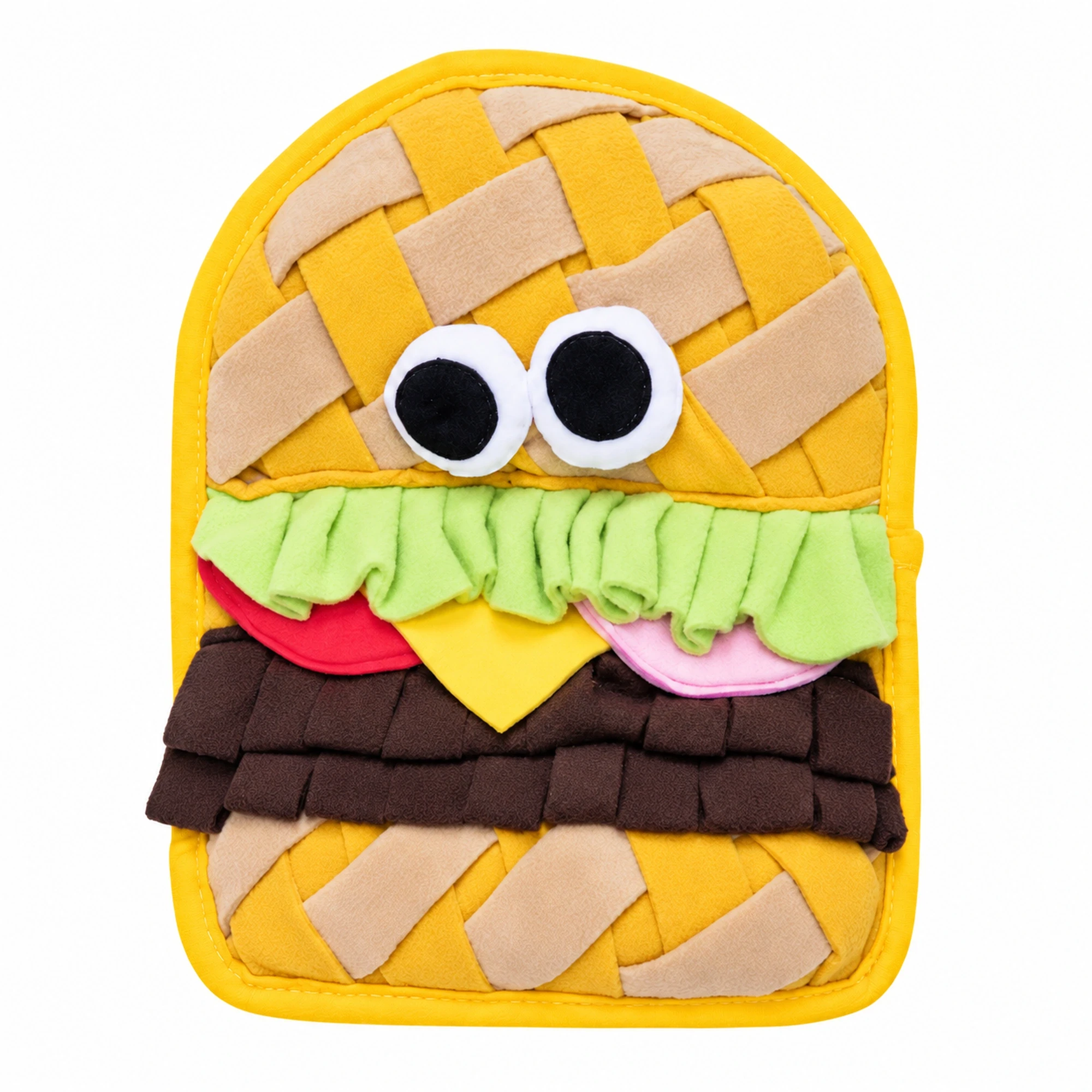
Fabric nosework mats provide an ideal medium for rapid morning enrichment. The Hamburger Character Snuffle Mat from the JoyPetPlay catalog utilizes dense fleece layering shaped like a stackable fast-food sandwich to conceal dry treats.
The multi-tier design includes fabric lettuce folds, tomato slices, cheese flaps, and textured buns that create varied compartment depths. Dogs must use their rhinarium (the sensitive tip of the nose) and dexterous tongue movements to nudge fabric folds aside. This precise tactile manipulation prevents dogs from simply wolfing food down. Because fabric puzzles can be shredded if an unmonitored dog decides to ingest fleece strips, this toy belongs strictly in the supervised pre-departure window. Handlers should present the stuffed hamburger mat twenty minutes before leaving, supervise the scent search, and safely store the mat inside a closet once empty.
Adjusting Puzzle Routes with the Green Three-Tier Wobble Treat Toy
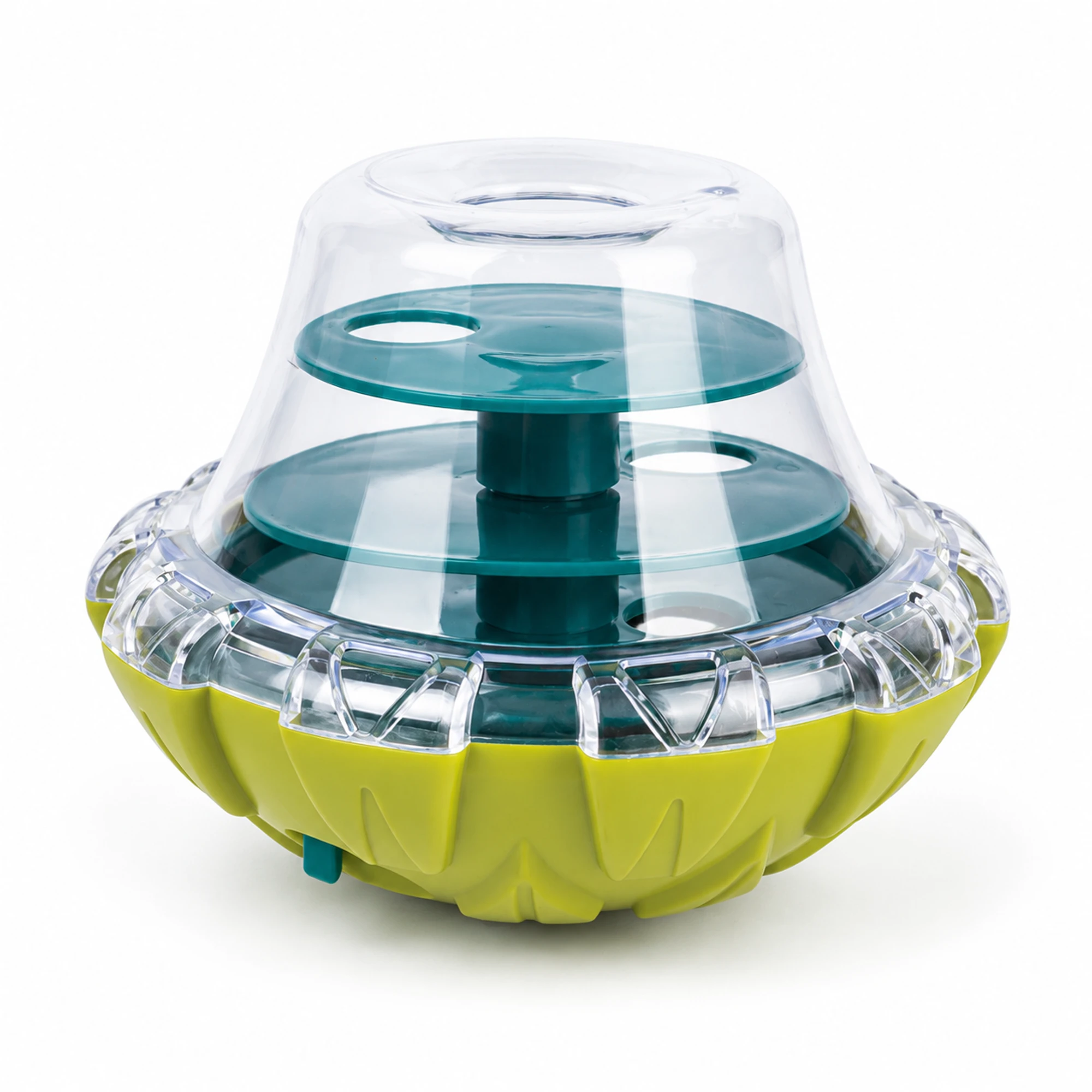
For canines driven more by mechanical problem-solving than fabric snuffling, the Green Three-Tier Wobble Treat Toy provides a dynamic kinetic challenge. This interactive dispenser features three stacked circular chambers supported by a weighted, rounded base that rocks unpredictably when nudged.
As the dog paws or noses the structure, internal baffles guide dry kibble through adjustable aperture gates. The wobbling movement mimics small prey resistance, compelling the dog to calculate balance and force to release each morsel. Handlers can calibrate the difficulty by rotating the tier openings, narrowing the exit holes as the dog gains problem-solving expertise. The toy is manufactured from impact-resistant food-grade polymer that absorbs floor collisions without chipping. Like fabric items, this multi-tier mechanical toy should be cleared from the floor before leaving to ensure the dog does not attempt to chew through the plastic casing while unattended.
Distinguishing Canine Boredom from Clinical Separation Anxiety
Pet guardians must accurately distinguish between simple environmental under-stimulation and genuine clinical separation distress. Conflating the two conditions often leads to inappropriate management strategies:
- Behavioral Onset Window: Bored canines typically display destructive chewing or mild wandering after two to three hours of complete inactivity, once their morning nap concludes. In contrast, dogs suffering from separation anxiety demonstrate frantic destruction, intense pacing, and panic within three to ten minutes of owner departure.
- Target Substrates: Bored dogs explore accessible novelties, shredding discarded mail, unrolling bathroom tissue, or chewing plastic containers left on counters. Dogs with separation distress focus destruction almost exclusively on departure barriers: clawing windowsill frames, tearing door weatherstripping, or biting doorknobs.
- Physiological Responses: Separation anxiety triggers hypersalivation, dilated pupils, urinary accidents despite prior house-training, and prolonged trembling. Bored canines exhibit normal vital signs, chewing calmly without autonomic panic responses.
Recording a video stream of your dog’s solo hours using an inexpensive indoor camera clarifies their behavioral baseline. If the recording reveals a dog resting quietly for six hours after twenty minutes of morning foraging, simple boredom management has succeeded.
Comprehensive Comparison: Pre-Departure Enrichment vs Solitary Home-Alone Equipment
Selecting toys for different phases of the day requires clear distinctions between interactive learning gear and independent safety articles:
| Enrichment Category | Representative Toy Model | Supervised Departure Window | Solo Home-Alone Window | Primary Cognitive Mechanism | Cleaning Protocol |
|---|---|---|---|---|---|
| Fabric Nosework Mat | Hamburger Character Snuffle Mat | Yes (15 to 20 minutes) | Strictly Prohibited | Deep olfactory tracking and scent separation | Gentle machine wash in mesh bag, air dry |
| Weighted Wobble Dispenser | Green Three-Tier Wobble Treat Toy | Yes (10 to 15 minutes) | Supervised Only | Kinetic balance calculation and paw manipulation | Hand wash with warm soapy water and bottle brush |
| Solid Rubber Dental Core | Single-Piece Heavy Vulcanized Bone | Yes (Any duration) | Safe for Solitary Play | Rhythmic jaw decompression and dental scraping | Top-rack dishwasher safe, inspect surface monthly |
| Dual-Port Rubber Feeder | Thick Hollow Natural Rubber Cylinder | Yes (Unfrozen or chilled) | Safe When Frozen Solid | Extended licking releases calming endorphins | Soak in warm water, rinse thoroughly after thawing |
The table above illustrates the vital rule of home-alone toy management: never leave complex mechanical puzzles or fabric articles with an unmonitored canine. Articles permitted during unsupervised hours must feature single-piece, indestructible rubber construction with dual ventilation ports that eliminate vacuum tongue entrapment.
Establishing the Daily Three-Step Departure Protocol
To build a peaceful household environment where your dog rests quietly while you work, execute this structured daily departure ritual:
- Step 1: Moderate Physical Relief (Thirty Minutes Prior): Conduct a relaxed twenty-minute walk focusing on elimination and physical movement. Keep the walk leisurely rather than hyper-stimulating, allowing ample decompression sniffing along grass margins.
- Step 2: High-Focus Olfactory Workout (Fifteen Minutes Prior): Place the Hamburger Character Snuffle Mat or Green Three-Tier Wobble Treat Toy on the kitchen floor loaded with small portions of dry kibble or dehydrated liver. Let your dog work through the compartments while you gather your belongings and dress for departure.
- Step 3: Low-Key Exit and Pack Away: As your dog finishes the final treats, calmly pick up the puzzle toy and store it inside a closed cabinet. Hand your dog a solid, single-piece rubber toy stuffed with frozen pumpkin or plain yogurt, step out the door without elaborate emotional goodbyes, and lock the entrance smoothly.
Maintaining this sequence shifts your dog’s psychological focus from your departure to the soothing sensory task at hand, preventing behavioral spikes and ensuring restful solitude.
Frequently Asked Questions
How long do food-dispensing dog toys actually keep a bored dog busy?
Most interactive food-dispensing toys engage a motivated canine for fifteen to thirty minutes. Even highly complex labyrinths are emptied rapidly once a clever dog learns the mechanical solution. The true therapeutic value lies not in filling an eight-hour gap with continuous play, but in providing concentrated cognitive exertion that triggers natural daytime sleeping cycles throughout the remaining hours.
Can I leave a fabric snuffle mat or multi-tier wobble puzzle out while my dog is home alone?
No. Fabric snuffle mats like the Hamburger Character Snuffle Mat and multi-tier hard polymer dispensers like the Green Three-Tier Wobble Treat Toy must never remain with an unsupervised canine. Bored dogs frequently chew and swallow loose fleece strips or crush plastic casings once the treats run out, creating acute intestinal blockage risks that require emergency surgery.
How often should I rotate dog toys to prevent boredom?
Rotate toys on a structured forty-eight hour schedule utilizing a three-bin rotation method. Maintain two active items per day: one interactive puzzle for morning supervised sessions and one durable rubber chew for solitary resting hours. Store remaining toys out of sight in a sealed container. Rotating items regularly preserves high sensory novelty, preventing the habituation that leads to boredom chewing.