Swimming and water fetch provide exceptional low-impact exercise for active dogs. Splashing into cool water soothes tired joints while burning substantial physical energy on warm summer afternoons. Standard land toys regularly fail in aquatic environments. Fabric balls soak up heavy moisture, sinking beneath the surface where dogs cannot reach them. Hard plastics can chip or irritate sensitive mouths when wet, while unrinsed surfaces collect abrasive salt and grit that wear down dental enamel.
Choosing the right water toys for dogs requires understanding buoyancy physics, non-porous material engineering, and retrieval ergonomics. Whether your dog loves diving into freshwater pools, retrieving along quiet lake shores, or splashing through coastal ocean surf, selecting specialized gear keeps aquatic games safe, hygienic, and rewarding.
Essential Requirements for Water Toys: Buoyancy and Surface Visibility
Buoyancy serves as the primary baseline for any safe aquatic dog toy. A water toy must float consistently high on the surface line rather than hovering at subsurface depths. When toys sink or sit low in the chop, dogs swallow excessive amounts of water while trying to secure their grip. This accidental swallowing can lead to canine water intoxication, known medically as hyponatremia, or severe gastric distress.
Thermoplastic rubber and closed-cell synthetic compounds provide reliable positive buoyancy without soaking up moisture. Unlike standard tennis balls or plush fabrics, non-porous rubber remains lightweight during extended swimming sessions. Purpose-built floating dog toys resist waterlogging, so the toy keeps its exact balance and surface elevation from the first throw to the last.
High-visibility colors represent another vital safety factor. Water reflections, ripples, and white ocean foam make dark or muted toys invisible to swimming dogs. Canines possess dichromatic vision, meaning their eyes process color primarily across blue and yellow spectrums. High-contrast shades like bright yellow, clear cyan, and vivid orange stand out sharply against blue pool tile and green lake ripples. A floating toy that catches the light allows dogs to spot their target immediately, reducing unnecessary swim fatigue and disorientation in deep water.
Pool Play vs Beach Play: Managing Salt, Sand, and Chlorine
Freshwater swimming pools and marine coastal beaches present completely different environmental challenges for canine toys and health. Selecting appropriate gear requires evaluating the exact conditions of your swimming destination.
Chlorinated Pool Environments
Swimming pools rely on chemical sanitizers like chlorine and bromine to control bacteria. While safe for human recreation, pool water can dry out a dog coat and irritate sensitive nasal passages. Toys that absorb water retain these chemicals within their inner cores. When a dog bites down on a saturated fabric toy, concentrated pool water squeezes directly into the mouth.
To prevent chemical ingestion, choose non-absorbent dog pool toys with sealed, non-porous surfaces. Smooth rubber and molded textures shed chlorinated water the moment they break the surface. Always rinse toys thoroughly after pool sessions so chemical residue does not degrade the flexible polymers over time.
Ocean Beaches and Coastal Surf
Saltwater environments introduce abrasive physical elements alongside marine salinity. Crashing shorebreak waves demand toys with superior grip profiles so dogs can latch on quickly before currents pull the toy away into the tide.
The biggest hidden hazard at the beach is silica sand. Wet sand adheres quickly to damp felt, loose rope strands, and moist rubber. Equipping your pup with purpose-built dog beach toys prevents abrasive quartz particles from acting like sandpaper against canine teeth. Over time, repeated chewing on gritty toys grinds down tooth enamel, exposing sensitive dentin and causing chronic oral pain. Selecting smooth, rinse-friendly rubber toys minimizes sand accumulation and protects dental health during beach outings.
Aquatic Environment Comparison
To help owners prepare for different destinations, the following table compares key hazards and gear requirements across swimming venues:
| Swimming Environment | Primary Environmental Hazard | Recommended Toy Features | Essential Handler Precautions |
|---|---|---|---|
| Backyard Pool | Chlorinated water ingestion and slippery concrete coping | Non-absorbent sealed rubber, bright cyan or yellow hue | Guide dog to shallow steps, provide fresh drinking water |
| Freshwater Lake | Submerged weeds, stagnant silt, blue-green algae | High-floating closed-cell foam, lightweight profile | Check local water advisory for cyanobacteria, rinse coat |
| Ocean Beach | Heavy shorebreak waves, salt toxicosis, abrasive sand | Smooth non-stick rubber, long toss cords, vivid orange tone | Limit swim sprints to ten minutes, rinse sand from mouth |
Retrieval Ergonomics in Water: Ring Grips and Toss Cords
Water retrieval requires different physical mechanics than dry land fetch. When a dog swims, its head remains angled upward to keep the airway clear above the splash line. Grabbing a round, smooth ball in deep water can be challenging because the jaw must open wide without taking in water. Specialized shapes significantly improve retrieval ergonomics.
Circular Rings for Easy Aquatic Pickups
A circular ring offers an open profile that swimming dogs can easily hook with their teeth. The Yellow Paw and Bone Dog Ring is a 20 by 20 cm circular rubber pull ring with pebbled surface textures and raised bone motifs. Its 20 cm wide diameter allows dogs to slide their jaws around the outer edge without burying their snouts beneath the surface.
The raised bone motifs and textured pebbled surface provide tactile grip even when wet. Weighing 120 g, this molded pull ring stays buoyant while giving owners sufficient heft for accurate, long-distance tosses across the swimming lane. Its bright yellow hue ensures rapid surface acquisition across calm pools or choppy lake ripples.
Toss Cords for Distance and Shoreline Control
For beach retrieval where waves roll along the sandbars, toys with integrated toss cords provide superior throwing leverage. The White Speckled Rope Loop Dog Ball pairs a 7.5 cm textured fetch ball with a 40 cm loop cord for water tossing and shoreline retrieval.
The 40 cm loop cord allows handlers to launch the 90 g ball far past the breaking surf without tiring their arms. When the dog reaches the floating 7.5 cm ball, the speckled texture gives positive mouth traction while the trailing rope allows for quick shoreline tug games upon return. Keeping the rope loop clean and checking the knots ensures reliable performance across diverse coastal settings.
Poolside Motivation and Low-Impact Enrichment
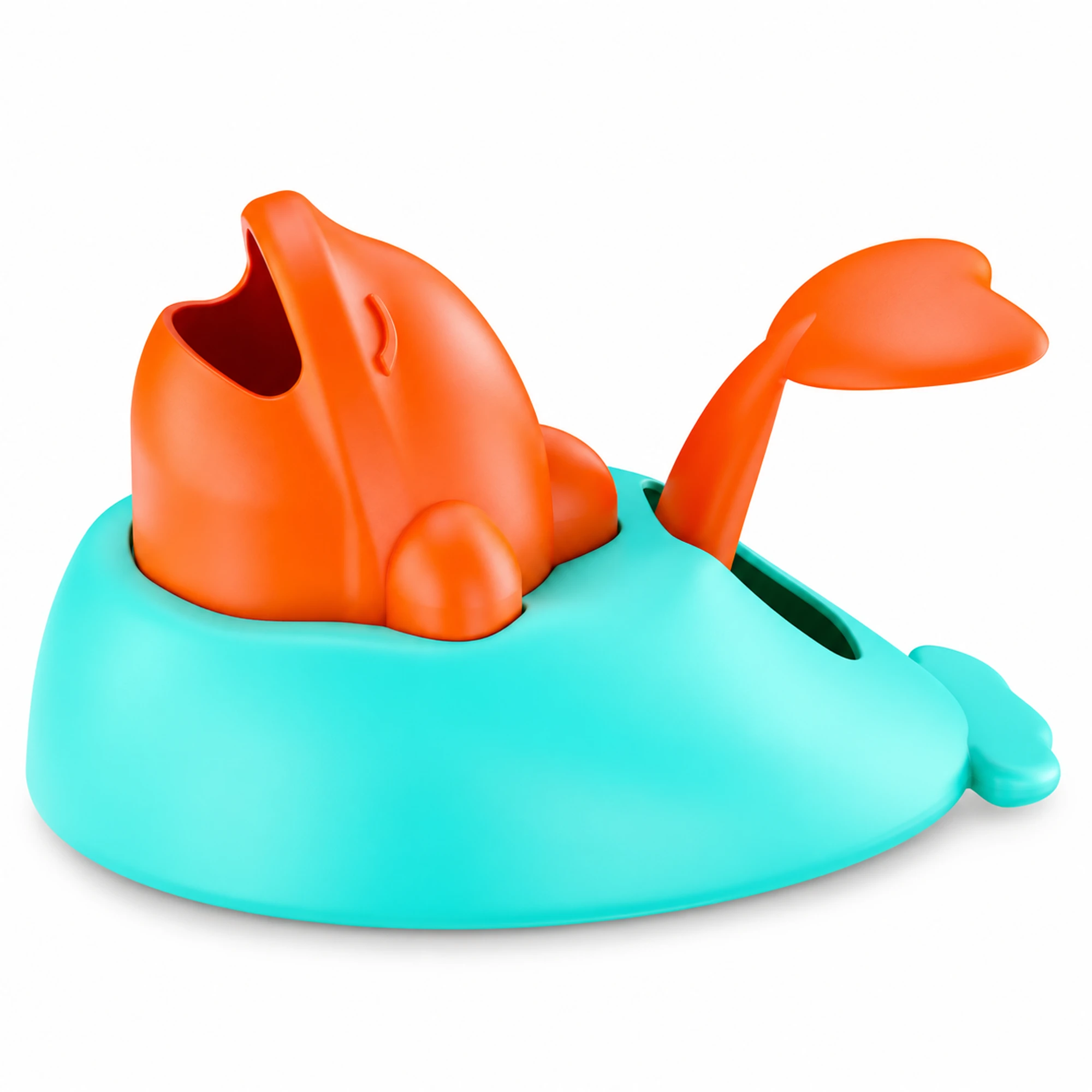
For quiet poolside sessions where energetic diving is not ideal, floating treat dispensers offer mental stimulation without intense splash fatigue. The Whale Press and Pop Treat Dispensing Dog Toy ($7.90) provides playful motivation along the water edge, allowing dogs to press and discover small rewards while resting between swimming rounds.
Post-Swim Toy Care: Rinsing, Drying, and Storage Protocols
Proper maintenance extends the working life of water toys and protects your dog from residual contaminants. Follow this straightforward cleaning routine after every aquatic session:
- Rinse Immediately with Fresh Water: As soon as playtime concludes, hose down all toys using clean tap water. Thorough rinsing strips away corrosive pool chlorine, ocean salts, and clinging beach sand before they dry into stubborn crusts.
- Wash with Mild Soap When Needed: If toys were used in brackish lake water or muddy shorelines, wash them in warm water mixed with a small amount of unscented dish soap. Scrub around pebbled textures and grooved motifs to dislodge trapped silt.
- Inspect for Structural Wear: Check rubber rings for deep puncture tears and inspect rope attachments for frayed strands. Discard any item showing loose chunks that could become swallowing hazards.
- Air Dry Completely in the Shade: Lay the rinsed toys on a ventilated drying rack away from direct, scorching sunlight. Ultraviolet radiation combined with intense heat can cause rubber compounds to oxidize and crack prematurely.
- Store in a Dry, Ventilated Bin: Avoid sealing damp toys inside airtight plastic containers, which fosters mold and mildew growth. Keep them in a breathable basket until the next swimming adventure.
Ear Care and Post-Swim Canine Health
Aquatic exercise requires careful attention to canine anatomy, particularly the ear canals. Dogs with floppy ears, such as Golden Retrievers, Labradors, and Cocker Spaniels, trap moisture inside the external ear canal after swimming.
Trapped moisture combined with warm body temperatures creates an ideal breeding ground for yeast and bacterial infections, such as Malassezia or Pseudomonas. After every swimming session, gently dry the outer ear flap and ear canal entrance with a clean, soft cotton towel. Many veterinarians recommend applying a drying ear cleanser formulated with astringent drying agents to evaporate residual moisture.
Additionally, monitor your dog for signs of water intoxication. If a dog consumes excessive fresh or pool water during enthusiastic fetch games, the body sodium levels drop drastically. Early clinical symptoms include listlessness, bloated abdomen, pale gums, excessive salivation, vomiting, dilated pupils, and ataxia. If these signs occur after swimming, seek emergency veterinary care without delay.
Frequently Asked Questions
Can regular tennis balls be used as water toys for dogs?
Standard tennis balls are not recommended for water play. The fuzzy felt covering absorbs water rapidly, causing the ball to sink or sit too low in the water. Furthermore, wet felt traps abrasive beach sand and chlorinated pool chemicals, which damages tooth enamel when chewed.
How do I clean dog water toys after a day at the beach?
Rinse the toys thoroughly under running fresh water to remove all traces of salt and sand. Pay special attention to textured surfaces, seams, and rope loops. Allow the toys to air dry completely in a well-ventilated, shaded area before storing.
What should I do if my dog swallows too much pool or ocean water?
Encourage your dog to take frequent rest breaks on dry land and provide fresh drinking water during play. If your dog shows signs of nausea, lethargy, vomiting, or disorientation after swimming, contact your veterinarian immediately.
Why do some rubber toys sink while others float?
Buoyancy depends on the specific gravity of the material. Solid vulcanized rubber is denser than water and sinks immediately. Water-safe toys incorporate hollow internal air cavities or lightweight closed-cell foam cores that displace sufficient water weight to float on the surface.
What colors are easiest for dogs to see in water?
Because canines possess dichromatic vision, bright yellow, vivid cyan, and clear orange provide the highest contrast against blue pool water and dark lake ripples. Dark green, purple, and red appear dull gray or brown to dogs, making retrieval significantly harder.
Water fetch combines mental stimulation with exceptional physical conditioning. Selecting purpose-built toys made from buoyant, non-porous materials ensures that your dog can retrieve comfortably without swallowing water or grinding down tooth enamel. Prioritize high-visibility tones, inspect circular rings and toss balls regularly, and make thorough post-swim rinsing a non-negotiable habit for every aquatic adventure.