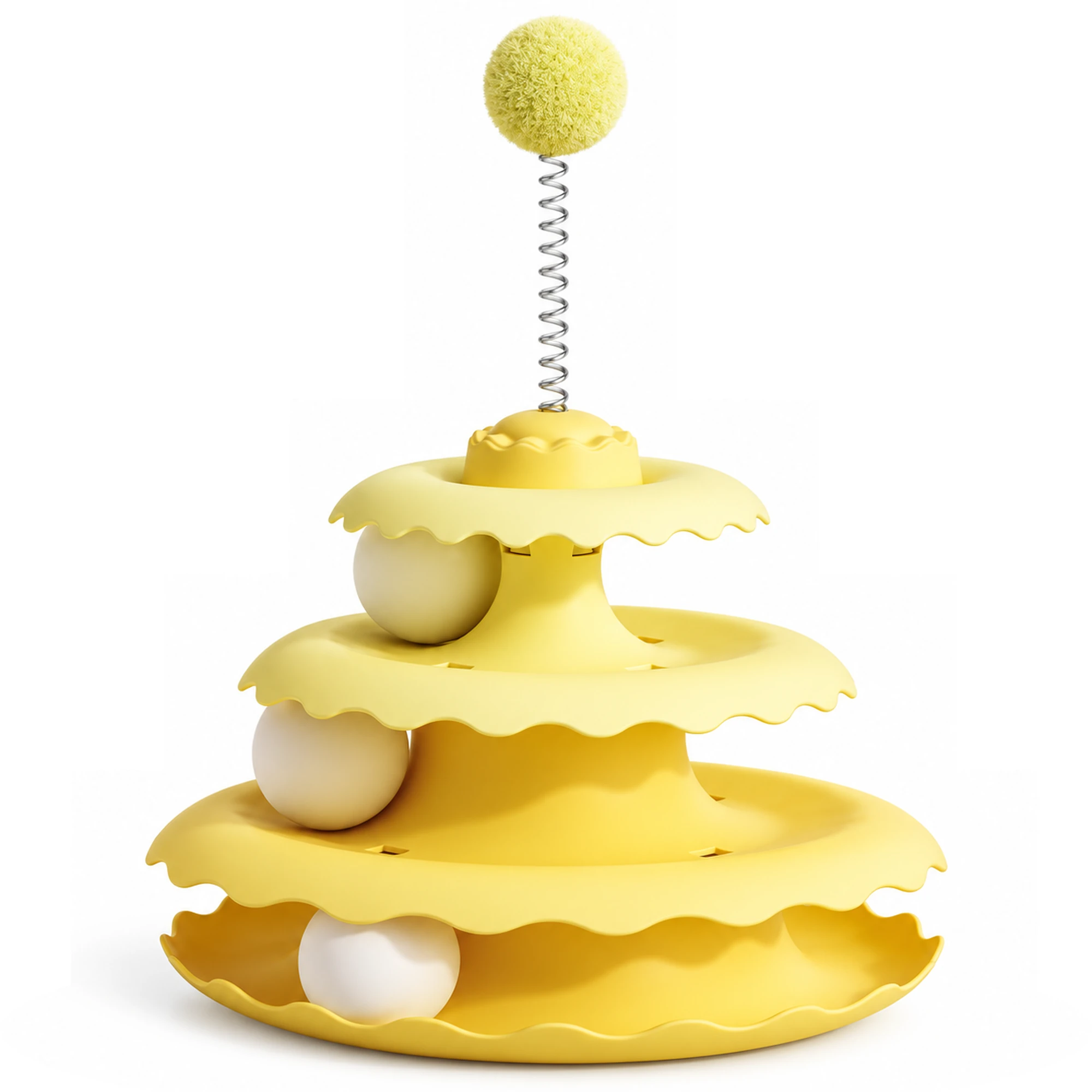
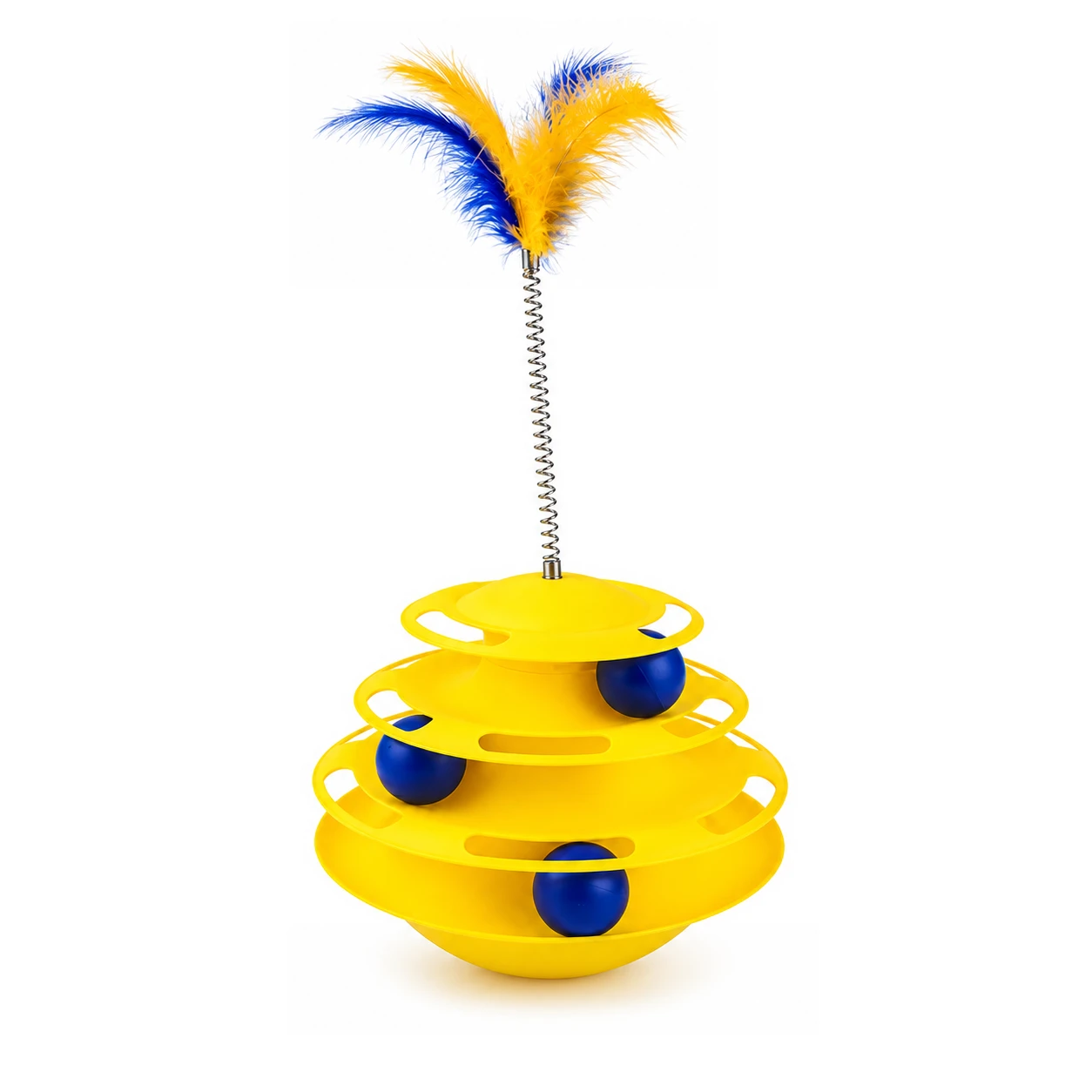
These two cat track toys both have three levels and three balls. The useful difference is above and around the tracks: one has scalloped edges and a spring-mounted pompom; the other has a rounded lower hemisphere and a spring-mounted feather teaser. Compare those features first, then follow the supervision and damage instructions that both listings give.
This is a comparison of the two product descriptions, with no play-test or stability ranking.
Compare the structure at a glance
| Feature | Three-tier pompom track | Three-track feather toy |
|---|---|---|
| Track arrangement | Three tiers, one ball in each track | Three levels, three blue balls |
| Body detail | Scalloped edges | Rounded lower hemisphere |
| Upper attachment | Yellow pompom on an upright spring | Blue/yellow feather teaser on a spring |
| Listed instruction | Supervise play; remove if damaged | Supervise play; remove if damaged |
The details come from the Yellow Three-Tier Track Cat Toy with Spring Pom-Pom and Yellow Wobble Three-Track Feather Cat Toy listings.
Decide what you want to change in your toy collection
If you already have a three-level, three-ball track, either of these models repeats that count. In this pair, direct your comparison toward the upper attachment and body shape. That keeps the purchase decision tied to an actual difference.
If you already have a pompom track, use the upper attachment as your comparison point. The feather version is described with a spring-mounted blue/yellow feather teaser. Decide whether that is a change you want to offer during supervised play. The scalloped three-tier option is described with a yellow pompom on an upright spring, for a comparison with the attachment you already have. These are choices about the parts you will offer, not predictions that a cat will prefer one or play for longer.
The rounded lower body is also worth identifying before ordering. It describes a different shape; it does not establish that the feather model resists tipping better. The pompom listing gives no comparative flip test. The feather listing gives no comparative flip test either. There is no supported stability winner here.
Use each toy’s own supervision instruction
Both selected listings say to supervise play and remove the toy if damaged. Plan to remain for the session, and include the upper attachment when looking over the toy: the pompom and its spring on one, the feather teaser and its spring on the other.
If you find damage, remove the toy from play.
Keep cleaning separate from the structure comparison
The pompom description supplies no cleaning method, and the feather description supplies no cleaning method. A pompom, a feather and a similar tower shape do not establish a wash or soaking instruction. Use the care instructions supplied for your exact model before cleaning it.
Choose between these two tracks for a change you can name, such as the upper attachment or body shape, and keep the same supervised-use plan for either one.