Proper crate training creates a peaceful home territory for domestic canines. When dogs spend time locked in an empty kennel without mental occupation, quiet rest often turns into frantic pawing and vocal whining. Many dog owners place toys inside the kennel to comfort their pets during work hours or shopping trips. Yet tossing an untested plaything into an unmonitored crate introduces grave medical hazards. In an enclosed kennel, broken rubber pieces or unraveling seams can become an emergency obstruction in a matter of seconds.
Deciding what items are truly safe to leave in a crate requires checking rubber composition, structural molds, air venting dynamics, and canine bite behavior. When picking crate toys for dogs what is safe to leave behind, pet parents must separate safe pacification tools from hazardous choking items.
The Unique Risk Environment of an Unsupervised Crate
Enclosed kennels alter how dogs handle everyday play objects. Out in a spacious living room, your companion moves between resting spots, tracks room activities, and repositions easily. Inside an enclosed crate, available floor space shrinks, focusing canine attention entirely on what sits on the bottom tray. If a pet feels stressed by solitude, that nervous excitement focuses entirely on the chew toy.
Without direct human supervision, dogs focus intense jaw leverage on a single patch of rubber for prolonged spans. Canine bite power spans from 200 to more than 400 pounds per square inch based on head anatomy. Steady chewing against one spot fatigues materials far quicker than active outdoor fetching. Furthermore, if an object blocks a dog’s airway inside a locked kennel, owners cannot provide immediate help. Every item left inside a crate must satisfy rigorous safety criteria.
The Physics of Negative Pressure: Why Dual Air Vents Are Essential
A frequent yet hidden danger of hollow rubber toys involves tongue entrapment sparked by internal vacuum suction. When canines lick wet food or peanut butter from inside a toy, the mouth forms an airtight perimeter around the cavity opening.
If the rubber item has only a single portal, rapid licking creates an internal vacuum. The dog’s tongue gets pulled into the interior space. External atmospheric pressure holds the soft tissue inside, pinching blood vessels. The trapped tongue swells quickly, doubling in volume and locking the pet in place.
Emergency animal hospitals often admit dogs with tongues stuck inside single-hole rubber toys. In acute instances, prolonged circulatory blockage leads to dead tissue, forcing surgical removal of part of the tongue.
To eliminate negative pressure suction traps, safe kennel toys need dual through-hole airflow channels. A secondary opening on the opposite surface balances air pressure. Air circulates through the internal chamber, preventing vacuum formation no matter how hard the pet licks.
Material Chemistry: Single-Piece Vulcanized Rubber vs Weak Polymers
Safety inside a kennel demands specialized rubber compounding. Crate chew items must be molded from a continuous piece of dense, vulcanized natural rubber.
Vulcanization links polymer chains with sulfur curing under high temperatures, forming a tough molecular network. This formulation gives natural rubber high tensile stamina, tear resistance, and rapid elasticity. When canine teeth press into vulcanized rubber, the material flexes and bounces back instead of tearing into sharp shards.
By contrast, ordinary toy compositions fail under steady unmonitored chewing:
- Thermoplastic polymers and soft vinyl puncture under medium jaw pressure, creating sharp points that irritate gums.
- Thin latex tears into loose flaps that pets swallow, forming clumping masses in the stomach.
- Glued multi-part items split along bonded joints, exposing hollow compartments.
- Hard nylon bones do not give under pressure, causing slab tooth fractures on upper fourth premolars.
Opting for thick natural rubber with medium durometer stiffness offers dental protection alongside solid tear durability.
Lethal Crate Hazards: Objects You Must Never Leave Unattended
Pet shop aisles display many bright toys, but most are unsuitable for unmonitored kennel use. Keep these hazardous categories away from your dog’s crate:
1. Plush Fabric Toys and Stuffed Animals
Even plush toys promoted as tough feature synthetic polyester batting and plastic squeakers. An unmonitored pet can rip through seams in minutes. Ingested polyester stuffing will not break down in stomach acid. It gathers with food matter, creating blockages in the small intestine. Loose plastic squeakers present immediate choking dangers.
2. Rope Toys and Braided Tugs
Rope toys cause numerous linear foreign body surgeries in canine practice. When dogs chew on braided cotton or synthetic strands, individual threads fray and get swallowed. Inside the digestive tract, one section of thread catches in the stomach while intestinal contractions drag the remaining length along the gut. The intestine bunches up like cloth on a cord, cutting through internal tissue and causing life-threatening complications without urgent surgery.
3. Conventional Tennis Balls
Standard tennis balls feature hollow rubber interiors pressurized with air and covered in abrasive felt. Medium and large dogs can squeeze a tennis ball flat between their back teeth. If that compressed ball slips backward into the throat while the dog breathes in, it expands over the windpipe, causing rapid suffocation. In addition, abrasive nylon felt acts like rough sandpaper against tooth enamel.
4. Rawhide Chews and Animal Bones
Rawhide pieces soften and turn slippery when drenched in saliva. Dogs often swallow large, slick pieces of rawhide that swell inside the gut or stick in the throat. Cooked bones crack into sharp pieces that puncture the stomach wall, while marrow bones can wedge over the lower jaw, requiring hospital tools to remove.
Safe Crate Toys: Heavy-Duty Treat Dispensers and Textured Acorns
Safe kennel toys occupy dogs through patient licking and steady treat release rather than destructive gnawing. Licking stimulates oral receptors, releasing calming dopamine and serotonin to soothe anxious pets.
The Green Acorn Treat Dispensing Dog Toy
The Green Acorn Treat Dispensing Dog Toy with Nubbed Cap (item 1688-857660155794-5836746343301) provides reliable structural safety for crate use. Molded from dense natural rubber, this acorn-shaped toy features a textured cap with raised surface nubs that scrub teeth and massage gums. Most importantly, the green acorn includes dual through-hole openings that equalize internal air pressure, eliminating vacuum suction on canine tongues. The spacious interior chamber holds chilled wet food or peanut butter, prompting dogs to work patiently for extended periods.
The Yellow Ribbed Olive-Shaped Treat Toy
The Yellow Ribbed Olive-Shaped Treat Toy (item 900547580738-5756659281431) features a long contour that prevents accidental swallowing. Deep outer channels wrap around the exterior, letting owners spread chicken paste or cream cheese along the outer grooves. Inward-facing rubber ribs hold dry biscuits, requiring the dog to roll the toy with its nose to dislodge treats. The narrow profile rests neatly between canine paws on a kennel floor.
The Orange Acorn-Shaped Treat Toy
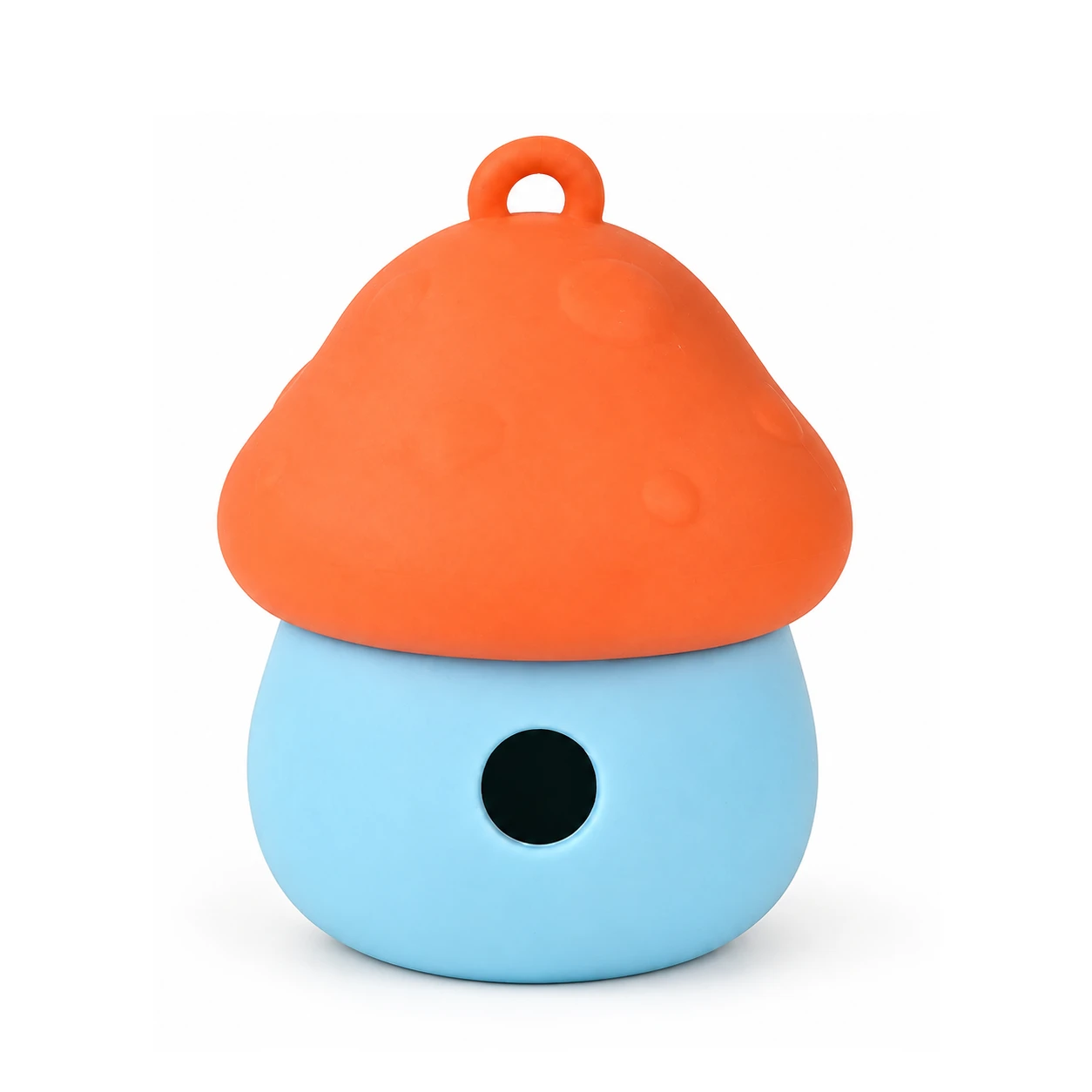
The Orange Acorn-Shaped Treat Toy (item 985697195371-6116178563205) incorporates an asymmetric shape that wobbles across the floor. As the dog nudges the toy with its snout, dry kibble dispenses gradually from the side portal. The thick rubber cap withstands strong jaw pressure, while the recessed window stops food from dumping out immediately.
Evaluation Matrix: Crate Toy Safety Features
Reviewing toy designs across core safety points helps owners choose sound kennel enrichment:
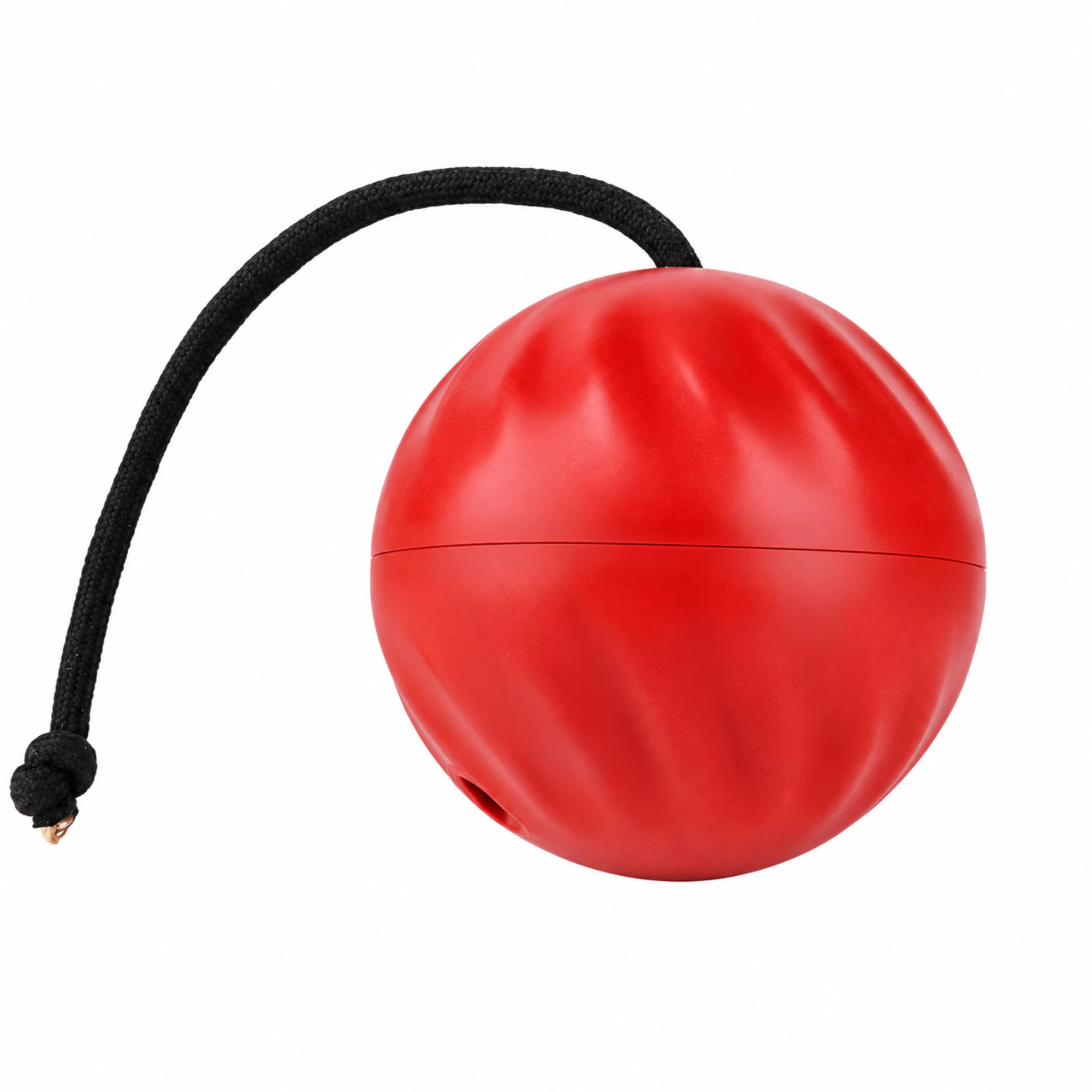
|:---|:---|:---|:---| | Toy Category | Construction Integrity | Choking and Obstruction Risk | Crate Safety Verdict | | Single-Piece Natural Rubber Dispensers | Seamless vulcanized rubber with dual air vents | Negligible when sized correctly for dog weight | Approved for unmonitored crate enrichment | | Plush Toys with Squeakers | Stitched fabric skins with loose synthetic batting | Severe risk of bowel obstruction from stuffing | Strictly forbidden inside unsupervised crates | | Cotton Rope Tugs | Twisted thread strands that fray under gnawing | Extreme risk of linear intestinal lacerations | Strictly forbidden inside unsupervised crates | | Hollow Tennis Balls | Compressed rubber cores with abrasive court felt | High risk of airway choking and enamel blunting | Strictly forbidden inside unsupervised crates | | Heavy-Duty Non-Spherical Rollers | Molded rubber cylinders with wide end caps | Minimal risk due to oversized cross-section | Approved for supervised crate transitions |
The Food Stuffing Science: Freezing Gradients and Calming Licking
The way you fill a crate toy decides how long your pet stays occupied. Placing loose dry kibble inside an open cavity keeps a dog engaged for only two or three minutes. To build a relaxing thirty to forty-five minute kennel routine, apply density layering and freezing gradients.
Layer 1: The Flavor Cap (Bottom Opening)
Coat the smaller bottom vent with a small spoonful of smooth peanut butter or pumpkin puree. This temporary barrier stops broths from dripping out during filling while allowing airflow once licked clean.
Layer 2: The Core Bulk (Middle Cavity)
Fill two-thirds of the inner space with soaked kibble, cooked rice, and shredded lean meat. Soaking dry food in warm bone broth expands the starches, creating a firm paste that resists fast extraction.
Layer 3: The High-Value Seal (Top Opening)
Top the primary entrance with a layer of plain yogurt, canned dog food, or mashed sweet potato. This fragrant surface layer catches your dog’s attention immediately upon entering the kennel.
Layer 4: The Deep Freeze
Place the filled toy upright in your freezer for four to six hours. Freezing turns the contents into a firm solid block. Your dog cannot gulp down big pieces; it must lick the frozen face slowly as the food thaws. This gradual licking process activates the parasympathetic system, soothing kennel nerves and helping the animal rest quietly.
The Three-Session Safety Verification Protocol
Avoid putting a fresh chew toy into an unmonitored kennel on its first day. Every dog brings distinct jaw leverage and biting habits to play items. A toy that lasts months with a Golden Retriever might crack within thirty minutes under a young Malinois.
Follow this testing progression before leaving any toy alone:
- Session 1: Active Interactive Observation: Offer the toy in your living room. Watch how your pet handles it. Does it roll the toy, or does it clamp down with its back molars to crush the shell?
- Session 2: Quiet Distance Monitoring: Provide the toy while you read across the room. Check if the dog picks at edges or tries to peel off outer rubber nubs.
- Session 3: Supervised Crate Simulation: Place your pet in the kennel with the toy while you stay nearby. Observe whether being inside the crate increases biting force.
If the toy displays no cracks or tooth punctures after three sessions, it is suitable for unmonitored kennel use. Run a thumbnail indentation check before each crating period: press your nail into the rubber. The surface should yield slightly and spring back immediately. If the rubber feels brittle or soft, replace the toy immediately.
Common Questions About Crate Toys and Safety
How many toys should I leave inside my dog crate at one time?
Provide just one safe, filled rubber treat dispenser inside the kennel during unmonitored hours. Putting several loose objects inside clutters the floor tray, reduces lying room, and raises excitement levels. A single frozen treat toy delivers ample mental activity to help the dog rest without creating clutter.
What should I do if my dog ignores the rubber toy inside the crate?
Canines that bypass crate toys often feel mild confinement worry, which suppresses their appetite. Begin by stuffing the toy with tempting foods like dried liver or warm broth. Offer the toy outside the kennel first so the pet builds positive associations. Gradually transition the toy toward an open crate before closing the door.
Can puppies have the same rubber crate toys as adult dogs?
Young puppies need softer rubber blends engineered for puppy teeth. Standard adult rubber items can feel too firm for tender puppy gums, while heavy power-chewer toys may discourage young dogs. Pick puppy-specific natural rubber toys that flex easily, and freeze them with diluted goat milk or pureed pumpkin to soothe teething discomfort inside the kennel.