When a dog struggles with separation distress, simple departure cues can trigger elevated heart rates, restless pacing, and vocalization. Many pet owners look for interactive puzzles hoping toys for dogs with separation anxiety will resolve the distress instantly. While physical enrichment delivers measurable sensory comfort, toys cannot heal an underlying panic condition by themselves. Selecting effective separation anxiety dog toys requires recognizing what oral motor engagement achieves and where behavioral limits begin.
Distinguishing mild departure stress from acute panic is the first step toward helping an anxious pet. Interactive toys and enrichment tools cannot cure clinical canine separation anxiety alone. However, textured chew rings and multi-pocket snuffle mats provide meaningful oral soothing. They lower physiological arousal before departure, stimulate calming endorphin release through rhythmic licking and chewing, and build positive departure associations when integrated into systematic desensitization protocols.
The Physiological Divide: Mild Distress Versus Full Clinical Panic
When selecting toys for separation anxiety, owners must first distinguish between isolation boredom and true panic.
Mild to moderate departure stress occurs when a dog feels uneasy as their routine changes. The dog might follow you from room to room, sit tensely by the front door, or whine softly as you put on your coat. In this state of low to moderate arousal, enrichment tools excel. When a dog engages in sustained chewing or scent-driven foraging, the brain releases dopamine and serotonin. This rhythmic oral stimulation helps downregulate circulating cortisol and encourages the autonomic nervous system to rest in a calmer parasympathetic state. Handing over a loaded treat toy twenty minutes prior to departure creates a calm emotional buffer before loneliness sets in.
Clinical separation anxiety, on the other hand, triggers an involuntary sympathetic nervous system surge identical to a human panic attack. The dog amygdala fires uncontrollably, flooding the bloodstream with adrenaline. Heart rates spike, respiration turns shallow and rapid, and stress-induced anorexia takes over. In true panic, the gastrointestinal tract shuts down, causing the dog to ignore even high-value treats, fresh meat, or favorite toys.
Expecting an interactive toy to cure acute panic without gradual desensitization or veterinary intervention is unrealistic. If your dog trembles, pants heavily, or scratches frantically at doorframes when left alone, toys must serve as supportive accessories within a broader veterinary behavior plan rather than a standalone cure.
The Neurobiology of Chewing and Licking: Endorphin Release
Chewing and licking are biologically grounded coping mechanisms rather than casual canine pastimes. They are powerful neurochemical self-soothing tools hardwired into canine physiology.
When a dog bites into a resilient, textured surface, pressure stimulates mechanoreceptors located within the periodontal ligament surrounding the roots of the teeth. These sensory signals travel along the trigeminal nerve directly to the brainstem and hypothalamus, triggering the release of endogenous opioids, particularly beta-endorphins. These natural neurochemicals lower blood pressure, reduce perceived stress, and create a mild sedative effect.
Similarly, repetitive licking across grooved rubber or textured mats stimulates the vagus nerve and activates salivary enzyme cascades. Licking releases soothing hormones that counteract sympathetic arousal. Providing appropriate oral outlets during pre-departure routines allows dogs to channel nervous energy into productive, biologically calming behaviors instead of chewing furniture legs or carpets.
Textured Chewing Resistance: The Lavender Twist and Treat Ring Toy
For dogs that experience moderate restlessness during departure preparations, steady jaw compression provides grounding tactile feedback.
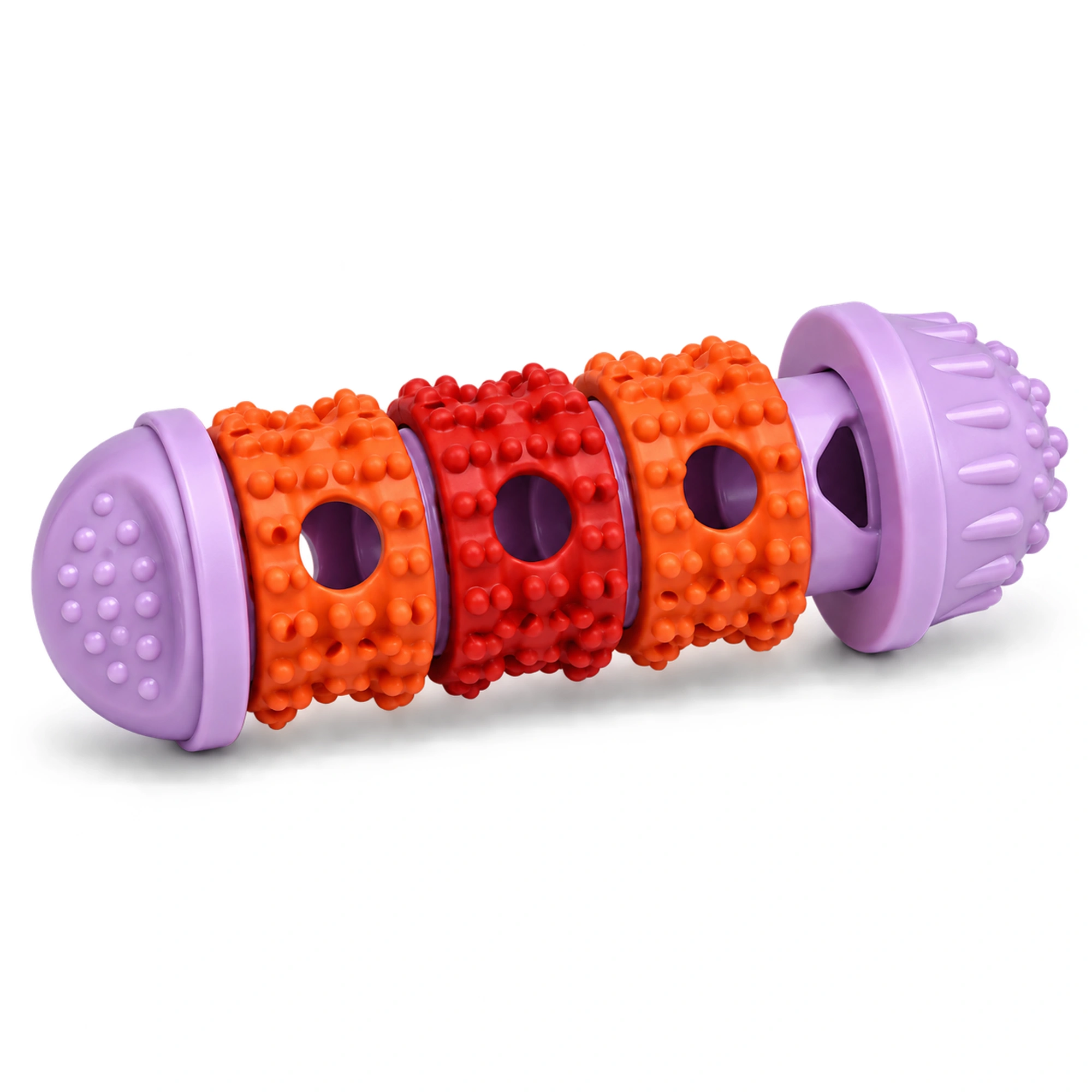
The Lavender Twist and Treat Dispensing Dog Toy with Textured Rings ($19.00, catalog item lavender-twist-treat-ring-toy) is designed specifically for this calming oral engagement. Measuring 18 by 6 centimeters and weighing 240 grams, this durable thermoplastic rubber toy delivers varied surface textures that soothe tired gums and satisfy repetitive jaw compression.
The central twist-adjustable clamp firmly secures natural chew sticks or dehydrated meat strips inside the central channel. Meanwhile, the outer textured rings contain small treat openings where owners can smear soft peanut butter, wet food, or pumpkin puree.
As the dog works to extract the spreadable filling, sustained mechanical licking prompts salivary enzymes and endorphin release. This focused oral session provides a grounding ritual during the critical minutes when an owner walks out the door. Always observe your dog during initial sessions to ensure they chew calmly rather than attempting to bite off large pieces in agitation.
Scent Foraging and Olfactory Grounding: Ruffled Fleece Bowls and Mats
Canine olfaction connects directly to the emotional and memory processing centers of the brain. Sniffing and foraging require deep mental focus, lowering heart rates and encouraging independent exploration through calming toys for dogs.
The Yellow Flower and Pocket Foraging Mat is a bone-shaped fleece mat with layered flower folds and five pockets for treat searching. Spanning 64 by 43 centimeters, the mat features dense fleece petals arranged in a layered sunflower pattern alongside dedicated hiding compartments.
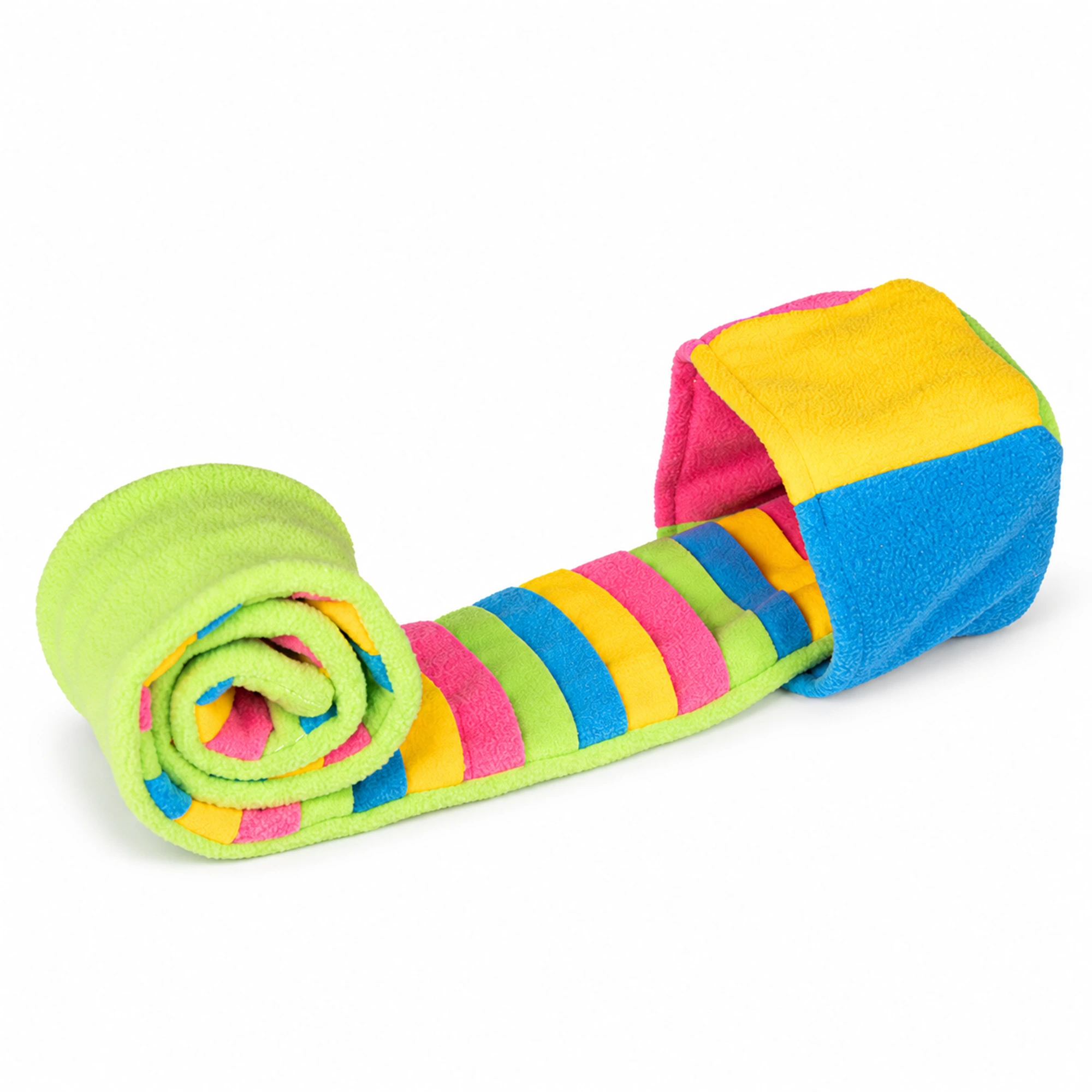
Another practical option for smaller living areas is the Small Rainbow Roll-Up Snuffle Mat Foraging Bowl for Dogs ($16.00, catalog item small-rainbow-rollup-foraging-bowl). It features a colorful cloth trail that rolls out from a soft fleece bowl, allowing owners to hide tiny treats between fabric loops before rolling the strip back into the bowl.
Hiding dehydrated liver bites or dry kibble deep within ruffled fleece petals encourages slow, methodical searching. Instead of pacing near the entryway or tracking your departure cues, your dog engages their seeking system. This active nosework redirects anxiety into calm curiosity. Snuffle mats work best when introduced twenty minutes prior to departure and picked up once the search is complete, preventing nervous shredding of the fabric.
Sizing and Material Safety Matrix for Anxious Dogs
Anxious dogs interact with toys differently than relaxed dogs. In high-stress states, dogs may bite harder or attempt to swallow items whole. Use this guide to choose safe materials and sizes based on your dog weight:
| Weight Category | Example Breeds | Recommended Toy Type | Primary Material | Critical Safety Guideline |
|---|---|---|---|---|
| Under 10 lbs | Chihuahua, Yorkie, Toy Poodle | Roll up foraging bowls, pliable textured rings | Soft fleece, pliable food-grade TPE | Ensure chew rings are light enough to carry without neck strain |
| 10 to 25 lbs | Jack Russell, French Bulldog, Beagle | Bone-shaped snuffle mats, twist treat rings | Layered fleece, dense thermoplastic rubber | Avoid loose strings or bells that can be swallowed during stress |
| 25 to 50 lbs | Border Collie, Australian Shepherd, Spaniel | Deep pocket mats, durable treat dispensers | Heavy woven canvas, thick natural rubber | Monitor chew pressure to prevent tearing rubber edges |
| Over 50 lbs | Golden Retriever, German Shepherd, Lab | Reinforced rubber rings, heavy foraging mats | Heavy vulcanized rubber, double stitched felt | Never leave lightweight cloth mats unattended with heavy chewers |
The Accidental Cue Hazard: Why Departure Timing Matters
Many caring owners make the mistake of handing over a puzzle toy seconds before stepping out the front door. While this seems logical, it often produces the opposite of the intended effect.
Dogs are acute observers of environmental cues. If a special treat toy appears only when you grab your keys, put on your shoes, and close the door, the toy becomes a conditioned predictor of isolation. Instead of feeling comforted, the dog begins associating the toy with the impending departure. Over time, the dog may refuse to touch the toy, pacing anxiously the moment the object is brought out of the cabinet.
To avoid creating an accidental departure cue:
- Offer Toys Twenty Minutes Prior: Present the loaded toy fifteen to twenty minutes before you start gathering your personal belongings. Let the dog settle into rhythmic licking and chewing while you are still moving calmly around the house.
- Present Toys During Non-Departures: Frequently offer loaded chew rings and snuffle mats on evenings and weekends when you have no intention of leaving. This breaks the predictive association between the toy and human absence.
- Keep Departures Calm and Low Key: Avoid lengthy emotional farewells or excited greetings upon return. Calm transitions teach your dog that comings and goings are ordinary, non-threatening household events.
Integrating Toys with Gradual Desensitization Protocols
For dogs dealing with moderate separation anxiety, toys produce the greatest benefit when paired with systematic desensitization training.
Desensitization involves exposing the dog to micro-absences that remain below their panic threshold:
- Phase 1: Departure Cue Habituation: Pick up your keys, put on your jacket, or touch the front door handle without leaving. Offer a snuffle mat to keep the dog calm and relaxed during these daily motions.
- Phase 2: Micro-Absences: Step outside the front door for five to ten seconds while your dog works on a Lavender Twist and Treat Ring. Return before the dog finishes the spreadable filling.
- Phase 3: Incremental Duration: Gradually extend the duration of absence from thirty seconds to two minutes, five minutes, and fifteen minutes over several weeks.
Throughout this process, the toy serves as a comforting oral anchor that keeps the dog parasympathetic nervous system engaged during short periods of solitude.
Supervision and Swallowing Hazards: Protecting Anxious Chewers
Anxious dogs frequently exhibit oral fixation. If an enrichment toy is left unattended after the food rewards are gone, a stressed dog may begin chewing, pulling apart, or ingesting the fleece fabric, rubber caps, or plastic backing. Swallowing non-food items can result in life-threatening gastrointestinal blockages requiring emergency veterinary surgery.
Follow these strict safety rules:
- Leaving a fabric snuffle mat inside an unattended crate invites fabric shredding once the treats disappear.
- Inspect rubber chew rings before and after every session. If you observe deep cracks, tears, or missing chunks, retire the toy immediately.
- Store high-value departure toys inside closed cabinets out of canine reach when not in active use.
Frequently Asked Questions
Can chew toys cure severe dog separation anxiety?
Chew toys cannot cure severe canine separation anxiety. In true clinical panic, dogs experience acute sympathetic arousal and will refuse all food and toys. Interactive toys serve as supplementary coping tools for mild stress and structured desensitization routines, but severe distress requires behavior modification under a certified veterinary behaviorist.
Can I leave a snuffle mat out while my dog is alone in the house?
Snuffle mats should not be left unattended with an anxious dog for extended periods. Once all treats are discovered, a stressed dog may begin chewing, pulling apart, or ingesting the fleece fabric and plastic anti-slip backing. Snuffle mats are designed for supervised foraging sessions or short departure transitions where you retrieve the mat shortly after consumption.
Why does my dog ignore food puzzles when I leave the house?
If your dog ignores high-value food puzzles the moment you walk out the door, their stress level has exceeded their cognitive threshold. Anxiety suppresses appetite through sympathetic nervous system activation. This indicates that your dog is experiencing acute distress rather than mild boredom, requiring slower desensitization steps.
How far in advance should I give my dog an anxiety toy before leaving?
Introduce the loaded toy fifteen to twenty minutes before your planned departure. This gives your dog time to settle into a focused licking or foraging rhythm while you are still present, preventing the toy from becoming a stressful predictor of your absence.