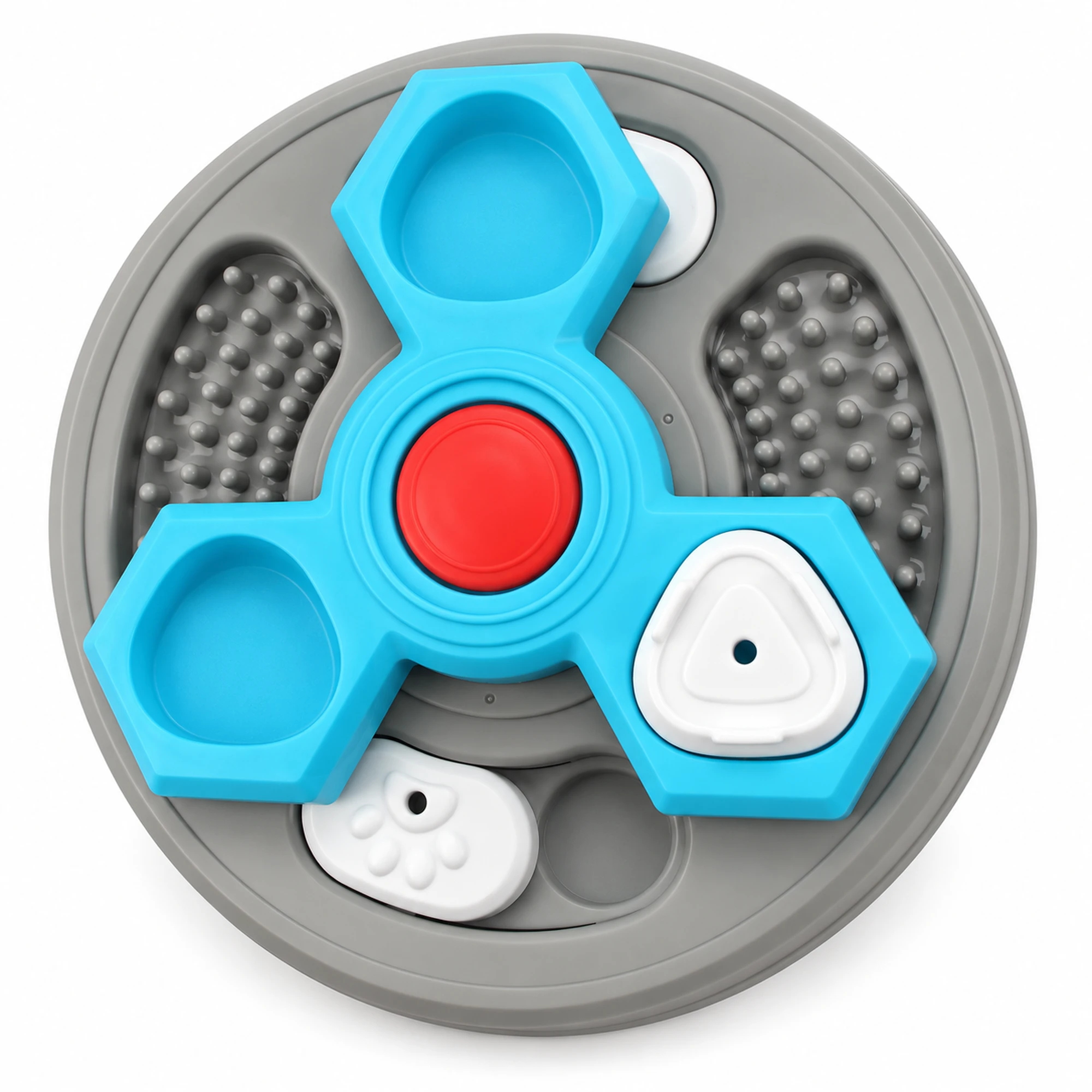
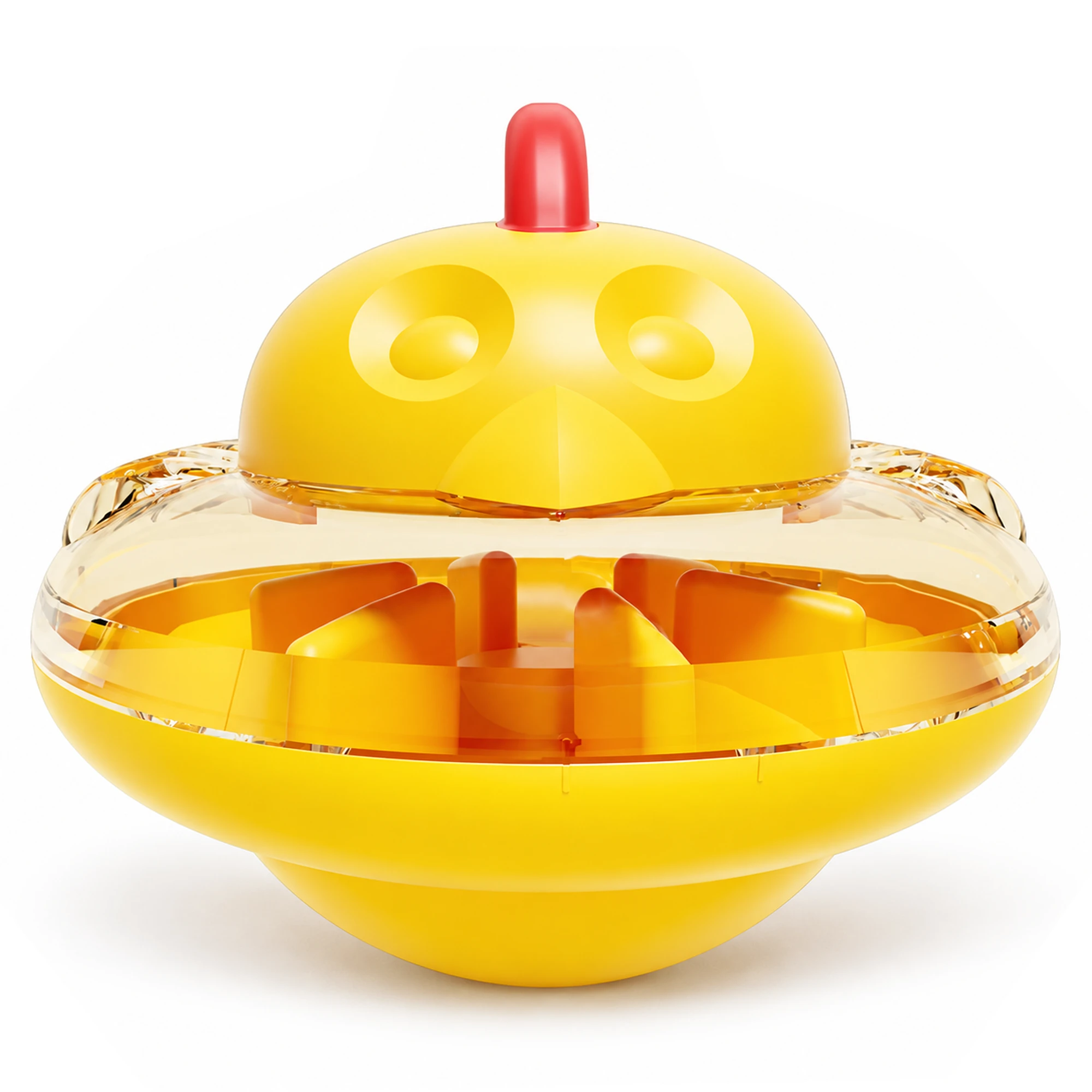
Treat dispensing dog toys promise mental stimulation, slower mealtimes, and independent focus for curious dogs. Yet many dog owners experience an immediate mismatch during their first trial. Either the food drops out onto the rug in ten seconds flat, or the treats become wedged inside the internal chamber, leaving a frustrated dog clawing at hard plastic.
The performance of any dog treat dispenser toy hinges on the physical gap between kibble diameter and the discharge opening. Pairing food proportions with toy architecture keeps dogs motivated while stopping frantic chewing and boredom. Reviewing how various dog treat dispensing toys process kibble measurements helps handlers choose ideal reward profiles for sustained enrichment.
The Mechanical Impact of Kibble Proportions on Canine Motivation
Whenever dogs explore an interactive dog treat puzzle toy, they rely on scent trails, rolling momentum, and sight to stay focused. When dry morsels measure far smaller than the discharge port, simple gravity empties the payload at once. The animal consumes dinner without solving any mechanical riddle, and the treat dispensing dog toy loses its training value.
The reverse scenario causes identical frustration. When treat nuggets measure even half a millimeter wider than the aperture, or when irregular outlines wedge inside the inner throat, food flow halts. Canines frequently respond to locked dispensers by biting down on the body or slamming the toy into drywall. Finding the right fit requires selecting treats that demand three to five deliberate paw nudges per payout.
Feeder toys need consistent reward frequencies to reinforce curiosity. Canine researchers note that focus peaks when food drops intermittently instead of flooding out or staying trapped. A toy that empties too readily leads to rapid gulping, whereas a blocked dispenser causes fatigue. Establishing an accurate mechanical balance between food diameter and internal volume keeps pets happily engaged in constructive foraging.
Evaluating Dispenser Geometry: Elastomer Slits, Gravitational Tumblers, and Sliding Gates
Distinct toy shapes manage food displacement differently. Knowing how biscuits interact with natural rubber, rigid plastic, and mechanical sliding gates guides you to the best treat dispensing dog toys for each play environment.
1. Flexible Perimeter Openings in TPR Rollers
The Yellow Double-Loop Treat Dispensing Dog Toy, listed at 29 dollars in the JoyPetPlay merchant catalog, features a golden translucent figure-eight double-loop tube molded from flexible thermoplastic rubber with bone-shaped dispensing openings.
Because thermoplastic rubber yields under jaw pressure, the bone-shaped cutouts expand slightly when dogs bite or step on the curved cylinder. Small circular kibble slips through during floor rolls, while slightly larger training bites stay trapped until teeth apply direct pressure. This elastic barrier offers forgiving clearance for dogs that prefer carrying and mouthing items during play. The continuous curved tube provides dual open centers measuring ten centimeters across, giving medium and large canines ample grip area without puncturing interior food chambers.
2. Gravity Tumblers with Fixed Rigid Ports
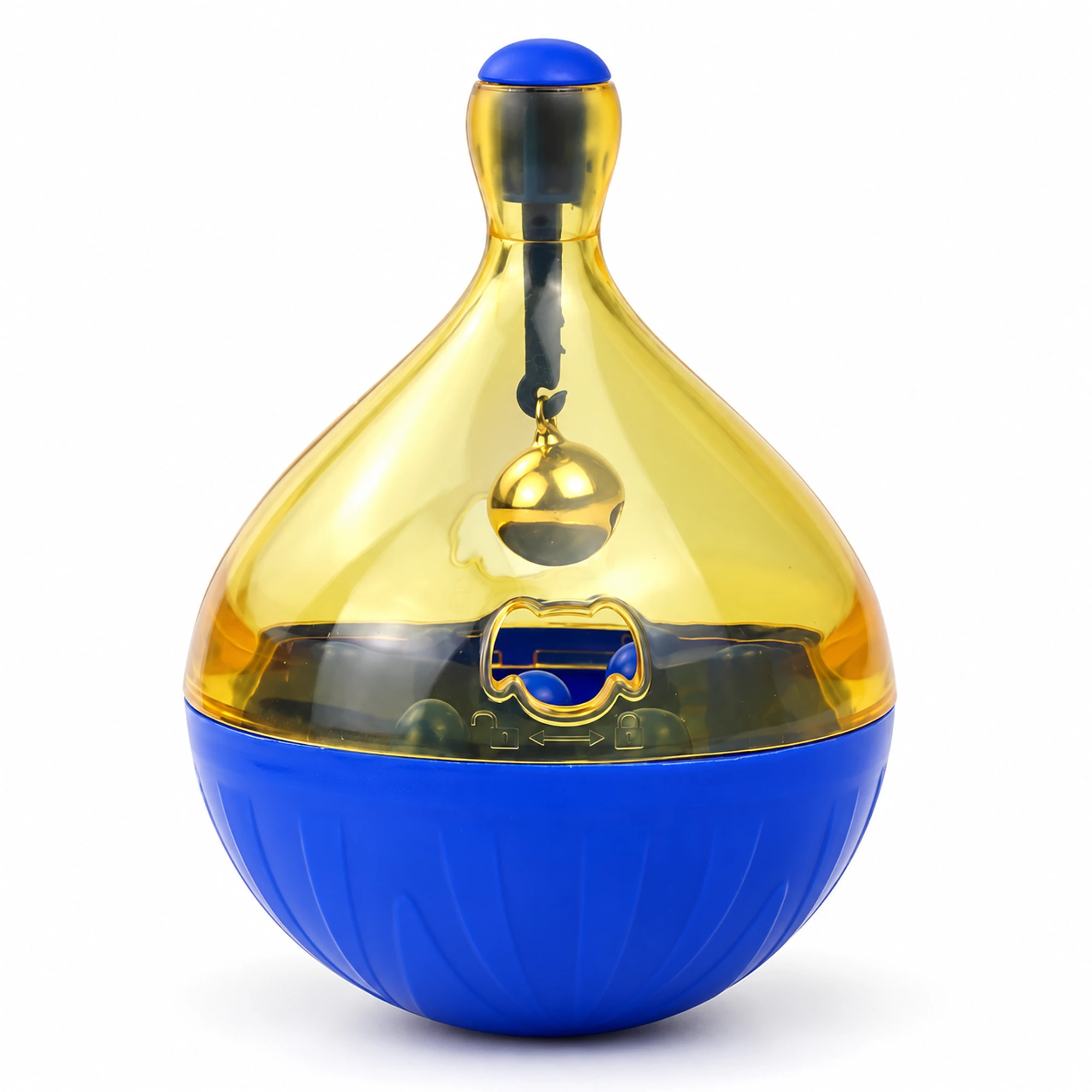
The Blue Dome Wobble Treat Dispensing Dog Toy, available for 2.8 dollars in the JoyPetPlay merchant catalog, features a weighted rounded base, a smoky see-through chamber, and dual dispensing openings located in the top dome and lower base for supervised treat play.
Rigid tumblers provide zero wall flex. Reward payout depends entirely on kinetic motion as pets bump the rounded base with a snout or paw. Food morsels climb internal curves and drop through the dual openings in random bursts. For this mechanism, small round or oval kibble measuring between 8 mm and 12 mm works best. Square biscuits or flat disks easily bridge across the internal throat, causing sudden blockages. Because the lower base carries concentrated ballast, the toy rights itself upright after every nudge, inviting the dog to initiate repeated physical contacts.
3. Mechanical Sliding Regulator Tabs
The Brown Bear Adjustable Treat Toy, retailing at 15 dollars in the JoyPetPlay merchant catalog, features a molded brown bear head, two rounded ears, a cream lower cup, an open mouth dispensing aperture, and a front sliding tab for supervised rolling play.
An adjustable front slider lets owners calibrate opening size without purchasing separate items for different food formulas. You can pull the gate wide for active training sessions with crunchy biscuits, or narrow the slot down to a thin slit when loading small dry kibble. This mechanical versatility adapts the challenge as pets gain problem-solving dexterity. Measuring ten and a half centimeters tall by eight point two centimeters wide, the bear tumbler glides across floor surfaces while shielding dry rations behind sturdy polymer walls.
The Physical Mechanics of Kibble Bridging and Throat Clogs
Chamber blockages in feeder toys rarely stem from one oversized chunk. In most homes, feeding interruptions occur because of granular bridging. When multiple kibbles rush together into a tapered neck, their angular faces interlock.
Spherical kibble rolls smoothly along smooth walls because friction points remain small. In contrast, star-shaped, triangular, or disc-shaped kibbles carry flat planes and sharp corners. When two triangular pieces drop into the funnel together, their outer points bind against chamber walls while their inner faces press tight. This action forms a structural arch that easily suspends the weight of all kibble above it.
To prevent granular bridging, the narrowest passage inside a rigid dispenser must equal at least two point five times the widest dimension of your treat. If your dispenser carries a twelve-millimeter exit port, treat diameter must stay within six to eight millimeters. Exceeding this dimensional threshold guarantees that two biscuits will collide at the throat and cause an unyielding blockage.
Kibble Dimensions and Texture Categories
Commercial dog diets vary widely in physical shape, density, and exterior hardness. Selecting matching food categories prevents frustrating jams and promotes relaxed foraging.
| Treat Category | Typical Diameter | Recommended Dispenser Mechanism | Common Jam Risk Factor |
|---|---|---|---|
| Puppy Training Morsels | 4 mm to 7 mm | Narrow fixed slots or adjustable bear slider | Dumps too rapidly if opening exceeds 9 mm |
| Standard Maintenance Kibble | 9 mm to 13 mm | Blue dome wobble tumbler or TPR double loop | Bridges when angular pieces enter throat together |
| Large Breed and Dental Diets | 18 mm to 25 mm | Wide sliding tab or flexible outer cavities | Severe mechanical wedging in rigid funnels |
| Freeze-Dried Raw Chunks | Irregular 10 mm to 16 mm | Flexible perimeter cutouts with manual flex | Crumbs create sticky powder buildup |
| Baked Hard Biscuits | Variable 12 mm to 20 mm | Hand-loaded rubber cavities or wide ports | Shards break off and wedge sliding tabs |
Training morsels measuring under seven millimeters suit quick-reward training exercises. Maintenance kibble suits wobble toys because uniform density yields steady tumbling movement. Large breed rations need wide openings or sliding tabs set to maximum aperture. Freeze-dried meats require extra observation because friable edges pulverize into meal under rolling pressure.
Treat Moisture, Fat Content, and Powder Buildup
Physical shape tells only half the dispensing story. Surface moisture, fat glazes, and crumb friction alter how food moves over plastic and rubber surfaces.
Many premium pet recipes receive top-dressed animal fats after extrusion to boost aroma. As these coated pellets tumble inside a closed toy, they leave a thin oily film on internal tracks. When dry kibble powder brushes against this film, a thick paste develops. Over several days of play without washing, this residue narrows the exit neck by two or three millimeters, turning ideal kibble into an unexpected jam risk.
Semi-moist rewards and jerky bites generate even greater friction. Soft morsels deform under impact rather than rolling. When an active tumbler lands on a pliable meat cube, the piece flattens and sticks to the wall. Keep moist and chewy snacks on open lick surfaces, and load only dry, crunchy pellets into rolling dispensers.
Breed Specifics and Muzzle Anatomy in Dispenser Interaction
Canine breeds approach interactive puzzles with very different motor techniques, altering how food leaves the reservoir.
Brachycephalic dogs like French Bulldogs, Pugs, and Boston Terriers possess shortened skulls and shallow jaws. These companions cannot grip rubber slits comfortably with front teeth. Instead, they bump dispensers forward with their chins, foreheads, and muzzles. For short-faced pets, gravity wobble toys like the Blue Dome Tumbler excel because simple frontal bumps rock the container without needing jaw pressure.
Mesocephalic and dolichocephalic dogs such as Golden Retrievers, Border Collies, and German Shepherds handle puzzles with agile paws and strong bites. These dogs routinely lift rolling toys, walk to rugs, and toss them from above to dislodge treats. For determined chewers, tough thermoplastic rubber designs like the Yellow Double-Loop absorb repeated bite pressure while quieting floor impacts.
Practical Calibration: The Five-Shake Hand Test
Before giving a loaded dispenser to your pet, take sixty seconds to test clearance through this straightforward manual protocol:
- Hand Shake Baseline: Put eight to ten kibble pieces into the clean dispenser. Hold the container over a shallow bowl and shake it five times using moderate force. When three or four pieces tumble out, your clearance is correct. Should the entire load drop out at once, the food is too small. If zero pieces fall, the kibble is too large.
- The Dual-Size Buffer Technique: When small food drops out too quickly, mix two distinct kibble sizes. Blend seventy percent standard kibble with thirty percent larger crunchy bites. The larger biscuits act as moving baffles, slowing the outflow without causing a blockage.
- Angle Verification: Tip the toy gently through ninety degrees to mimic natural nose nudges. Confirm that treats slide smoothly over internal ramps instead of catching on plastic mold seams.
- Chamber Fill Capacity: Avoid filling any dispenser past sixty percent of total volume. Overloading removes the tumbling clearance treats require, triggering immediate bridging jams.
Cleaning, Hygiene, and Plastic Maintenance
Canine saliva carries digestive enzymes and starches that dry into tough coatings. Mixed with food dust, dried saliva harbors microbes and stiffens mechanical sliders.
Take apart dispensers completely after every two feeding routines. For rigid ABS models like the Blue Dome Tumbler and Brown Bear Dispenser, clean separated components in warm water with mild, unscented soap. Use a small bottle brush to reach interior recesses, then rinse thoroughly under fresh water. Let every component dry fully on a clean towel before reassembly, because lingering dampness softens kibble and encourages mold.
For elastic TPR toys like the Yellow Double-Loop, inspect the perimeter openings for small splits or punctures after washing. If you detect rubber thinning or tearing around the bone-shaped cutouts, replace the toy immediately to avoid ingestion of detached fragments.
Common Dispenser Troubleshooting Inquiries
What treat diameter works best for most dog treat dispensing toys?
Most standard interactive dispensers perform best with dry kibble measuring between 8 mm and 12 mm across. This size allows individual pieces to move freely past interior baffles while demanding deliberate nudges to tumble through the release aperture.
Why do treats get stuck even when they appear smaller than the exit hole?
Treats jam because of granular bridging, where two or three angular biscuits enter the internal funnel at the same moment and wedge against each other. Surface oils and saliva buildup also coat interior walls, narrowing the physical exit path.
Can I put raw freeze-dried nuggets into rolling treat toys?
Freeze-dried raw nuggets are often fragile and produce significant meat dust when tumbled. This dust quickly combines with dog saliva to form sticky clogs. If using freeze-dried items, choose firm, dense cubes and clean the dispenser after every play session.
How do I prevent my dog from chewing the toy destructively?
Dogs chew dispensers destructively when payout ceases completely or when the challenge level causes intense frustration. Calibrate treat sizing so rewards drop every three to five nudges, and supervise play to redirect aggressive biting toward dedicated chew bones.