Start with the action the toy is designed for. Read its loading instructions, check that a permitted piece of food can come out, then demonstrate that movement while your dog watches. Leave room for your dog to investigate and try. The aim of this first session is a small, observable action. You do not need to finish a full toy or work to a learning deadline.
If you’re looking for how to teach a dog to use a treat ball, first check whether your toy rolls, rocks or has another mechanism. A round shape alone doesn’t tell you which part to move.
Check the toy before asking your dog to solve it
Use the instructions for your exact model to identify three things: where food goes in, where it comes out, and what makes it come out. Choose food permitted by those instructions and close the toy as directed. Before offering it, try the described movement yourself. If food doesn’t emerge, resolve the loading or dispensing problem before treating it as a training problem.
For a named example, KONG’s Wobbler instructions tell owners to encourage their dog to rock the toy to release food, discourage chewing and supervise use. Those instructions describe the KONG Wobbler; they don’t establish how another brand’s toy opens or what food it accepts.
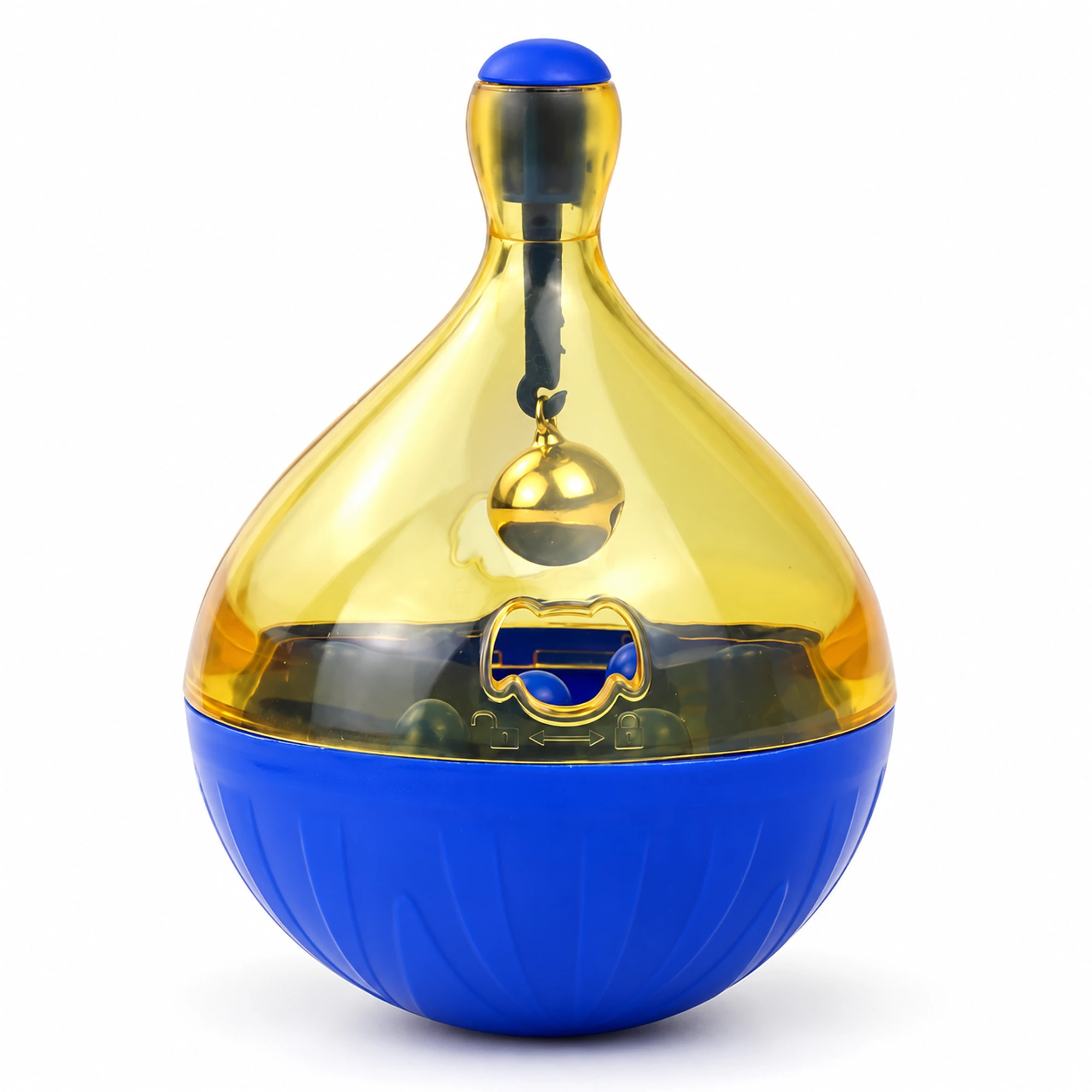
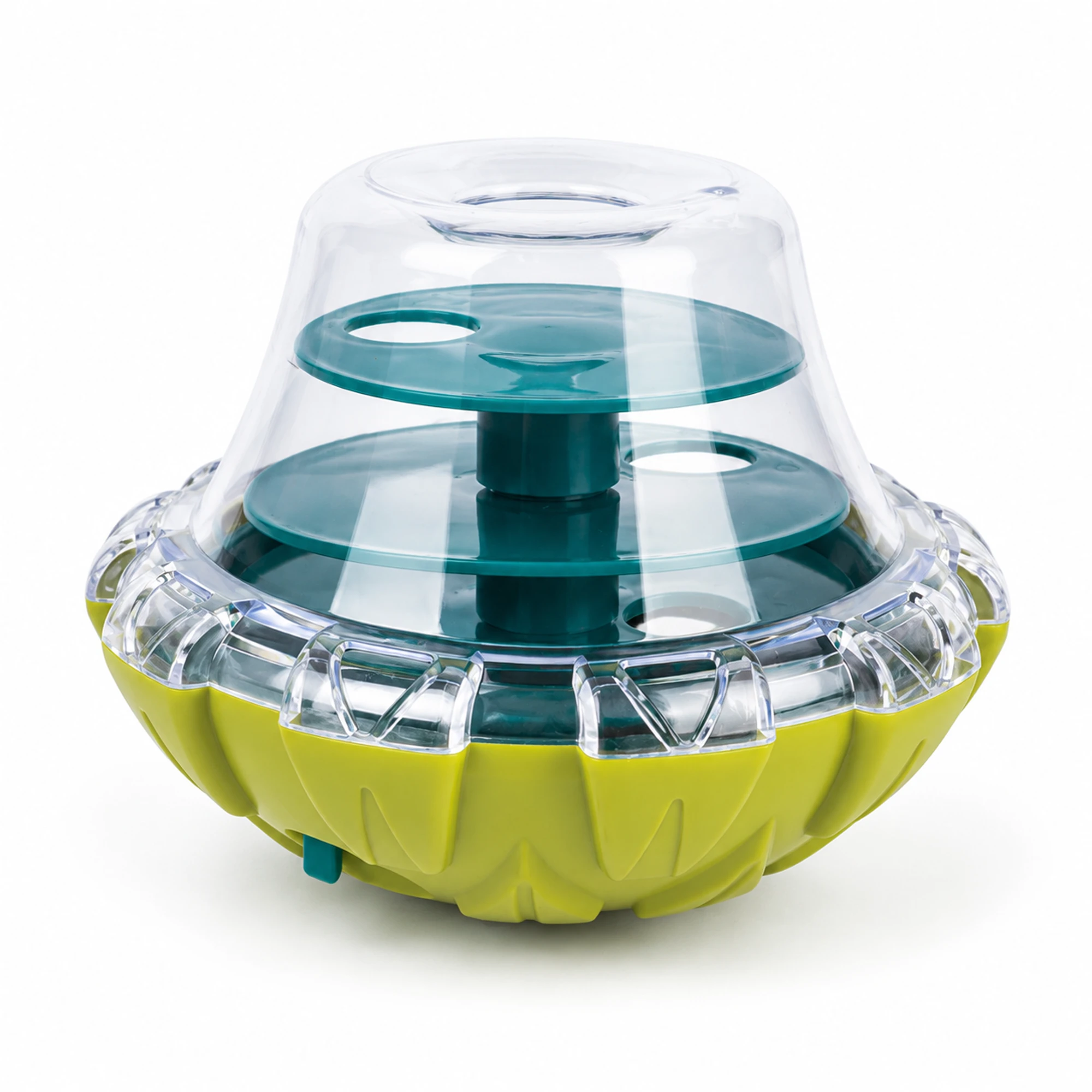
Two JoyPetPlay catalog examples show why it helps to read the mechanism:
| Catalog example | Listed loading or movement | What to check before offering it |
|---|---|---|
| Blue Bell Wobble Treat Toy | Its rounded blue base rocks when nudged, and a shaped side opening releases small treats. The top opens for filling and closes before supervised play. | Identify the side outlet and follow the top-fill instruction. |
| Green Three-Tier Wobble Treat Toy | The description says to add a few treats through the round top opening and start a gentle wobble. | Locate the top opening and try the described wobble. |
These are descriptions of the listed mechanisms, not a fit recommendation for every dog. Check your own toy’s suitability and use instructions before starting.
Try a first introduction you can observe
The following is a suggested way to organize a supervised first try. It builds on the toy’s described movement; it isn’t a tested training program.
- Show one release. With your dog watching, use the permitted movement to release a piece of food. Avoid adding extra challenges before you’ve seen the basic action work.
- Give your dog a turn. Stop moving the toy yourself and allow an opportunity to investigate. Watch what actually happens: looking, sniffing, touching or moving it.
- Notice who caused the movement. A treat released by your hand and one released after your dog’s touch are different observations. Record the second only when you see it.
- Keep the next attempt simple. If your dog has just moved the toy, you can offer another opportunity with the same setup. There is no need to change the mechanism or make it harder immediately.
- Finish if you need to. End the shared session if your dog walks away or you cannot keep supervising. You can return to the same simple setup later without calling this attempt a failure.
When your dog eats the food but doesn’t move the toy
That exact distinction appears in an r/dogs question about a KONG Wobbler. The owner said their puppy ate treats that the owner knocked out but hadn’t started pushing the toy to release them.
Use that as a question to investigate, not proof that every dog needs the same method. For your next attempt, separate what you know from what you still need to observe:
| What you saw | A useful next check |
|---|---|
| Food came out only when you moved the toy | Offer an opportunity for your dog to initiate the same permitted movement. |
| Your dog touched it, but no food came out | Recheck the food and dispensing action against the instructions. |
| Your dog tried to chew it | Stop and consult the toy’s intended use. KONG specifically discourages chewing its Wobbler. |
| Your dog walked away | Finish this attempt; note the response without assigning a cause. |
Don’t copy food-smearing or modification ideas from a forum question as if they were the manufacturer’s instructions.
Keep one note for next time
Write down the toy, how you loaded it, whether your dog moved it, and whether food came out after that movement. “Nudged once; no food released” is more useful for the next setup than “didn’t understand.” “Ate the piece I released” is an observation too.
At the next session, begin with the unresolved step in your note. That gives you something concrete to check without inventing a learning deadline.