Introducing cat tunnel toys into your home gives indoor felines a dedicated arena for predatory play, tactical retreat, and sensory stimulation. While energetic cats often dive straight into a newly unfolded chute, cautious or timid cats may treat an unfamiliar fabric tube with suspicion. Pushing a hesitant feline inside causes unnecessary stress and creates negative associations with the toy. A systematic introduction honors your cat natural territory habits, scent communication systems, and physical hunting patterns.
Exploratory Sensory Physiology: Why Felines Seek Enclosed Pathways
Domestic cats descend from wild solitary predators that spent substantial waking hours navigating burrows, dense undergrowth, and rock crevices. Their anatomy reflects this heritage. A feline whiskers, or vibrissae, sit on the muzzle, above the eyes, and on the backs of the front legs. These stiff specialized hairs detect microscopic air currents and calculate whether an opening accommodates the animal body without physical entrapment.
When a cat walks inside an enclosed structure, their lateral fur touches surrounding walls. Feline behaviorists describe this preference as thigmotaxis, an innate comfort derived from tactile contact along the body flanks. Solid barriers overhead and on the sides reduce the number of visual angles a cat must monitor for potential threats. Within an enclosed conduit, a cat can survey an entire room through a narrow aperture while keeping their vital torso shielded. Tunnels satisfy both the instinct to hide from threats and the instinct to stalk unsuspecting targets.
Unboxing Hazards: Auditory and Olfactory Obstacles
Many cat owners eagerly unbox a spring-loaded tunnel and pop it open right in the middle of a busy room. The sudden mechanical release makes a sharp snapping noise that reverberates against hard floors. For an animal whose hearing range extends to 64,000 Hertz, that metallic thud can register as an aggressive strike.
Synthetic fabrics straight from the factory carry pungent industrial aromas. Dyes, plastic wrappers, and coated polyester fabrics release chemical scents that clash with your household baseline odor. Cats evaluate safety primarily through their olfactory bulb. If an object smells alien, cautious pets avoid the surrounding floor area entirely. Setting the tunnel in an open, high-traffic zone also forces the cat to approach from exposed ground, which amplifies anxiety. Unpacking the product in a separate room and letting it air out for twenty-four hours eliminates these introductory stumbling blocks.
The Four-Phase Desensitization Protocol
A methodical four-phase protocol helps your pet build positive associations with new cat tunnel toys at an unhurried, comfortable pace.
Phase 1: Scent Seeding and the Flat Fabric Ring
Keep the tunnel completely collapsed flat on the floor during the first two days. Fasten the toggle loops so the structure stays compressed into a shallow fabric doughnut. Place this flat circle near your cat favorite resting spot, but away from litter boxes and water bowls.
Take a clean cotton washcloth and gently stroke your cat cheeks, chin, and forehead. These areas contain sebaceous glands that deposit comforting facial pheromones. Rub this scented cloth across the tunnel fabric and internal rims. Drop three or four dried meat treats or a pinch of fresh catnip around the exterior edge. Allow your cat to sniff the fabric ring without intervening or speaking loudly.
Phase 2: The Semi-Collapsed Archway
On the third day, release one side of the tunnel toggles while keeping the opposite side tied. This configuration creates a short arch or partial hood rather than a long, dark corridor. The opening measures only eight to ten inches deep, allowing light to pour through from both sides.
Place a familiar fleece blanket or an old t-shirt carrying your scent inside the shallow cavity. Scatter high-value treats just inside the lip of the fabric. Your cat can stretch their neck forward and retrieve the food without committing their hind legs into an enclosed space. Repeat this routine over two days until your cat approaches the archway with relaxed ears and an upright tail.
Phase 3: Straight Baseboard Alignment
On the fifth day, untie all toggles and extend the tunnel to its full length. Position the tube flush against a solid living room wall rather than in the center of the rug. Cats naturally navigate rooms along structural perimeters because walls protect their lateral flanks.
Anchor the ends with soft weights or tuck the edge under heavy furniture legs so the tunnel cannot roll when brushed. An unstable, shifting tube can frighten a cat who steps on the interior rim. Toss a ping-pong ball or crinkle ball gently into the nearest opening so it rolls three-quarters of the way through. Place a line of five savory treats spaced six inches apart along the interior floor. Your cat will step forward step by step, consuming each reward while discovering that the tunnel remains stable.
Phase 4: Full Traversal and Chase Exercises
By the seventh day, your cat will likely walk through the straight corridor without hesitation. At this stage, you can transition from stationary food incentives to active kinetic play. Position yourself near one end while your cat watches from the opposite opening. Call their name in a soft voice and slide a lightweight felt mouse all the way through the tube. When the cat bolts through the exit to seize the mouse, praise them and offer a small snack. This completes the transition from passive inspection to active predatory enjoyment.
Tunnel Architecture Typology: Matching Structure to Feline Personality
Not every cat enjoys the same interior layout. Choosing a shape suited to your pet age, weight, and confidence level determines how often they use the toy.
Straight single-tube models range from three to six feet in length with an internal diameter of ten to twelve inches. These simple corridors suit energetic sprinters who love straight dashes across hardwood floors. They also fit compact apartments where owners must fold gear away each evening.
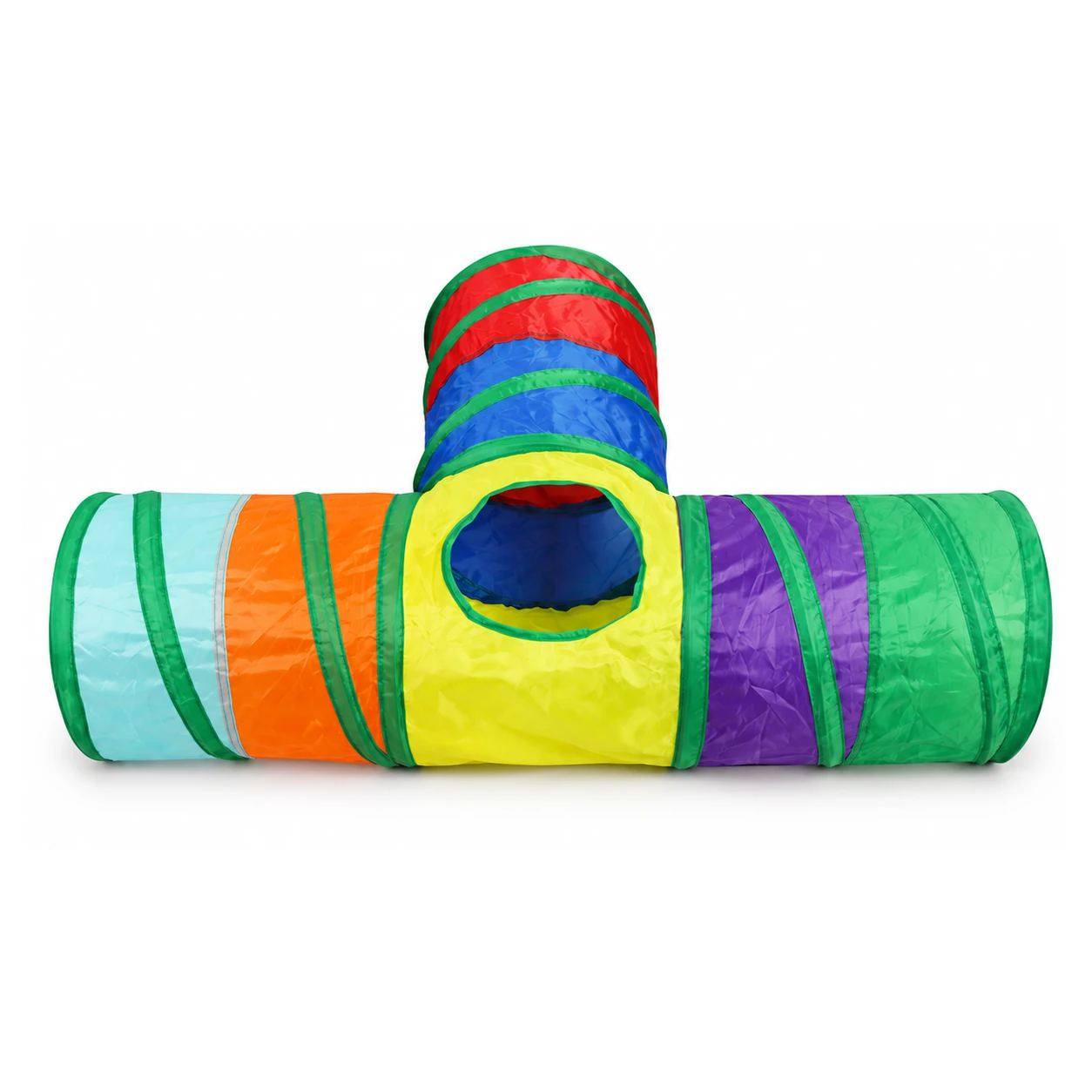
Three-way T-junction and Y-junction configurations introduce central intersections with multiple entryways. These designs appeal to tactical stalkers who enjoy changing direction mid-pounce. The intersecting hub provides an internal staging post where a cat can pause, observe two hallways simultaneously, and choose an unpredictable exit route.
S-curved and circular serpentine designs break direct lines of sight. Timid cats often prefer curved corridors because approaching humans or other pets cannot see into the nesting chamber. The gentle bend creates a secluded burrow environment that feels secure for afternoon naps.
Crinkle-lined tubes incorporate crackling cellophane sheets sewn between polyester layers. Auditory hunters find this crackling texture irresistible because it mimics small rodents moving beneath dry leaves. However, sound-sensitive or rescue cats may flinch at the loud noise. For sensitive felines, select soft felt or canvas tunnels without crinkle inserts.
Multi-Cat Households: Preventing Territory Choke Points and Ambush Traps
Introducing cat tunnel toys into a home with multiple felines requires careful spatial planning. Play equipment can quickly turn into a site of territorial conflict if one cat claims the entrance as an ambush point.
A solitary, single-tube tunnel with only two openings presents a choke-point hazard. A dominant cat can sit outside one opening, trap a lower-ranking cat inside, and block the exit path. This dynamic causes acute fear and can spark urine marking near the tunnel ends.
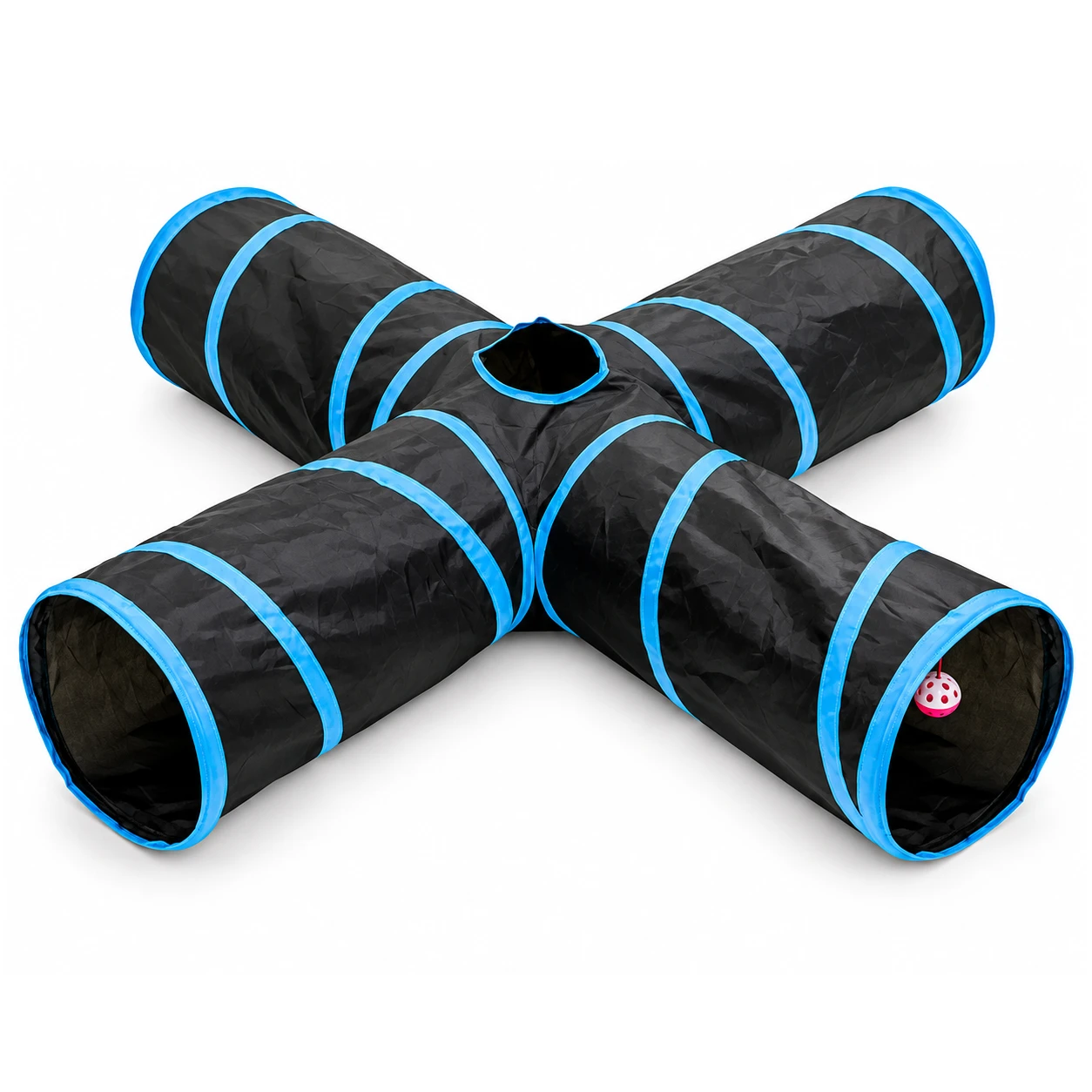
To prevent territorial bullying, choose multi-exit tunnels featuring center skylights or side portholes. These mid-section cutouts offer emergency escape paths so an occupied cat is never trapped. Maintain at least three feet of clear clearance around every tunnel entrance. Avoid positioning tunnels in dead-end hallways or right next to litter boxes. If you live with three or more cats, deploy two separate tunnels in distinct rooms to ensure equitable resource distribution.
Interactive Wand Lure Play Integration
While tunnels serve as quiet resting dens, their greatest enrichment value emerges during interactive play sessions with human companions. Combining an enclosed tunnel with a flexible wand toy triggers the full predatory motor sequence: stare, stalk, pounce, capture, and bite.
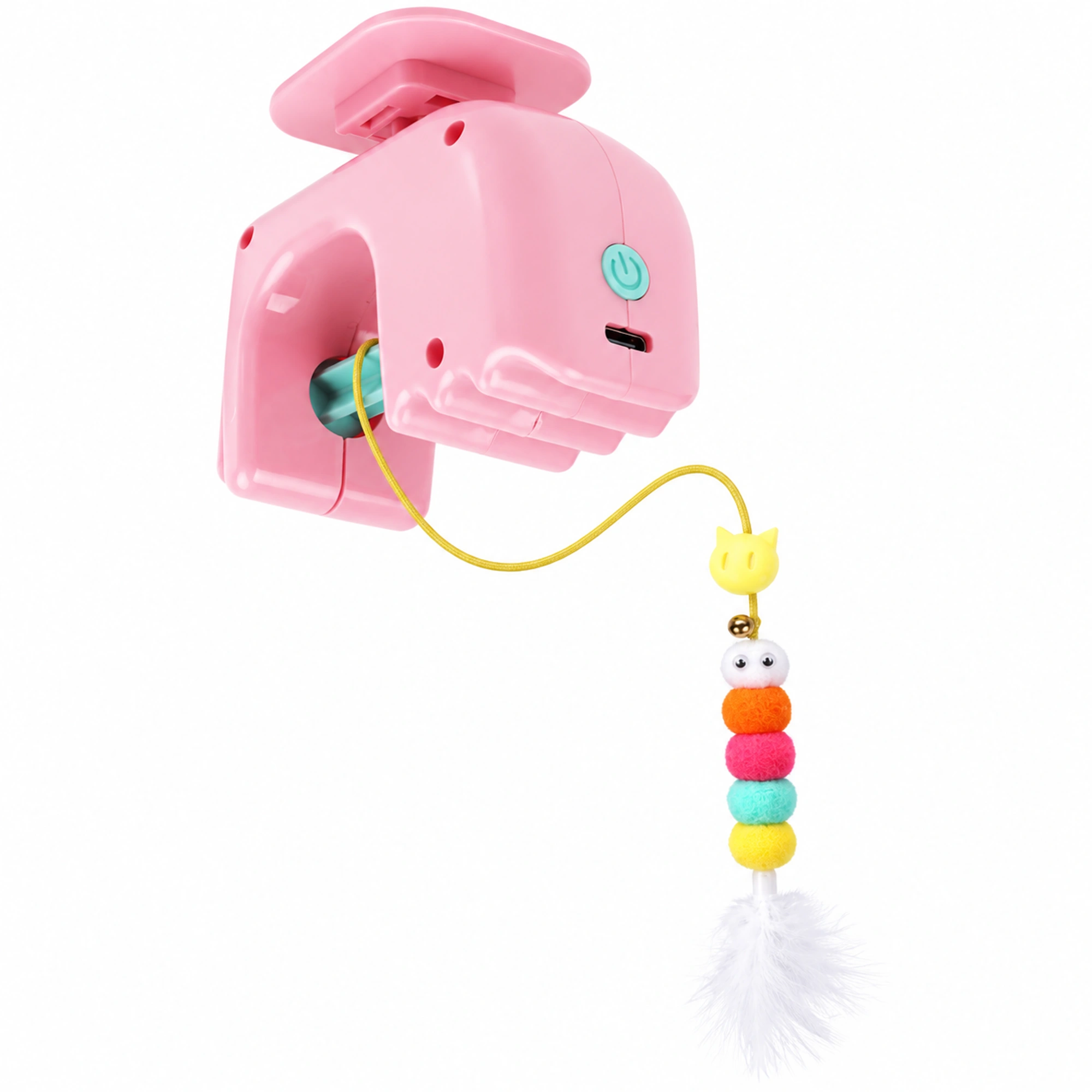
Take a lightweight wand lure such as our popular Pink Hanging Cat Teaser and trail the feathery tip past the outer tunnel wall. Scratch the fabric gently with your fingernails to simulate rustling prey. Most cats cannot resist the auditory lure of simulated movement scurrying past their hidden alcove. Drag a teaser string smoothly through the middle so your cat charges through the entire length in pursuit of the capture.
Avoid dangling wand lures directly into your cat face while they hide inside the tube. Thrusting a toy into an enclosed space can feel invasive and cause defensive swatting. Instead, drag the lure across the exterior fabric, pause near a peephole, and let the teaser dart around the outer corner. The cat will track the movement through the fabric weave, wiggle their hindquarters, and burst through the opening to secure their prize.
Safe Maintenance, Wire Rib Inspection, and Cleaning Methods
Routine maintenance preserves product longevity and protects your feline from accidental injuries during rough play sessions.
Most cat tunnels rely on coiled sprung steel wire to maintain an open cylindrical shape. Over months of aggressive pouncing, the fabric sleeves encasing these steel coils experience friction. Inspect both ends of the internal wire frame every two weeks. Feel along the seam bindings for sharp metal tips poking through the fabric. If any wire punctures the outer binding, discard the tunnel immediately or repair it with reinforced canvas patches to prevent facial scratches.
Cleaning methods depend on the specific construction materials:
Nylon and polyester tunnels wipe down easily with a damp microfiber cloth and mild pet-safe dish detergent. Avoid harsh bleach solutions or citrus-scented disinfectants, which leave lingering smells that repulse cats. Air-dry the extended tunnel outdoors in indirect sunlight until the inner lining dries completely.
Plush and faux-suede tunnels often accumulate loose fur and dander. Run a rubber pet hair squeegee along the interior walls before spot-cleaning. If the product label permits machine washing, fold the tunnel into a mesh laundry bag, wash on a gentle cold cycle, and reshape the spring frame before line drying.
Tunnel Selection Matrix for Common Indoor Setups
Different living spaces and feline play styles demand distinct physical tunnel dimensions and layout choices.
| Tunnel Style | Best Feline Temperament | Minimum Floor Footprint | Ambush Risk Level | Interior Acoustic Level |
|---|---|---|---|---|
| Straight Single Tube | High-energy sprinters and kittens | 4 feet by 2 feet | Moderate if dead-ended | Low to medium |
| Three-Way T-Junction | Multiple cats and tactical hunters | 6 feet by 6 feet | Low due to 3 exit paths | Medium |
| Curved S-Shape | Timid cats and comfort nesters | 5 feet by 3 feet | Low with visual bends | Low |
| Crinkle-Lined Tube | Sound-stimulated prey stalkers | 4 feet by 2 feet | Moderate without side holes | High crackle volume |
Frequently Asked Questions About Cat Play Tunnels
Can kittens safely play in adult-sized cat tunnels?
Kittens over eight weeks of age can safely use standard ten-inch diameter cat tunnels. Ensure the spring tension is gentle so the structure does not collapse under a light kitten weight. Supervise early sessions to confirm the kitten navigates the full length without becoming disoriented.
Why does my cat sleep inside the tunnel instead of running through it?
Cats naturally seek dark, semi-enclosed spaces for restorative sleep. The curved fabric walls simulate a protective den that shields their back and sides from household draft and foot traffic. If your cat naps inside, let them rest undisturbed.
What should I do if my cat bolts away when the fabric crinkles?
Some felines possess sensitive auditory thresholds and find crinkling sounds overwhelming. If your cat retreats, remove the crinkle tunnel and substitute a silent cotton canvas or felt alternative. You can also place soft fleece towels inside to dampen the internal rustling noise.
How often should I rotate the tunnel out of the living room?
Feline curiosity relies on novelty. If a play tunnel sits in the exact same spot for weeks, cats often begin ignoring it. Fold the tunnel away after four or five days of active use, store it in a closet for a week, and reintroduce it in a different room corner. This simple rotation schedule keeps the tunnel novel and engaging across many months.