Cats pounce on moving feet because quick floor-level movement triggers instinctual ambush reflexes. To an under-stimulated indoor cat, an ankle gliding across the carpet mimics the erratic scurrying of a small rodent or bird. When felines lack structured outlets for their daily predatory drive, moving human extremities turn into the default target. Learning how to stop a cat attacking feet requires a two-part method: freezing in place during an ambush to deny the chase response, and providing designated predatory outlets using distance wands and plush kickers.
Punishing a cat for foot pouncing almost always makes matters worse. Physical reprimands or loud shouting increase arousal and convert playful predatory ambushes into fear-based aggression. Instead of viewing foot attacks as malicious misbehavior, observant cat owners treat them as an urgent signal that their feline companion needs structured, interactive play.
Why Cats View Moving Feet as Prey Targets
Domestic felines maintain the complete predatory motor pattern of their wild ancestors: locate, stalk, chase, pounce, capture, and bite. In an indoor home devoid of live rodents, cats channel these instinctual motor routines into whatever moves across the room. When wondering why does my cat attack my feet, owners should observe the domestic environment: toes slipping out from under bedsheets or heels walking down a quiet hallway present tempting ambush opportunities.
Several behavioral factors intensify foot-stalking habits:
- Play Deprivation: Young adult cats and energetic kittens generate substantial stores of pent-up energy. Without interactive play sessions, this energy builds until the first passing target triggers an explosive release.
- Accidental Reinforcement: When a cat grabs an ankle, human reflexes prompt pulling the foot away rapidly or yelling. To a predatory feline, sudden jerking movements and high-pitched vocalizations resemble injured prey, which encourages gripping tighter.
- Lack of Physical Capture: Laser pointers and lightweight foam balls leave cats frustrated because they cannot sink claws and teeth into a tactile object. Moving ankles offer the physical resistance cats seek during a completed hunt.
Predatory Play vs Redirected Aggression: Diagnostic Matrix
Distinguishing between predatory play ambushes and redirected aggression prevents costly handling mistakes. While predatory play stems from natural hunting drives, redirected aggression occurs when a cat spots an outdoor intruder or experiences sudden fright and channels that defensive panic toward the nearest living creature. Attempting to wave a toy near a cat in an active state of redirected aggression can trigger defensive bites.
The following diagnostic matrix outlines physiological indicators that differentiate normal predatory play from defensive redirected aggression:
| Behavioral Indicator | Predatory Play Attack | Redirected Aggression Event | Recommended Intervention |
|---|---|---|---|
| Vocalization | Silent stalking with zero growls or hisses | Low guttural growling, sharp shrieks, or continuous hissing | Back away slowly without eye contact; give cat quiet space |
| Pupil and Facial Expression | Dilated round pupils focused strictly on foot motion | Dilated pupils accompanied by flattened ears and wrinkled muzzle | Avoid reaching toward the animal; dim ambient room lights |
| Body Carriage and Fur | Low stalking crouch with smooth, flat body coat | Piloerection with puffed tail fur and arched back | Place a solid barrier like cardboard between feet and cat |
| Attack Motion and Contact | Quick forward leap followed by brief grabbing and soft mouthing | Repeated explosive strikes with full bite force and deep claws | Never touch the cat directly until heart rate returns to normal |
| Post-Attack Recovery | Rapid disengagement when movement halts; immediate play interest | Extended vigilance lasting 30 to 120 minutes with tense posture | Provide a dark retreat room with water, litter, and quiet |
Evaluating these physical indicators ensures you apply the correct behavioral remedy. A playful cat needs immediate redirection toward safe toys. In contrast, an agitated cat suffering from redirected arousal requires complete physical space until physiological equilibrium returns.
What to Do in the Moment: The Freeze and Neutral Response
When a cat crouches with dilated pupils and prepares to spring at your feet, your immediate physical reaction determines whether the encounter escalates. Understanding how to stop cat biting ankles begins with interrupting the prey sequence before teeth make contact.
Follow this protocol during an active stalk or pounce:
- Freeze Instantly: Stop walking immediately. Prey flees; inanimate objects freeze. When you remove motion, the stimulus that activated your cat’s hunting drive vanishes.
- Stand Completely Still: Do not kick outward or attempt to pull your ankle away. Maintain a neutral posture and avoid eye contact, which cats can interpret as a direct challenge.
- Detach Without Emotion: If your cat has already latched on, gently push your foot slightly toward the grip rather than pulling away. Cats release pressure instinctively when their target moves toward them instead of pulling free.
- Offer an Immediate Neutral Redirection: Keep dedicated redirection toys nearby. Introduce a long wand or plush kicker to channel the cat’s heightened arousal onto a safe object.
Strategic Diversion Stations: Doorways and Blind Hallway Corners
Cats rarely launch foot ambushes in wide open spaces. Instead, predatory felines stake out strategic choke points such as bedroom doorway frames, sofa edges, and sharp hallway turns. At these locations, passing human ankles appear suddenly around corners, replicating the flight path of small mammals scurrying past burrow exits.
Setting up structured diversion stations neutralizes ambush zones before you step into strike range:
- Doorway Kicker Stashes: Keep long plush kicker toys sitting directly beside high-risk room entrances. When approaching a doorway where your cat routinely lies in wait, slide a soft kicker gently across the carpet ahead of your stride. The sudden ground movement of the toy captures your cat’s attention before your feet cross the threshold.
- Hallway Corner Distraction Spots: Position interactive puzzle balls or stationary teaser tracks around blind turns in long corridors. These toys break your cat’s fixation on passing feet by providing constant visual and tactile intrigue at floor level.
- Elevated Lookouts Near Transit Paths: Install a sturdy cat tree or wall shelf adjacent to busy hallways. Cats often ambush ankles simply because they lack high vantage points. Providing vertical perches satisfies their territorial surveillance needs, encouraging felines to observe movement from above rather than pouncing from floor level.
Nighttime Bed Sheet Ambushes: Blanket Movement Protocols
Bed sheet ambushes represent one of the most frustrating forms of predatory foot attacks. Under heavy blankets, restless feet generate subtle ripples and shifting contours that strongly resemble rodents burrowing through dense foliage. Young felines possess heightened crepuscular biorhythms, making dawn and midnight prime hunting windows.
To resolve nocturnal attacks, implement this three-part bedtime protocol:
- Pre-Sleep Hunting Completion: Conduct a vigorous 15-minute wand play session 30 minutes before bedtime. Guide the toy through intense sprints until your cat lies down panting gently. Follow the play session immediately with a protein-rich bedtime meal or canned wet food snack. Consuming dense protein triggers hormonal signals that shift the feline nervous system from predatory vigilance into deep metabolic rest.
- Stillness Under Bedding: If your cat pounces on your feet beneath the covers during the night, keep your toes completely stationary. Wiggling feet or pulling them away convinces your cat that prey is struggling to break free. Once the movement ceases, the blanket turns motionless and the predatory reward disappears.
- Heavy Duvet Barrier: During the retraining period, swap thin blankets for a dense quilt or duvet. Thick bedding dampens the visual silhouette of foot movement and shields human skin from stray claws, preventing reflexive jerking that fuels repeated ambushes.
Redirecting Predatory Energy with Distance Wands and Plush Kickers
True behavior modification requires replacing the human target with an acceptable substitute that satisfies the feline hunting sequence. Cats need toys that permit full physical engagement without placing human hands or feet in danger.
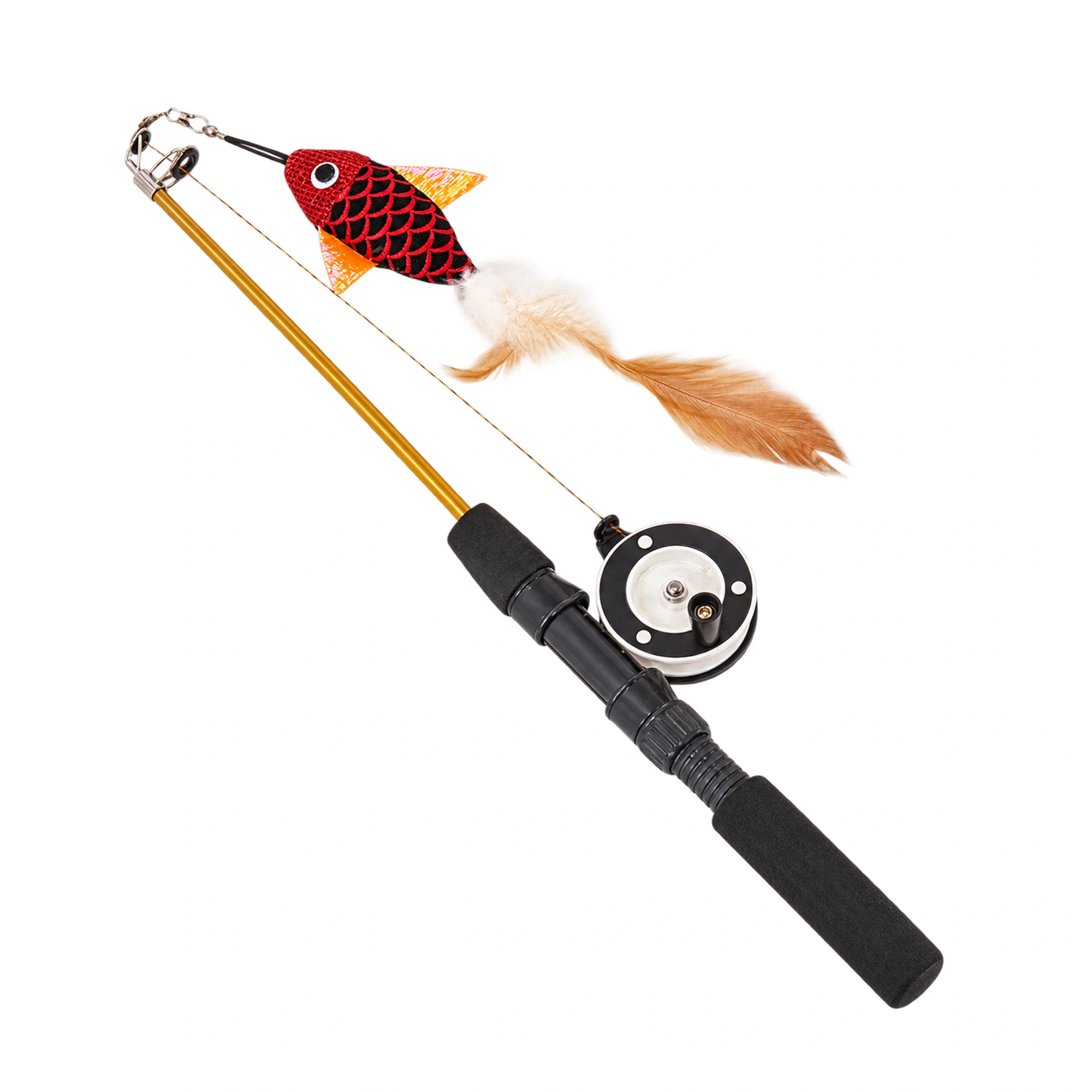
The Mini Fishing Reel Feather-Fish Wand provides an ideal distance toy for redirection. Equipped with a telescoping gold-toned rod and miniature manual reel, this wand lets you guide a red fabric feather-fish lure across rugs while keeping your hands and feet safely outside strike range. The manual reel enables you to imitate escaping prey, giving your cat an engaging ground chase that tires their fast-twitch muscles.
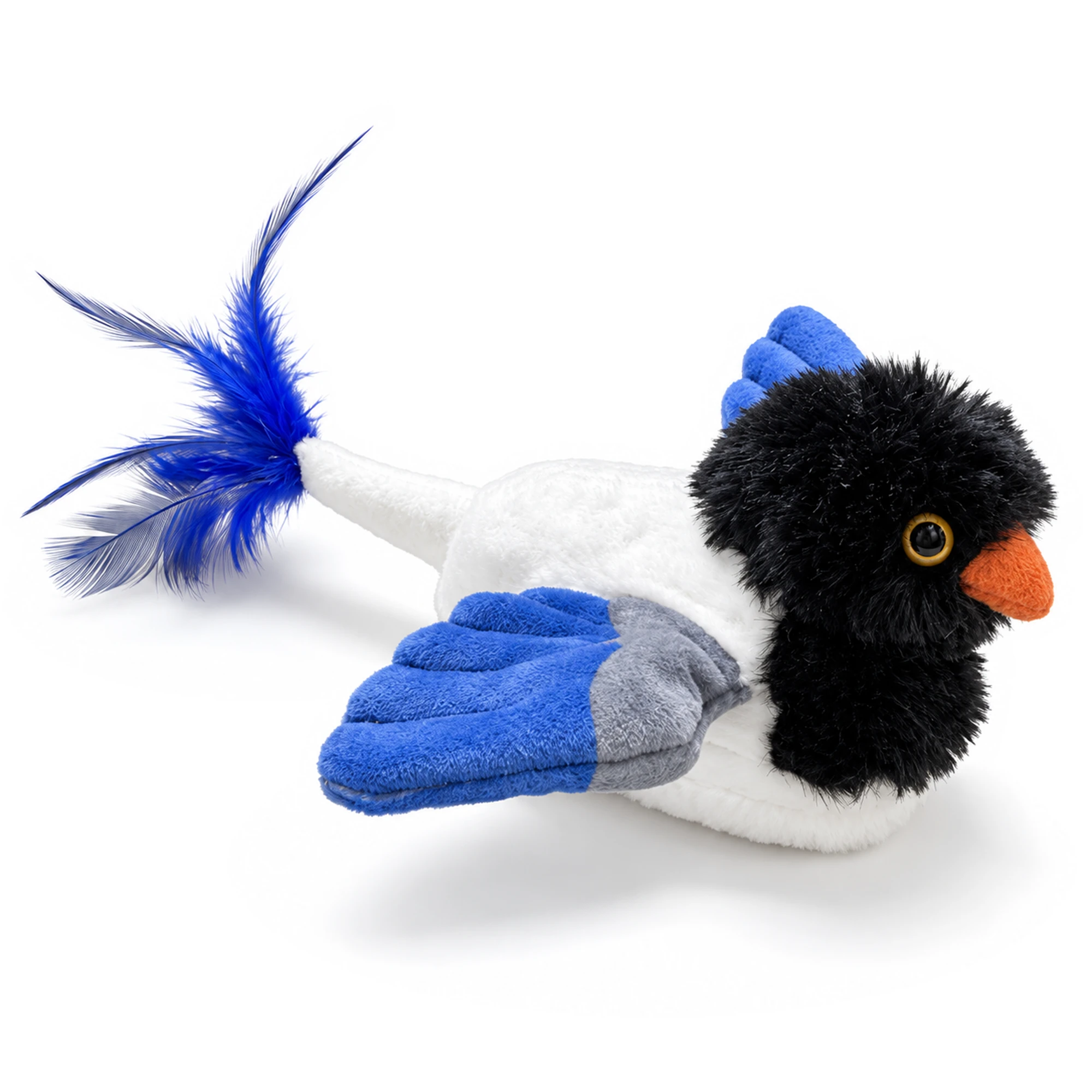
For cats that transition from pouncing into aggressive bunny-kicking and biting, a sturdy plush kicker is indispensable. The Blue Magpie Cat Feather Toy and Kicker Toy features soft fleece fabric covering a plump body, inviting curious paws to grab, wrestle, and bunny-kick across the floor. Cat owners in community discussions consistently report that sliding a plush kicker between a cat’s paws the moment rough play begins allows the animal to discharge predatory energy safely.
| Redirection Equipment | Primary Mechanism | Best Use Case | Behavioral Benefit |
|---|---|---|---|
| Telescoping Feather Wand | Manual reel and extended rod | Active hallway and living room chase | Keeps human ankles clear while simulating escaping prey |
| Plush Magpie Kicker | Soft fleece body with feather accents | Ground wrestling and rear paw kicking | Absorbs bites and bunny-kicks during peak overstimulation |
| Food Puzzle Roller | Internal maze releasing dry kibble | Post-play satisfaction | Completes the hunt-capture-eat biological sequence |
| Sisal Scratching Post | Vertical fibrous sisal wrapping | Morning territory marking | Reenforces boundary ownership and stretches leg muscles |
| Corridor Puzzle Track | Enclosed ball inside contoured base | Blind hallway corner placement | Diverts attention at high-traffic door thresholds |
Establishing a Predictable Daily Play Routine
Inconsistent playtime creates unpredictable bursts of predatory stalking. Especially for a cat attacking feet when walking, establishing two structured 10 to 15 minute play sessions each day satisfies hunting instincts before they spill onto passing ankles.
Schedule the first session in the morning before breakfast, and hold the second session in the evening before dinner. Follow the natural hunt-catch-eat cycle:
- Stalking Phase: Move the feather lure slowly around doorframes and furniture corners, allowing your cat to crouch and plot their sprint.
- Sprint and Chase: Accelerate the wand in short bursts to get your cat running and elevating their heart rate.
- Successful Capture: Allow your cat to catch the lure firmly at the end of the session, letting them chew and kick the plush body.
- The Final Meal: Serve your cat their scheduled meal immediately after play. Eating protein-rich food signals completion of the hunt, allowing your cat to groom calmly and settle down for a deep nap.
Frequently Asked Questions
Why does my cat only attack my feet when I walk by?
Moving feet generate ground vibrations and rapid motion that resemble rodents moving through underbrush. To an under-stimulated indoor cat, your ankles represent the most dynamic prey stimulus in the house.
Should I spray my cat with water when they bite my feet?
No. Water spray bottles create fear, damage trust, and can escalate defensive aggression. Freezing in place and redirecting attention to a wand toy or kicker produces far superior, lasting results.
How do distance wands and kickers stop foot attacking?
Telescoping wands engage the chase sequence at a safe physical distance, while plush kickers provide a tactile target that cats can bite and kick vigorously without harming human skin.
How long does it take to stop a cat attacking ankles?
Most healthy indoor cats show measurable behavioral improvement within 7 to 14 days of consistent routine implementation. Eliminating foot attacks requires total consistency: freeze every single time without yelling, and provide daily high-intensity wand play before meals.
Why does my cat bite my feet when I am asleep in bed?
Cats experience peak predatory energy during crepuscular twilight hours and midnight intervals. Slight movements of feet under sheets simulate burrowing rodents, tempting cats into an instinctual pounce. Completing an active play cycle and feeding a meal right before bedtime eliminates this nighttime hunting impulse.