The Living Room Toy Avalanche: Why Unorganized Toys Lose Value
Walk across almost any family home with pets and you will likely step around scattered rubber bones, squeaky plush animals, unraveling ropes, and plastic spheres. Eager to pamper their companion animals, dedicated pet parents steadily buy new accessories. Over the months, these pieces spread across rugs, roll underneath heavy sofas, and crowd hallway corners. What began as an expression of love gradually evolves into visual clutter that stresses human housemates while confusing family pets.
Leaving dozens of accessories spread permanently on floors strips them of psychological allure. Animal psychologists refer to this mental fade as habituation. When a dog or cat spots thirty identical toys strewn across living room rugs day after day, their brain classifies those items as static background objects like baseboards or radiator vents. The items no longer evoke evasive prey or stimulating challenges. Pets stroll past the static assortment with indifference, prompting frustrated guardians to conclude their companions have lost their playful spark entirely.
Implementing structured storage restores novelty while reclaiming clean floor space. Through an intentional rotation strategy, guardians transform messy floors into structured enrichment stations that preserve interest. Mastering how to rotate cat toys guarantees that basic feathers and mice regain dramatic excitement upon each reappearance. Instead of purchasing endless replacements, thoughtful storage awakens latent curiosity using items already stored inside your home.
The Scientific Psychology Behind Toy Rotation and Novelty Resetting
Predatory animals possess neurological systems programmed to track sudden environmental novelties. In natural settings, target prey does not linger motionless in open fields; it darts outward, seeks cover, and vanishes down burrows. To simulate this erratic dynamic indoors, owners should separate their collection into three or four distinct baskets, leaving only three items accessible at any given moment.
Hiding seventy percent of your pet supplies inside a closed closet refreshes their mental fascination. When an item disappears from sight for a fortnight, feline and canine brains undergo a full neurological reset. Bringing out a familiar puzzle after two weeks apart sparks intense sniffing, eager pawing, and focused curiosity matching the arrival of a brand new parcel.
Rotating toys also limits destructive chewing on baseboards and sofa legs. When pets receive fresh textures on a predictable schedule, their natural investigative drive targets the reintroduced gear rather than expensive furniture corners. For handlers managing high-drive canines, incorporating self play dog toys into rotating baskets guarantees that solitary daytime hours stay mentally demanding and physically rewarding.
Selecting Functional Storage Bins, Fabric Totes, and Wall Systems
Choosing the right organizers bridges home utility with pleasant room design. Hard plastic crates often make loud clattering sounds when pets search through them, occasionally startling shy animals. Soft fabric bins, open-front felt baskets, and braided rope hampers offer silent accessibility while matching modern living room decor.
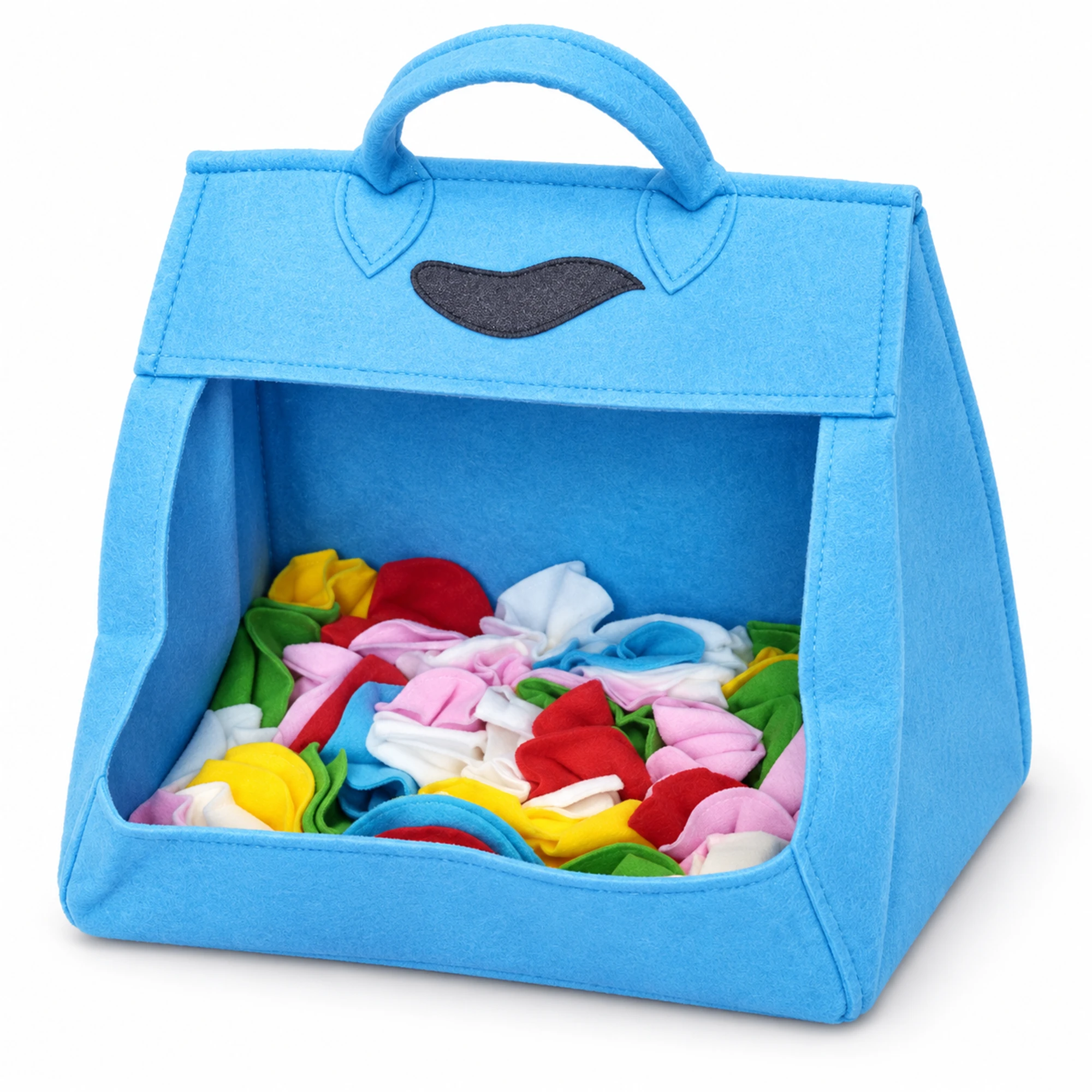
The Blue Handbag Snuffle Nest priced at $29.00 performs double duty as an attractive storage basket and an olfactory foraging station. Sewn from sturdy blue felt with a comfortable top carrying strap, this open caddy holds plush toys and chew rings neatly next to your armchair. The interior base houses layered colorful fleece folds where guardians can hide treats during supervised play, turning your tidy organizer into a rewarding scent puzzle before visitors arrive.
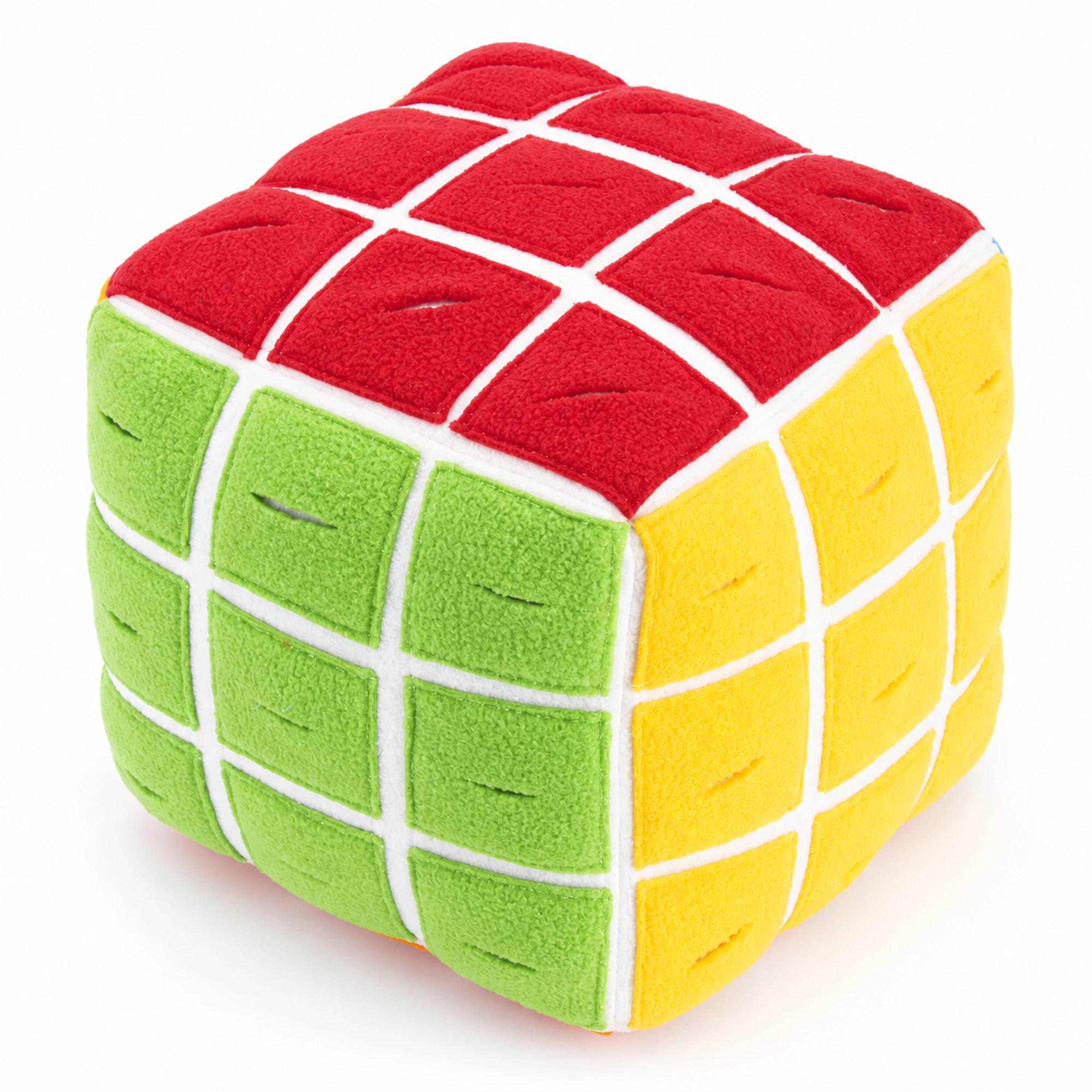
For modular sorting of fabric toys, pliable cubes supply flexible convenience. The Large Fabric Pocket Foraging Cube priced at $26.00 features multi-hued textile sides with slit openings that collapse flat when not in use. Handlers can use soft cubes to sort plushies by theme or rotation week, sliding them into shelving compartments or under tables without marking wooden floorboards.
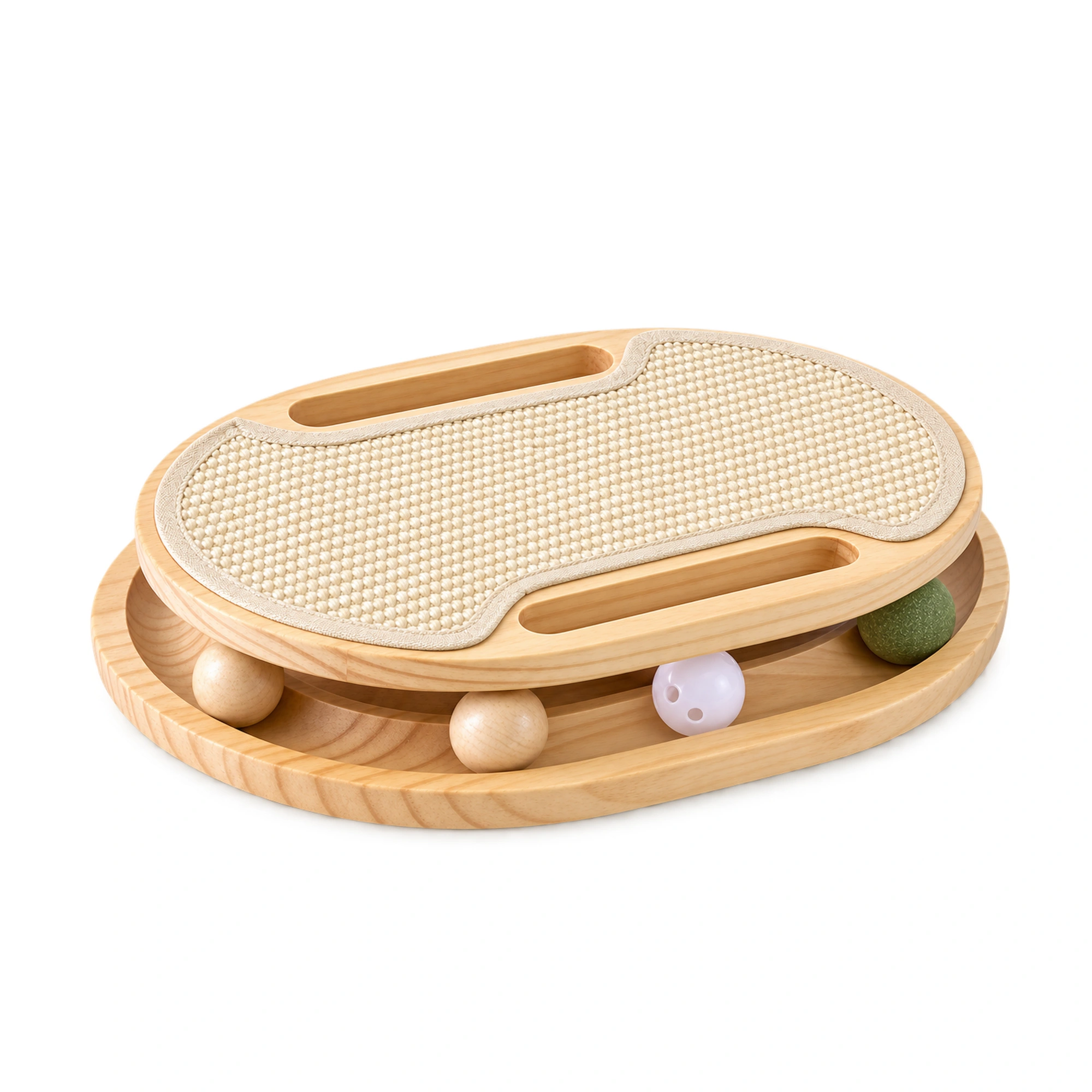
Low-profile play boards and flat puzzles demand horizontal organization tactics. The Sisal Island Dual-Track Play Board priced at $28.69 features a low-profile oval timber platform that slides smoothly under living room armchairs or rests flat on low shelves. Because its rolling balls remain trapped within twin perimeter channels, handlers can slip the board away after evening games without stray parts rolling across doorways.
Segregating Toy Categories: Teaser Wands, Chew Rings, and Scent Mats
Effective space management demands separating play items by physical category instead of dumping everything into one deep hamper. Mixing long feather wands with heavy rubber balls causes tangled cords and damaged lures. Setting up dedicated zones for specific activities keeps playtime effortless and orderly.
Organize household play accessories into four distinct storage zones: First, store wand teasers, feather rods, and string lures in an upright position. Mount an over-the-door pocket hanger or place a tall umbrella container inside a storage closet. Keeping long wands elevated prevents flexible poles from taking a permanent bend and keeps energetic kittens from biting cord lines during the night.
Second, reserve an open, shallow bin on the floor for daily chew toys and rubber dental rings. Placing this basket within easy reach lets dogs select their preferred texture independently without bothering human handlers.
Third, use an airtight container for catnip toys and herb-infused plush items. Leaving catnip out in open air causes delicate essential oils to oxidize and lose aroma within weeks. Keeping catnip mice in sealed glass jars or latching bins locks in potency for months, ensuring lively feline responses whenever you lift the lid.
Fourth, keep fabric mats and snuffle pads rolled up in high baskets. The Rainbow Fold Blue Flower Garden Mat priced at $26.00 features floral petal folds and straight fabric channels that roll into a tidy bundle. Stashing the mat between sniffing sessions keeps fabric fibers fluffy and stops crumbs from gathering household dust.
Routine Cleaning Protocols and Saliva Sanitization for Stored Toys
Dropping slobbered, moist toys directly into unventilated storage baskets encourages rapid bacterial buildup and sour mildew smells. Dogs coat plush fabrics in saliva loaded with oral bacteria, while cats rub facial pheromones across fabric mice. Without consistent sanitation, storage hampers turn into reservoirs for mold and dust mites.
Mastering how to clean cat toys and dog supplies protects animal health and keeps equipment durable. Fabric snuffle mats, stuffed mice, and rope toys should be laundered twice monthly using warm water and unscented detergent on a gentle washing cycle. Avoid perfumed fabric softeners or dryer sheets, as artificial scents irritate sensitive pet noses and trigger skin itchiness. Dry all textiles completely under direct sunshine before placing them back into rotation caddies.
Hard rubber chew bones, puzzle boards, and motorized balls need weekly scrubbing with hot water and mild dish soap. Grab a narrow bottle brush to clear saliva and treat remnants from deep recesses and feeder ports. For city residents who buy compact apartment cat toys, maintaining spotless gear prevents lingering pet odors from building up inside snug apartments.
Establishing a Weekly Household Tidy-Up Routine with Pet Participation
Keeping an orderly home does not require long hours of frustrating labor. Developing a five-minute evening cleanup habit leaves floors clear and readies pets for deep nighttime sleep. Remarkably, many willing dogs can learn to help gather their toys directly into bins.
Teaching your dog to put toys away offers wonderful cognitive exercise for family canines. Begin by sitting beside an open basket with a tasty treat tucked in your palm. As your dog picks up a toy, position your hand over the basket rim and give a gentle drop command. When the toy lands inside the basket, praise your pet and offer the treat immediately. After a few weeks of consistent practice, your companion will proudly search out scattered toys and drop them into the caddy on cue.
In feline households, pick up wand lures and rolling track spheres right before serving evening dinners. Packing up gear signals that the daytime hunting window has ended, prompting cats to finish their meal, wash their faces, and settle in for peaceful rest.
By uniting stylish storage baskets, disciplined rotation cycles, and sanitary cleaning habits, you create a calm home where clutter vanishes and play thrives. Thoughtful storage keeps cat toys for indoor cats feeling novel, engaging, and delightfully rewarding.