If your dog scoops up a squeaky plush, wanders the hallway, and lets out plaintive whimpers, you are witnessing one of the most puzzling canine habits. Pet parents often watch with genuine worry. Your dog appears physically healthy and may even wag their tail, yet they emit sounds of profound heartbreak while clutching their prized possession.
Vocalizing while holding a toy is rarely an emergency. Instead, it is an expressive behavior driven by specific canine instincts. Understanding the root cause helps you know whether your dog needs an interactive play partner, a calming puzzle to satisfy an urge to bury treasure, or a quiet spot to decompress.
By examining vocal cadence, body posture, hormonal status, and environmental triggers, you can decipher exactly what your dog is trying to say.
Acoustic Analysis of Canine Whining: What Pitch and Cadence Reveal
Canines possess a wide vocal repertoire that includes barks, growls, howls, yelps, and whines. When a dog whines while holding an object in its jaws, it is producing a closed-mouth or partially occluded vocalization.
Bioacoustic studies show that whines represent high-frequency acoustic signals between 1,000 Hz and 4,000 Hz. These frequencies mimic neonatal distress calls, naturally prompting caregiver attention and social proximity. In domestic dogs, whining acts as an involuntary acoustic leak during periods of peak emotional arousal. When an emotional surge occurs, autonomic nervous system pathways tighten the vocal cords and increase breathing rates.
Because the mouth is occupied by the toy, airflow diverts through the nasal passages and lip margins. This physical dynamic generates the characteristic muffled whine that dog owners recognize instantly.
1. High Arousal and Play Solicitation
The most frequent reason dogs cry with a toy in their mouth is intense excitement combined with an invitation to play.
When a dog grabs a plush item that triggers predatory drive, adrenaline surges. They want to shake it, chase it, or play tug with you, but holding the toy physically prevents them from barking freely. The pent-up arousal escapes as high-pitched whines and muffled cries. You will usually see a loose body posture, an alert wagging tail, and playful bowing movements. The dog approaches you, nudges your legs with the toy, and whimpers because they want you to initiate an energetic chase.
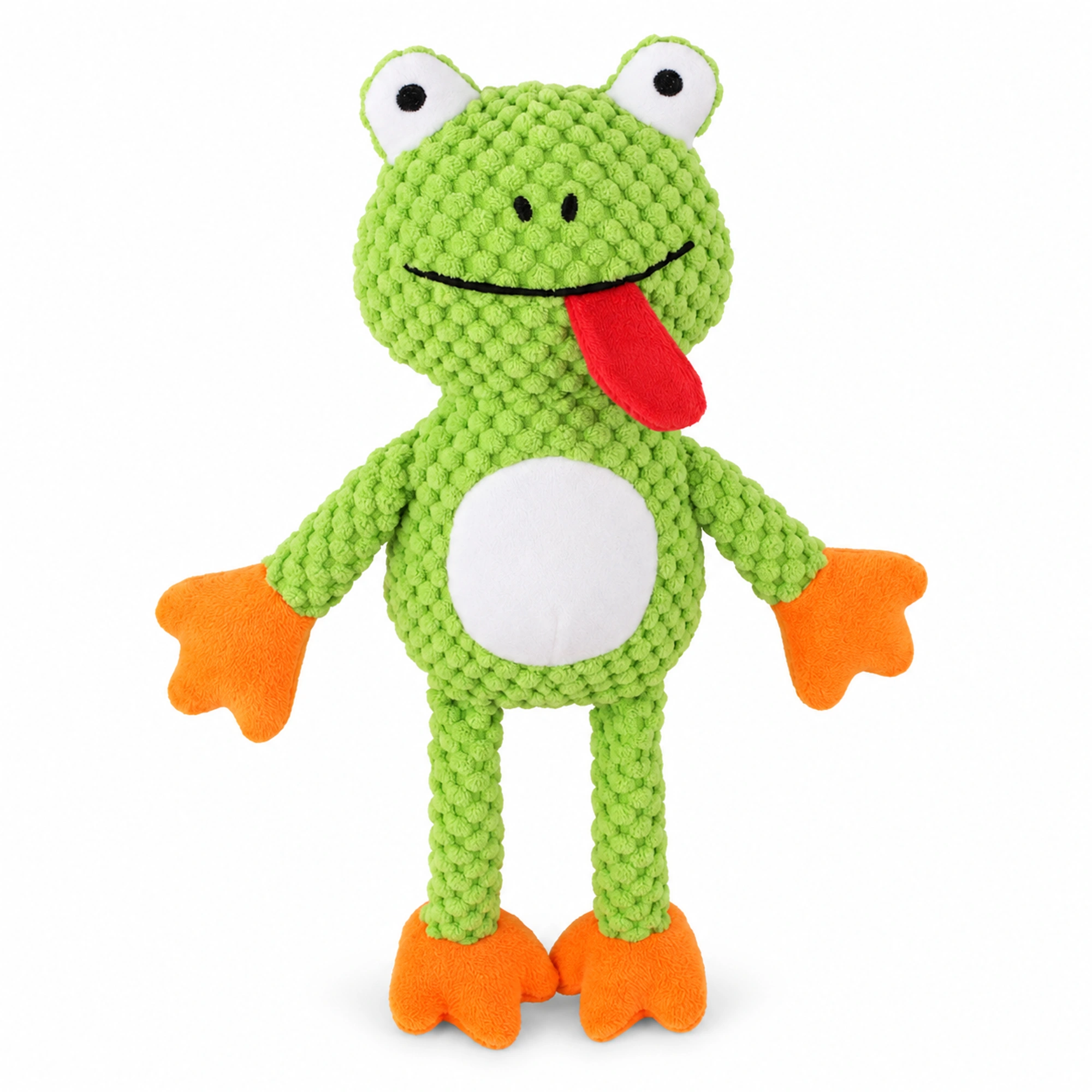
For dogs that experience this burst of vocal excitement, a dynamic toy like the Pose & Pull Frog offers an ideal physical outlet. Gently adjust the frog’s fabric-covered limbs by hand to change their visible length and arrange a new pose. Lime bobble fleece, a stitched smile, a red fabric tongue and orange webbed hands and feet give this supplier-described dog plush its playful character. The tactile limbs provide great grip points for cooperative tug games, allowing your dog to channel excitement into active movement.
2. The Instinct to Bury and Cache Treasure
Another classic scenario occurs when a dog receives a new toy, high-value chew, or favorite plush, and immediately begins walking around the house whining while looking at couch cushions, rugs, or dark corners.
This behavior stems from ancestral caching instincts. Wild canids bury surplus game to protect valuable resources from scavengers. When an indoor dog acquires a toy that feels extraordinarily valuable, an urgent impulse to stash the item takes over. Flat carpets and polished flooring provide zero dirt to dig into, causing genuine psychological frustration that manifests as continuous pacing and whining.
On Reddit, an owner described this common scenario: “My dog, a 12-year-old beagle mix, does this a lot. Always has been. In his case, all he really wants is to bury the toys. We give him a blanket to “bury” his toys in, and that keeps him pretty satisfied.”
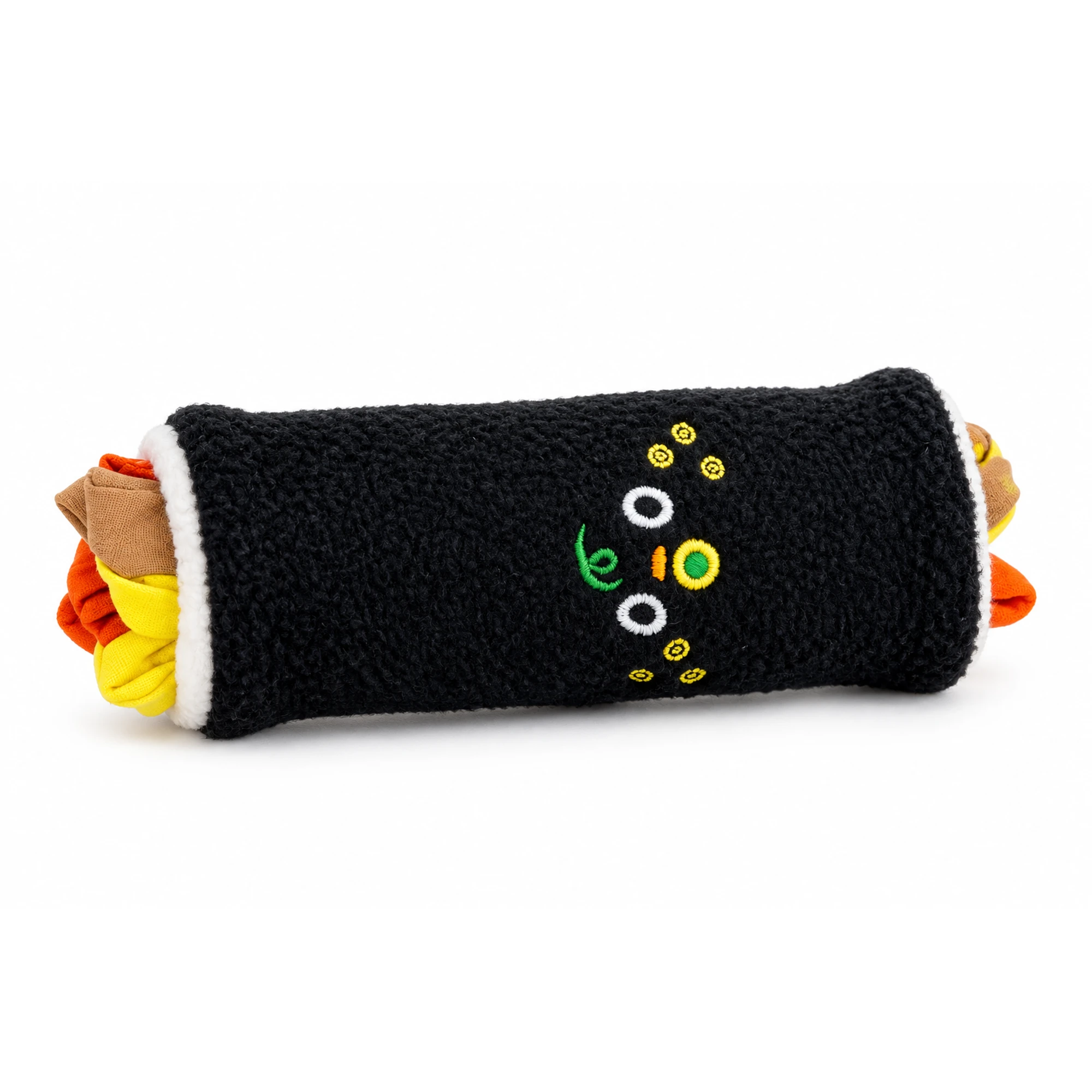
When your dog is in caching mode, redirecting their focus toward a structured foraging activity can relieve the mental pressure. The Seaweed Roll Snuffle Mat is particularly helpful for dogs with strong hiding and digging instincts. Unroll the seaweed-shaped plush wrap to tuck treats into the white fabric pockets, then roll it up for a small sniffing challenge. The fabric folds provide physical hiding layers where dogs can tuck prizes away, satisfying the biological need to conceal valuable objects.
Vocalization and Behavior Diagnosis Matrix
| Observed Vocal Pattern | Accompanying Physical Body Language | Primary Underlying Root Cause | Recommended Immediate Action |
|---|---|---|---|
| Muffled chirping whine | Loose spine, play bows, rapid mid-height tail wagging | High play arousal and human play solicitation | Initiate structured fetch or gentle interactive tug |
| Continuous high-pitch whine | Urgent pacing, inspecting baseboards, sofa corners | Instinctive resource caching and burial frustration | Provide a soft fleece blanket pile or roll-up snuffle mat |
| Low rhythmic whimper | Guarding toy in bed, licking plush ears, nesting | Hormonal shift or pseudopregnancy (false pregnancy) | Provide calm isolation, avoid taking toy, consult vet |
| Tense whine with pauses | Stiff neck, wide unblinking eyes, freezing on approach | Resource guarding conflict and fear of confiscation | Toss smelly treats away to initiate a stress-free trade |
3. Nesting Drive and False Pregnancy
In female dogs, especially unspayed females a few weeks after a heat cycle, crying while carrying a toy can indicate a maternal or nesting instinct.
This medical phenomenon is known as pseudopregnancy or false pregnancy. Approximately six to twelve weeks following estrus, a female dog’s progesterone levels drop while prolactin hormone levels spike. Prolactin is the hormone responsible for milk production and maternal bonding. Even if the dog was never mated, elevated prolactin tricks the canine brain into believing puppies are imminent.
A female dog experiencing false pregnancy will adopt a soft plush toy as an imaginary surrogate puppy. She carries the toy tenderly by its scruff, licks its face, builds a nest out of blankets, and whines mournfully if the toy is moved. The crying represents acute maternal distress: she believes her puppy is crying or in danger.
If you suspect nesting behavior, keep interactions calm and avoid forcibly snatching the toy. Removing the toy causes significant psychological distress and can trigger frantic searching. Provide a secure, cozy space with comfortable bedding. If false pregnancy symptoms persist or include physical signs such as milk production, swollen mammary glands, or extreme lethargy, consult your veterinarian for guidance on medical management.
4. Resource Guarding and Anxiety
While less common, some dogs cry with a toy because they feel conflicted about its security.
If a dog feels that other pets or household members might confiscate their prized possession, they may carry it nervously from room to room, vocalizing due to inner conflict. They want the toy, but holding it near others creates mild anxiety. The dog wants to keep the valuable prize, but fears losing it, producing an agonizing emotional state that leaks out as high-pitched whimpers.
Watch your dog’s body language closely. If the crying is accompanied by stiff posture, whale eyes (showing the whites of the eyes), lip licking, or growling when approached, do not confront or corner the dog. Instead, offer a trade for a high-value treat from a respectful distance, or give the dog an undisturbed room where they can enjoy their toy in peace.
Structured Decompression Protocol: Transforming Crying into Calm
When your dog paces with an object in its mouth, follow this structured four-step decompression protocol:
Step 1: Decode the Body Language
Stop and observe for sixty seconds. Check whether your dog’s body is fluid and playful (play solicitation), urgent and looking downward (caching), or rigid and protective (guarding or hormonal).
Step 2: Neutralize Environmental Triggers
If other household pets are hovering or staring, move them to another room. Reducing competitive social pressure instantly eases resource anxiety and allows your dog to relax.
Step 3: Offer an Approved Burial Station
If caching is the culprit, fold a large plush blanket or towel into loose layers on the living room floor. Lead your dog to the blanket. Many dogs will immediately push the toy into the folds using their snout and walk away completely relaxed.
Step 4: Engage in Olfactory Nosework
Transition intense vocal arousal into grounding scent work. Scent-driven foraging stimulates the release of calming dopamine, shifting canine brain waves from sympathetic panic into parasympathetic contentment.
Long-Term Environmental Management and Play Supervision
Preventing habitual toy crying requires managing how and when toys are presented in your household:
- Put High-Arousal Squeakers on a Schedule: Do not leave loud squeaky plushies scattered on the floor all day. Bring them out for structured interactive sessions, then put them in a closed cabinet when play ends.
- Establish Safe Resting Zones: Give each pet in multi-dog homes an individual crate or room where they can enjoy toys without fear of theft.
- Monitor Toy Wear: Inspect seams and fabric limbs regularly. Toys that are licked or carried constantly gather saliva and weaken over time.
- Support Senior Dogs: Older dogs with cognitive dysfunction syndrome sometimes pace and vocalize with objects. Ensure senior pets have predictable daily routines and easy access to orthopedic resting spots.
Frequently Asked Questions
Why does my dog only cry with squeaky toys?
Squeakers simulate the high-pitched sounds of small prey animals, which activates intense prey drive and arousal. Dogs often whine because the sound stimulates them faster than they can physically release their energy through biting or shaking.
Should I take the toy away if my dog is whining?
Taking the toy away abruptly can increase stress and provoke resource guarding. Instead, observe whether your dog wants you to play with them or wants a safe place to settle. If they need a break, calmly trade the toy for a treat.
Can snuffle mats help reduce toy anxiety?
Yes. Foraging and nosework naturally trigger the release of calming hormones in a dog’s brain. Rolling up treats in a Seaweed Roll Snuffle Mat redirects frantic pacing into focused, methodical problem-solving.
Why does my dog cry while carrying a toy to me?
When a dog brings you a toy while crying and wagging, they are experiencing high greeting excitement. Holding the toy prevents them from vocalizing normally, so the greeting energy comes out as high-frequency whimpering. They are inviting you to engage in mutual play.
How do I know if my female dog is experiencing false pregnancy?
Look for symptoms appearing six to twelve weeks after a heat cycle. Common indicators include collecting soft toys in a bed, mothering and licking plush items, whining when separated from the toys, nesting with blankets, and swollen mammary tissue. If you observe these signs, discuss spaying or medical treatment with your veterinarian.