Properly sanitizing canine play items requires tailoring your cleansing approach to the exact composition of each toy. Non-porous molded rubber bones rinse cleanly using warm tap water, mild dish soap, and a slender bottle brush to prevent fungal growth inside treat channels. Braided cotton rope structures demand heated white vinegar soaks coupled with unfiltered sunshine drying to eliminate deep microbial buildup without depositing hazardous chemical film. Meanwhile, suction cup floor tether assemblies require clean, grease-free perimeter wiping to maintain powerful vacuum floor adhesion.
A consistent sanitization routine keeps playtime enjoyable and protects your pet from digestive distress caused by lingering bacteria and spoiled food.
Why Dog Toy Hygiene Matters: Saliva, Bacteria, and Food Residue
Every time your dog mouths a toy, saliva deposits proteins, bacteria, and moisture onto the surface. When left in toy crevices or soaked into textile fibers, this environment encourages bacterial growth and slime formation known as biofilm. If you use peanut butter, canned dog food, or kibble inside interactive chews, trapped organic residue ferments quickly.
Pet parents frequently voice valid concerns about cleaning complex treat shapes. As one Reddit r/CleaningTips user Lemon_Drop_Kid explained: “This toy is made for dispensing treats as the dog rolls it, concerned about cleaning as it does not open. Worried that over time mold will build up if I put water in it. Any help greatly appreciated! Thanks!”
Ingesting sour food residue or fungal spores can trigger intestinal upset, loose stools, and persistent bad breath. Establishing practical weekly sanitation stops biofilm formation before it threatens your dog. To learn more about polymer purity and chew safety standards, review are rubber dog toys safe.
Cleaning Rubber and Silicone Chew Toys: Crevice and Slot Maintenance
Solid rubber toys resist moisture absorption, making them straightforward to sanitize. Textured surfaces with dental nubs and treat slots require targeted scrub techniques to dislodge stubborn debris.
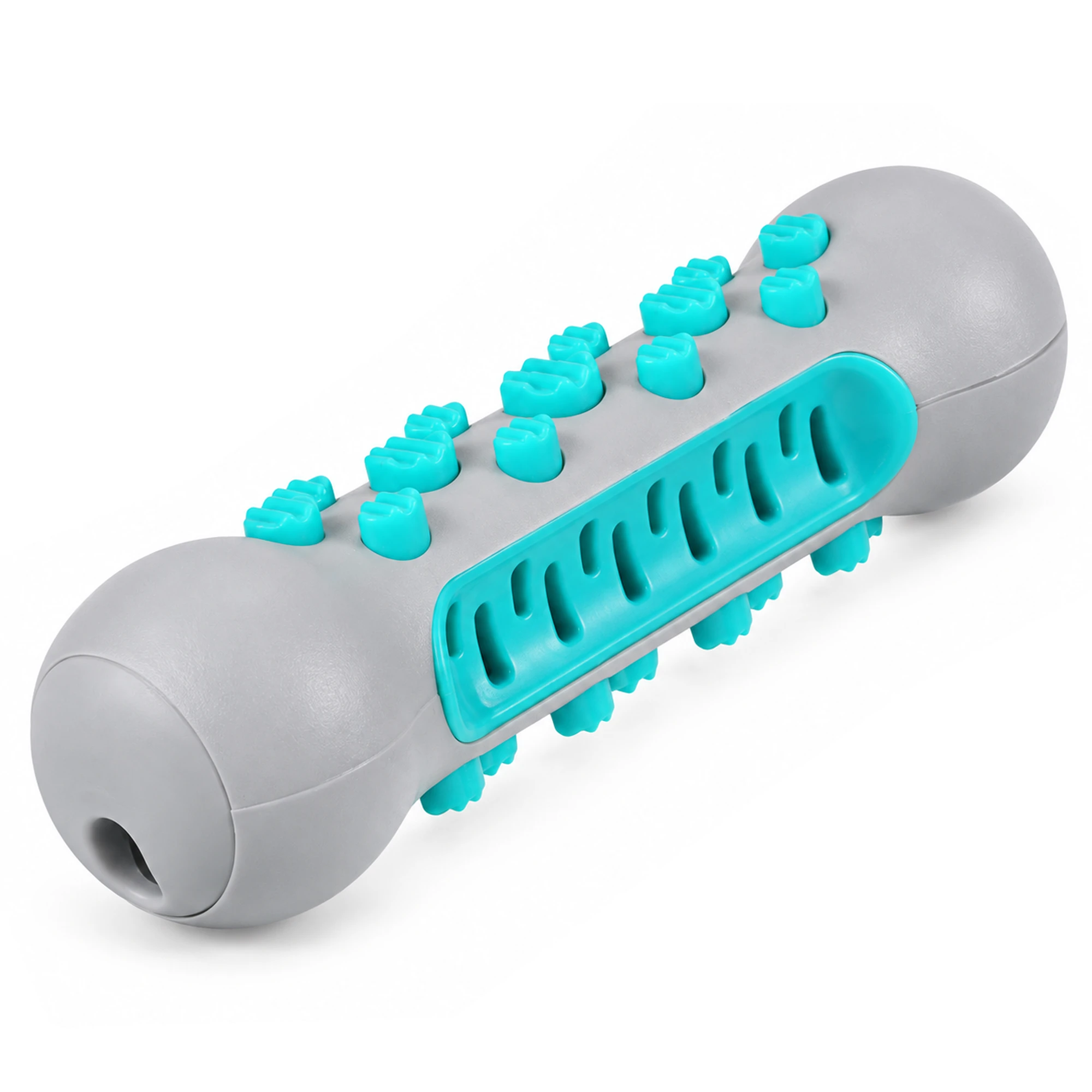
For example, consider the JoyPetPlay dental chew bone: A gray bone-shaped dog toy with turquoise-blue raised nubs, a slotted side panel, rounded ends and an end opening. Includes one assembled toy. Supervise play and remove if damaged. Supplier-reported SKU piece weight: 147 g; supplier piece dimensions: 15 × 4.6 × 4.6 cm. These figures are not independently measured; net/gross weight and packaging inclusion are unspecified.
Follow these steps to clean rubber chew toys thoroughly:
- Soak in warm soapy water: Submerge the rubber bone in a basin filled with warm water and two drops of fragrance-free liquid dish soap for fifteen minutes to loosen crusted paste.
- Scrub nubs and interior cavities: Use a narrow nylon bottle brush or clean toothbrush to scrub the side slots and interior treat channel. Pay special attention to corners where wet kibble collects.
- Rinse under running warm water: Flush all internal passages until the water runs clear and zero soap bubbles remain.
- Vertical air drying: Stand the toy upright on a wire drying rack in a well-ventilated spot. Complete air circulation prevents internal water stagnation and mold growth.
Avoid harsh household cleaners like chlorine bleach, ammonia, or scented bathroom sprays. Rubber compounds can absorb chemical scents and harsh residues, which your dog subsequently licks during chew sessions.
Washing Cotton Rope and Tug Toys: Odor Elimination and Drying Rules
Cotton rope toys collect heavy saliva, dirt from the yard, and oral shedding. Because dense fibers absorb moisture deep into the inner strands, improper washing leaves mildew inside the core.
Follow this sanitation routine for braided rope toys:
- Shake out loose dirt: Comb away surface dust, loose pet hair, and dried garden mud before wetting the toy.
- Prepare a gentle vinegar soak: Fill a bowl with hot water and add one cup of distilled white vinegar. White vinegar naturally cuts through saliva film and neutralizes sour odors without toxic detergents.
- Hand wash or gentle cycle: Submerge the rope and squeeze firmly to let vinegar water penetrate the core strands. If machine washing, place the rope inside a mesh laundry bag and run a delicate hot wash cycle without fabric softener.
- Thorough sun drying: Never toss damp rope toys into enclosed storage bins. Lay the rope flat in direct sunlight on an outdoor rack or sunny windowsill until bone-dry. Sunlight provides natural ultraviolet disinfection while ensuring core fibers dry completely.
Never leave damp rope toys inside dark plastic toy bins. Trapped dampness causes sour musty odors within forty-eight hours and turns cotton strands into breeding grounds for yeast and mold.
Suction Cup and Floor Anchor Toy Maintenance
Suction-based play systems feature both rubber vacuum bases and pulling ropes or chew targets. Maintaining airtight suction requires keeping the rubber base free from pet dander, grease, and floor grit.
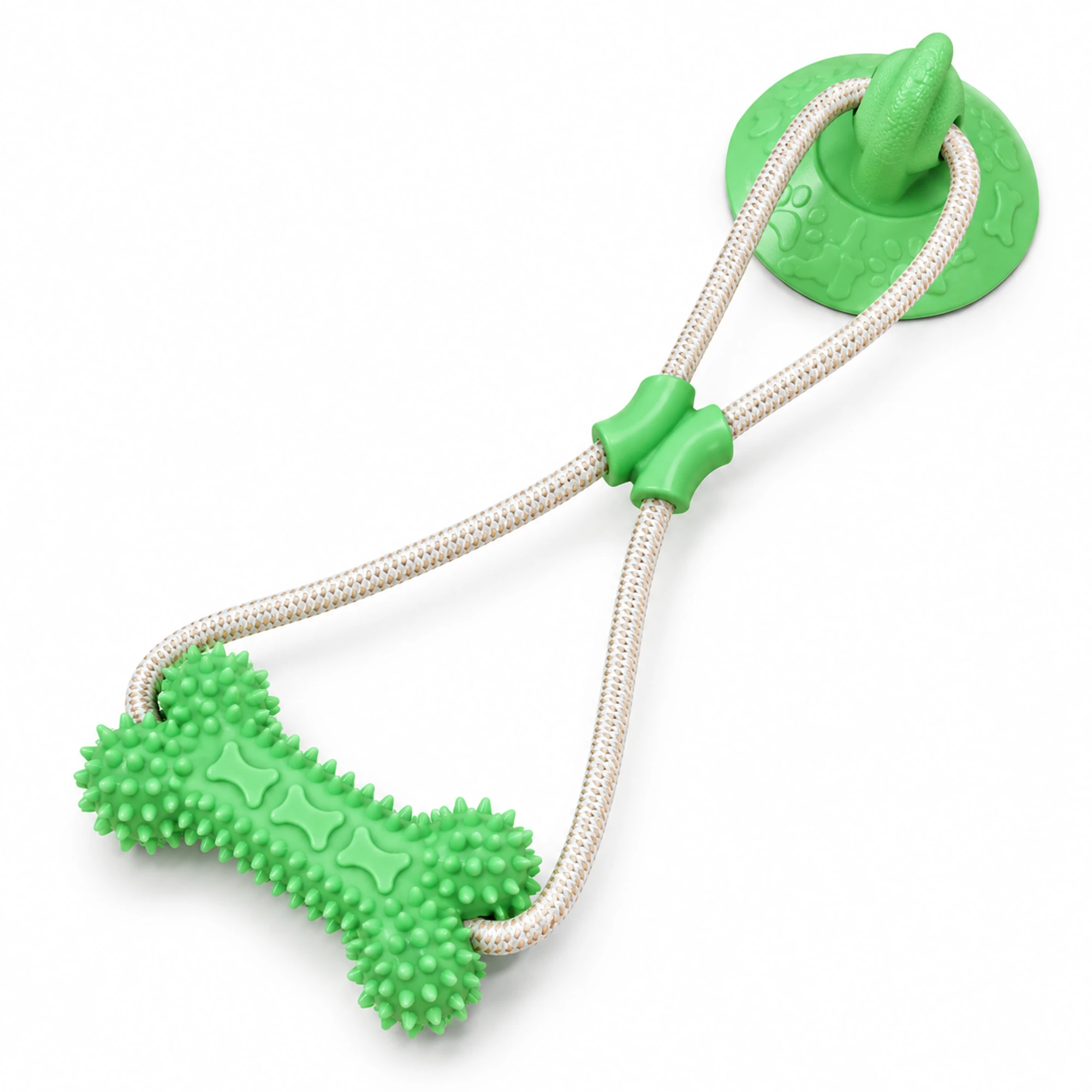
Consider the JoyPetPlay interactive floor game: Press the green suction base onto a clean, smooth floor and invite your dog to pull the textured bone. Slide the green rope adjuster to position the loop, then lift the base edge after the game.
Keep suction toys operating at maximum hold with these maintenance steps:
- Wipe the suction cup: Wash the underside of the green suction base with warm water and mild soap after every play session. Never use petroleum-based lubricants or oils on the rubber cup.
- Clean the attachment surface: Sweep and mop tile, hardwood, or laminate flooring before pressing the suction base down. Microscopic dust particles break the vacuum seal and cause premature release during pulling.
- Clean the rope adjuster: Inspect the sliding cord lock for trapped dirt. Rinse the adjuster under warm water and slide it back and forth to clear grit.
- Store flat: Store the suction base facing upward or hanging by its loop. Never bend the rubber flange during storage, as creases permanently compromise airtight floor adhesion.
When to Clean and When to Retire Worn Dog Toys
Cleaning provides an ideal opportunity to inspect every toy for physical degradation. While routine scrubbing restores hygiene, it cannot fix structural damage.
Inspect each toy against these retirement criteria:
- Missing rubber pieces: If chunks of rubber have broken off from ends or side slots, retire the toy immediately to avoid foreign body obstruction.
- Frayed rope strands: Trim minor fuzz, but discard ropes when the main braided weave unravels into loose string tangles that dogs could swallow.
- Cracked suction cups: If the base rim exhibits hairline tears or deformation, the suction will fail and require product replacement.
- Lingering sour odors: If a rope toy smells sour despite a hot vinegar wash and full sun drying, internal mold has colonized the core fibers.
To organize toy hygiene without overwhelming your daily schedule, combine sanitation with your rotation plan. Read our guide on how to rotate dog toys to learn how managing five active toys keeps play exciting while keeping wash days manageable.
Frequently Asked Questions
Can you wash dog toys with regular dish soap?
Yes, you can wash dog toys with mild, fragrance-free liquid dish soap and warm water. Dish soap effectively cuts through saliva grease and dried food pastes. Always rinse the toys thoroughly under running tap water until all suds vanish completely, as swallowed soap residue can cause stomach irritation.
How do you get mold and dried food out of hollow dog toys?
To remove stubborn dried treats and mold from hollow toys, submerge the toy in hot water mixed with equal parts distilled white vinegar for twenty minutes. Use a narrow baby bottle brush or pipe cleaner to scrub internal cavities vigorously. Rinse with clean hot water and stand the toy upright on a ventilated rack so air circulates through both openings until totally dry.
Can rope dog toys go in the washing machine?
Yes, cotton rope dog toys can go in the washing machine on a hot water cycle. Place rope toys inside a mesh garment bag to prevent knotted ends from banging against the drum or snagging the agitator. Wash with white vinegar or a tiny drop of pet-safe detergent, avoid fabric softeners, and let the rope dry completely in direct sunlight before returning it to your dog.