Check what the motor moves before choosing an automatic dog ball: the ball itself, or a separate ball thrown from a machine. Start with that distinction, then check the instructions for the exact model. A product photo or the word “automatic” is not enough to choose the play setup.
A moving ball and a launcher do different jobs
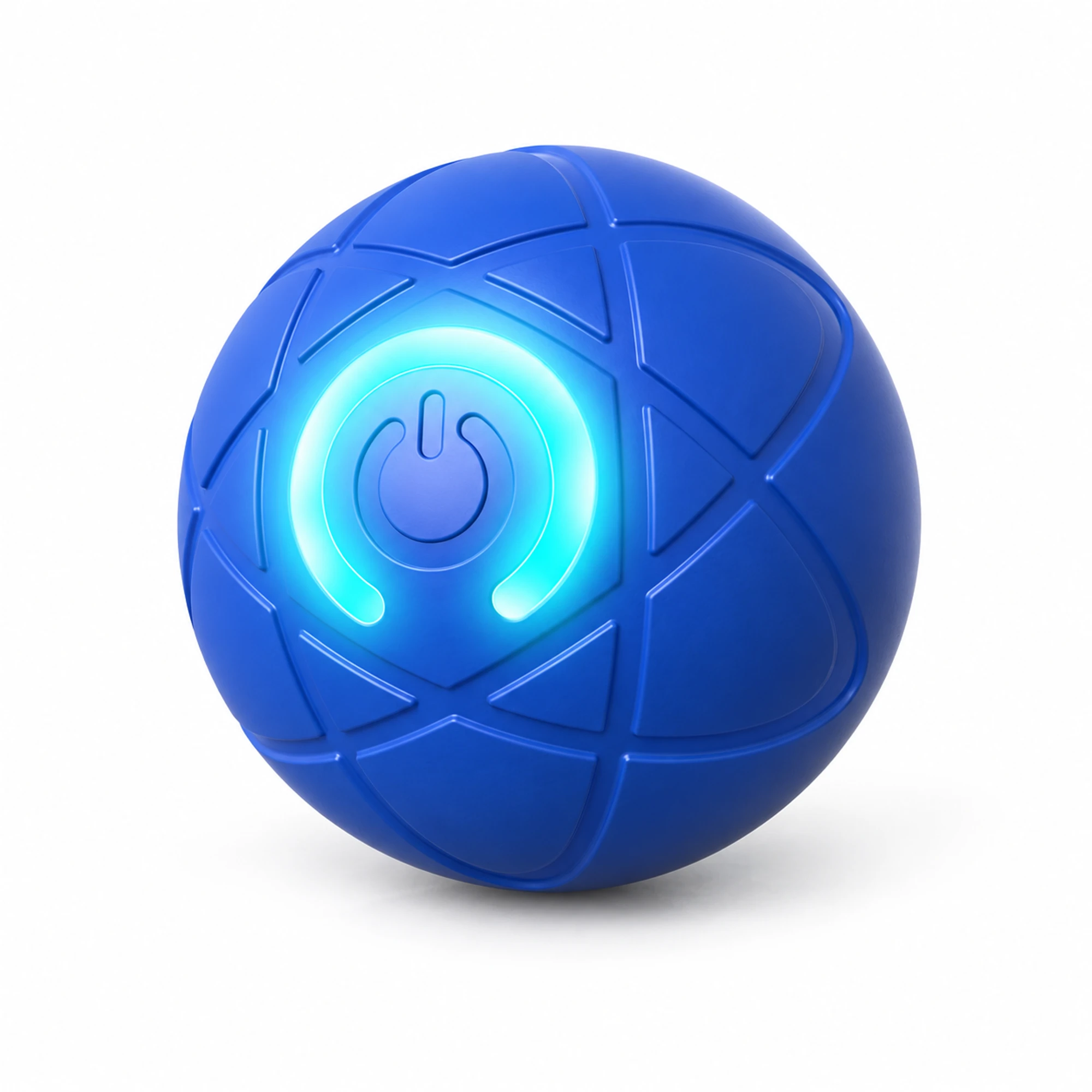
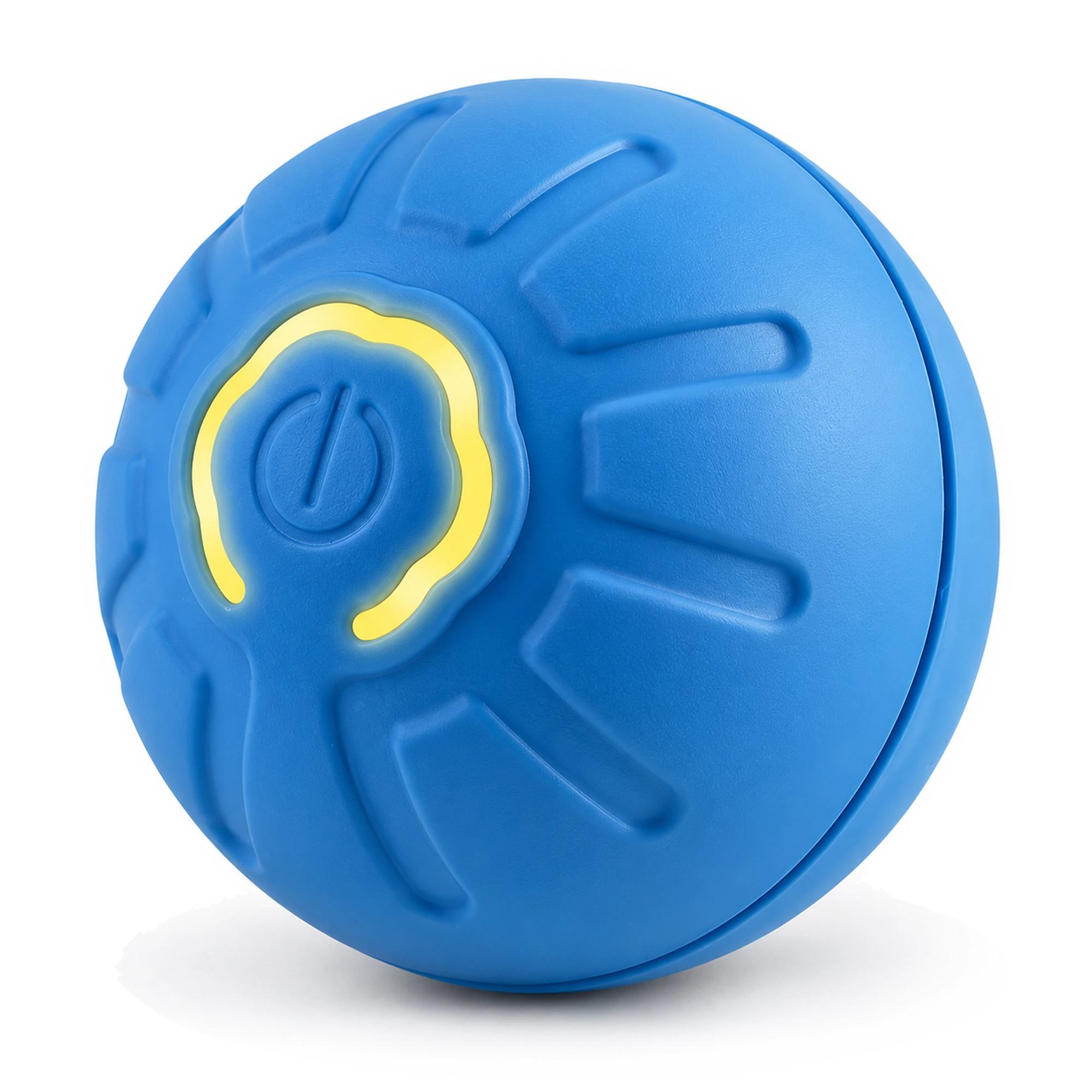
JoyPetPlay describes its Blue Geometric Tap-Wake Play Ball as a small, motor-driven blue ball. The supplier shows small dogs chasing it on a floor and waking it with a tap. That description is an example of the ball itself being the moving toy.
For a separate-ball design, PetSafe describes its Automatic Ball Launcher, model PTY00-14665, as a machine that throws tennis balls with adjustable distance and angle settings.
Use those examples to sort a listing before comparing features:
| What you want to identify | Motor-driven ball example | Automatic launcher example |
|---|---|---|
| Moving object | The blue JoyPetPlay ball itself | PetSafe says its PTY00-14665 launches tennis balls |
| Documented action | Supplier-shown tap activation and floor chase | PetSafe-described ball launching, with distance and angle adjustments |
| Next information to request | Supported surfaces, operation and charging instructions for that exact ball | Compatible balls, launch area and setup instructions for that exact launcher |
The last row is a shopping checklist. It is not a statement that every product has the same settings, power source or surface limits.
Choose the activity before the specifications
If you want your dog to follow a moving ball on the floor, investigate the first format. Ask for a demonstration of the exact model on the kind of floor where you intend to use it. Do not assume that a floor demonstration establishes performance on carpet, outdoors or around obstacles.
If you want a machine to send a separate ball away for fetch, investigate the launcher format. Before ordering, find the manufacturer’s requirements for ball size, launch direction, clearance and where the dog should wait. Compare those requirements with the space you actually have.
Keep the equipment decision separate from a training expectation. Choosing a launcher does not establish that your dog will return a ball to it. You can decide who will reload it before deciding whether you want to teach a return to the hopper.
“Automatic” still leaves a job for you
PetSafe’s launcher training guide says not to force a worried dog near the launcher and to take a break if the dog becomes stressed.
For that PetSafe model, the guide teaches the dog to wait to the side and describes returning the ball to the hopper. It also says the dog should use the launcher only while supervised. Those are instructions for the named PetSafe launcher; another model needs its own setup instructions.
When comparing products, write down your part in the session: operating the controls, placing or returning the ball, watching play and putting the equipment away. Treat an unclear instruction as something to resolve before use.
Read the selected set’s contents separately
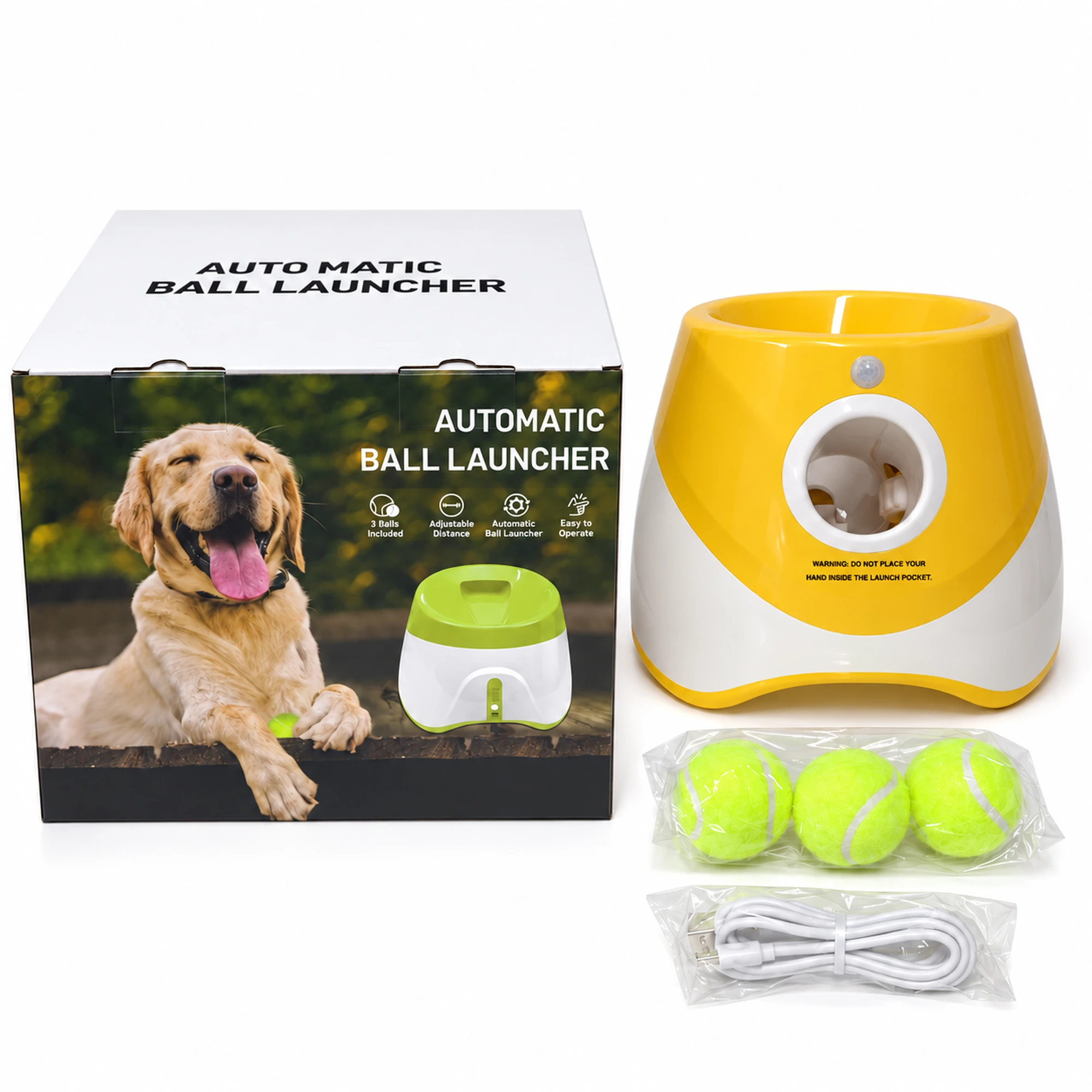
JoyPetPlay’s Golden Yellow and White Ball Launcher Three-Ball Set lists one launcher, three tennis-style balls, one USB cable and the supplier-shown printed box. Its description calls for supervised play and removal if damaged.
That contents list identifies the set. It does not provide a launch-distance figure or the size of compatible replacement balls. Do not borrow PetSafe’s specifications for this yellow launcher, or treat the included USB cable as proof of a particular battery system.
A useful message to the seller is: “For this exact option, please provide the operating instructions, compatible replacement-ball specification, power requirements and launch-space requirements.” For the blue moving ball, ask instead about its activation, supported surfaces and charging instructions. Once those answers are available, you can compare products within the play format you actually want.