Enthusiastic pet parents often step into a park, fling a tennis ball across the grass, and anticipate an immediate return delivery. Instead, an untrained dog frequently dashes toward the sphere, sniffs it briefly, scoops it up, and immediately bolts in the opposite direction. What began as an effortless outdoor game quickly deteriorates into an exhausting, unintended contest of keep-away.
Fetching appears deceptively straightforward to humans, yet it actually strings together four distinct behavioral stages: pursuing an object, securing it in the jaw, transporting it back to the handler, and cleanly releasing it on cue. Dogs naturally enjoy the chase, but returning the item and letting it go require deliberate coaching. If you want to know how to teach a dog to fetch step by step, breaking the sequence into reverse stages creates dependable habits without frustration.
Why Fetch Is a Taught Skill Rather than Pure Instinct
It is common to assume that every dog is born with a retrieve program ready to run. Wild canids pursue moving targets to capture and consume sustenance, rather than to surrender prizes to a social partner.
A puppy owner asked whether fetch is something dogs naturally learn or something you have to teach, sharing that they want to throw a ball to burn energy easily but their dog only runs to it and will not return it. This frustration is shared by thousands of pet parents every year. Running after a tossed object is driven by chase motor patterns. Returning that prize requires trust, cooperative reinforcement, and a clear understanding that giving up the toy restarts the fun.
When dogs grasp that bringing the toy back produces a treat or another throw, the retrieve transforms from an accidental chase into a reliable interactive game.
Step 1: Start at the Finish Line with Reverse Chaining
Most handlers start teaching fetch by throwing the toy as far as possible. This approach sets a dog up to fail because the dog has high arousal, long distance, and zero understanding of what to do next.
Professional animal trainers use reverse chaining, also known as backchaining. You teach the final step of the chain first: taking the toy from your hand and dropping it directly into your palm.
- Sit on the floor with your dog in a quiet room with minimal distractions.
- Hold a favorite toy right in front of your dog’s nose.
- The moment your dog’s mouth contacts the toy, mark the moment with a verbal cue like “yes” and immediately offer a high-value treat from your other hand.
- When your dog reliably touches and holds the toy for one second, say “drop” or “give” right before presenting the treat. Your dog will release the toy to eat the treat.
- Practice this close-range handoff five times per session until your dog willingly places the toy in your open hand.
By mastering the finish line first, your dog always knows the destination: bringing the object directly into your palm.
Step 2: Build Gentle Gripping with Soft Plush Toys
Hard plastic balls and heavy rubber bumpers can discourage puppies or sensitive dogs from gripping. If a toy hurts their teeth or feels awkward to carry, dogs quickly lose interest in holding it. Starting with a pliable plush toy encourages a gentle, confident mouth grip.
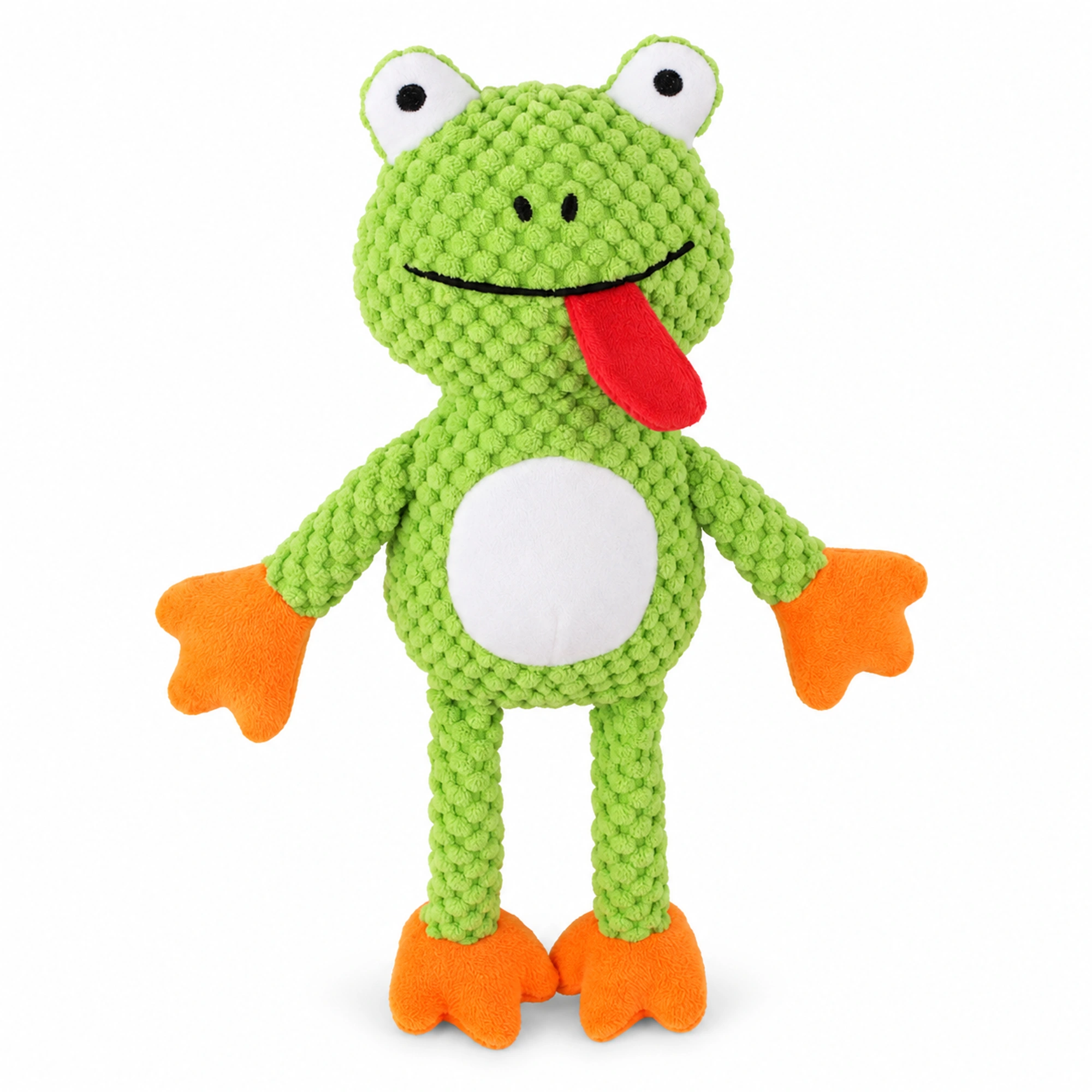
The Pose and Pull Frog serves as an adaptable training aid during early indoor retrieval lessons. Gently adjust the frog’s fabric-covered limbs by hand to change their visible length and arrange a new pose. Lime bobble fleece, a stitched smile, a red fabric tongue and orange webbed hands and feet give this supplier-described dog plush its playful character. Introduce it under supervision. Its soft fleece texture is comfortable for dogs to pick up from flat floors, while the adjustable limbs provide easy gripping surfaces for both puppies and small adult dogs.
During these short indoor trials, toss the soft plush just two feet away on the rug. Encourage your dog to grab it, then tap your palm and step backward. Stepping backward activates your dog’s natural desire to follow your movement, guiding them back to your hand for an immediate reward.
Step 3: Solve the Return Problem with the Two-Toy Trade
The biggest hurdle in fetch training is the dog who runs away with the toy or drops it ten feet out of reach. Chasing your dog only rewards their keep-away strategy, turning the session into an unintended wrestling match.
The most effective way to eliminate keep-away is the two-toy trade method. This technique uses two toys of equal or complementary value to make returning irresistible.
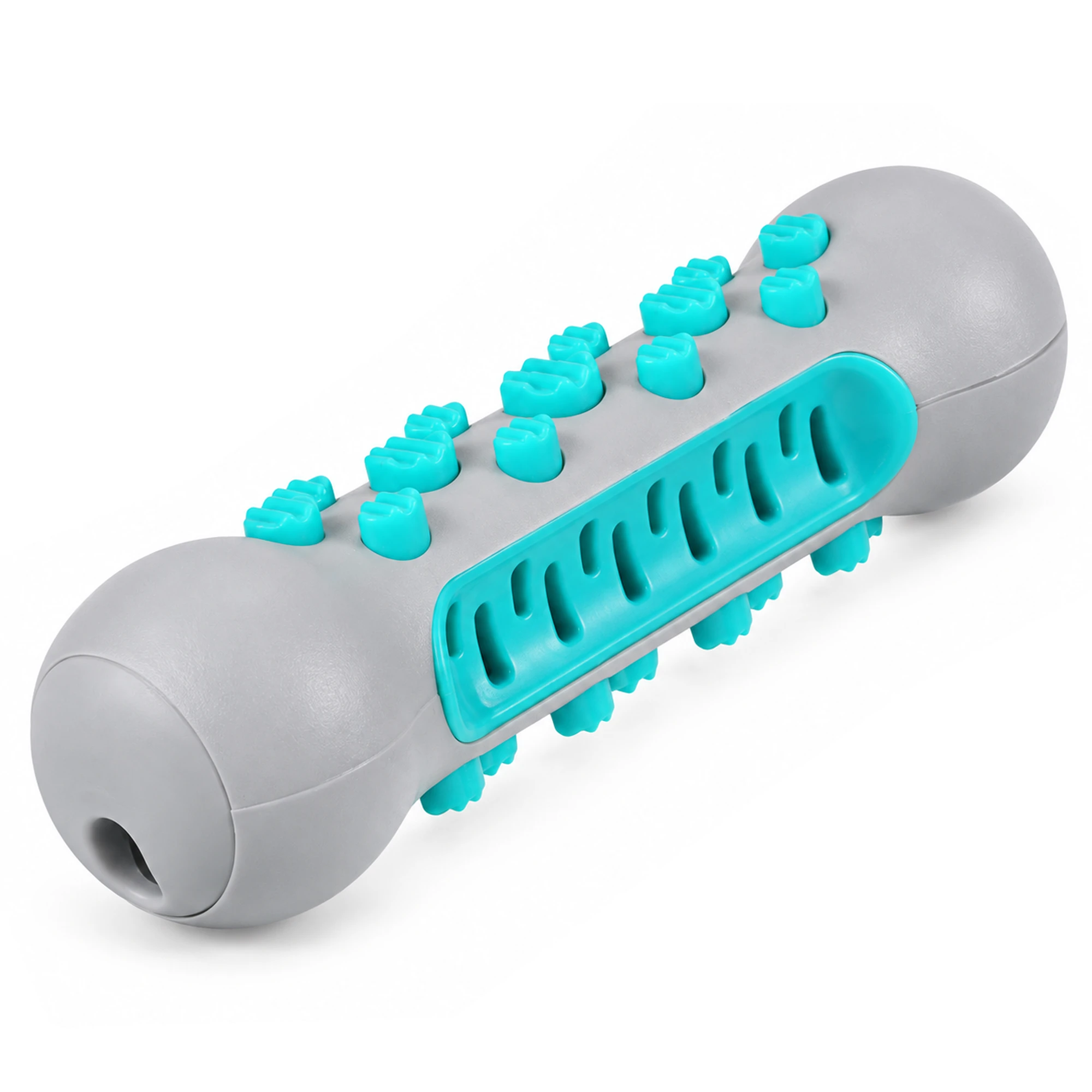
For the exchange reward, a textured chew bone packed with aromatic treats works exceptionally well. Consider the Blue and Gray Bone Dog Toy as a dedicated trading piece. A gray bone-shaped dog toy with turquoise-blue raised nubs, a slotted side panel, rounded ends and an end opening. Includes one assembled toy. Supervise play and remove if damaged. Supplier-reported SKU piece weight: 147 g; supplier piece dimensions: 15 × 4.6 × 4.6 cm. These figures are not independently measured; net/gross weight and packaging inclusion are unspecified. The slotted side openings allow you to wedge high-value treats securely inside, making it an irresistible counter-offer when your dog holds the retrieval toy.
Here is how the two-toy trade works in practice:
- Toss toy number one (such as the soft frog plush) three to four feet away.
- As soon as your dog picks it up, do not move toward them. Stand still, show them the treat-loaded bone, and give an enthusiastic verbal recall.
- Your dog runs back to investigate the high-value bone.
- When your dog reaches you, present the bone near their nose. To lick the treat slots, your dog must drop the plush toy.
- As the plush leaves their mouth, say your release cue (“drop”), praise them, and let them chew the reward bone for three seconds before repeating the exercise.
Using two toys eliminates conflict. Your dog realizes that returning the first toy does not end play; instead, it triggers an immediate reward and another round of fun.
Step 4: Add Distance and Formal Cues Gradually
Once your dog reliably retrieves the toy from five feet away and drops it into your hand, you can begin expanding the exercise.
First, add distance in small increments. Move from five feet to ten feet, then across the length of the living room, and finally into a fenced backyard. If your dog gets distracted or stops returning, you have increased the distance too quickly. Step back to the distance where your dog was last successful.
Second, attach verbal cues. Once the physical behavior is smooth, name each part of the chain:
- Say “fetch” right as you toss the toy.
- Say “bring it” as your dog turns back toward you.
- Say “give” or “drop” as your dog places the item into your open hand.
Keep your practice sessions short. Three to five minutes twice a day is far more productive than one thirty-minute marathon that tires your dog mentally.
Troubleshooting Common Fetch Frustrations
- Your dog drops the toy too early: If your dog drops the object halfway back, do not walk forward to pick it up. Point to the toy and encourage them to pick it back up. Alternatively, walk backward while clapping your hands so they carry the item all the way to your feet.
- Your dog gets possessive over the toy: Never pry a dog’s jaws open forcefully. Forcing a release creates resource guarding. Always use higher-value trades, such as roasted chicken or liver treats, so giving up the object is always a winning choice for your dog.
- Your dog loses interest after two throws: Some dogs possess lower natural chase drive. End the session while your dog still wants more. Leaving them wanting another throw builds anticipation for the next training session.
Frequently Asked Questions
How long does it take to teach a dog to fetch?
Most dogs understand the basic sequence within one to two weeks of consistent, daily five-minute sessions. Building a reliable retrieve at long distances in distracting environments usually takes four to six weeks.
Why does my dog run to the toy but refuse to bring it back?
Running toward a moving toy satisfies predatory chase drive, but returning requires cooperative social drive. Without clear instruction, dogs assume the fun part is holding the prize or initiating a game of keep-away.
Can I teach an older dog to fetch?
Yes. Adult and senior dogs can learn to fetch using the same reverse chaining sequence. Starting close to your hand removes athletic strain and builds confidence before adding running distance.
What should I do if my dog drops the toy too early?
If your dog drops the toy several feet away, withhold praise until they pick it up again. You can also place your open hand directly beneath their chin to shape a clean delivery into your palm.