When a dog starts pacing across the room or gnawing on chair legs, most of us reach for the leash. We assume that one more brisk walk or half an hour of fetch at the park will burn off that restless energy. Yet relentless physical exercise often backfires. Active dogs build muscular endurance quickly, returning home with elevated adrenaline levels while their curious minds remain entirely under-stimulated.
Giving dogs cognitive workouts channels excess energy, prevents boredom, and curbs destructive behavior according to the American Kennel Club. Directing a dog toward scent puzzles and mechanical tasks tires the central nervous system much deeper than repetitive sprinting ever could. Still, handing the wrong puzzle toy to the wrong dog leads to instant frustration. A high-strung dog facing fragile plastic tabs may simply chew the toy into shards. On the flip side, a cautious or elderly dog faced with complex three-tier locks will likely walk away confused. Tailoring dog brain games by energy level channels restless excitement effectively. Understanding mental stimulation for dogs by energy level creates genuine, lasting calm in your household.
The Neurochemistry of Arousal and the Physical Exercise Paradox
Many dog parents know the frustrating post-park routine. Your dog sprints through open grass, drinks half a bowl of water, and immediately starts barking at curtains, pacing hallways, or chewing rugs. Dog owners report that physical exercise alone can result in overstimulation and zoomies, whereas mental food puzzles promote deep calm and rest.
When dogs sprint back and forth during repetitive ball chasing, adrenaline and cortisol surge through their bloodstreams. Without a structured task requiring quiet concentration, that physical arousal lingers in their nervous systems for hours. The canine body is physically fatigued, but the brain remains primed for pursuit and action. This physiological imbalance often surfaces as persistent pacing, demand barking, or sudden chewing on baseboards and sofa cushions.
Focused scent work, licking, and methodical paw manipulation activate the parasympathetic nervous system. Scent discrimination stimulates the canine olfactory bulb, which connects directly to the limbic system. As a dog methodically tracks individual kibble pieces through fabric or unlocks sliding panels, respiration slows, pulse rates drop, and dopamine is released in measured increments. A structured fifteen-minute mental workout often leaves an energetic dog settled peacefully on its bed, sound asleep.
To choose suitable activities, owners must match the mechanics of the puzzle to where their dogs land on the daily arousal spectrum.
Low Energy Level: Calming Scent Work and Slow Foraging
Low-energy dogs include older seniors with stiff joints, growing puppies recovering between growth spurts, dogs healing from veterinary procedures, and timid dogs easily overwhelmed by loud noises. For these companions, forceful physical movements or clattering plastic toys trigger physical discomfort, startle reflexes, or complete disinterest.
Scent games offer restorative decompression because sniffing naturally grounds a dog emotional state. The Gold Carrot Garden Snuffle Mat features a yellow chenille center, grass strips, fabric cups, and layered flowers for hiding treats. Rather than relying on rigid mechanical latches, this textile mat conceals dry kibble across plush fabric folds.
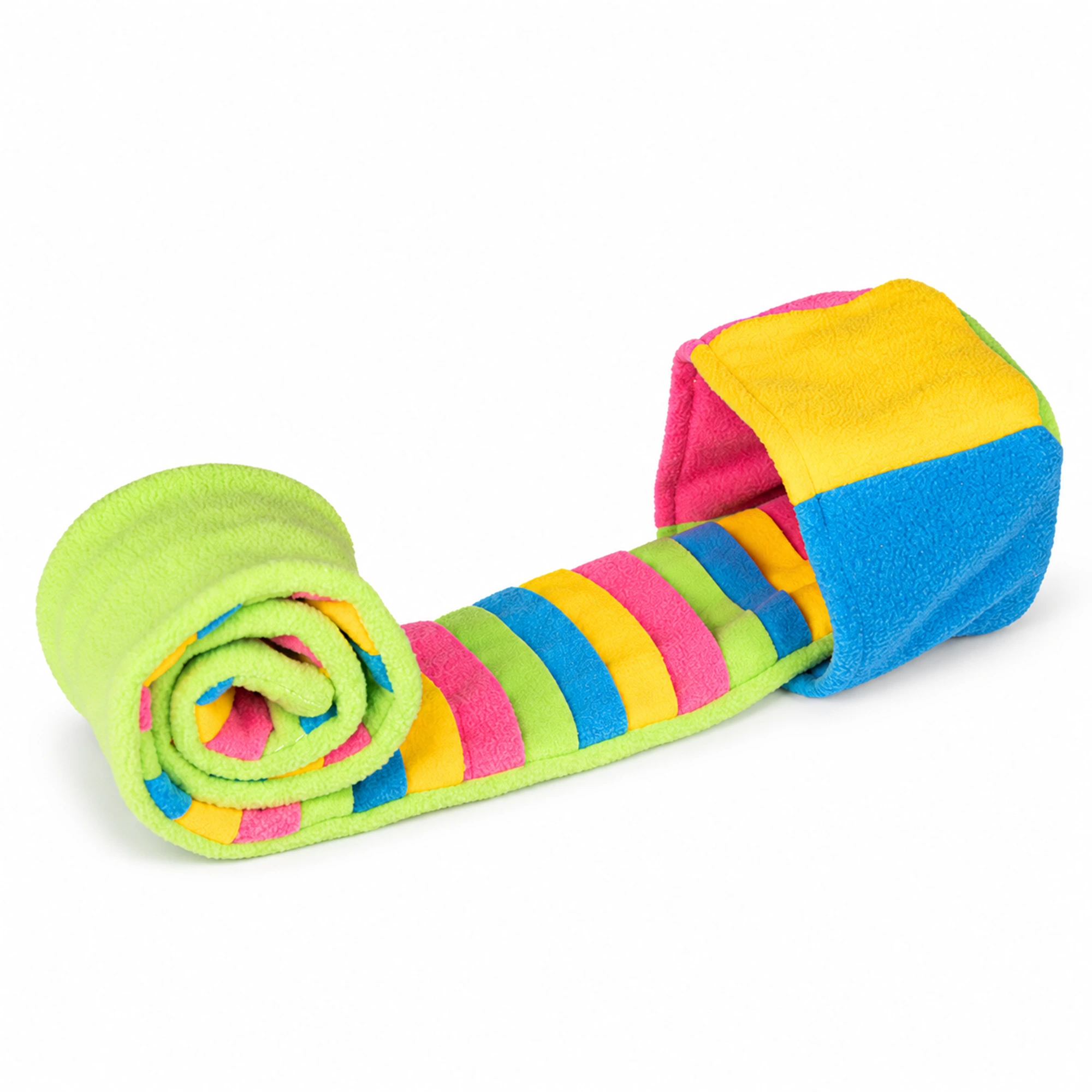
Another versatile option for small and gentle foragers is the Small Rainbow Roll-Up Snuffle Mat Foraging Bowl for Dogs ($16.00, catalog item small-rainbow-rollup-foraging-bowl). It features a colorful cloth trail that rolls out from a soft fleece bowl, allowing owners to hide tiny treats between fabric loops before rolling the strip back into the bowl.
When starting with a calm, sensitive, or senior dog:
- Scatter fragrant treats loosely across the top of the fabric so your dog finds immediate success without digging.
- Once your dog uses its nose to part the grass strips, tuck food deeper inside the layered flowers and roll up compartments.
- Keep sessions gentle and low pressure. Spending ten to fifteen minutes untangling scent trails from a textile foraging tool satisfies natural hunting drives without stressing tender joints or fragile teeth.
Moderate Energy Level: Stationary Multi-Mechanism Puzzle Boards
Moderate-energy dogs possess steady curiosity, patient temperaments, and nimble paws. These dogs do not barrel through obstacles with brute force, but they quickly outgrow simple single-action feeder bowls. They flourish with sequential challenges where solving one obstacle reveals the next reward.
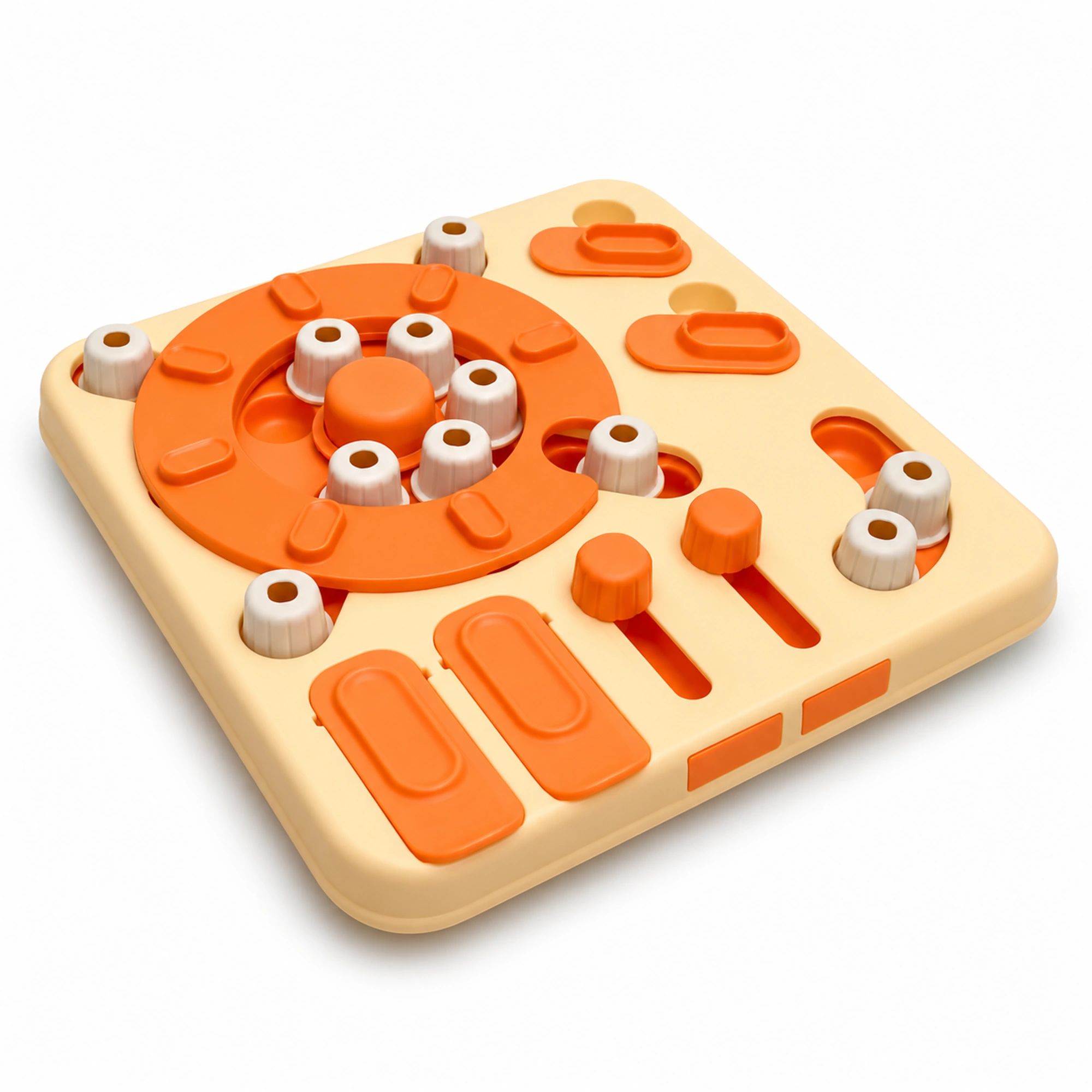
A prime example of sequential problem solving is the Orange Turn, Slide and Lift Dog Puzzle Toy with Treat Drawers ($46.00, catalog item orange-turn-slide-lift-treat-puzzle). This board pairs multiple mechanical barriers: rotating center dials, sliding drawer handles, and lift-up covers. Its stationary footprint tests spatial memory and systematic motor control. A dog must first spin the outer dial to uncover hidden food, slide drawer handles along their tracks, and gently pull open side compartments using its nose or paws.
Another proven design is the Four-Drawer Slide and Turn Dog Puzzle Toy. It combines four sliding drawers with bone-shaped track locks and a central wheel.
When introducing stationary multi-mechanism puzzle boards:
- Load a single compartment first and leave the cover half open so the scent is obvious.
- Allow your dog to nudge the drawer open and claim the reward.
- Gradually introduce the locking mechanism once your dog understands that pawing and sliding deliver treats sequentially.
- If your dog begins scratching aggressively at the center, gently guide its nose toward the unlocked slider. Guiding pets through methodical steps builds frustration tolerance and confident problem solving.
High Energy Level: Active Motion and Rolling Dispensers
High-drive dogs, working breeds, and adolescent canines often become impatient with stationary tabletop boards. In their excitement, they may swat at delicate hinges, flip puzzle trays onto the carpet, or bite plastic rims to crack compartments open. For these energetic dogs, mental stimulation must incorporate controlled physical motion.
The Yellow Roll and Adjust Treat Dumbbell features a sturdy cylindrical body with lime end grips for rolling treat play. Rather than sitting still on a mat, this rolling dispenser tumbles across the floor as your dog nudges it with nose and paws, rewarding tracking and chasing drives while dispensing food one piece at a time.
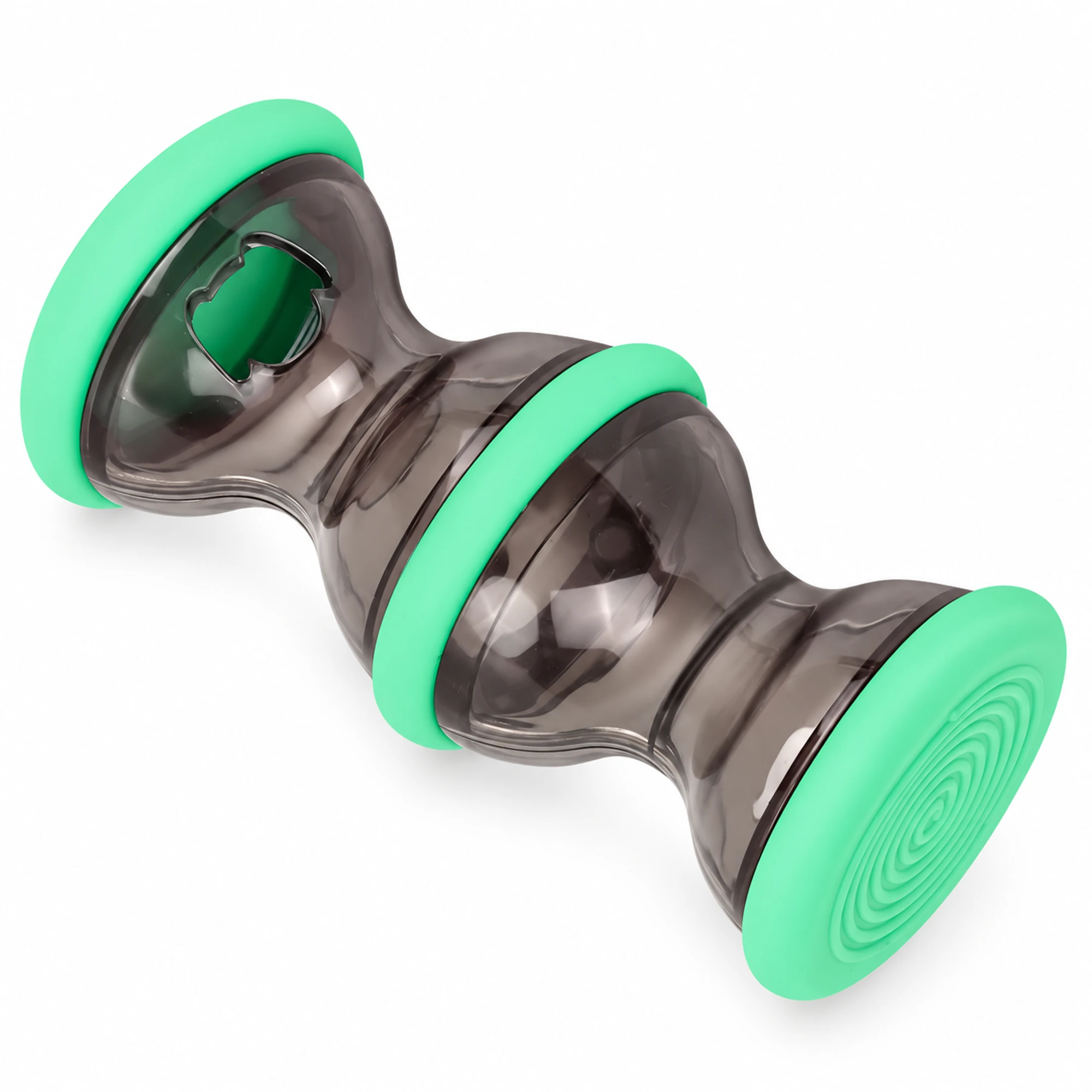
Similarly, the Mint Roll and Reward Small Dog Toys with Clear Dispenser ($11.30, catalog item mint-roll-reward-toy-small) uses rolling momentum to release kibble through calibrated openings as the cylinder glides across the rug.
Key strategies for managing high-energy dogs with rolling dispensers:
- Calibrate the Dispensing Port: Begin with the widest opening so treats fall out with minimal effort. As the dog learns that pushing the toy delivers food, narrow the opening to increase focus and stamina.
- Provide Adequate Floor Space: Deploy rolling toys in open hallways or living rooms clear of furniture crevices where toys might get wedged.
- Pair with Floor Mats: Placing a rubber runner or low pile rug underneath rolling toys gives dogs traction and reduces rolling clatter on hardwood floors.
Operating an interactive treat dispensing dog toy satisfies active drives while channeling physical momentum into focused mental work.
Understanding the Frustration Threshold: Scaffolding Difficulty
Canine cognitive enrichment fails when the gap between a dog current skill level and the puzzle difficulty is too wide. When faced with an insurmountable challenge, dogs react in one of two ways: they either shut down and walk away, or they resort to destructive biting to break open the compartment.
Veterinary behaviorists recommend following the eighty percent success rule. Your dog should be able to solve approximately eighty percent of the puzzle steps without experiencing visible agitation or prolonged pauses.
Watch for these early signs of frustration during puzzle play:
- Whining or high pitched barking at the toy.
- Biting the outer plastic frame or attempting to lift and throw the entire board.
- Yawning, lip licking, or looking away repeatedly (displacement behaviors indicating stress).
- Walking away before retrieving accessible treats.
If you observe any of these behaviors, immediately reduce the difficulty. Unlock one sliding mechanism, leave a drawer open, or use higher-value treats like freeze-dried liver to rebuild motivation. Enrichment should always build canine confidence, never cause anxiety.
Small Dog Toy Sizing and Material Selection Matrix
Selecting the right product involves matching your dog energy category to recommended puzzle mechanics and materials. Use this reference guide before bringing new gear home:
| Energy Tier | Primary Behavioral Need | Recommended Mechanics | Example Products | Typical Session Time |
|---|---|---|---|---|
| Low Energy and Seniors | Olfactory grounding and joint relief | Soft fleece folds, roll up trails, cloth cups | Small Rainbow Roll-Up Bowl, Gold Carrot Snuffle Mat | 10 to 15 minutes |
| Moderate Energy | Sequential problem solving and logic | Sliding tracks, rotating dials, pull drawers | Orange Turn, Slide & Lift Puzzle, Four-Drawer Board | 15 to 20 minutes |
| High Energy and Working | Controlled movement and persistence | Rolling cylinders, adjustable ports, wobble balls | Yellow Roll Dumbbell, Mint Roll & Reward Toy | 15 to 25 minutes |
Safe Supervision Protocols and Toy Rotation Routines
No interactive puzzle toy is designed to be a chew toy. Even durable composite plastic boards can suffer damage if a dog is left unsupervised with empty compartments.
Follow these practical guidelines to ensure long term safety and interest:
- Interactive Supervision: Always remain in the room during puzzle sessions. Guide your dog gently if they get stuck, and praise them when they solve a compartment.
- Immediate Removal Upon Completion: As soon as your dog finds the last hidden treat, take the toy away. Letting a dog chew on an empty plastic board teaches bad habits and ruins the toy.
- Weekly Rotation Schedule: Maintain a rotation of three to four different puzzle types. Swap a snuffle mat on Monday for a sliding puzzle on Wednesday and a rolling dumbbell on Friday. Rotating items keeps novelty high and prevents mental habituation.
- Regular Cleaning: Wash fleece mats in a mesh laundry bag using fragrance-free detergent, and wipe down plastic puzzle boards with warm soapy water to eliminate stale treat oils and bacteria.
Frequently Asked Questions
Can mental stimulation replace daily physical walks for my dog?
Mental stimulation burns cognitive energy and curbs destructive boredom, but it does not replace the cardiovascular benefits, muscle development, and sensory exploration of outdoor walks. The best approach pairs daily sniffing walks with short indoor puzzle sessions.
How do I choose between a snuffle mat, a sliding puzzle, and a rolling dumbbell?
Select based on your dog current arousal. If your dog needs to calm down before bedtime or has joint stiffness, choose a soft fabric snuffle mat. If your dog enjoys focused problem solving without rushing, choose a multi-drawer sliding puzzle. If your dog is pacing and needs to move while thinking, choose a rolling treat dumbbell.
Why does my dog seem hyperactive even after a long outdoor run?
Extended cardiovascular exercise increases adrenaline and stamina without working the brain. Without a calming mental task to downshift arousal, dogs often display hyperactivity and post-exercise zoomies. Introducing a food puzzle after exercise channels that lingering arousal into restful focus.
What should I do if my dog tries to chew the plastic puzzle instead of solving it?
Chewing on the plastic indicates that the puzzle is either too difficult or the dog has become overstimulated. Temporarily remove the toy, simplify the setup by leaving sliders partially open, and supervise closely to redirect chewing toward proper nudging or sliding motions.