E-commerce listings for pet supplies are packed with comforting buzzwords. Brands routinely promise non-toxic blends, sustainable polymers, and indestructible builds. Yet for a attentive pet owner, this flood of promotional phrasing often obscures genuine physical qualities. Claims such as military grade or bite-proof lack formal definitions in animal product retail. Because standard ingredient labeling remains optional across much of the pet industry, owners must learn to evaluate basic rubbers, structural synthetics, and composite timbers themselves. Developing a foundational grasp of material science allows handlers to safeguard their companions from chemical hazards and intestinal blockages.
The Chemistry of Rubbers and Elastomers
Rubber remains the premier substrate for gear engineered to endure rigorous chewing. In retail catalogs, buyers typically choose between two main materials: natural vulcanized latex and synthetic thermoplastic rubber, widely known as TPR. Natural rubber originates from tapped tree sap. It provides remarkable rebound resilience and deep tensile flexibility. Premium vulcanized latex yields substantially before tearing, which helps it disperse heavy canine jaw forces across dense cross-sections. In contrast, bargain natural rubber often relies on chalk or clay additives to reduce factory costs. These cheap binders erode tensile elasticity, causing the item to fracture into rough pieces when subjected to persistent jaw pressure.
Thermoplastic elastomer serves as a functional middle ground between flexible rubber and rigid plastic. Injection molding allows manufacturers to produce intricate shapes and translucent surfaces with TPR. The compound flexes smoothly and retains scent attractants effectively. Even so, TPR has lower shear endurance and heat tolerance than cured natural latex. Dogs with powerful chewing habits can slice through perimeter ridges with their molars.
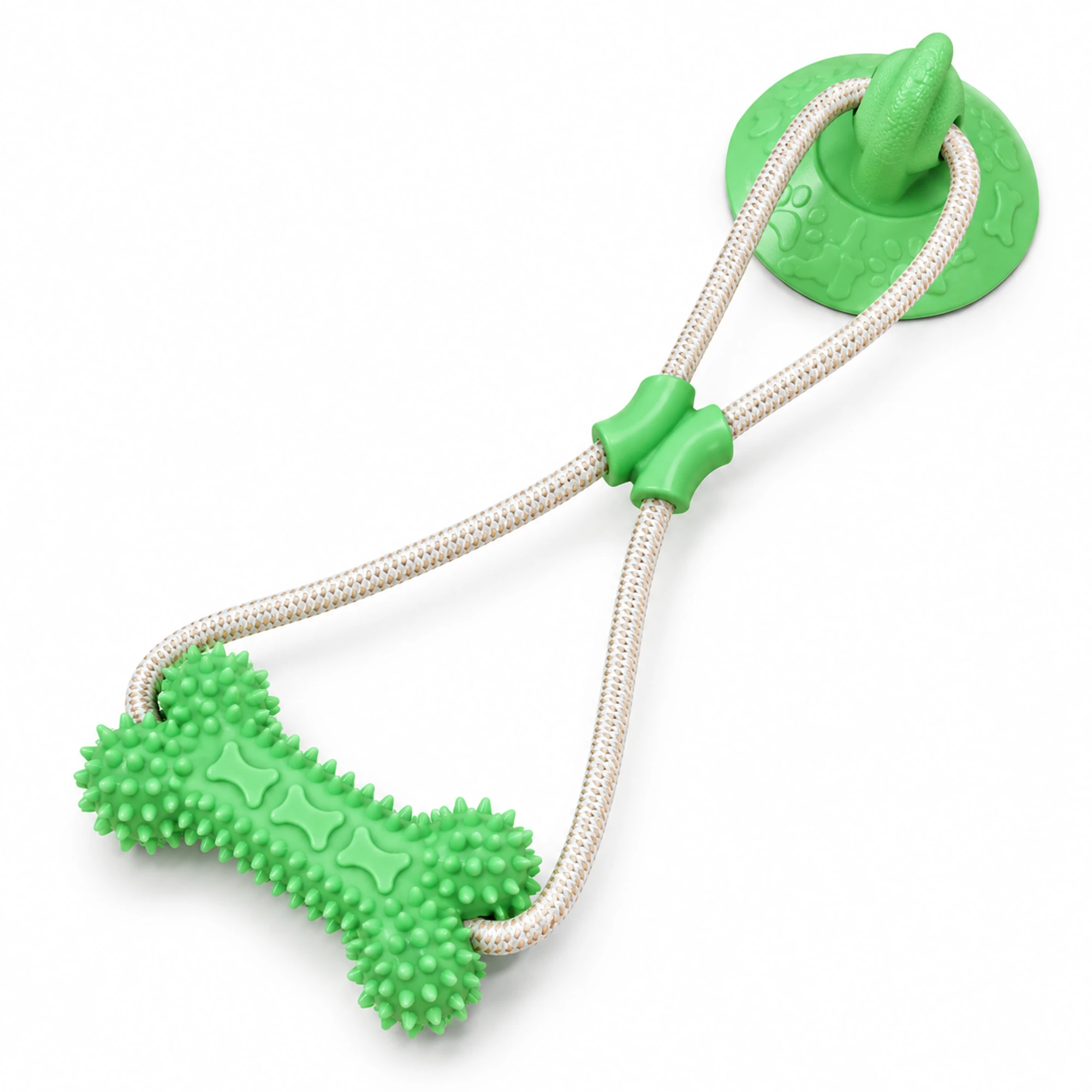
A reliable example of thoughtful elastomer design is the Green Suction Cup Dog Tug Toy with Braided Rope and Rubber Chew Bone, priced at 8.50 dollars. Its layout joins an anchor floor suction pad to a pliable rubber bone covered in molar cleaning nubs. The elastic polymer absorbs dental compression without fracturing, scraping tartar while keeping gums unharmed. When shopping for durable dog toys, handlers should always test whether the rubber yields under firm thumbnail pressure. Solid compounds that feel completely unyielding risk fracturing canine teeth, whereas oily or fragile textures will tear quickly.
Engineering Plastics: Polycarbonate, Polypropylene, and ABS
Motorized track games and multi-tier treat puzzles depend on rigid engineering plastics to protect internal motors, rotating dials, and sliding treat chambers. The overall safety and working lifespan of these toys depend directly on which polymer base the manufacturer chooses.
High-impact Acrylonitrile Butadiene Styrene, commonly designated as ABS, represents the gold standard for dynamic pet gear. ABS provides dimensional rigidity, impact resistance, and long-term durability. It withstands sudden drops onto hard ceramic floors and heavy paw swatting without cracking. Medical-grade and food-contact ABS contains no bisphenol compounds or phthalate plasticizers. Its dense surface also prevents saliva seepage, keeping bacteria from flourishing inside hidden micro-pores.
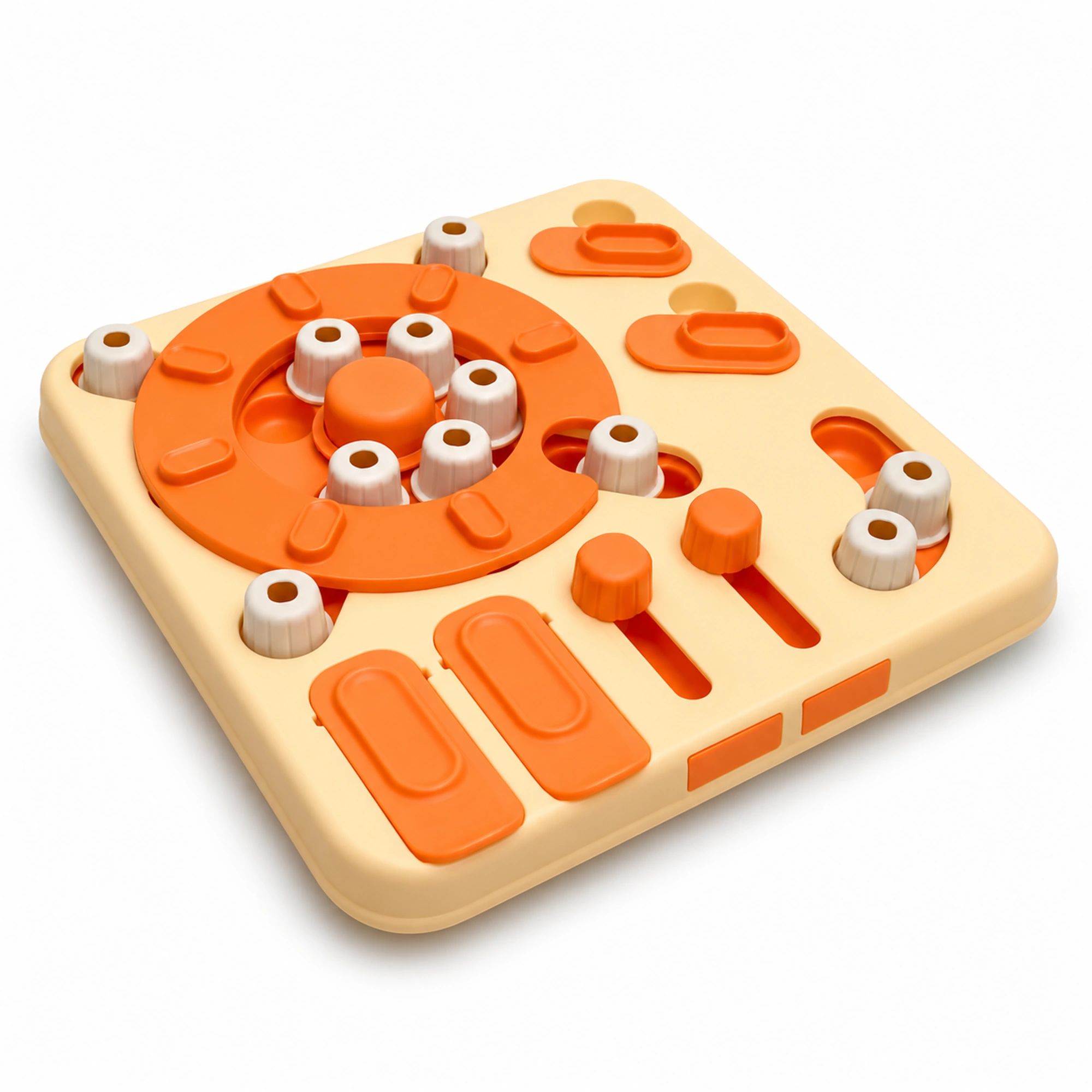
Consider the solid construction of the Orange Turn, Slide and Lift Dog Puzzle Toy with Treat Drawers, priced at 46.00 dollars. This multifaceted puzzle board uses heavy-duty food-grade ABS throughout its sliding tracks, rotary dials, and lift-out caps. That structural toughness prevents eager dogs from splintering plastic caps between their molars while hunting for hidden treats. For owners looking for interactive dog toys for large dogs, thick ABS housings preserve mechanical performance without breaking into sharp debris.
In contrast, budget manufacturers frequently opt for cheap polystyrene or brittle vinyl mixtures. Low-grade polystyrene easily shatters into jagged needles under paw weight or tooth pressure. Flexible vinyl toys often include chemical plasticizers that release unpleasant synthetic fumes. Buyers should note overall unit weights. Solid puzzle consoles with heavy walls signify genuine ABS resin, whereas remarkably lightweight units generally point toward cheap, fragile plastics.
Natural Plant Fibers: Sisal, Jute, and Untreated Timber
Feline enrichment relies heavily on plant fibers and solid wood frameworks. Cats depend on fibrous textures to remove dead outer claw sheaths and deposit scent cues from their paws. How these organic materials are sourced and assembled dictates both durability and respiratory safety.
Sisal fiber harvested from Agave sisalana leaves provides the ideal texture for feline claws. Its rough, unyielding cords endure intense scratching without shedding loose threads that pets could ingest. Jute feels noticeably softer and wears down much faster, whereas synthetic imitation ropes generate friction heat that can blister sensitive paw pads.
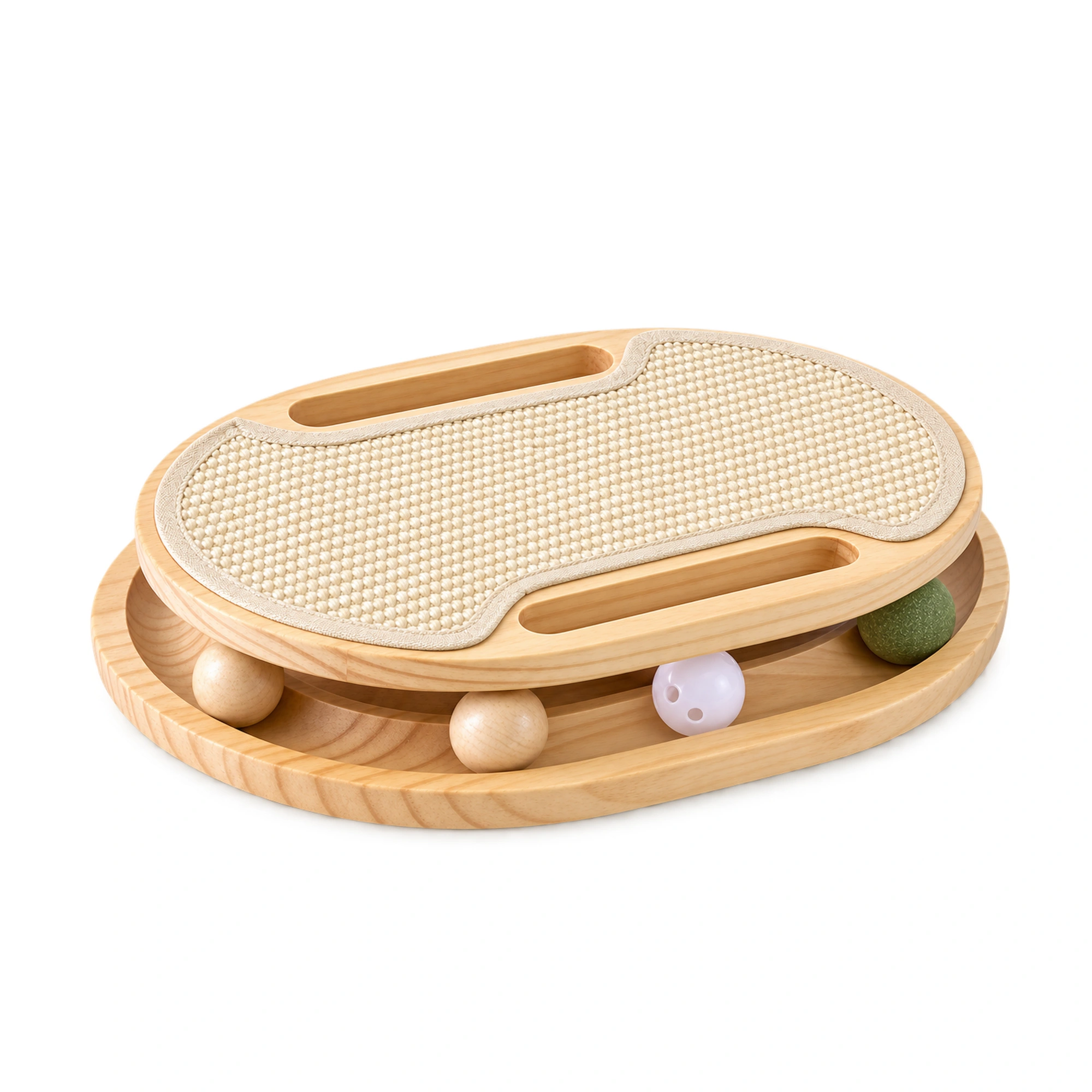
An outstanding fusion of organic fibers and wooden framing is the Sisal Island Wooden Cat Track Toy with Dual Ball Channels and Scratch Mat, priced at 28.69 dollars. This unit combines a dense natural sisal scratching surface with a smooth, solid wood track base. The substantial wooden construction delivers steady ballast, stopping the unit from tipping over when a playful feline launches onto it. Conversely, cheap scratchers frequently rely on particle board or soft cardboard held together by urea-formaldehyde glues. These industrial binders release volatile fumes that irritate sensitive feline airways. Untreated pine, birch layers, and beech hardwoods deliver superior safety and longevity for any indoor cat toy.
Textiles and Fabrics: Fleece, Canvas, and Hidden Fillings
Soft enrichment items, such as foraging mats and plush toys, provide calming mental workouts through patient nose work. The safety of fabric toys depends on seam craftsmanship, textile weave density, and interior stuffing.
Thick polyester polar fleece remains the premier fabric for snuffle mats. Polar fleece resists frayed edges, ensuring individual yarns do not pull loose into dangerous linear strings. The textile cleans reliably in household laundry cycles and dries rapidly without collecting mold spores.
The Round Ruffle Flower Snuffle Mat, priced at 18.80 dollars, demonstrates secure textile fabrication. Its tiered fleece petals form numerous scent hiding spots without exposing loose threads. Dogs burrow their muzzles deep into the folds to forage, gaining valuable mental exercise without swallowing loose string loops.
By contrast, looped terry cloth and loose knit fabrics present serious hazards. A single caught claw can pull a long string free from loop-pile fabric. If swallowed, linear threads can cinch intestinal walls, causing critical internal trauma. Always examine plush toys for reinforced double-stitched seams and embroidered facial features. Glued felt noses and plastic button eyes detach easily, creating choking hazards for puppies and curious pets.
What Online Listings Conceal: Six Critical Quality Markers
Product photos on the internet can look appealing, but digital displays cannot convey physical material integrity. Pet owners can verify structural quality through six simple checks upon receiving any new item:
- The Scent Inspection: Quality polymers and untreated fibers feature neutral aromas. Sharp chemical perfumes, oily residues, or solvent odors suggest recycled plastics or unwashed vulcanization agents.
- The Flexural Surface Test: Press a thumbnail firmly into rubber sections. High-quality rubber bounces back quickly without leaving chalky white stretch marks. Fragile plastics develop faint stress lines or micro-fractures under force.
- Seam Pulling Assessment: Pull hard against fabric seams, squeaker pockets, and rope joints prior to giving the toy to your companion. If you can loosen stitching with your fingers, pet jaws will rip it apart within minutes.
- Internal Component Safety: Check for hidden stiffening wires, rigid plastic squeaker chambers, or foam pellets inside plush bodies. Promptly discard loose packaging ties, plastic fasteners, and display ribbons.
- Glue and Adhesive Residue: High-quality products use mechanical interlocking or sonic welding. Noticeable drips of yellow hot-melt adhesive around seams signal sloppy manufacturing and present chemical ingestion risks.
- Moisture and Colorfastness Audit: Wipe a damp white cloth across brightly colored fabrics and painted surfaces. If dyes rub off onto the fabric, the colorants are water-soluble and could enter your pet digestive tract during saliva-heavy chewing sessions.
Establishing a Responsible Toy Inspection and Retirement Routine
Even premium materials wear down under sustained jaw compression, digestive enzymes, and sunlight exposure. Sustained item safety relies on an ongoing inspection schedule.
Inspect your companion toy collection every week. Retire rubber chew items once surface cracks penetrate deeper than three millimeters. Deep crevices hold anaerobic bacteria and allow pets to bite off loose fragments. Trim frayed strands on any dog tug toy before dangling threads become long enough to cause digestive obstructions. For battery-powered games, verify battery terminals for oxidation and confirm that sliding compartments open smoothly without pinching sensitive paws.
Selecting verified raw materials safeguards animal wellness and prevents costly veterinary emergencies. By recognizing the difference between marketing claims and real material engineering, pet owners can choose truly safe pet toys that enrich everyday play.