Every cat companion eventually witnesses the remarkable shift that occurs when a cat first catches the scent of catnip. A dignified, sleepy pet might press its face into the dried leaves, roll playfully across the floor, kick its back feet with lively energy, or purr loudly in a state of blissful distraction. Within fifteen minutes, the excitement subsides, leaving behind a tranquil cat resting quietly on the rug.
While this reaction looks unpredictable or even comical, it stems from precise neurobiological triggers. Catnip interacts with feline sensory hardware in a way that is unique in the mammalian world. Understanding what does catnip do to cats when they inhale or ingest this herb allows pet parents to provide safe, enriching stimulation while avoiding sensory overload.
The Olfactory Chemistry of Nepetalactone
Catnip, classified botanically as Nepeta cataria, is a hardy perennial member of the mint family Lamiaceae. The plant produces microscopic bulbous glands on the surfaces of its leaves and stems containing an active volatile organic compound known as nepetalactone. In nature, nepetalactone functions primarily as an evolutionary defense mechanism to deter insects such as aphids and mosquitoes. For domestic cats, however, this chemical acts as a potent olfactory stimulant.
To understand how does catnip work inside the feline nervous system, consider the sensory pathway. When a cat sniffs catnip, volatile nepetalactone molecules travel through the nasal cavity and bind to specialized sensory receptors in the olfactory epithelium. The chemical also interacts with the feline vomeronasal organ, often called Jacobson’s organ, located in the roof of the mouth. From these peripheral receptors, neural signals travel directly to the olfactory bulb. The olfactory bulb sends rapid impulses to the amygdala, which regulates emotional responses, and the hypothalamus, which controls neuroendocrine systems and instinctual behaviors.
Because these neural pathways connect directly to emotional and motor control hubs, inhaling nepetalactone simulates feline social and sexual pheromones. Despite triggering behaviors that resemble courting or high-intensity play, catnip is completely non-toxic and non-addictive. It does not bind to opioid receptors, create physical dependency, or cause withdrawal symptoms when removed from a cat’s environment.
Typical Behavioral Phases: From Hyperactive Play to Sedation
The feline response to catnip follows a clear, predictable behavioral pattern that unfolds across several stages. Observing the observable effects of catnip on cats highlights how systematically this compound acts:
- Initial Olfactory Investigation and Lip Curling: When your cat first detects nepetalactone vapors, it leans in closely with an intense sniff. Many cats exhibit the Flehmen response, lifting their upper lip and holding their mouth slightly open to pump scent molecules directly into the vomeronasal organ.
- Facial Rubbing and Scent Marking: Within seconds of inhaling, cats begin rubbing their cheeks, chin, and temples against the herb or toy. This behavior coats their facial scent glands in the botanical oils while spreading their own unique scent across the surface.
- Whole-Body Rolling and Motor Excitement: Arousal quickly peaks into full-body movement. Cats frequently drop to the floor, twist from side to side, clasp the item with their front paws, and deliver rapid rabbit kicks with their hind legs. Vocalizations like chirping, soft growling, or deep purring are common during this stage.
- Gradual Relaxation and Sedation: After ten to fifteen minutes of intense activity, the burst of energy wanes. Cats often enter a calm, drowsy state, stretching their limbs out and settling down for a peaceful nap.
Interestingly, the route of exposure changes the nature of the reaction. Inhaling nepetalactone produces the classic energetic, euphoric state. If a cat eats raw catnip leaves, the compounds pass through the gastrointestinal system and generally produce a mild calming or sedative effect instead.
The 15-Minute Window and Olfactory Fatigue: How Long Does Catnip Last
One of the most remarkable aspects of the catnip response is its finite duration. Pet owners frequently ask how long does catnip last during an active play session. In practice, a catnip session almost always concludes naturally between ten and fifteen minutes after exposure.
This automatic shutdown occurs because of olfactory fatigue, also called sensory receptor adaptation. When nepetalactone continually bombards nasal receptors, the olfactory neurons temporarily stop sending signals to the brain. Even if fresh catnip remains on the floor, your cat will lose interest and walk away once the receptor sites become saturated.
Following this sensory shutoff, cats experience a biological refractory period lasting between thirty minutes and two hours. During this interval, the receptors reset their baseline sensitivity. Attempting to offer catnip during the refractory window produces zero reaction. Once the reset period passes, the olfactory receptors regain full sensitivity, allowing the cat to respond again if re-exposed.
To maintain potency and prevent chronic sensory desensitization, cat parents should offer catnip only once or twice a week rather than leaving loose herbs out permanently. Furthermore, nepetalactone evaporates quickly when exposed to open air, warmth, and ultraviolet light. Always store catnip herbs and infused toys in airtight glass or metal containers kept in a dark cupboard or freezer.
Genetics and Age: Why Do Cats Like Catnip
When observing feline fascination with the plant, people often wonder why do cats like catnip so selectively. If your cat walks past a pile of fresh catnip without reacting, nothing is medically wrong. Sensitivity to nepetalactone is a genetically inherited trait governed by an autosomal dominant gene.
Global veterinary studies reveal that approximately 60 to 70 percent of adult domestic cats possess this gene and display the classic euphoric reaction. The remaining 30 to 40 percent lack the genetic receptors and will completely ignore catnip throughout their lives. This genetic variance extends across the entire feline family Felidae: lions, leopards, and jaguars frequently respond to nepetalactone, whereas tigers often show little to no reaction.
Age also plays a crucial developmental role. Newborn kittens and young cats under six months old do not possess fully matured olfactory receptor systems. When young kittens encounter catnip, they generally show indifference or even mild avoidance. Genuine behavioral reactions typically emerge around six to eight months of age, coinciding with sexual and neurological maturity. If a kitten ignores catnip toys, waiting until adolescence will reveal whether it inherited the responsive gene.
For adult cats that naturally lack catnip sensitivity, alternative botanical enrichments can provide identical enjoyment:
- Silver Vine (Actinidia polygama): Contains multiple active volatiles including actinidine and dihydroactinidiolide, stimulating up to 80 percent of domestic cats, including many that ignore catnip.
- Tatarian Honeysuckle (Lonicera tatarica): The woody shavings of this plant offer a gentle, uplifting response for many non-receptive felines.
- Valerian Root (Valeriana officinalis): Contains actinidine-like volatile compounds that induce playful rolling and kneading.
Interactive Play with Catnip Balls and Scratchers
Using catnip effectively goes beyond sprinkling loose dried flakes on a living room rug. Incorporating the botanical into dedicated floor toys and scratchers channels natural predatory drive into beneficial daily exercise and stress relief.
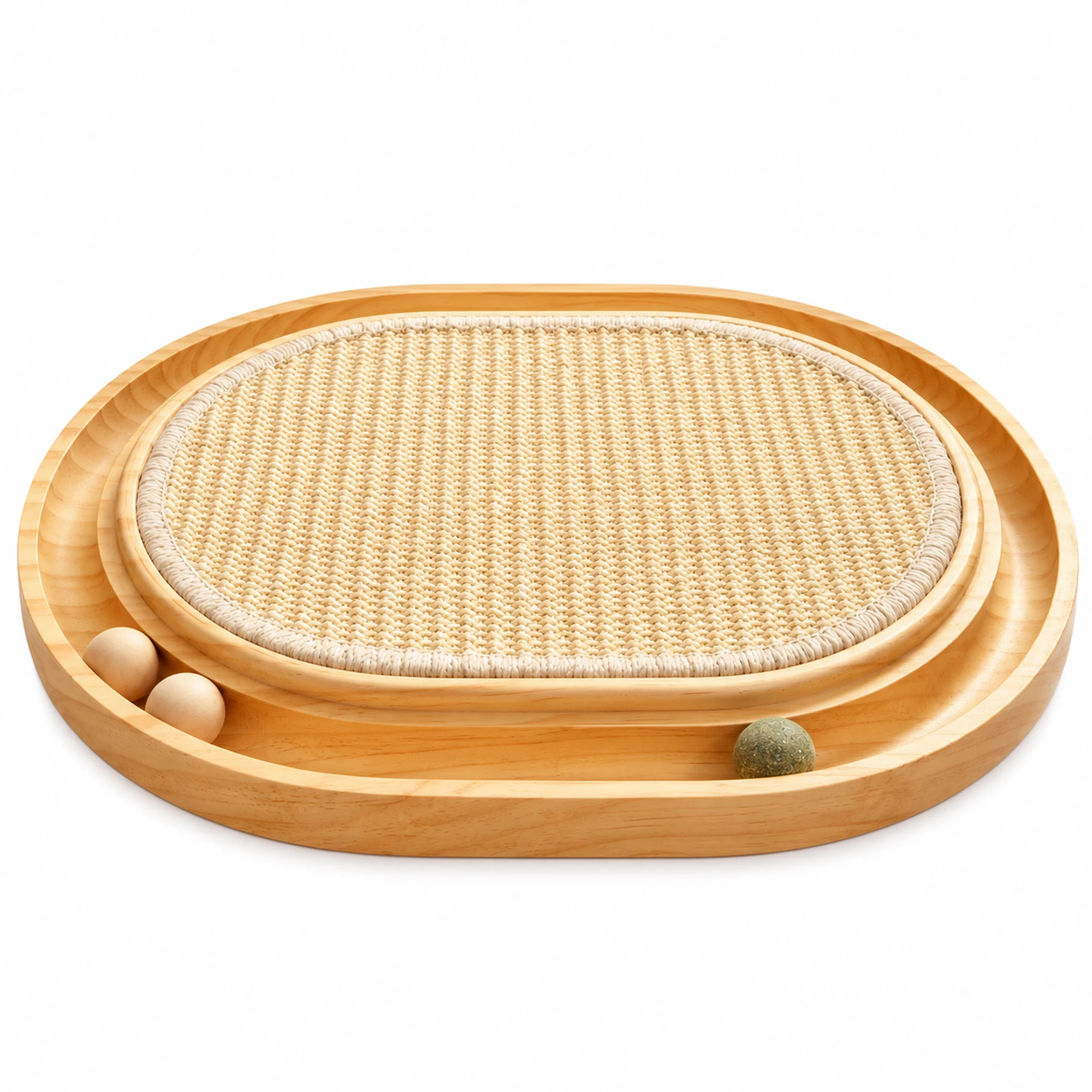
When cats enter the high-energy rolling and kicking phase, they instinctively seek physical surfaces to grip and scratch. Dedicated play stations, including the Oval Wood Three-Ball Scratch and Track Cat Toy, combine structural stability with built-in sensory incentives. This toy integrates a solid wooden base tray with a fixed central woven sisal pad and an outer perimeter track that houses smooth wooden balls alongside an aromatic green catnip ball.
As cats nudge the catnip ball along the wooden track, the friction releases fresh volatile oils into the air. This active pursuit prompts cats to pounce, bat, and scratch directly into the heavy woven sisal mat instead of targeting nearby household furniture or rugs. For additional enrichment tips on toy variety, see our guide on how to rotate cat toys.
Pairing catnip with self-grooming stations also supports healthy coat maintenance. Cat grooming stations featuring arched bristles allow cats to rub their facial scent glands against firm bristles. Applying a light dusting of catnip to the base encourages cats to lean in, rub their cheeks, and remove loose fur independently. When choosing enrichment toys across life stages, read our comparison on cat toys for kittens vs adult cats. Similarly, tiered cat track toys help multiple felines channel heightened stimulation into healthy ball chasing, preventing redirected aggression between household pets.
Summary Checklist for Cat Parents
- Frequency: Introduce catnip once or twice weekly to avoid sensory burnout.
- Storage: Keep herbs in sealed, airtight containers in a cool, dark cabinet to preserve volatile oils.
- Safe Environment: Clear floor clutter before offering catnip so cats can roll and jump safely without knocking over objects.
- Digestion Safety: Allow your cat to smell freely, but prevent them from consuming large handfuls of dry plant matter to prevent digestive upset.
Frequently Asked Questions
Is catnip addictive or dangerous for cats? No. Catnip is non-addictive and poses no risk of chemical dependency or overdose. Feline reactions resolve naturally within fifteen minutes due to receptor fatigue, preventing continuous overstimulation.
Why does my kitten ignore catnip? Kittens under six months of age have not developed the necessary olfactory receptors to process nepetalactone. Most cats only begin displaying interest after reaching six to eight months.
Can catnip cause aggressive behavior? In some cats, especially intact males or pets with strong prey drive, the sudden energy rush can look like hyper-arousal or defensive play. If your cat tends to swat or nip when stimulated, offer catnip inside enclosed track toys rather than direct hand contact.