When pet parents ask is catnip safe for cats, veterinarians point out that the underlying herb, Nepeta cataria, is completely non-toxic and non-addictive. When cats smell catnip, the volatile compound nepetalactone binds to olfactory receptors, triggering a harmless sensory response that lasts between ten and fifteen minutes. However, the physical kicker or pouch encasing the dried plant introduces tangible household risks. Aggressive bunny-kicking, chewing, and biting can shred thin fabric seams, exposing synthetic polyester stuffing, plastic squeakers, or small glued bells that pose life-threatening intestinal obstruction hazards if swallowed.
Ensuring your cat enjoys catnip safely requires separating the benign biological effects of the plant from the physical integrity of the toy itself. By understanding feline olfactory sensitivity, inspecting toy construction, and rotating sturdy floor toys, you can provide rich mental stimulation while keeping your home free from emergency veterinary hazards.
What Catnip Does to Cats and Why It Is Safe
Catnip belongs to the mint family, and its active component is nepetalactone, an essential oil stored in microscopic glands on the plant leaves and stems. When a cat rubs, sniffs, or chews a catnip toy, these oil reservoirs rupture and vaporize. The scent molecules bind to tissue in the feline nasal passage, stimulating sensory neurons that send electrical signals through the olfactory bulb into the brain amygdala and hypothalamus.
This sensory pathway triggers behaviors that mimic feline pheromones, leading to classic reactions such as chin rubbing, head shaking, body rolling, vocalization, and exuberant running. This ecstatic response is entirely natural, harmless, and self-limiting. After roughly fifteen minutes of sensory arousal, the olfactory receptors become temporarily desensitized. The cat enters a natural refractory period lasting thirty to sixty minutes during which additional catnip produces no behavioral reaction.
Catnip is neither physically addictive nor chemically poisonous. Concerned owners often ask can cats overdose on catnip, but fatal toxicity from inhaling or eating the plant is biologically impossible. If a cat eats a modest pinch of the dried plant material, it often produces a mild sedative effect rather than excitement. While consuming excessive quantities of raw dried leaves may trigger temporary stomach upset, mild vomiting, or soft stools, the herb itself leaves no lingering toxins in the feline liver or kidneys.
Ingestion Hazards: When Catnip Toys Turn Dangerous
While the herb itself is non-toxic, cheap or damaged catnip toys present severe mechanical risks. Cats rarely interact with catnip toys calmly. Instead, the aromatic scent drives many felines into intense predatory behavior: seizing the toy with front paws, biting the fabric, and delivering violent hind-leg kicks known as bunny-kicking.
This repetitive friction rapidly weakens plush seams. When a cat rips open an inexpensive fabric kicker, several distinct hazards emerge:
- Synthetic Batting and Polyester Fiberfill: Ingested synthetic fibers cannot be dissolved by feline stomach acids. Swallowed fluff can clump in the gastrointestinal tract, forming dangerous foreign body blockages that require emergency surgical removal.
- Swallowed Jingle Bells and Small Accessories: Many commercial cat toys attach metal bells, felt ears, plastic eyes, or decorative ribbons. Cats driven by intense play can easily detach and swallow these small components, risking throat choking or bowel perforation.
- Hidden Glue and Toxic Dyes: Substandard imported novelty toys often use chemical adhesives to bond decorative parts rather than heavy-duty reinforced stitching. Saliva softens these adhesives, allowing toxic compounds to enter the feline digestive tract.
To protect your pet, never leave fabric catnip kickers or plush mice on the floor as permanent unattended toys. Inspect every soft toy before handing it to your cat, run your fingers along all stitched edges, and retire any toy the moment seam threads unravel or stuffing peeks through.
Age Rules and Heredity: Kittens vs Adult Cats
Choosing catnip toys for kittens requires understanding developmental maturity, because young felines under three to six months rarely react to the aromatic oils. Catnip is completely non-hazardous to kittens from a biochemical standpoint, but offering it to very young felines is essentially useless.
Feline responsiveness to nepetalactone is an inherited autosomal dominant genetic trait. Approximately sixty-five percent of domestic felines carry this gene and respond enthusiastically to catnip, while roughly thirty-five percent of adult cats remain genetically indifferent throughout their entire lives.
Furthermore, even genetically predisposed kittens do not develop sensitivity to nepetalactone until their olfactory and reproductive systems reach developmental maturity. Most kittens show zero interest in catnip before the age of three to six months. In some cases, young kittens actively avoid the pungent aroma until their adult hormone profiles settle.
If you are caring for a teething kitten under six months old, introducing plush catnip toys offers no real behavioral benefit and exposes their needle-sharp deciduous teeth to fabric shredding risks. Instead, offer age-appropriate chew rings and developmental play items designed specifically for juvenile jaws. To explore developmental play distinctions in depth, consult our guide on cat toys for kittens vs adult cats.
Safer Alternatives: Infused Scratchers and Ball Tracks
Cat owners who want to provide stimulating scent enrichment without the hazards of weak plush fabric can choose solid structural toys that integrate catnip safely into non-chewable platforms.
The Oval Wood Three-Ball Scratch and Track
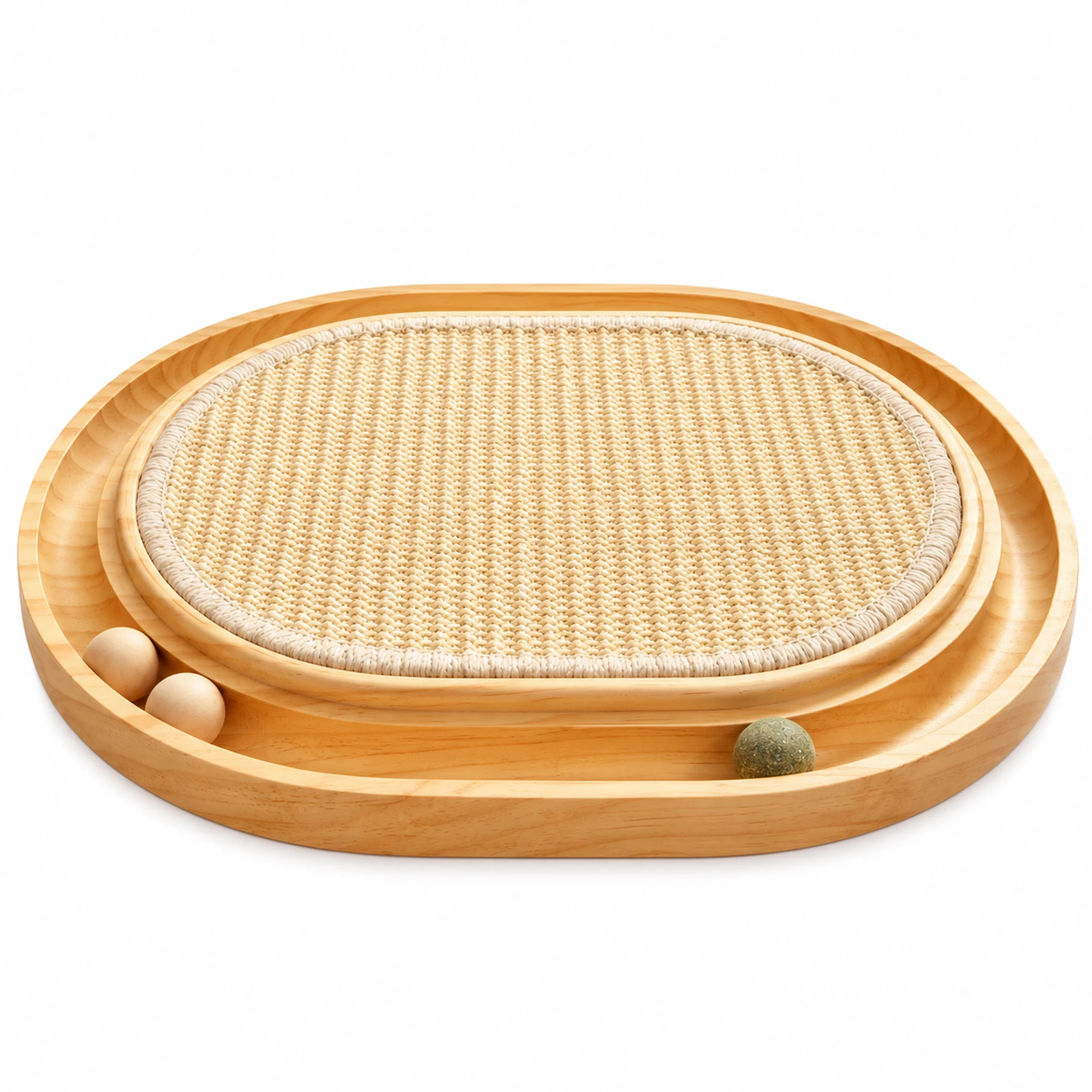
For active batting and clawing, the Oval Wood Three-Ball Scratch and Track Cat Toy offers an exceptionally durable play station. It pairs a solid wooden perimeter track with a central fixed woven sisal scratching pad. Within the open outer track, two polished wooden balls roll alongside one concentrated green catnip ball.
Because the catnip is compressed into a smooth, solid ball held securely inside the track groove, your cat catches the scent and bats the rolling ball without tearing open soft plush fiberfill. The woven sisal insert invites full-body scratching that naturally sharpens claws while keeping paws away from loose threads.
Cat Grooming Arch with Base Scenting
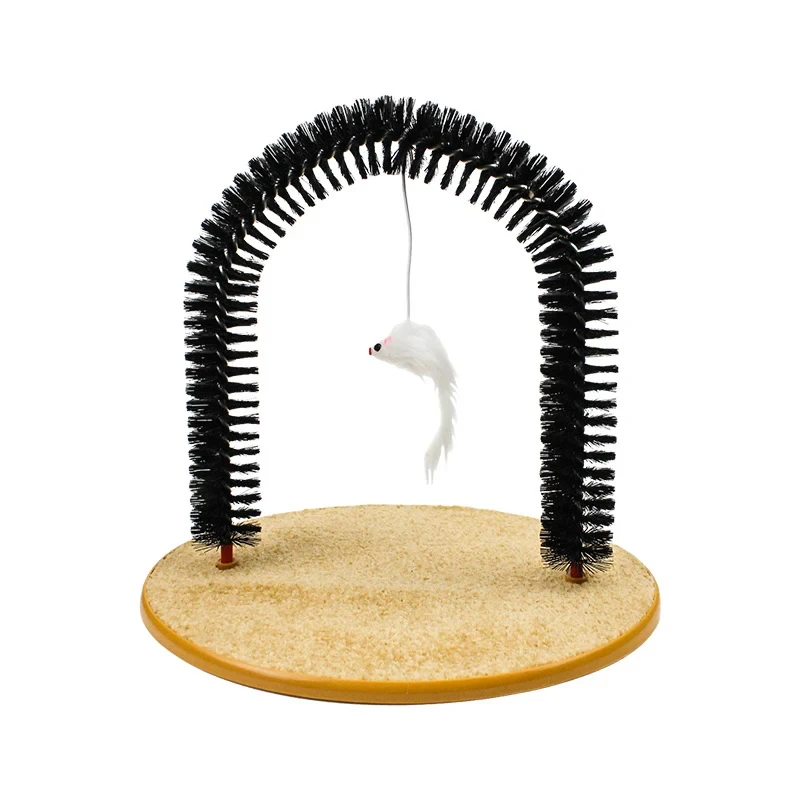
Another hygienic option is the Cat Grooming Arch with Oval Base and Hanging Mouse Toy. Built with a sturdy black bristle arch mounted over a stable textured carpet base, this station allows cats to rub their facial scent glands independently.
Instead of stuffing catnip inside a fragile toy, owners can lightly dust loose dried catnip onto the textured carpet mat beneath the arch. As the cat rolls and rubs against the firm bristles, the brush gently captures loose shedding fur and distributes natural skin oils without creating fabric tear hazards.
High-Energy Chasing: Green Three-Level Tree Track
When high arousal leads to active sprinting and swatting, redirecting focus to a multi-tier tower channels energy safely. The Green Three-Level Star-Top Tree Cat Track Toy features three scalloped green tiers, a yellow star topper, and two yellow balls across its open tracks. The compact plastic frame (measuring 11.2 by 11.2 by 15.5 cm) gives indoor cats a visual chase challenge that channels hyperactive zoomies into coordinated batting rather than toy destruction.
| Toy Model | Physical Structure | Enrichment Mechanism | Safety Advantage |
|---|---|---|---|
| Oval Wood Scratch and Track | Solid wood frame with woven sisal pad | Rolling wooden balls and compressed catnip ball | No soft stuffing or weak seams to tear open |
| Cat Grooming Arch Station | Durable bristle arch on textured carpet base | Self-grooming facial rub with hanging toy | Captures shedding hair while avoiding loose fiberfill |
| Green Three-Level Tree Track | Tiered plastic tower with star topper | Two captured balls across exposed tracks | Sturdy non-fabric chase toy that resists aggressive biting |
Storage and Satiation: Maintaining Catnip Freshness
Even the safest catnip toys lose their appeal if left scattered on the living room floor. Continuous exposure to nepetalactone leads to olfactory fatigue, causing your cat to tune out the scent entirely within a few days. Furthermore, the volatile oils in dried catnip steadily oxidize under room air, heat, and humidity, turning pungent green leaves into dull, scentless dust.
To keep catnip toys enticing and preserve their potent aromas:
- Limit Play Sessions: Hand catnip toys to your cat for interactive play windows of twenty to thirty minutes, then gently retrieve the toy once your cat loses interest.
- Store in Airtight Glass Jars: Place catnip toys in an airtight glass container or zip-top bag kept in a dark, cool cupboard. This blocks moisture and prevents premature nepetalactone breakdown.
- Infuse Non-Catnip Toys: You can revive plain fabric or wooden toys by storing them inside an airtight jar alongside a loose porous sachet of fresh dried catnip.
- Establish a Predictable Rotation: Offering catnip toys only once or twice a week maintains peak excitement and prevents sensory habituation. To build a balanced household rotation routine, read our comprehensive advice on how to rotate cat toys.
Frequently Asked Questions
Can cats fatally overdose on catnip?
No. Catnip is non-toxic and does not depress the central nervous system or respiratory function. Cats cannot fatally overdose on the scent or ingestion of catnip. When cats consume large quantities of dried leaves, the worst outcome is mild, self-limiting digestive irritation, such as vomiting or soft stools, which resolves within a few hours.
Are catnip toys safe for teething kittens?
Kittens under three to six months old lack the mature olfactory receptors required to respond to nepetalactone, meaning catnip toys provide no sensory benefit. Moreover, teething kittens chew vigorously, which increases the likelihood of tearing plush seams and swallowing stuffing or squeakers. Stick to solid rubber chew toys and kitten-safe wands until your cat reaches six months of age.
How often can you give a cat a catnip toy?
Offering catnip toys once or twice a week is the ideal frequency for most adult felines. Giving catnip toys daily causes olfactory habituation, diminishing your cat’s behavioral response. Removing and sealing toys between sessions preserves both nepetalactone potency and your cat’s playful enthusiasm.