Knowing when to throw away a dog toy protects your pet from life-threatening airway blockages and intestinal obstructions. Surface dirt washes away easily with mild soap and water, but physical structural breakdown cannot be reversed. Maintaining damaged dog toy safety requires spotting micro-fissures and material stress before fragments detach. When rubber cracks widen, braided cords fray into loose threads, or chew pieces tear off, the toy transitions from an enriching play item into a hazardous emergency risk.
Key Takeaways
- Humane World for Animals advises pet owners to discard toys when they start to break into pieces or are torn.
- Rubber chew toys must be retired as soon as cracks extend deeper than surface scuffs or raised nubs begin tearing off.
- Braided rope toys become severe linear foreign body hazards once strands unravel into loose, swallowable strings.
- Suction cup anchors require replacement if floor flanges split, warp, or lose airtight seal during pull play.
- Conducting a weekly tactile audit prevents broken pieces from turning into veterinary foreign body obstructions.
When to Throw Away Dog Toys: The Core Safety Rule
Every dog toy has a finite lifespan determined by the dog’s chewing strength, play habits, and material durability. Understanding when to replace dog toys keeps daily play safe and engaging. According to official welfare guidance from Humane World for Animals, pet owners should discard toys when they start to break into pieces or are torn. Playthings that begin to splinter, crack, or shred release small fragments that dogs can swallow or inhale without warning.
Many pet parents struggle emotionally with deciding the exact moment to discard familiar playthings. In community discussions on r/dogs, owners describe sorting through piles of old toys and wondering how to decide when to toss them when pets continue gnawing on compromised items. However, retaining damaged toys presents avoidable medical danger. Once an object loses structural integrity, continuing play is never worth the risk of an emergency endoscopic or surgical foreign body retrieval.
To keep play safe, inspect toys weekly. While surface grime calls for routine washing as detailed in our guide on how to clean dog toys, irreversible physical tears require immediate disposal.
Signs of Dangerous Rubber and Chew Toy Breakdown
Solid and textured rubber chew toys are popular for their resilience, but they are not indestructible. Across repeated fetch and tug sessions, sharp teeth puncture polymer walls and start tiny fissures that expand under jaw pressure.
Examine rubber chew toys against these critical failure thresholds:
- Deep structural tears: Surface tooth indents are normal, but any crack that penetrates more than two millimeters or creates an opening into an interior cavity requires instant retirement. Under biting force, cracked rubber shears off into chunks.
- Detached or torn dental nubs: Textured surfaces help massage gums, but if raised nubs rip away or hang by a thread, remove the toy immediately. Detached rubber bumps are easily swallowed by enthusiastic chewers.
- Chewed off ends: The end caps and flared lobes of chew bones receive the highest jaw torque. If the tips are chewed down or missing material, discard the item.
- Softened or gummy texture: Sunlight, hot dishwasher cycles, and prolonged saliva exposure can degrade rubber compounds. If the surface feels unusually sticky, gummy, or brittle, the polymer has broken down.
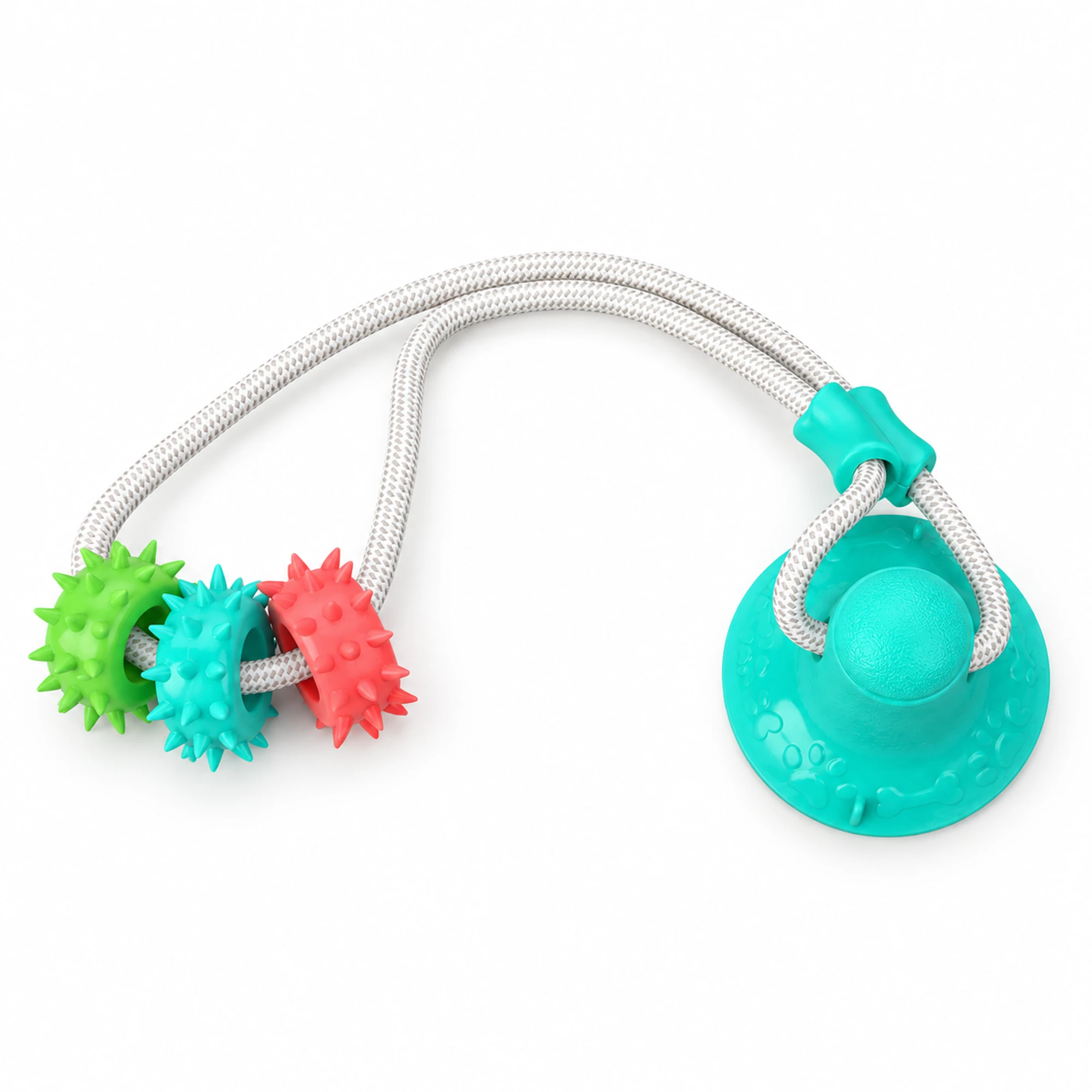
For example, consider the JoyPetPlay Cyan Three-Ring Suction Tug Toy. According to the catalog, this item connects a cyan suction base and rope slider to three colourful spiked chew rings for a dog to sniff and tug. During inspection, run your fingers along the green, cyan, and coral spiked rings. If any spiked ring develops a radial split or if teeth puncture completely through the ring circumference, retire the toy to prevent ring pieces from detaching.
Rope and Suction Mount Failure Points
Tug-of-war toys combine textiles, sliders, and suction fixtures. These combined designs experience multi-directional pull tension, creating distinct stress zones that require ongoing visual inspection.
Braided cords present unique biological risks when damaged. When cotton or synthetic rope weaves loosen, individual fibers separate. If a dog swallows unraveled threads, the intestines can bunch around the string in a dangerous medical condition known as a linear foreign body.
Inspect rope and anchor toys using these safety criteria:
- Unraveled braided weave: Minor surface fuzz is typical, but if braided strands separate into loose loops longer than five centimeters, remove the toy. Dogs often work loose threads free with their front incisors and swallow them.
- Frayed attachment knots: Knots that anchor ropes to rubber cores or suction fixtures must remain tight. If the weave around the knot thins or unravels, the rope can snap unexpectedly under tension.
- Cracked suction flanges: Flexible suction cups rely on smooth, pliable edges to maintain vacuum grip. If the rubber flange develops perimeter tears or curling creases, the suction seal will fail, causing sudden release during play.
- Damaged cord adjusters: Plastic sliders keep rope loops positioned properly. If the slider cracks, chips, or develops sharp burs from teething marks, replace the assembly.
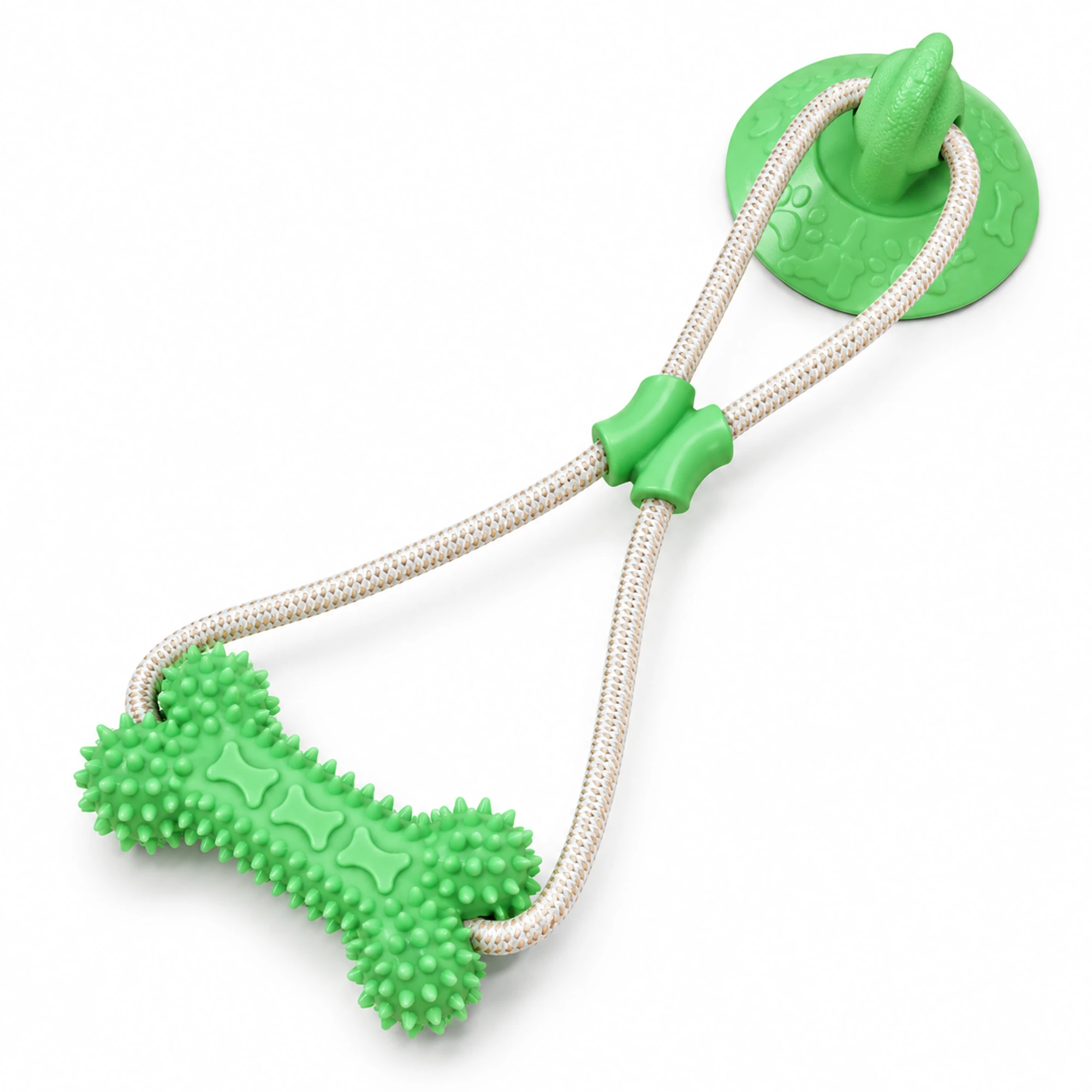
Consider the JoyPetPlay Green Suction & Rope Bone Tug Game. According to catalog specifications, this setup connects a green suction base to a textured rubber chew bone via an adjustable braided rope loop. When evaluating this toy, examine the braided cord where it threads through the center slider. If the cord fibers show excessive wear or the rubber bone displays deep bite fissures, retire the toy promptly.
A Step-by-Step Toy Safety Audit Routine
Establishing a structured inspection routine prevents dangerous toy wear from slipping through unnoticed. Learning how to know when to replace dog toys comes down to regular physical checks rather than waiting for an item to break completely during play. Conduct a proactive five-step check each week:
- Gather all toys into good lighting: Collect toys from crates, toy boxes, and under furniture so no hidden, half-chewed items remain accessible.
- Perform the bend and flex test: Take each rubber toy and bend it firmly with both hands. Flexing opens up concealed cracks and hidden internal tears that remain invisible when the toy rests on the floor.
- Run hands along rope cords: Feel the entire length of braided cords. Check for hard knots that have slipped, thinned sections, or tangled string nests.
- Check seams and squeakers: For plush or fabric items, inspect perimeter stitching. If white batting or plastic squeaker capsules are exposed, discard or mend the item before returning it to your dog.
- Apply the swallow test: Compare the toy’s remaining size to your dog’s open jaw. If chewing has reduced the toy to a size that could fit entirely behind your dog’s rear molars, toss it out immediately.
When sorting toys, divide them into three clear piles: safe for continued play, in need of a soapy wash, and designated for the trash bin. If you hesitate about whether a torn toy is safe, follow the golden rule of pet safety: when in doubt, throw it out.
Frequently Asked Questions
When should you throw away a dog toy that is torn?
You should throw away a dog toy as soon as any tear, crack, or rip appears that compromises the structural integrity of the material. Humane World for Animals specifically advises discarding toys when they start to break into pieces or are torn. Damaged play items quickly shed loose fragments that lead to serious choking or internal intestinal blockages.
How do you know if a rubber chew toy is no longer safe?
A rubber chew toy is no longer safe if you see deep cracks, missing chunks, detached dental nubs, or noticeable softening of the rubber. Perform a manual bend test by flexing the toy in your hands. If the rubber splits open or reveals deep fissures under gentle bending pressure, discard the toy immediately.
Are frayed rope dog toys dangerous for dogs?
Yes, frayed rope dog toys pose severe health hazards. When dogs chew on unraveled rope fibers, they frequently swallow loose strands that can cause linear foreign body obstructions. Trim minor surface fuzz, but discard ropes when braided strands unravel.