Finding a stray squeaky plush tucked behind a couch cushion or discovering a small mountain of chew toys shoved beneath your bed is a common surprise for pet owners. Dogs treat specific toys like secret treasure, carrying them room to room before carefully tucking them out of sight. While this habit can leave your living space disorganized, the underlying drive is completely normal canine behavior rooted in ancestral survival instincts. Understanding why does my dog hide toys helps you differentiate between harmless biological habits and stress-related hoarding, while giving your companion healthy foraging outlets at home.
When a domestic dog repeatedly stashes possessions, pet parents frequently wonder why do dogs bury toys inside modern houses. The habit reflects ancestral resource preservation, though modern indoor settings add distinct social triggers and emotional layers. Reading subtle postural changes and providing structured puzzle mats helps support your pet without sacrificing a clean house.
Evolutionary Biology of Canine Resource Storage
Domestic dogs descend from wild canids that depended on caching surplus food to survive harsh seasons. Wolves and wild dogs bury extra prey to prevent scavengers from stealing a meal needed for leaner days. Field biologists identify two main caching patterns across wild canines: scatter caching and larder caching. Scatter caching spreads single food pieces across broad hunting territories, lowering the risk that a competing animal uncovers the entire food cache. Larder caching gathers multiple items into a central den or burrow.
Modern companion dogs receive scheduled meals in clean bowls, yet their ancestral genetic wiring persists. Valued objects trigger an immediate urge to find a quiet storage spot. Soft indoor locations like laundry baskets, deep sofa creases, and the shadowy area beneath a mattress mimic natural dens wild ancestors used for protection. This biological impulse explains why families so often notice a dog hiding toys under bed frames and living room furniture.
On community forums, pet owners describe this hoarding habit regularly. A dog owner shared that their shih tzu picks out most of the dog plushies from her basket and hides them underneath the bed like a dragon. For smaller companion breeds, carrying soft plush animals into tight spaces recreates a safe den environment. Sheltered spots give dogs peace of mind that treasured items remain safe from household foot traffic and curious pets.
Scatter Caching Versus Larder Hoarding Indoors
Individual canine temperaments dictate how caching appears in an apartment or house. Some dogs operate as classic scatter cachers. They place a rubber bone beneath a dining chair, leave a fabric duck behind the curtains, and press a chew between sofa cushions. Each possession has a unique location, and the dog checks these separate hiding points throughout the afternoon.
Other pets act like committed larder hoarders by dragging every toy into one central sanctuary. Common larder locations include an open crate, the dark floor beneath a platform bed, or a hollowed nest inside a closet. Larder hoarders often spend quiet mornings rearranging their items, using their muzzles to nudge soft toys into organized piles.
Differentiating Playful Stashing from Stress and Resource Guarding
Most dogs hide toys as a relaxed solo game or soothing comfort ritual. Pet parents should still observe body posture to ensure the habit does not stem from stress or territorial tension.
Playful Caching Dynamics
A relaxed dog stashes toys with a loose, bouncy gait. They bury an item with gentle nose nudges, trot away quietly, and return hours later to start a game of fetch. In homes with multiple animals, dogs sometimes stash toys to prevent a housemate from taking them. This represents ordinary canine social dynamics as long as both animals remain relaxed.
Stress and Boredom Outlets
Dogs that lack exercise or cognitive stimulation sometimes hide items as a coping mechanism. If a dog feels restless or overwhelmed by a busy household, repetitive stashing offers temporary tension relief. Setting predictable daily routines and scheduling calm resting periods often reduces frantic hiding sequences.
Resource Guarding Warning Signals
Caching becomes a problem when accompanied by resource guarding. If your dog stiffens, drops their head, shows the whites of their eyes, or growls when someone walks near their stash, the behavior has shifted into defensive possession. Never scold a guarding dog or yank away the hidden object. Confrontation escalates anxiety. Instead, introduce positive treat exchanges and consult an accredited canine behaviorist if guarding persists.
Diagnostic Matrix: Play Versus Guarding Signals
Identifying your dog’s motivation requires examining their posture before, during, and after each hiding episode. The following diagnostic matrix outlines key physical signals across different caching behaviors.
| Behavioral Dimension | Playful Caching | Stress and Boredom Caching | Resource Guarding |
|---|---|---|---|
| Body Carriage | Loose, curved spine with natural hip movement | Pacing, tight muscles, rigid tail carriage | Frozen stance, lowered neck, hard stare |
| Facial Expression | Soft eyes, relaxed mouth, gentle panting | Furrowed brow, darting eyes, lip licking | Direct unbroken eye contact, bared teeth, lip curls |
| Movement Cadence | Casual, rhythmic, easily interrupted | Frantic, repetitive, unable to stop | Tense, deliberate focus, sudden defensive snaps |
| Response to Human Presence | Bounces away or offers the toy | Skittish retreats, scrambling for new spots | Low guttural warning growl, physical body blocking |
| Post-Caching State | Rests comfortably or explores another room | Continued pacing, whining beside furniture | Remains stationed beside the stash on alert |
Recognizing these distinctions helps owners choose the right management approach. Playful stashing needs only minor household boundaries, stress caching benefits from calm enrichment routines, and serious guarding calls for systematic positive counterconditioning.
Scent Fatigue and Household Triggers for Indoor Caching
Living indoors presents canine senses with challenges unknown to wild ancestors. Two domestic triggers frequently prompt indoor hiding: sensory saturation and toy clutter.
Olfactory Saturation in Living Spaces
A dog’s nasal cavity houses up to 300 million scent receptors, compared to approximately 6 million in people. Indoor air holds concentrated detergents, synthetic fragrances, cooking vapors, and floor cleaners. This constant chemical presence can overstimulate sensitive working noses. When a scented toy sits on a bright carpet, burying it beneath heavy furniture provides sensory relief. The enclosed space beneath a couch softens intense odors, letting the animal process the toy’s scent without competing aromas.
The Problem of Continuous Toy Clutter
Leaving dozens of toys scattered across living room rugs diminishes novelty and breeds restlessness. Free access to excessive possessions triggers an innate urge to organize and safeguard the abundance. Using systematic toy rotation rather than unrestricted floor bins reduces compulsive hoarding habits.
Interactive Enrichment Solutions for Natural Foragers
Instead of reprimanding a dog for following natural instincts, offer structured games that satisfy urges to search, untangle, and uncover items constructively. Scent-centered foraging activities turn burrowing energy into calming mental workouts.
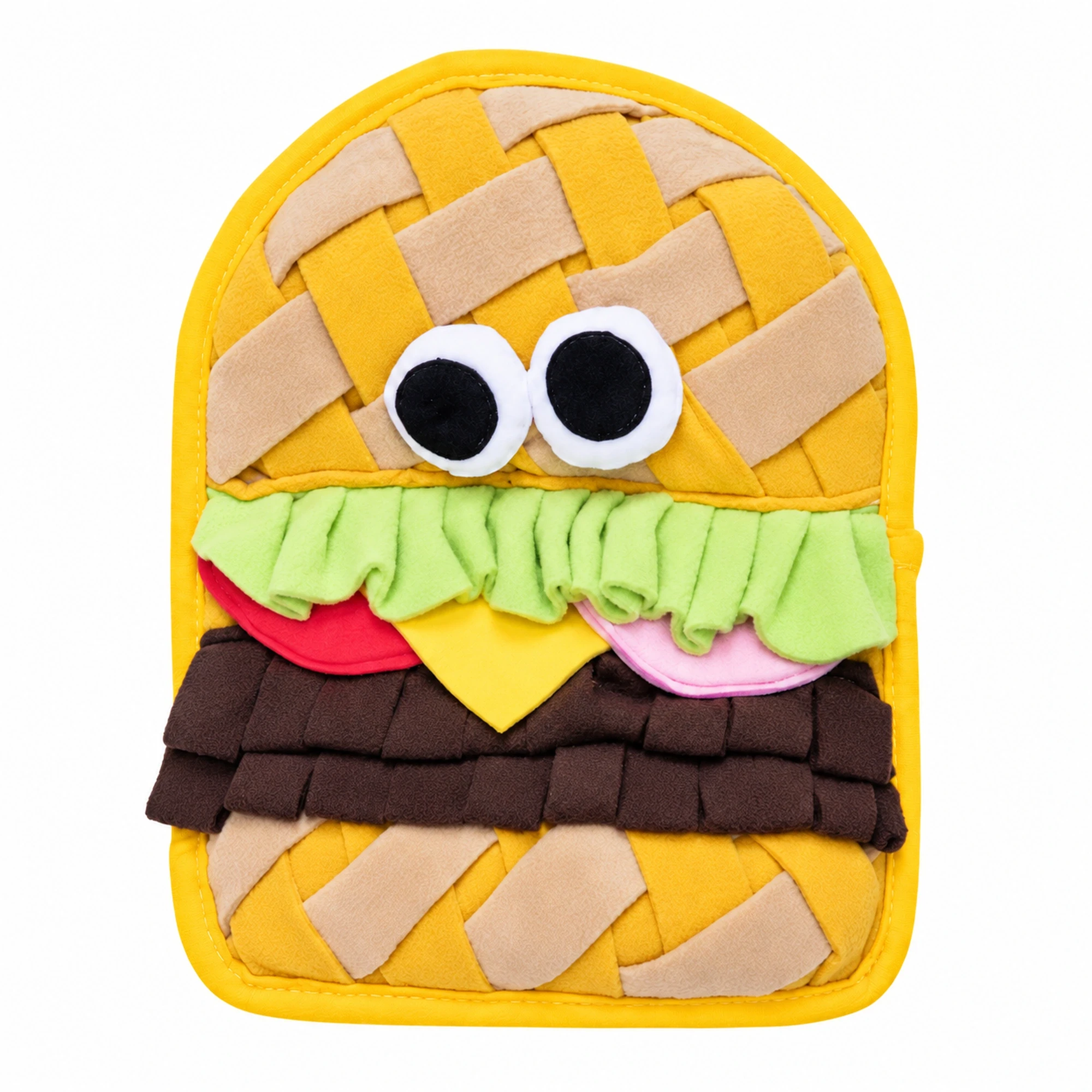
Hamburger Character Snuffle Mat
Dogs that enjoy nudging their snouts into tight crevices benefit from textured foraging mats. This hamburger-shaped snuffle mat is for supervised sniffing play. Its yellow-edged design combines crossing bun strips, green ruffles and colorful food-inspired layers, with round eyes above the center.
Tucking dry kibble or training treats deep within the fleece folds motivates dogs to work their sense of smell instead of pushing rubber toys under dark furniture. Fifteen minutes of focused scent work lowers resting pulse rates and releases rewarding dopamine, satisfying the foraging drive that leads dogs to hoard items behind pillows.
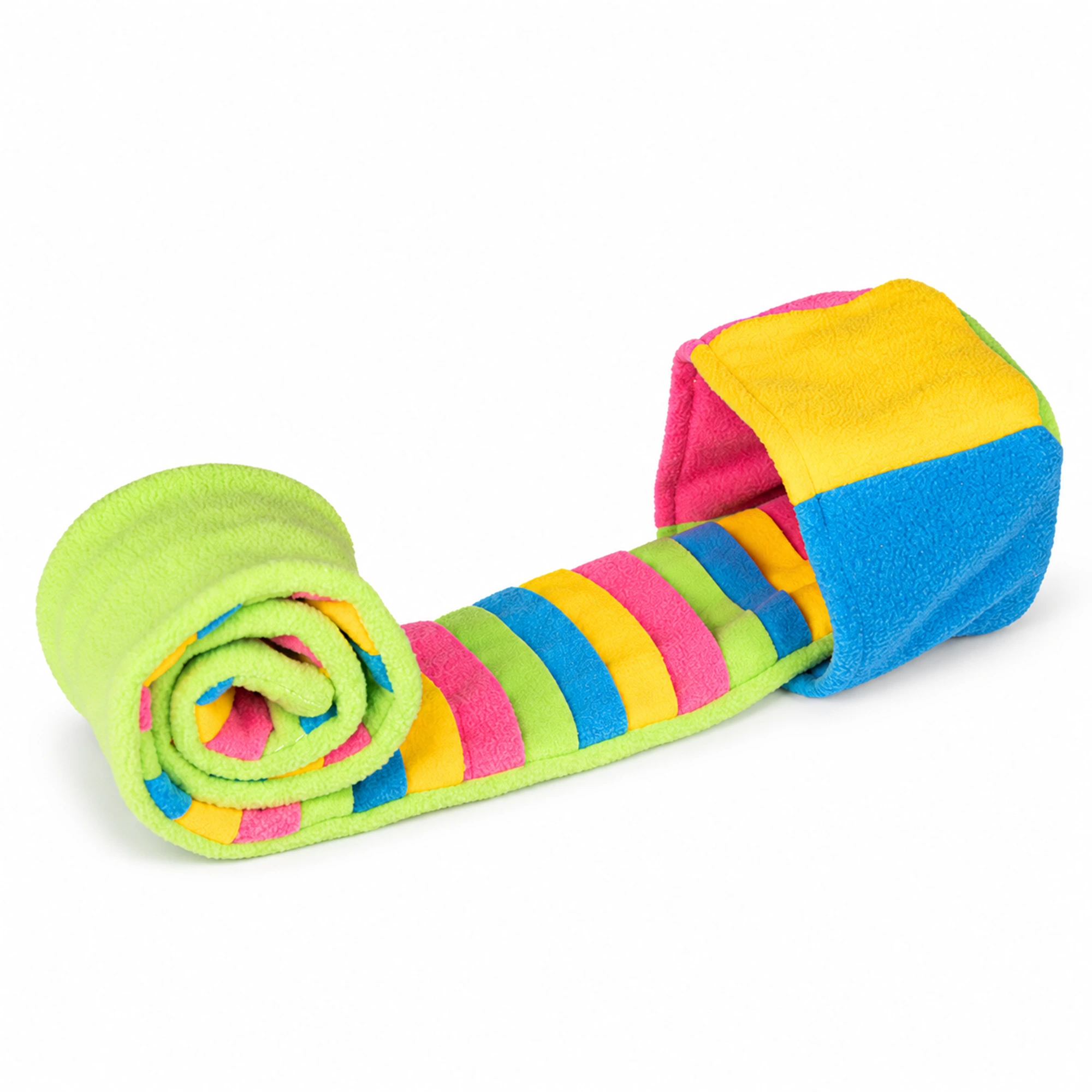
Small Rainbow Roll-Up Foraging Bowl
Pets that enjoy peeling blankets or unrolling fabric thrive with roll-up puzzle bowls. Unroll the colorful cloth trail, place a few dry treats between the real fabric bands, then roll the connected strip back into its soft fleece bowl. During supervised play your pet can pull the trail out to discover the next treat. The small rainbow version has a lime-green roll and a blue, yellow and pink cloth bowl.
This design lets dogs unwrap the fleece using both paws and muzzle, satisfying tactile instincts to uncover concealed items in an orderly indoor setting. The layered cloth bands mimic digging through undergrowth, channeling ancestral motor sequences without fraying living room rugs.
Structured Scent Games to Satisfy Caching Urges Indoors
Pet owners can channel hiding and searching drives using three simple indoor search games:
- The Three-Box Shell Search: Line up three shallow cardboard boxes across the floor. Place your dog in another room, then tuck a favorite squeaker toy beneath a rolled hand towel inside one box. Release your dog with a clear search cue. When your pet locates the toy, offer praise. This exercise shows dogs that finding concealed objects is an approved activity.
- The Hallway Blanket Trail Challenge: Accordion-fold a fleece blanket along a hallway. Drop small dry biscuits inside every fold, placing a soft plush toy at the far end. Allow your dog to work through the folds from front to back. Pushing through soft fleece replicates the snout movements dogs use when pushing toys beneath sofa cushions.
- The Scent-Marked Retrieve: Rub a dry training biscuit against a rubber toy to establish a clear scent profile. Place the toy behind a door or beneath a light blanket while your dog holds a stationary stay. Release them to locate the object. This drill reinforces impulse control while providing genuine foraging closure.
Practical Household Habits to Manage Toy Stashes
If toy collections under living room furniture become unmanageable, simple environmental changes restore order without frustrating your dog:
- Maintain a Toy Rotation Routine: Keep three or four toys available at one time. Store the remaining items in a closed cabinet and rotate them weekly. Fewer items reduce the urge to stockpile massive collections.
- Create Approved Stashing Zones: Set an open fleece basket or shallow cloth crate in a quiet corner. When your dog searches for a hiding spot with a toy in mouth, guide them to this designated area and praise them.
- Respect Harmless Hiding Spots: If your dog tucks a toy away without showing tension, avoid removing it while they watch. Constant confiscation creates anxiety, driving pets to seek tighter, unreachable spots.
- Use Supervised Sessions for Soft Toys: Keep snuffle mats and roll-up puzzle bowls for supervised enrichment sessions. Put them away once treats are cleared to preserve high novelty and engagement.
- Install Under-Furniture Blockers: Place commercial furniture blockers or rolled towels along the base of low couches and beds. Blocking deep gaps prevents lost toys and eliminates midnight scratching at baseboards.
Common Questions About Indoor Toy Caching
Why does my dog hide toys under blankets or behind pillows?
Dogs use cushions and blankets because soft textiles resemble loose dirt. Pushing fabric over an object with their snout fulfills the instinctive urge to conceal possessions from competitors.
Should I stop my dog from hiding toys?
Hiding toys is harmless as long as your dog stays relaxed and shows no guarding behavior. Intervention is necessary only if the habit causes visible distress or escalates into defensive growling.
Why do dogs bury toys with their nose?
Dogs use their muzzles to mimic the scooping motions wild ancestors used to bury food. Even on flat carpets, this instinctive motor pattern pushes real or imagined material over the item.
Why do dogs hide treats or chew bones but not plush toys?
Chew bones and edible treats carry high nutritional value, making them direct equivalents to prey surplus in the wild. Edible items trigger strong storage instincts, whereas plush toys typically fulfill comforting or gentle predatory gripping drives.
How can I stop my dog from stealing laundry to bury their toys?
Dogs target laundry hampers because worn clothing carries comforting family scent. Keep laundry hampers behind closed doors and offer a dedicated fleece blanket in your pet’s bed as a safe nesting alternative.