Watching a dog clamp their jaws around a soft plush or rope and whip their head violently from side to side can look startling. Many pet owners wonder if this sudden thrashing indicates sudden anger, overstimulation, or pent-up frustration. Head shaking during play is an innate canine motor pattern that dates back thousands of years to wild ancestral hunting behavior.
Understanding why dogs shake their toys helps pet parents interpret their dog’s body language accurately, distinguish playful excitement from distress, and channel vigorous thrashing urges into safe, durable play outlets. When owners observe a dog shaking head with toy in mouth, they often worry whether this sudden intensity reveals underlying aggression. By exploring the ethological roots of canine ragging behavior, dog handlers can appreciate how predatory motor sequences shape modern play while maintaining clear safety protocols.
Canine Predatory Sequence and the Biomechanics of Ragging
Domestic dogs inherit a complete sequence of predatory behaviors from wild canids: search, stalk, chase, catch, bite, kill, and dissect. Wild canids such as wolves and foxes capture small prey animals and shake them rapidly from side to side. This quick whiplash motion, widely called ragging, snaps the prey’s cervical spine and neutralizes escape attempts without a prolonged struggle.
Even though household dogs receive prepared kibble in ceramic bowls, ancestral motor patterns remain deeply wired. When a dog grabs a flexible toy, the tactile resistance triggers this ancient motor pattern. When an owner asks why does my dog shake a toy with such persistent vigor, the explanation rests in the dopamine surge produced by completing this ancestral predatory sequence.
Pet owners witness this energetic ragging pattern during everyday play sessions. A dog owner shared that their labrador Benny vigorously shakes his head around with a toy in his mouth, a natural behavior known as ragging driven by predatory instinct and fun. For enthusiastic retrievers and terriers, thrashing a toy provides immense sensory satisfaction, acting as a harmless game rather than genuine predatory violence. The tactile response of swinging fabric satisfies canine neurological drives safely.
Breed Drives and Predatory Specialization
Selective breeding over generations modified the predatory sequence across distinct working groups. Herding breeds focus on the eye, stalk, and chase phases while actively suppressing the final kill bite. Terriers and hounds were bred to track and dispatch quarry underground, retaining strong ragging impulses. A Jack Russell terrier or rat terrier naturally demonstrates faster and more frequent head whipping than a guardian breed.
Retrievers frequently blend carrying habits with sudden thrashing bursts. A retriever often carries a plush toy proudly across the room, stops abruptly, whips their head several times, and then continues their calm trot. Understanding ancestral heritage clarifies why do dogs shake their toys during moments of peak joy.
Evaluating Playful Excitement Versus Conflict Agitation
Watching a dog thrash a toy with intense concentration can raise concerns about rising aggression. Under normal conditions, toy shaking remains a benign play habit. Reading your dog’s overall body language confirms they remain in a positive, relaxed emotional state.
Signs of Healthy, Playful Shaking
- Loose Body Posture: A playing dog maintains a relaxed, curving spine and loose hips.
- Play Bows: The dog lowers their front chest to the carpet while keeping their rear end raised.
- Exaggerated Pauses: Shaking stops periodically, allowing the dog to toss the toy or bring it back for another round.
- Soft Facial Features: Eyes remain soft without hard staring, and jaws stay relaxed.
Signs of Tension or Overarousal
If your dog’s stance stiffens, their eyes show visible whites (whale eye), or they freeze and rumble defensively, arousal has reached an unsafe level. In multi-dog households, pets sometimes shake toys to signal possession. When play shifts toward guarding, pause the session by tossing high-value treats a few feet away, trading the toy without tension.
Diagnostic Matrix: Head Whipping Across Play Contexts
To help handlers accurately evaluate toy thrashing, the following diagnostic table contrasts physical indicators across common play scenarios.
| Behavioral Dimension | Pure Playful Ragging | Overstimulated Thrashing | Defensive Possession |
|---|---|---|---|
| Overall Muscle Tone | Fluid, wiggly, loose spinal movement | Rigid limbs, rapid breathing, elevated tail | Frozen stance, stiff neck, dropped center of gravity |
| Eye and Facial Cues | Soft rounded pupils, relaxed open mouth | Dilated pupils, wide stare, wrinkled forehead | Hard stare, whale eye, tight lips, bared teeth |
| Play Interruption | Readily drops toy or pauses upon verbal cue | Reluctant to pause, hyper-focused on movement | Growls defensively or snaps if approached |
| Post-Shake Behavior | Drops toy and invites interactive chase | Keeps thrashing uncontrollably without pausing | Retreats to a corner and guards the item tightly |
| Vocalizations | High-pitched play growls or silent shaking | Loud, continuous, frantic vocalizations | Low-frequency guttural rumble, warning growl |
Recognizing these distinctions ensures you encourage healthy play while preventing arousal levels from escalating into reactivity. Playful ragging warrants praise, overstimulation calls for quiet rest, and guarding requires low-conflict trading games.
Cervical Vertebrae and Joint Health During High-Force Play
While adult dogs possess thick neck muscles designed to absorb rotational forces, repetitive high-velocity ragging still warrants sensible precautions. The canine cervical spine contains seven vertebrae (C1 through C7). The junction between the atlas (C1) and the axis (C2), termed the atlantoaxial joint, allows wide rotational motion but remains vulnerable to sudden torque.
Puppies under one year of age possess soft skeletal growth plates and delicate cervical ligaments. Intense whiplash games using heavy or inflexible toys can strain these developing tissues. Similarly, senior dogs suffering from cervical spondylosis, intervertebral disc disease (IVDD), or shoulder arthritis must avoid sudden head whipping.
To safeguard spinal health across all life stages, offer toys featuring flexible, lightweight extremities. Flexible rope tails and soft fabric appendages absorb rotational force, lessening the whiplash momentum transferred to your dog’s neck joints.
Purpose-Built Anchored Tug Equipment for Power Thrashers
Dogs with strong ragging drives need equipment built to withstand rigorous pulling without fracturing into dangerous swallowable pieces. Ordinary stuffed plushies frequently rip at the seams, exposing synthetic batting and plastic squeakers. Floor-mounted suction toys provide controlled resistance, allowing dogs to exercise neck and jaw muscles safely.
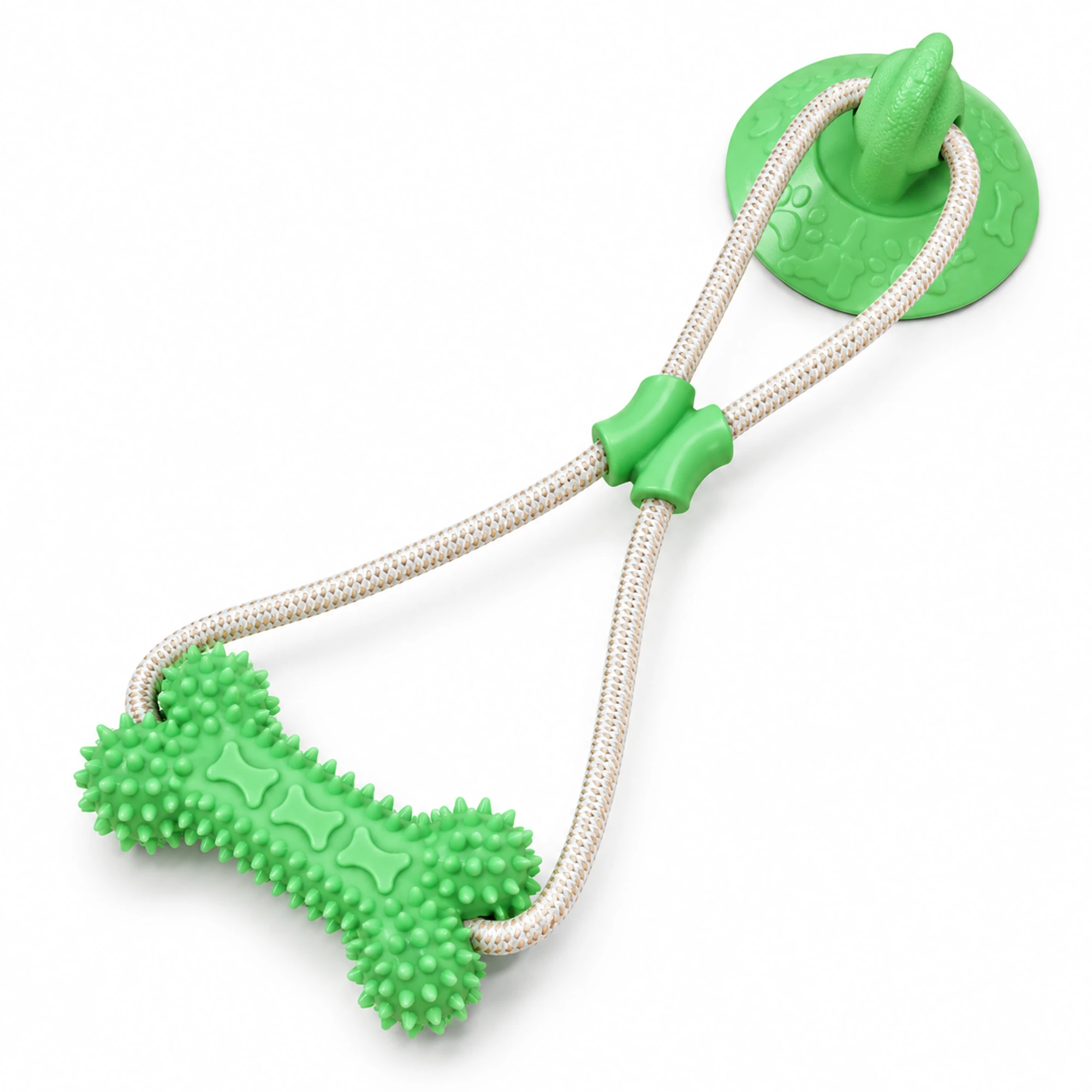
Green Suction & Rope Bone Tug Game
For dogs that prefer pulling and thrashing against floor-level resistance, anchored tug systems offer an active workout. Press the green suction base onto a clean, smooth floor and invite your dog to pull the textured bone. Slide the green rope adjuster to position the loop, then lift the base edge after the game.
The anchored suction base holds firmly to glazed tile or sealed hardwood, providing power tuggers a solid anchor to pull without shifting furniture. The braided rope dampens sharp side-to-side jerks, providing a spring-like resistance that cushions jaw and neck joints during energetic floor games.
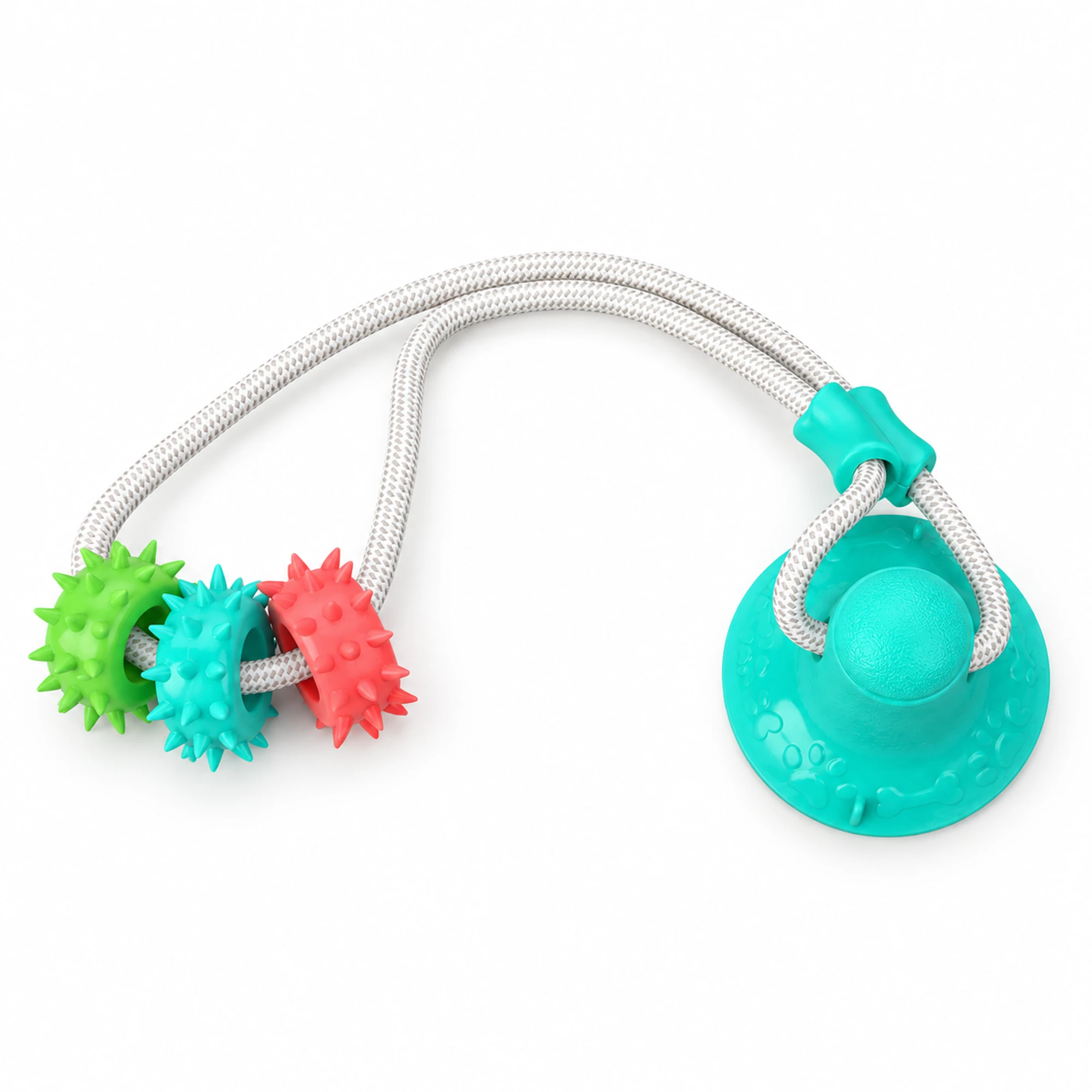
Cyan Three-Ring Suction Tug Toy
Dogs that enjoy pulling multiple textured rings benefit from multi-element designs. A cyan suction base and rope slider connect to three colourful spiked chew rings for a dog to sniff and tug. Attach the cup to a clean flat surface, adjust the slider and peel the cup edge to remove it after play.
The textured chew rings massage the gums while offering flexible gripping surfaces for dogs that shake items during supervised floor play. The multi-ring structure allows dogs to shift bite positions easily, preventing tooth slippage and protecting enamel during active play.
Structured Ground Rules for Neck-Safe Interactive Play
To keep your dog’s natural ragging drives safe and orderly indoors, follow these four simple habits:
- Mount on Clean, Smooth Surfaces: Before securing suction-anchored toys, clean the floor surface with a damp cloth. Smooth ceramic tile, polished stone, or sealed wood provide optimal suction grip.
- Supervise Thrashing Sessions: Always supervise your pet during high-arousal play. While ragging is natural, monitor playtime to ensure toys remain intact and replace items showing structural wear.
- Teach a Gentle Release Cue: Establish a reliable “drop it” or “trade” cue. Rewarding voluntary releases with a tasty treat prevents the toy from becoming a contested prize.
- Rotate High-Energy Toys: Pack away specialized suction tug toys after 15 to 20 minutes of active play. Keeping high-value items novel sustains your dog’s interest and prevents overstimulation.
- Keep Pulling Angles Low to the Ground: Ensure anchored toys sit flat on the floor so your dog pulls with all four paws grounded, maintaining horizontal spinal alignment.
Common Queries Regarding Head Whipping and Thrashing Habits
Why do dogs violently shake their heads when playing with toys?
Dogs shake their heads due to an ancestral motor pattern called ragging. In wild canids, rapid side-to-side shaking disables captured prey, and domestic dogs recreate this motion purely for fun during active play.
Can a dog hurt its neck by shaking toys too hard?
Healthy adult dogs have strong cervical muscles adapted to absorb the motion of ragging. However, for growing puppies or senior dogs with spinal arthritis, avoid heavy or rigid toys that could strain neck joints during vigorous thrashing.
Should I stop my dog from shaking toys?
As long as your dog shows loose body language, pauses willingly, and does not growl defensively, toy shaking is harmless, healthy enrichment that requires no intervention.
Why do dogs shake toys when they greet people at the front door?
Grabbing a toy and shaking it upon your arrival is an emotional displacement behavior. Excited dogs feel an overwhelming rush of greeting energy, and redirecting that excitement into a soft toy prevents jumping, nipping, and vocal barking.
What should I do if my dog starts shredding and eating the toy after shaking it?
Head shaking represents the kill phase, which naturally transitions into the dissecting phase. If your dog begins gnawing off fabric chunks or foam stuffing, calmly trade the plush for a long-lasting rubber chew bone to prevent foreign body ingestion.