Living with a dog means witnessing quiet rituals that reveal what makes canine minds tick. You have probably seen your dog trot across the kitchen with a plush toy tucked between their jaws. Some dogs hold a stuffed bear while trailing your footsteps throughout the house. Others sprint straight to their toy basket the second your keys jingle at the door, greeting you with muffled vocalizations and sweeping tail wags. Many dogs will even drift off to sleep while resting their chin firmly on a soft fabric limb.
This behavior is completely normal canine communication. Understanding why your dog insists on keeping a toy close helps you support their emotional needs, understand their genetic heritage, and provide the right physical outlets.
The Greeting Ritual: Channeling Big Excitement
When you come home after several hours away, your dog experiences an intense rush of adrenaline and joy. For many dogs, that emotional surge feels overwhelming. They need somewhere to direct that energy right away.
Grabbing a nearby toy acts as a calming displacement behavior. In animal behavior science, a displacement activity occurs when an animal experiences conflicting or intense emotional drives and redirects that energy into an unrelated motor pattern. Instead of jumping on your clothes, nipping at your hands, or barking uncontrollably, your dog clamps their mouth around a toy. Holding something solid absorbs that immediate burst of excitement. It keeps their mouth occupied while their body works through the greeting ritual. If your dog runs around in circles showing off their toy without wanting you to grab it, they are simply inviting you to witness their happiness.
The Neurobiology of Oral Pacification: Endorphins and Dopamine Release
Why does holding an object bring dogs such obvious comfort? The answer lies in canine neurochemistry and tactile mouth anatomy.
A canine mouth serves as hands, voice, and emotional release valve all at once. The oral mucosa, tongue, and periodontal ligaments around the teeth are packed with high-density sensory nerve endings connected directly to the trigeminal cranial nerve.
Gentle compression of a soft fabric item activates oral mechanoreceptors with steady mechanical feedback. This sensory feedback triggers the parasympathetic nervous system, prompting the pituitary gland to release endorphins and dopamine. These biochemicals naturally lower heart rate, reduce circulating cortisol levels, and create a calm emotional state.
This neurochemical mechanism explains why adult dogs continue the behavior long after puppyhood. Just like human toddlers find comfort in a thumb or blanket, dogs often use toys as emotional pacifiers. Pet owners on Reddit frequently describe young or active dogs holding a soft toy quietly in their mouth for hours every evening to settle down after a busy day. A dog owner shared that they had a shepherd who did this a lot, and their vet said it is a comforting mechanic, similar to an infant sucking their thumb.
You may also notice your dog gently nibbling a plush toy with their small front incisors without biting down hard. This gentle, rhythmic nibble is called cobbing or pookie-chewing. In wolf packs and wild dog social groups, canids cob on littermates during social grooming rituals. Cobbing reinforces social bonds and signals vulnerability and trust. When directed toward a favorite toy, cobbing provides tactile self-soothing before a nap.
Canine Carrying Behaviors and Motivations Matrix
| Carrying Motivation | Distinct Body Language Signals | Primary Neurological or Genetic Driver | Recommended Owner Management |
|---|---|---|---|
| Displacement Greeting | Rhythmic tail wagging, lowered ears, muffled whining, parade walk | Autonomic arousal regulation and greeting energy channeling | Acknowledge the dog calmly, admire the toy, avoid grabbing |
| Oral Pacification (Cobbing) | Soft squinty eyes, slow front-incisor nibbles, resting head on toy | Trigeminal stimulation and parasympathetic dopamine release | Provide clean, soft fleece toys and quiet bedding spaces |
| Retrieval Drive (Holding) | Firm chin carry, high posture, trotting gait, direct eye contact | Centuries of selective breeding for soft-mouth retrieving | Offer structured retrieve games and weighted carrying bones |
| Anxious Resource Caching | Stiff neck, wide eyes, searching for hiding spots behind furniture | Separation stress or resource guarding insecurity | Avoid taking the toy, practice treat trades, establish safe zones |
Genetics and Evolutionary Drives: The Working Retriever Instinct
Genetics also influence carrying habits. Sporting, herding, and retriever breeds have centuries of selective breeding encouraging them to hold items gently in their mouths.
Gun dogs such as Golden Retrievers, Labrador Retrievers, Chesapeake Bay Retrievers, Flat-Coated Retrievers, and Pointers were selectively bred to possess a soft mouth. A soft mouth is the genetic predisposition to pick up, carry, and deliver delicate feathered game over miles of rough terrain without puncturing the skin with their teeth. In these breeds, the urge to hold something between the premolars is an ingrained biological program. A retriever with empty jaws often appears uneasy, scanning the floor for something to carry. Handing them an approved item gives them an immediate sense of purpose.
Herding breeds such as Border Collies, Australian Shepherds, and German Shepherds carry toys for a slightly different genetic reason. These working dogs have elevated motor drive and high vigilance levels. Gripping a toy acts as a mental anchor, converting racing arousal into composed focus.
Tactile Companions and Structured Holding Outlets
While some dogs prefer plush textures, others favor a firmer, structured hold that massages their gums. Matching toy ergonomics to your dog’s carrying preferences protects personal household items from being repurposed.
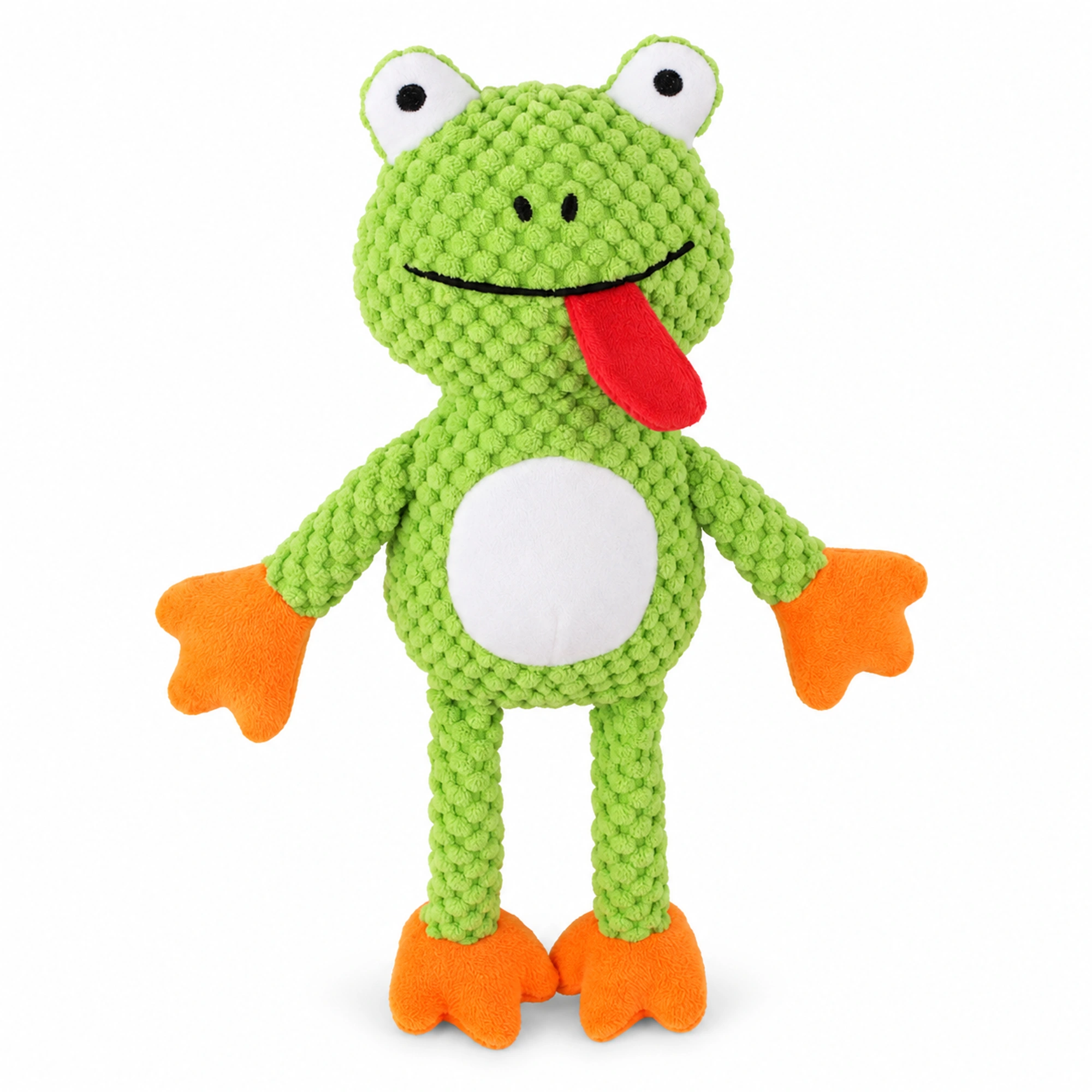
For dogs who love soft textures during downtime, plush toys offer a tactile companion. The Pose & Pull Frog features adjustable fabric-covered limbs, lime bobble fleece, a stitched smile, a red fabric tongue and orange webbed hands and feet. The soft fleece exterior gives gentle mouths a comfortable surface to cuddle against during quiet rest periods, while the bobble texture provides pleasant tactile feedback along the lips and gums.
Always introduce soft plush toys under supervision. If you want to review safe fabric play guidelines, take a look at our plush dog toy safety guide.
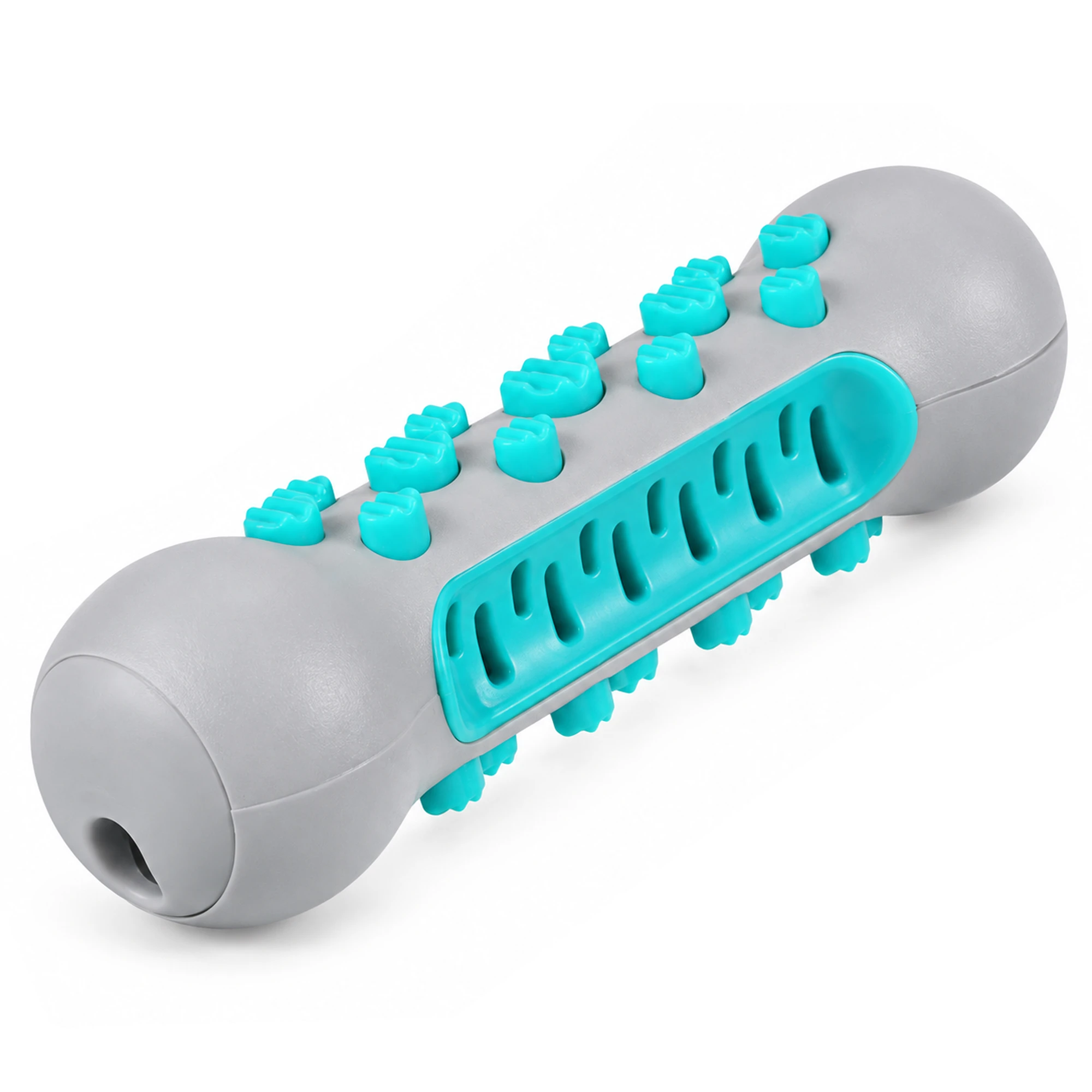
For dogs that prefer substantial weight and firm resistance, a solid chew like the Blue and Gray Bone Dog Toy gives active dogs a sturdy item to transport around the house. The Blue and Gray Bone Dog Toy features a gray bone-shaped body with turquoise-blue raised nubs, a slotted side panel, rounded ends and an end opening. Supplier-reported SKU piece weight is 147 g and piece dimensions are 15 × 4.6 × 4.6 cm, making it a manageable size for medium to large dogs to carry and position between their paws. The firm textured surface provides oral stimulation, and the slotted openings allow owners to smear a tiny dab of dog-safe peanut butter inside for added engagement.
If your dog tends to shift quickly from gentle carrying to frantic chewing, our guide on managing dog toy destruction covers safe chew-zone redirection techniques.
Healthy Comfort vs Resource Guarding: Recognizing the Difference
Carrying a toy is healthy and affectionate in the vast majority of households. However, it helps to distinguish calm holding from possessive guarding:
Relaxed Carrying Indicators
- Loose, wiggly hips and fluid spinal movement
- Soft, blinking eyes and relaxed facial muscles
- Gentle tail wags held at mid-height
- Approaching owners willingly to show the toy
- Releasing the item easily when offered a tasty treat
Possessive Guarding Indicators
- Stiff, frozen body posture the moment an owner steps near
- Hard, unblinking staring with whites of the eyes showing (whale eye)
- Hovering low over the toy with the head dropped
- Low guttural growling, lip lifting, or snapping when someone walks past
- Quickly rushing to hide the toy under a bed or behind a sofa
If your dog shows signs of guarding, never chase them or wrench the toy from their jaws. Forcing an item out of their mouth reinforces anxiety and increases defensive reactions. Instead, practice positive trading by tossing high-value treats a few feet away, allowing your dog to willingly release their toy without conflict.
Environmental Management and Toy Care Rules
To keep carrying behaviors safe and hygienic, follow these practical rules:
- Wash Soft Toys Regularly: Plush toys that are held and cobbed accumulate saliva, dust mites, and bacteria. Wash soft items in a mesh laundry bag using fragrance-free, pet-safe laundry detergent on a hot cycle every two weeks.
- Inspect Seams and Limbs: Regularly inspect fabric toys for separated stitching or exposed polyfill. If a limb or seam begins tearing, retire the toy to prevent ingestion hazards.
- Provide Different Weights and Textures: Keep a mix of lightweight plush items and heavier rubber bones in circulation. This allows your dog to pick the exact texture that matches their current mood.
- Respect Sleep Cuddles: If your dog falls asleep with a toy under its chin, leave it undisturbed. Forcing a dog to give up a comforting bedtime companion generates unnecessary stress.
Frequently Asked Questions
Should I take the toy away if my dog holds it for hours?
If your dog rests calmly with the toy and shows no tense guarding or stiffening, taking it away is usually unnecessary. Holding a soft companion often works as a healthy pacifying habit. If your dog begins growling when approached, trade the toy for a high-value treat rather than snatching it.
Why does my dog grab a toy right before greeting me at the door?
Grabbing a toy at the front door is common displacement behavior. Your arrival creates high excitement, and holding a toy gives your dog an immediate, safe physical outlet for that energy, preventing vocal whining, frantic jumping, or mouthing at your hands.
Why does my dog bring toys to me but refuses to let them go?
When a dog brings you a toy and wiggles while keeping it clamped in their teeth, they are not playing fetch. They are displaying a prized possession as a social invitation. They want your attention, praise, and physical presence, not an athletic game of catch.
Can carrying a toy indicate false pregnancy in female dogs?
Yes. Unspayed female dogs experiencing hormonal shifts after an estrus cycle can undergo pseudopregnancy (false pregnancy). A female experiencing false pregnancy may treat a soft plush toy like a newborn pup, carrying it tenderly to a nest, mothering it, and whining if separated. If this occurs, consult your veterinarian for advice on hormonal management.
How can I stop my dog from carrying dirty shoes instead of toys?
Dogs carry shoes because footwear is saturated with the concentrated scent of their favorite human. To redirect this habit, store shoes in closed closets and keep clean, textured dog toys readily available near doorways and sitting areas where your dog normally looks for items to carry.