Walking down the brightly lit aisles of a pet supply shop can feel overwhelming. Colorful displays showcase hundreds of options, from plush animals to rubber rings. However, unlike products manufactured for human infants, pet toys operate in a regulatory vacuum. In most countries, no mandatory safety standards regulate the chemical purity, mechanical durability, or choking dimensions of dog toys.
Every year, veterinary emergency rooms treat thousands of canines for preventable toy-related injuries. These range from fractured premolars caused by unyielding synthetic bones to life-threatening intestinal obstructions requiring emergency exploratory laparotomy. Dogs explore their environment through oral manipulation. Their jaws exert tremendous leverage, turning poorly engineered items into hazardous debris within minutes.
Applying a disciplined pre-purchase safety checklist allows you to filter out risky novelty items and invest in toys that support physical fitness, mental enrichment, and long-term canine health.
Mechanical and Chemical Risks in Pet Toys
Ensuring toy safety requires understanding two distinct categories of canine hazards: physical mechanical risks and biochemical hazards.
Mechanical Traumatic Hazards
Mechanical dangers involve physical trauma caused by the toy structure under biting force:
- Pharyngeal and Tracheal Choking: Toys sized smaller than the posterior oral cavity can slip past the base of the tongue during vigorous breathing, completely occluding the larynx.
- Linear Foreign Body Peritonitis: Ingested strings, ribbons, and unravelled rope fibers anchor in the stomach while the free end moves into the small intestines. The peristaltic motion causes the intestinal wall to bunch accordion-style, rapidly cutting through tissue and causing fatal septic peritonitis.
- Enamel Slab Fractures: Objects harder than tooth enamel cause high-velocity shear fractures along the upper carnassial premolars, exposing the dental pulp canal.
- Negative Pressure Tongue Entrapment: Hollow spheres with only a single opening create a vacuum seal when a dog tongue enters the cavity, cutting off venous circulation and risking tissue necrosis.
Chemical and Toxicity Hazards
Biochemical risks stem from toxic additives incorporated during plastic manufacturing:
- Phthalate Plasticizers: Low-cost vinyl and PVC toys rely on ortho-phthalates to soften brittle plastics. These chemical compounds leach into saliva and disrupt canine endocrine function.
- Heavy Metal Colorants: Cheap imported toys frequently contain lead, cadmium, and chromium pigments in surface paints, posing chronic organ toxicity risks.
- Volatile Petrochemical Residues: Industrial synthetic rubber blends often release toxic polycyclic aromatic hydrocarbons (PAHs) that irritate mucosal tissues.
Choosing products certified under food-grade material standards eliminates these insidious chemical exposures.
The Pre-Purchase 7-Point Safety Inspection Framework
Before placing any toy into your shopping basket or online cart, evaluate the design against these seven safety criteria:
1. The Airway Diameter Gauge
The simplest sizing rule relies on the toilet paper tube test. The interior diameter of a standard cardboard paper towel or toilet paper tube measures approximately 1.75 inches. If a toy or ball can pass through this tube without friction, it is too small for any dog weighing over twenty pounds. Always select toys that exceed your dog oral throat diameter by at least thirty percent.
2. The Compressibility and Enamel Check
Perform the thumbnail indentation test on every rubber, plastic, or synthetic toy. Press your thumbnail firmly into the thickest part of the item. If the material allows a visible, temporary indentation, it cushions tooth enamel safely. If the material feels as hard as concrete and makes a sharp clacking sound against ceramic tile, reject it immediately to prevent tooth fractures.
3. Seam and Structural Integrity
Examine all bonding lines, seams, and joins. Molded rubber toys should exhibit smooth, continuous walls without visible flash seams or thin air bubbles. For fabric toys, verify that seams feature reinforced box-stitching with heavy-gauge ballistic nylon thread rather than single polyester chain-stitching.
4. Component Entrapment and Small Parts
Inspect the toy for glued-on plastic eyes, decorative ribbons, buttons, or exposed internal squeakers. High-risk toys place small squeaker capsules directly beneath thin fabric layers. Look for toys that incorporate molded, single-piece construction where the squeaker is either deeply embedded within thick vulcanized rubber or eliminated entirely.
5. The Odor and Chemical Off-Gassing Test
Smell the toy closely before purchasing. High-quality natural rubber and food-grade silicone carry a mild, neutral scent or a faint earthy rubber aroma. If a product emits a sharp, acrid chemical odor resembling petroleum solvent, gasoline, or strong plasticizers, leave it on the shelf. Acrid smells indicate high concentrations of volatile organic compounds.
6. Hollow Cavity Ventilation Openings
If selecting a hollow treat-dispensing ball or cylinder, verify that the toy features dual opposing ventilation holes. When a dog inserts their tongue or snout into one opening, the secondary hole allows continuous airflow, preventing dangerous vacuum adhesion.
7. Linear Fiber Tightness
If inspecting rope toys, pull firmly on the strands. The cotton fibers should form dense, tightly wound multi-ply braids. Avoid loose, fluffy yarn weaves that easily unravel into individual thread segments when scraped by puppy teeth.
Catalog Selection: Blue Cone-End Suction Rope Toy
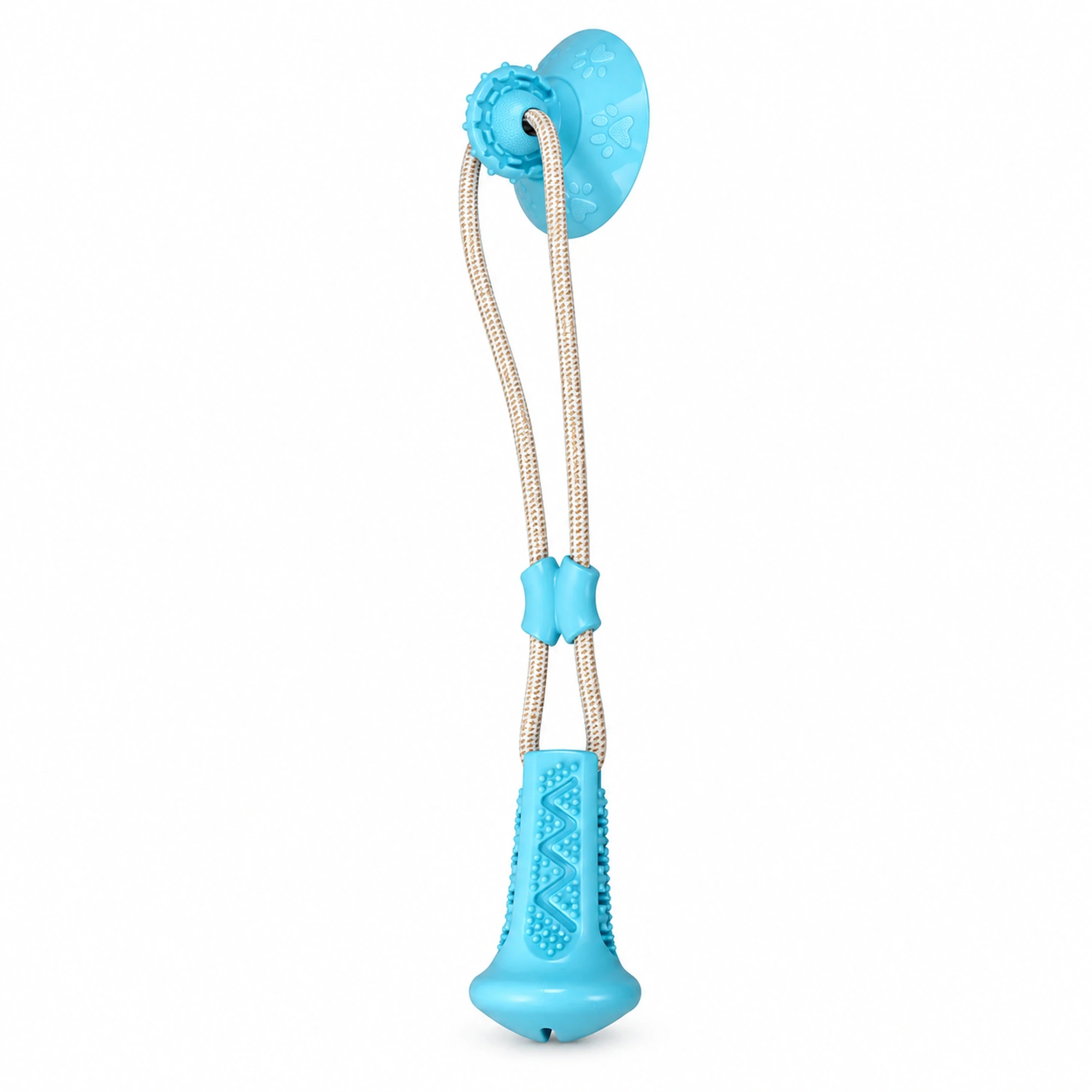
The Blue Cone-End Suction Rope Toy illustrates how smart mechanical engineering prevents common rope-related injuries. Traditional rope toys end in exposed frayed tassels that dogs chew off and ingest. In contrast, this design integrates a molded rubber protective cone that encases the rope terminus completely.
The wide silicone suction base adheres to tile and smooth flooring, allowing dogs to engage in controlled pulling games. Because the anchor absorbs tensile load, the dog pulls against an elastic system rather than jerking their neck against immovable objects. The natural cotton braid is tightly spun to resist shredding, while the rubber cone offers a gentle, safe chewing surface.
Catalog Selection: Blue and Gray Bone Dog Toy
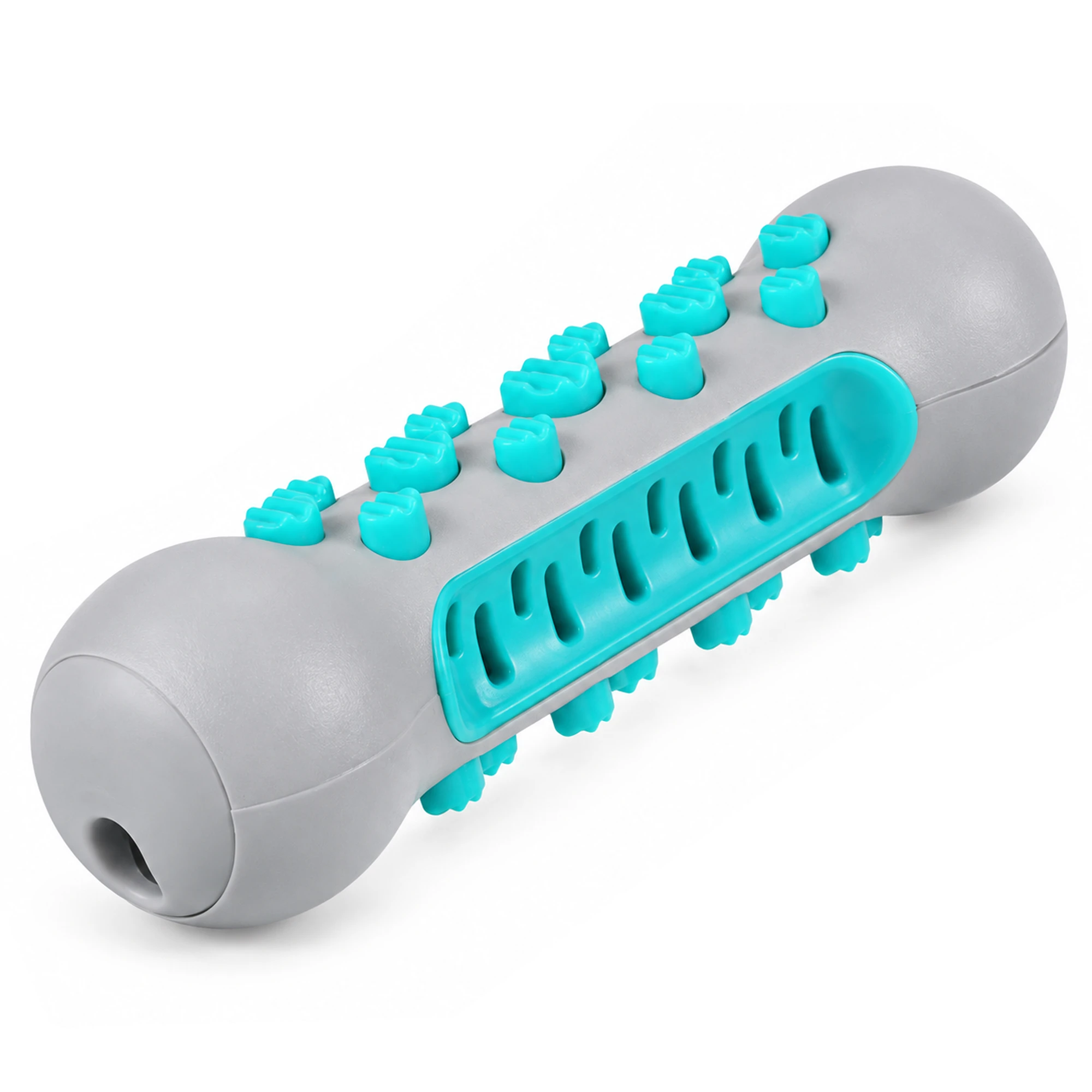
The Blue and Gray Bone Dog Toy replaces dangerous rawhides and unyielding nylon chews with flexible food-grade elastomer. Measuring over six inches in length with bulbous terminal ends, this bone cannot be accidentally swallowed whole by medium to large dogs.
The surface incorporates alternating ribbed and textured zones that massage gingival margins without causing enamel abrasion. Its solid, single-mold construction contains zero internal squeakers, glued plastic inserts, or hollow cavities, making it an exceptionally reliable choice for daily fetch and interactive gnawing sessions.
Catalog Selection: Yellow Channel Hollow Dog Ball
Tennis balls are popular fetch toys, yet standard tennis ball felt acts like sandpaper on canine teeth, collecting abrasive soil particles that grind down enamel over time. Furthermore, tennis balls lack ventilation openings, creating choking risks if swallowed.
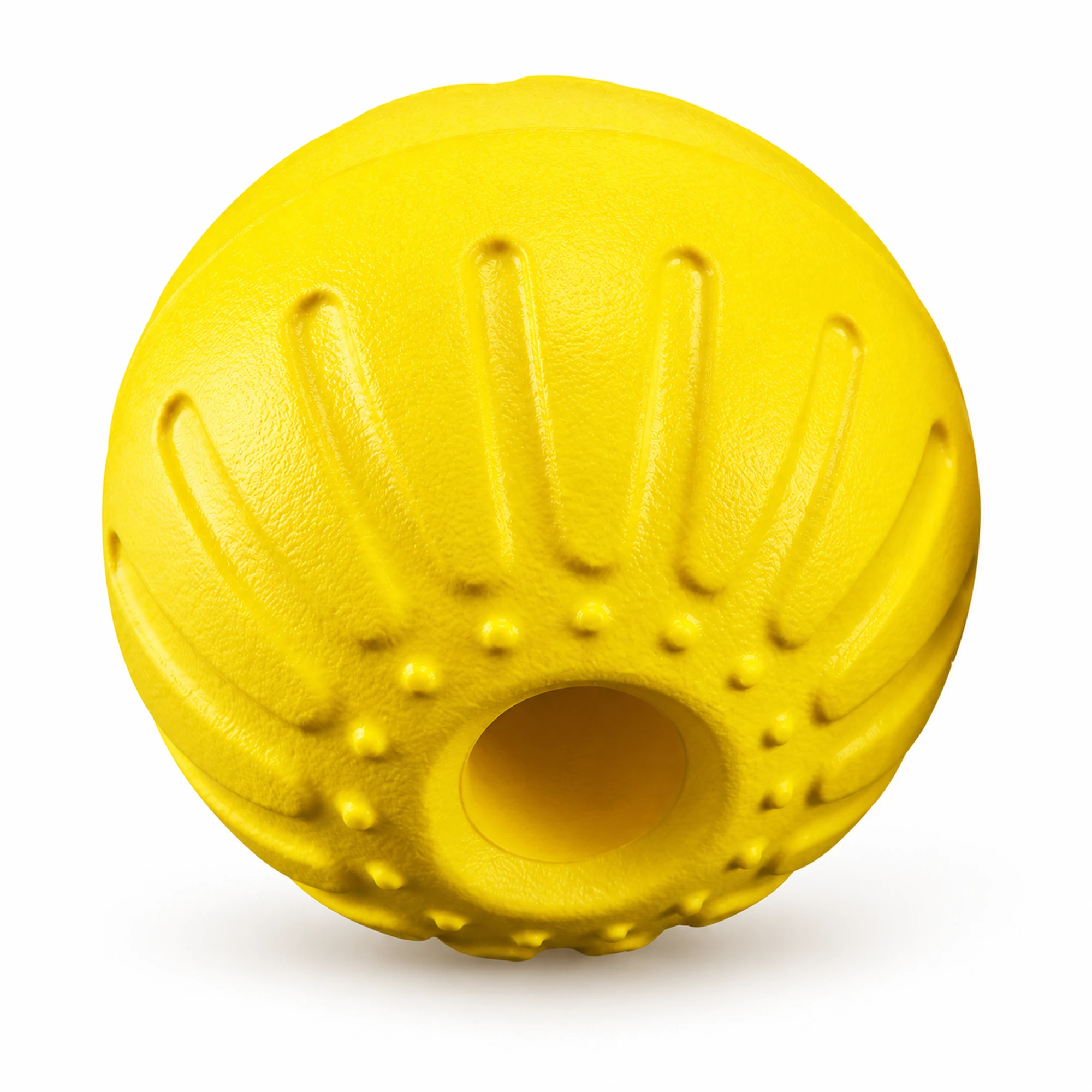
The Yellow Channel Hollow Dog Ball addresses both hazards. Molded from supple food-grade rubber, its exterior features deep recessed airflow channels. Even if the ball becomes wedged in a dog posterior pharynx during an enthusiastic catch, the exterior channels maintain patent airways until the owner can assist. The hollow interior provides gentle dental flex, while the bright yellow hue matches canine dichromatic color receptors for effortless outdoor tracking.
Comprehensive Safety Audit Table
Use this reference table to evaluate prospective toys before purchase:
| Inspection Category | Critical Safety Failure Sign | Mandatory Safe Standard | JoyPetPlay Verified Design |
|---|---|---|---|
| Sizing and Airway | Fits inside a 1.75-inch cardboard cylinder | Exceeds mouth throat width by thirty percent | Blue and Gray Bone bulbous wide ends |
| Material Hardness | Zero indentation under firm thumbnail pressure | Flexible shore hardness with elastic rebound | Resilient vulcanized food-grade rubber |
| Ventilation Safety | Single hollow cavity with closed opposite end | Dual opposing airflow channels or ports | Yellow Channel Hollow Dog Ball |
| Rope Construction | Loose synthetic yarn with unraveled tassels | Tightly twisted multi-strand natural cotton | Blue Cone-End protected rope sheath |
| Chemical Purity | Sharp chemical solvent or petrochemical odor | LFGB food-grade non-toxic certification | Pure natural rubber and medical silicone |
At-Home Safety Management Protocols
Buying a safe toy is only the first step; maintaining home safety requires active management.
The Initial 15-Minute Observation Window
Never give a new toy to your dog and immediately leave the house. Dedicate the first fifteen minutes of play to close observation. Watch how your dog approaches the item. Do they enjoy rolling and chasing it, or do they immediately fixate on chewing off a specific protrusion? If your dog attempts to deconstruct the toy with their back molars, redirect them to a dedicated heavy-duty chew item.
Multi-Dog Safety and Possession Dynamics
In households with multiple dogs, toys can trigger resource guarding and sudden competitive ingestion. Anxious dogs often swallow large objects rapidly to prevent another dog from taking them. When offering high-value toys or treat dispensers, separate your dogs into different rooms or exercise pens so each animal can enjoy their enrichment without social pressure.
Emergency Preparedness: Recognizing Canine Choking
Despite all precautions, foreign body accidents can occur. Knowing how to recognize and respond to canine airway obstruction is an indispensable skill for every dog parent.
Critical Symptoms of Choking
A choking dog displays distinct behavioral signs:
- Frantic pawing at the mouth or muzzle
- Extended neck with frantic, silent retching movements
- Inability to vocalize or bark
- Rapid change in gum and tongue color from healthy pink to pale gray or deep cyanotic blue
- Sudden collapse or loss of consciousness
Immediate First Aid Protocol
If your dog is conscious and choking:
- Clear the Mouth: Open the jaws carefully. Pull the tongue forward and sweep your index finger along the back of the throat. Only remove the object if you can grasp it easily; do not push it deeper.
- The Canine Heimlich Maneuver: For a standing large dog, stand behind them and wrap your arms around their abdomen just below the ribcage. Make a fist, place it in the soft indentation behind the sternum, and pull upward and forward with three to five rapid, firm thrusts.
- For Small Dogs: Hold the dog against your chest with their head downward, applying gentle upward pressure below the rib cage with the palms of your hands.
- Emergency Transport: If the obstruction does not clear within thirty seconds, transport your dog immediately to the nearest veterinary emergency facility while continuing abdominal thrusts.
Frequently Asked Questions
Are traditional tennis balls safe for regular fetch games?
Standard sports tennis balls are designed for athletic courts, not canine mouths. The bright green outer felt is woven from abrasive nylon fibers that accumulate dirt, grit, and sand. During play, this felt acts like coarse sandpaper, gradually eroding the protective enamel of canine canines and premolars. Replace abrasive tennis balls with smooth rubber fetch balls like the Yellow Channel Hollow Dog Ball, which protect dental enamel and provide emergency airflow channels.
How can I verify that a pet toy is genuinely non-toxic?
Look for manufacturers that explicitly verify compliance with food-contact standards such as FDA Title 21 or European LFGB regulations. Reliable brands state that their products are free from BPA, phthalates, lead, and latex allergens. If product packaging contains vague claims like non-toxic without listing specific material compositions or regulatory testing, inspect the item carefully and perform the odor test before buying.
Why are loose rope toys risky for unsupervised play?
While cotton fibers seem harmless, swallowed strings and loose threads represent the single most common cause of linear foreign body obstructions in veterinary surgery. When individual threads enter the small intestine, they can create friction against the delicate intestinal lining, leading to tissue tearing and life-threatening infections. Keep rope toys strictly reserved for interactive, supervised tug sessions, or select designs with protective end caps like the Blue Cone-End Suction Rope Toy.
How often should I audit and replace my dog toys?
Perform a comprehensive safety inspection of your dog toy bin once every month. Discard any plush toys with exposed internal stuffing, rubber toys with deep cracks or missing chunks, and fetch balls that have lost structural firmness. Regular auditing ensures that worn, compromised toys are retired long before they present a health emergency.