Purchasing companion animal accessories online introduces real uncertainties because shoppers cannot physically flex or test products before ordering. Retail web pages feature studio photography, confident marketing promises, and five-star customer reviews. Behind polished promotional copy, however, technical product specifications determine whether a toy survives months of daily play or fractures into dangerous splinters during the opening session.
Analyzing pet accessory listings requires looking past promotional headlines to evaluate raw material disclosures, millimeter dimensions, and mechanical safety notices. Ambiguous marketing terms like indestructible or all-natural frequently hide cheap vinyl plastics treated with industrial softening chemicals. By learning how to read online specifications accurately, pet parents can confirm chemical safety, check size charts against animal jaw size, and invest in accessories that genuinely protect companion health.
Beyond Marketing Buzzwords: The Truth Behind Indestructible Claims
No commercial polymer toy can survive absolute chewing pressure. A medium or large dog can exert dental crushing force exceeding two hundred pounds per square inch, easily crushing tree nuts and denting steel barrels. Because durability remains a central concern for pet guardians, e-commerce copywriters routinely apply labels like chew-proof or heavy-duty to standard synthetic molds.
Experienced owners treat bold claims as loose hints about intended play styles rather than guaranteed durability ratings. Whenever a retail page displays terms like power chewer or tough play, look closely for detailed material disclosures. Check for specific polymer wall thickness, tensile tear measurements, and gram weights. An item weighing under one hundred grams cannot withstand the rear molars of a muscular retriever, no matter how many bold claims decorate the title.
Check whether the manufacturer provides honest safety reminders. Reputable pet brands state clearly that initial play routines require human observation and advise owners to retire items once structural cracks appear. Listings that omit safety guidance often point to unvetted private-label goods imported without third-party laboratory testing. Identifying safe dog toys depends on verifying real physical specifications rather than believing marketing adjectives.
Decoding Raw Materials: Rubber, Polymers, and Textiles
Material properties govern how a toy behaves under persistent chewing pressure and sharp claw strikes. High-standard listings state the exact polymer compound rather than relying on generic descriptions like rubber or plastic. Learning core material names helps consumers reject brittle and toxic items.
Natural hevea rubber offers superior elastic recoil and high tensile stretch. The natural compound flexes under heavy tooth impact, dampening biting energy without splitting into sharp fragments. Thermoplastic elastomer, abbreviated as TPE, merges the processing versatility of plastics with the elasticity of vulcanized rubber, providing puncture resistance for squeaky dog toys and rolling dispensers.
Food-grade silicone serves as another dependable material, widely used in slow-feeding mats and cat items because the dense surface inhibits bacterial growth and endures high-temperature dishwasher cleaning. In contrast, cheap polyvinyl chloride plastic, sold as PVC or vinyl, relies on phthalate plasticizers to maintain soft flexibility. Pet saliva gradually draws these chemical plasticizers into mouth tissues, making pure PVC inappropriate for regular chewing play.
For fabric accessories, search for ballistic nylon cordura, dense polar fleece, or heavy unbleached cotton duck. High-durability textile toys feature internal seam bindings stitched with bonded nylon thread, often utilizing double-needle seams across major pull points.
Evaluating Mechanical Action: Treat Dispensers and Activity Boards
Interactive devices incorporate moving parts, internal levers, sliding lids, and gravity chutes that challenge animal cognition. Product descriptions must explain the mechanical process required for a pet to access rewards. Reviewing these mechanical actions prevents pet owners from purchasing toys that confuse shy animals or break under enthusiastic paw swipes.
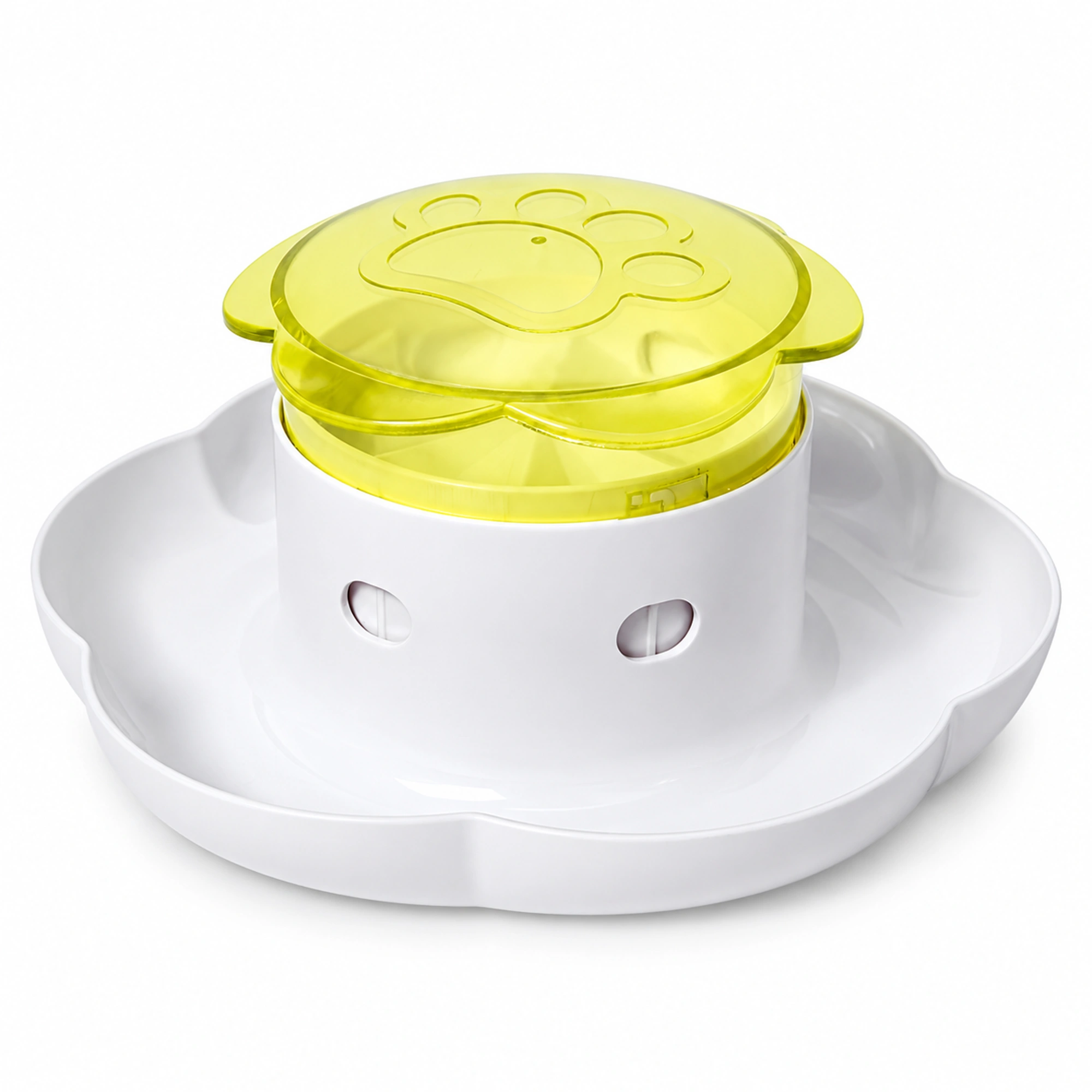
The Yellow Paw Press Treat Dispensing Dog Toy ($17.50) provides a clear example of durable mechanical design. This device features an oversized domed push plate set over an internal gravity chute and a wide bottom catch tray. When a dog presses the yellow paw pad with a paw or chin, an internal spring mechanism opens an internal hatch, dropping dry kibble into the tray.
Product descriptions for treat units should state maximum food pellet diameters. The Yellow Paw Press handles kibble up to twelve millimeters across without jamming, while the broad weighted base prevents kibble from scattering across slick floors. Impact-resistant ABS plastic withstands repeated paw stomps, illustrating the standard of the best treat dispensing dog toys engineered for independent play.
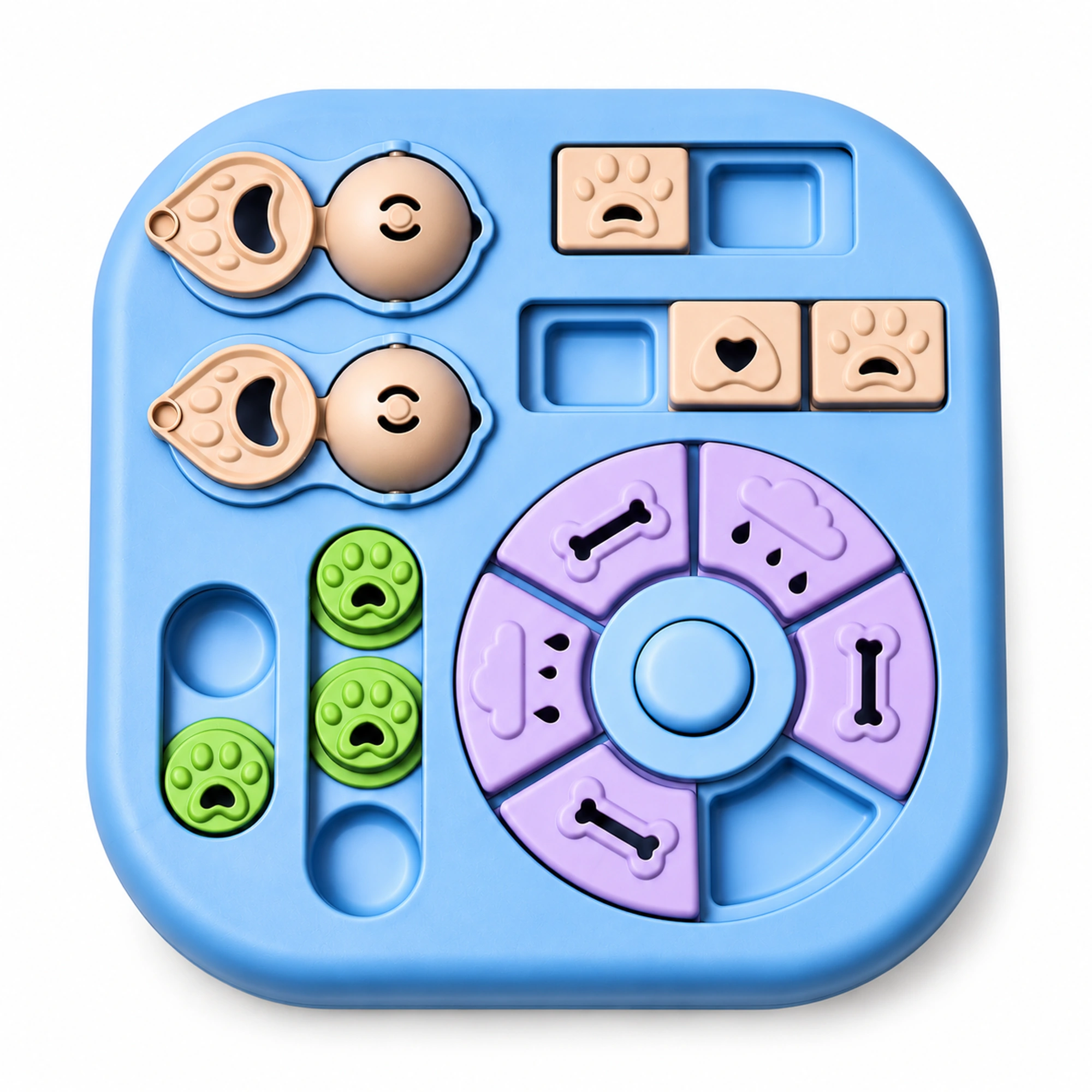
Similarly, multi-step game trays like the Blue Mix and Match Dog Puzzle Toy Board ($19.00) combine several mechanical motions on a single base. This game tray features revolving dials, sliding covers, and reward cups. High-quality product text explains how sliders slide and confirms that moving tiles remain anchored inside molded tracks so pets cannot swallow loose parts.
Scent Enrichment and Fabric Durability: Multi-Layer Snuffle Toys
Fabric foraging toys stimulate olfactory systems through hidden cloth folds, demanding thick textiles that endure digging claws. When examining plush foraging items, read descriptions for fabric weight ratings, seam construction, and washing guidelines.
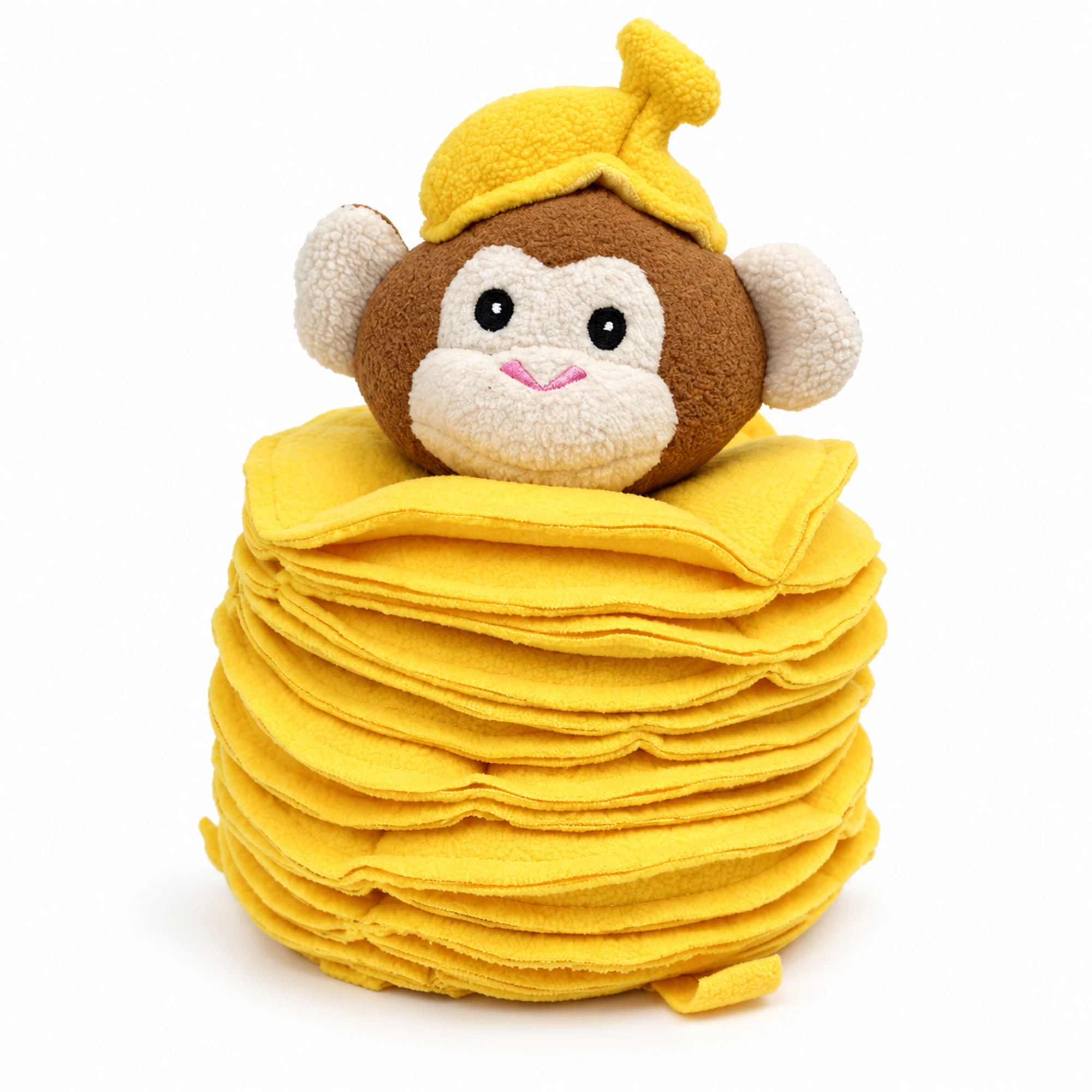
The Banana Monkey Dog Puzzle Toy ($27.00) exhibits resilient textile manufacturing. This soft foraging station features layered yellow fleece banana peel folds attached to a reinforced monkey body. Tiered cloth flaps provide hiding compartments for dehydrated treats and dry kibble.
Dense polar fleece absorbs pet saliva during scent searches without shedding loose threads. The product description confirms that interior seams are overlocked to resist claw tearing. Double-sewn fabric patches replace glued plastic eyes, eliminating small swallow hazards for young pets.
Sizing Metrics and Jaw Capacity Alignment
A toy sized safely for a miniature poodle can present a fatal choking hazard for a German Shepherd. Reliable product pages list exact dimensions, including total length, minimum waist diameter, item weight, and target pet weight ranges.
When reading sizing charts, compare the narrowest point of the toy against your pet muzzle width. Any ball or cylinder measuring smaller than the distance between your dog canine teeth can lodge inside the throat during a fast catch. For dogs over twenty kilograms, pick items with a minimum width of eight centimeters.
Total item mass also indicates wall strength. A dog treat puzzle toy built with thin two-millimeter walls will shatter under a large paw, whereas a four-millimeter injection shell absorbs heavy impact safely. Choose the larger size whenever your companion sits between two weight categories.
The Lavender Twist and Treat Dispensing Dog Toy ($19.00) provides precise sizing figures in its listing. Measuring sixteen centimeters in diameter with deep ribbed grooves, this dual-ring dispenser holds dense biscuit snacks while providing ample biting grip for medium and large dogs.
Essential Product Description Checklist
Before completing an online order for any pet accessory, evaluate the description against this five-point safety checklist.
The Five Point Listing Evaluation Protocol
-
Chemical Safety Disclosures: Verify written confirmation that the toy is free from BPA, lead, cadmium, and phthalate compounds.
-
Dimensional Clarity: Demand three-dimensional measurements rather than vague sizes like small, medium, or large.
-
Squeaker and Hardware Protection: Confirm whether internal squeakers are housed inside secondary rubber enclosures or reinforced cloth pockets.
-
Cleaning and Sanitation Protocols: Check whether parts withstand boiling water rinses or dishwasher cleaning cycles to remove oral bacteria.
-
Detachable Component Warnings: Check whether the item includes removable plugs, small sliding tabs, or thin cord ties that could break off during play.
Post Purchase Physical Verification
Safety checks continue after the delivery box arrives at your doorstep. Before introducing an accessory to your pet, carry out a thorough physical inspection of the unboxed item.
Rinse the object in warm water to wash away manufacturing dust and packaging debris. Bend flexible rubber pieces firmly in both directions to reveal potential micro-tears in the molding. Pull hard on textile seams, ribbons, and squeaker compartments to test stitching durability against human hand tension. If an item gives off an acrid chemical odor after washing, return the product right away. Spending ten minutes reading product copy and verifying raw materials protects your companion and ensures every play purchase provides safe daily enrichment.